The 1984 John Deere Snowfire 340 is a true icon-recognized as the last snowmobile produced by John Deere and notable for its simple, rugged design. Prized among collectors and trail riders for its no-nonsense reliability and unique place in snowmobile history, the Snowfire was built with a lightweight aluminum tunnel and powered by a Kawasaki 339cc free-air engine. With a direct drive system, cleated track, and John Deere's longest travel suspension of the era, the Snowfire delivers responsive handling while keeping maintenance straightforward.
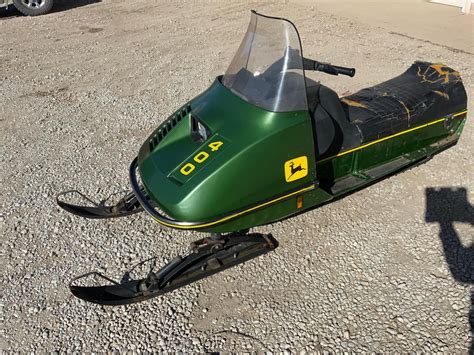
A classic John Deere snowmobile, similar in style to the Snowfire 340.
The Snowfire 340: A Closer Look
As a late-season introduction in model year 1982, the Snowfire was a full production model only for 1983. Deere and Company then sold its snowmobile business to Polaris in fall 1983, with fewer than 300 model year 1984 Snowfires actually built.
Key Features and Performance
The free air engine was combined with a nearly all-aluminum chassis to allow Deere to promote the 314-pound Snowfire as the lightest 340cc snowmobile on the market. This made the Snowfire easier to influence with body positioning while also being simpler to dig out when it was stuck and easier to trailer than competitive models. At a good 20 pounds lighter and $500 less expensive at retail than the Sprintfire, the Snowfire also lacked its more expensive sibling’s standard equipment speedometer and warning lights.
Factory fuel mileage estimates, developed on Deere’s dynamometers instead of out on the trail, illustrate one of the operational differences between these engines. Realistically, both of these engines could do better under ideal conditions, and a 1984 Snowfire recorded 23.63 MPG in the second annual Snow Goer fuel economy tests, the best of any air-cooled twin under 400cc that was tested from any brand.
Read also: O-Pee-Chee Gretzky All-Star
“In test riding, we’ve found Deere’s long-travel suspension to be effective in absorbing some of the bigger bumps on the trail,” editors wrote. “On moguled sections, especially, it produced a smooth ride. Cornering was not viewed as favorably, though, due to less weight on the skis and the long-travel (for the time) rear suspension.
“Surprisingly peppy at low end and mid-range,” our testers reported. “It’s a family machine with the emphasis on the wife and kids.
Free Air Engine Cooling: Advantages and Disadvantages
Free air snowmobile engine cooling was very popular during the vintage era because it offered a lot of advantages. It was light weight and less expensive than any other cooling type due to fewer parts. All of that and more made free air cooling a big hit. But as the years rolled on, free air cooling began to fall out of favor.
In addition, free air cooling was nowhere near as good at maintaining consistent engine temperatures as other cooling methods, depressing power output by as much as 30 percent as the engine got hot. So liquid cooling began to replace free air as the cooling choice for performance sleds.
The more upscale Sprintfire had a liquid-cooled 340 with oil injection, while the price-leader Snowfire had a free air 340 that ran on pre-mix to keep cost down. This engine was actually the same one used in the revolutionary Spitfire, but with a Y-pipe exhaust header that was more efficient than the F-pipe header on the Spitfire.
Read also: John Deere Sprintfire Specs
Why We’re Walking Away From This John Deere Snowmobile
Sportfire Model Information
The 84 Sportfire is a great looking sled, and Deere only built 371 of them. They were 42 hp T-7 440, with a single 34mm Mikuni, power jet carb, Comet 102-C drive clutch (as stated above), a multi angle helix in the driven and oil injection from 82-84. The chassis featured a 30 inch ski stance, and had the same track as the Liquifire from 82-84 with the LF skid frame and Sport rear arm and shock.
Sportfires got the Liquifire track and suspension starting in 82, which was a nice upgrade. One with electric start is pretty rare, especially an 84. Sportfires are hands down the most reliable jd's out there!!
Key Features of the 1984 Sportfire:
- 42 hp T-7 440 engine
- Single 34mm Mikuni power jet carb
- Comet 102-C drive clutch
- Multi angle helix in the driven clutch
- Oil injection (1982-1984)
- 30-inch ski stance
- Liquifire track and suspension
Restoring and Maintaining Your Classic Snowfire
If you’re reviving a rare Snowfire or keeping your classic on the trail, MFG Supply has you covered with essential parts like durable Dayco drive belts and proper-fit windshields.
Common Replacement Parts:
Read also: Overview of John Moore's NHL Career
- Dayco drive belts
- Windshields
- Seat covers
- Key switches
- Gas gauges
An 84 Sportfire in good reasonable condition sounds like a buy at that price. If you make a deal, post some pictures for the peanut gallery entertainment. Looks like a nice machine at a good price. Should be a winner.
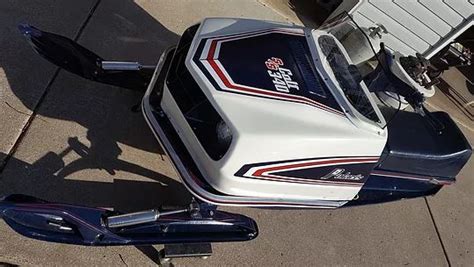
Restoring a vintage snowmobile can be a rewarding experience.
tags: #1984 #john #deere #snowmobile