Choosing the right hockey stick is essential for any player looking to enhance their performance on the ice. The length of your hockey stick significantly influences your control, reach, shot power, and overall playstyle. Whether you opt for a shorter or longer stick, each choice comes with its advantages and drawbacks.
Selecting the optimal stick length tailored to your game style not only boosts your technical skills but also increases your enjoyment on the ice. Adjusting your stick selection can transform your gameplay, empowering you with shot accuracy, improved control during passes, and greater confidence when facing opponents.
To find the perfect stick, you need to consider your size, build, and playing style. Many players unknowingly use ill-suited sticks for years, impacting their game. By following these essential guidelines, you can ensure superior on-ice performance.
Here, we break down the two main types of hockey sticks: Composite and Wood. Also, the two-piece shaft and blade combos
A beginners guide to choosing the right hockey stick
Understanding Hockey Stick Length
Having the correct length for a hockey stick is, to say the least, crucial for you to play ice hockey as desired. Even though there are guidelines regarding the length of a hockey stick, other factors also influence the choice. Typically, a shorter player's hockey stick is less lengthy than that of a taller player.
Read also: Is this One Piece Snowmobile Suit Worth It?
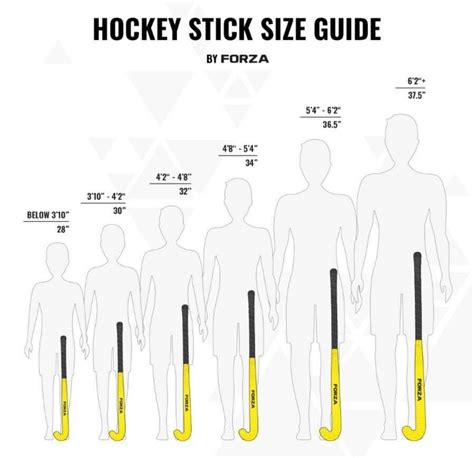
Hockey sticks come in various lengths, typically categorized into short, medium, and long. The most common way to measure a hockey stick is by standing it upright against your body. When wearing skates, the top of the stick should ideally reach somewhere between your chin and nose. However, personal preference, position, and style of play all contribute to determining the perfect length for you.
Ideally, the length of a hockey stick should extend approximately to the tip of the nose when the individual is standing without ice skates, and to the chin when wearing them. This standard applies to both children and adults. Another method to determine the stick length is to consider roughly 80% of the player's height. However, even with this guideline, there is variance in stick lengths among players who are of similar height. Some prefer a slightly longer hockey stick, while others perform best with a shorter one.
It's entirely possible to trim the stick to your desired length. Utilize a coping saw or a similar fine-toothed cutting tool, then make a new knob using hockey tape. It's essential to note that the "flex" or rigidity of the stick changes as you trim it. Specifically, the hockey stick's shaft becomes stiffer the shorter it is.
When procuring a hockey stick for a child or junior player, it's imperative to select one specifically designed for their age group. These sticks are not only shorter in length but also feature slimmer shafts and smaller blades. This design ensures that young players, despite their relatively smaller hands, can grip the stick shaft adequately.
Stand with your skates on and hold your stick in front of you. Your stick should be anywhere from 1 to 2 inches below or above your chin. Keep in mind that shorter sticks may be great for puck handling, but might not have a powerful shot. Long sticks give you reach and could even help you develop a commanding slap shot with minimal effort.
Read also: Is the KLIM Ripsa Vapor Suit worth it?
The Benefits of a Short Hockey Stick
A shorter stick offers better puck control and agility, making it ideal for quick stickhandling.
- Enhanced Puck Control: A shorter hockey stick allows for better stickhandling and close control. Players who rely on quick dekes, tight turns, and precise movements benefit greatly from using a short stick.
- Improved Passing Accuracy: With a short stick, maneuvering the puck becomes easier, resulting in sharper and more accurate passes. This is especially useful for forwards who operate in tight spaces.
- Better Agility and Maneuverability: A short hockey stick enables players to move swiftly and react faster to opponents. Speedy forwards and playmakers often prefer short sticks to enhance their on-ice agility.
- Quicker Wrist Shots: Since the blade of a shorter stick remains closer to the body, players can execute wrist shots and snap shots with greater speed and accuracy.
The Drawbacks of a Short Hockey Stick
- Reduced Reach: A shorter stick limits your ability to poke-check opponents and intercept passes.
- Less Power in Slap Shots: Due to the shorter shaft, there’s less leverage to generate powerful slap shots.
The Benefits of a Long Hockey Stick
A longer stick provides greater reach and leverage for powerful shots and defensive plays.
- Increased Reach: A longer hockey stick allows players to extend their reach, making it easier to poke-check opponents and gain control of the puck in challenging situations.
- Stronger Defensive Capabilities: Defensemen prefer long sticks because they provide better coverage, helping to block shots, cut passing lanes, and disrupt plays effectively.
- More Powerful Slap Shots: With a longer stick, players can generate more power in their slap shots due to increased leverage. This is particularly beneficial for defensemen and power shooters.
- Better Stickhandling at a Distance: A longer stick enables players to control the puck from a distance, which can be advantageous in high-traffic areas or when making long passes.
The Drawbacks of a Long Hockey Stick
- Reduced Stickhandling in Tight Spaces: A longer stick can make it harder to maneuver the puck in close quarters.
- Slower Reaction Time: Since a long stick extends further from the body, players may need extra time to adjust their movements.
Types of Hockey Sticks
Before you can choose the right hockey stick, it’s important you know what kind of sticks are even out there. You also need to know how to pick the best one for your size, build, and playing style. Some aspects of sticks are up to player preference, but there are also fundamental guidelines you can follow to ensure you have the best stick for performance on the ice.
Hockey sticks can be separated into three subcategories:
- Composite sticks
- Wood sticks
- Two-piece shaft and blade combos
Composite Hockey Sticks
Composite sticks are what most NHL players use today. Usually made from woven carbon fiber and fiberglass blends, they’re them incredibly lightweight making them a consistent, high-performing stick.
Read also: Features of Custom Hockey Gloves
PROS: Composite sticks come in a wide range of price points with varying degrees of performance and features as their price gets higher.CONS: Simply put, the biggest disadvantage to a composite stick is the lack of durability. While some sticks are better-built to increase durability, they still pale in comparison to how long a wooden stick will last you.
Wood Hockey Sticks
Wood sticks are largely thought of as “old school” these days, mostly due to the technological advances seen in the hockey industry - but they’re still around and are actually a great choice for certain players’ styles.
PROS: While it’s true that wooden sticks have been rendered all but obsolete in the world of the NHL, they’re still very much alive to many players who grew up on them. They’re well-regarded for their “feel” of the puck, long-lasting durability, and very cheap price.CONS: A big con to the wooden stick, however, is the overwhelming weight. A wooden stick can weigh 2 - 3 times more than some of the composite sticks out there today. Another concern is performance, which can become inconsistent over time. The more a wooden stick is used, the more its performance will decline.
Two-Piece Hockey Sticks
If you go the two-piece route, it means you’ll have to purchase two separate items - a blade and a shaft.
In terms of the materials used to make them, the shaft on a two-piece stick is just like what’s on their one-piece counterparts. Shafts are made with a blend of carbon fiber and fiberglass, which results in yet another lightweight product. As for your blade selection, you have the option of either a composite or wooden blade.
PROS: There are two major benefits to a two-piece stick. The first is the excellent performance provided (though still not quite as good as a one-piece). The second is the potential savings in cost.On a two-piece, if you break the blade, you simply pull it out of the shaft and replace it with a new one. The same concept goes for a broken shaft. This way, you’re only spending a small amount of money to replace a broken piece, rather than having to buy a whole new stick.
CONS: Two-piece sticks can (and generally will) loosen over time and hours of play.
PRO TIP: One thing to note is that shafts come with different tapers:
- Tapered
- Standard
When purchasing either type of shaft, be sure the blade you purchase is the same type, otherwise they will not fuse together.
How to Choose the Right Hockey Stick Length
Consider Your Position:
- Forwards: A shorter stick offers better control for quick plays and agility.
- Defensemen: A longer stick provides better reach and defensive capabilities.
- Two-Way Players: A medium-length stick balances both offensive and defensive benefits.
Factor in Your Playing Style:
- If you focus on puck control and quick dekes, opt for a short stick.
- If you play a defensive role, a long stick is beneficial.
- If you prefer a balance of both, a mid-length stick may be ideal.
If you find a hockey stick that fits your weight and flex preferences but isn’t the right length, you can customize it. Most composite sticks can be cut down for a shorter length or extended with an end plug for additional reach. Keep in mind that modifying the stick can alter its flex and durability.
The best way to determine the ideal hockey stick length is to test different options during practice sessions. Trying out both short and long sticks will help you find the one that maximizes your performance.
Understanding Hockey Stick Flex
Stick flex measures how flexible or stiff a stick is when force is applied. Since the flex rating indicates how many pounds of force it takes to flex the stick one inch, you should know that some sticks are significantly easier to bend than others.
Proper stick flex can increase overall shot velocity since flex has what you can think of as a slingshot effect. There is no “right or wrong” flex - it varies among players. so you'll want to try out different options. The higher the flex number, the stiffer, or less bend a stick will have. Conversely, the smaller the flex number, the more bend and softer a stick will be.
Not sure where to start? Using a sizing chart is a good idea.
Hockey Stick Flex Chart
There are many things to look at when you’re determining your stick length and flex. Your height, weight, and age can all help you decide on the best stick.
The dimensions of the shaft and the overall height of the stick get longer and larger with each size. Youth sticks are the shortest and thinnest, and senior sticks are the longest and thickest.
| Player Weight (lbs) | Flex |
|---|---|
| 70-90 | 30-40 |
| 90-120 | 40-50 |
| 120-150 | 50-60 |
| 150-180 | 70-75 |
| 180-200 | 85-90 |
| 200+ | 95-110 |
Picking a Blade Pattern/Curve
What kind of pattern do you like? Toe, mid, heel? Are you the type to pick corners in tight? Or do you like to blast absolute rockets from the point? If you’re new to hockey, this may all sound like gibberish, but we’re here to help you figure it all out.
Years ago, it was easy for players to choose a blade pattern…because they didn’t have a choice! Sticks were all straight blades up until the 1960s, when Stan Mikita and Bobby Hull popularized the curved blade. Today, curves are available in so many different shapes and sizes, it can be overwhelming for novice players to make sense of it all.
Let’s start with what makes a blade curve. Curves are shaped and differentiated by three factors:
- Curve Type
- Curve Depth
- Face Angle
Types of Blade Patterns
Blade patterns generally come in anywhere from 6 - 10 different styles for each manufacturer. While named differently, often different brands will have very similar (if not totally identical) patterns. That said, while they may be quite similar across brands, it’s also true that many brands have patterns that are unique.
It’s worth the time and effort to experiment with different blade patterns - you may be pleasantly surprised with the results, maybe in that your shooting becomes much more precise, or in that your puck handling suddenly improves.
- Toe Curve: With a toe curve, most of the curve is in the top 1/3 of the blade.
- Mid Curve: Just like you may be thinking, the mid curve blade has a prominent curve in the middle of the blade.
- Heel Curve: With a heel curve, the curve is most obvious in the last 1/3 of the blade.
Curve Depth
Curve depth relates to the depth or shallowness of the degree of the curve type. There are three depths to each of the three curve types:
- Deep
- Moderate
- Slight
The deep depth creates a larger “pocket” where the puck can sit, and the slighter depth has a smoother, gradual curve without an aggressive angle.
Curve Openness
Curve openness refers to the face angle of the blade and how much loft it creates. The face angle has three types of loft: closed, slight, and open.
If you look straight down at the closed blade, you can see the face, or front side, of the blade. But when you look straight down at the open blade face, you can see how the front is much more visible, almost as if the blade has been twisted - the result is more loft, and the more loft a blade has, the easier it is to lift or elevate the puck.
Hockey Stick Kick Point
The kick point of a hockey stick is a huge selling point for composite sticks. Kick point is most associated with flex and the style of play you want to bring to the ice.
The kick point of a stick can be defined as the area where the stick will flex the most. There are three types of kick points, and each caters to a different type of player. The different kick points are: low-kick, mid-kick, and customized kick.
- Low-Kick: A low-kick is made for the player who relishes a lightning-quick release. Mainly for quick wrist shots and snap shots, this kick compresses and loads in the tapered area of the stick. It’s meant to get the puck to the net as fast as possible, usually when you’re within a close vicinity.
- Mid-Kick: Mid-kick points are made for the power player, the type of shooter who loves to unleash hard slap shots and fully-loaded wrist shots. This type of kick compresses and bends mostly in the middle of the shaft. It offers full-powered shots for players shooting from greater lengths.
- Customized Kick Point: A customized kick point is the last type. Not all brands offer this kick point. A customized kick point is engineered to flex wherever you place your bottom hand. Customized kick point sticks are great to optimize a full-loading stick and unleash powerful shots from any location of the rink.
Choosing the right kick point can greatly enhance your performance by aligning the stick’s flex with your shooting style. Experiment with different kick points to find the one that best suits your game.
Left-Handed or Right-Handed Hockey Stick?
For beginner skaters, deciding which handed stick you need might prove a little more difficult than you may first think. If you already know which way you shoot, you probably automatically wander that way to whichever you use when you walk over to a stick rack.
However, if you don’t know, the easiest way to figure it out is to actually pick up a baseball bat. Which way do you naturally swing? Keep in mind, there’s no right or wrong choice when it comes to playing hockey. The most important aspect is that you feel comfortable. When in doubt, if you’re undecided, just go with the option that feels the most comfortable and natural to you.
It’s interesting to look at the lopsided ratio of left-handed to right-handed shooters in the NHL. Left-handed players crush the number of right-handed players in the NHL today by a ratio of nearly 70 to 30, but why?
Determining whether you need a left handed or right handed hockey stick when purchasing a new one can be confusing. The left or right hand designation comes from which hand is closest to the blade of the stick. For example, if your left hand is the lower one when comfortably holding the stick, that means you are a left-handed player. Conversely, if your right hand is lower, you will want a right-handed stick. The most important thing to focus on is how comfortable or natural a stick feels in the hands.
Try stickhandling with a puck or tennis ball and see which hands feels more natural. *Note: your dominant writing hand does not always determine hockey stick handedness.
It may sound confusing, but it makes sense when you think about the aspect of control. If your right hand controls the top of the stick, think about how much easier it would be to hold and control the rest of the stick. And vice versa if you’re a dominate lefty. Being able to control your stick is obviously unbelievably important when you’re on the ice.
It’s worth mentioning again that playing with a left- or right-handed stick is first and foremost based off comfort. If you’re a dominant right-handed person and you feel better holding a right-handed stick, then go with that stick and give it a try. There’s no right or wrong when determining how to shoot. For most players, it will feel natural when they hold the stick, and then they know…so try both out and see which is the most comfortable.
Hockey Stick Shaft Finish
Most sticks come with two different finishes to the shaft, either grip or clear (non-grip). The purpose of adding a grip coating to the shaft is to optimize the amount of control a player has over the stick with their bottom hand.
You’ve probably noticed that at some point, your bottom hand might shift up and down the stick while you’re stick handling. With a non-grip finish, sliding your hands over the shaft is effortless. But the downside to not having a grip is if you don’t have a tight enough handle on the stick while shooting, your hand can slip and reduce the amount of power generated from your shot.
The opposite is true for a stick with grip - the grip coating may be too tacky, ultimately inhibiting your ability to slide your hands up and down the shaft. The benefit, however, is the extra grip you get when you go to shoot, which essentially locks your bottom hand in place and efficiently generates full power on your shots.
Each manufacturer has their own type of grip and non-grip finishes that differ from other brands. Once again, it really comes down to preference. So when you start looking for your next stick, be sure to check out the finishes and understand how each one can benefit (or hinder) your game.