Skiing is an exhilarating sport that offers a unique sensation of speed and freedom. Whether you're a beginner just starting out or an advanced skier tackling challenging terrain, understanding your speed and how to control it is crucial for both enjoyment and safety. This article explores the average skiing speeds for different skill levels, provides tips for improving your technique, and discusses the psychological aspects of learning to ski.
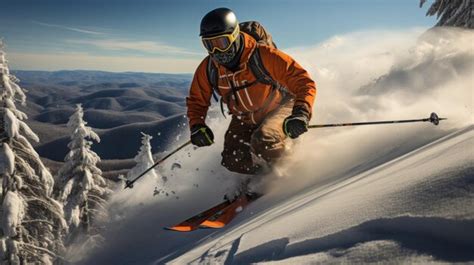
Beginner Skiing: Building a Foundation
For those just starting out, the primary focus is on learning the fundamentals and building confidence. This includes mastering basic techniques such as the wedge turn (snowplow), maintaining balance, and controlling speed on gentle slopes.
* Typical Beginner Speed: Generally, beginners ski at slower speeds, often under 10 mph, as they focus on control and coordination.Remember, "Slow is smooth, and smooth is fast." Make sure you have solid fundamentals (stance, basic turning, stopping) on easy terrain; this strong foundation will speed up your progression to true intermediate. It's better to ski a green run really well (controlled turns, good balance) than to survive a blue run with poor form.
Intermediate Skiing: Transitioning to Blue Runs
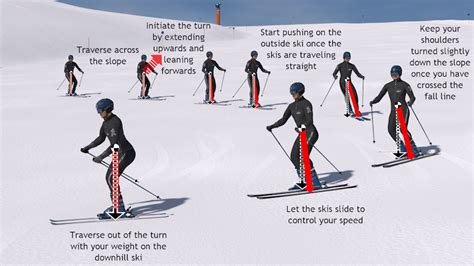
Once you're comfortable with the basics, it's time to move beyond the bunny hill and into intermediate terrain. This stage introduces new challenges, including steeper slopes and parallel turns. Becoming an intermediate skier means you can confidently ski blue runs under typical conditions.
Tips To Ski Fluidly | For Intermediate and Advanced Skiers
The progression can be fast for some adults, especially those with factors in their favor (fitness, athletic background, good instruction, etc.). A standard estimate is that an average person takes ~10-14 ski days to reach a comfortable intermediate level. In that timeframe, you should be able to make parallel turns and confidently ski on blue slopes. Ski industry experts often note that skiers spend multiple seasons refining their skills to reach an intermediate level. Remember that "intermediate" covers a range: it starts with handling blue runs cautiously and ends with cruising them in good form.
Read also: Skiing at Brighton at Night
Typical Intermediate Speed: Intermediate skiers often reach speeds between 15 and 25 mph, depending on the slope and conditions.
Typical challenges in the green-to-blue phase:
- Speed control on steeper slopes: On blues, you must rely on turning across and uphill (and eventually hockey stops) to manage speed. The wedge won't cut it anymore.
- Refining turn technique: To truly enjoy intermediate slopes, you must transition to smoother parallel turns. Early on, many skiers make a half-wedge habit when things get steep - it takes practice to eliminate that and trust edging both skis.
- Stamina and confidence: Blue runs are longer and more taxing. New intermediates often tire quickly because they still use a lot of muscle to turn (i.e., using a defensive skidding technique). It might take a few weeks of skiing to build the leg strength to handle a long intermediate run top-to-bottom without excessive fatigue.
Overcoming Psychological Barriers
Learning to ski is as much a physical challenge as a mental game. It's common to experience fear, anxiety, or frustration at various points in your progression. Here are some psychological barriers and how long they might affect you:
- Fear of speed and falling: A baseline fear of "going too fast" can linger from your beginner days into being an early intermediate. It typically lasts until your skills catch up and prove to your brain that you can handle the speeds you're reaching.
- Fear of injury: This fear often lasts until you have a few falls and realize you're okay. Wearing a helmet can also alleviate injury fears.
- Self-doubt: Try to replace self-doubt with patience - give yourself time to learn. The doubt usually vanishes as you hit your first few achievements.
- Intimidation by others: Focus on your own improvement. The intimidation factor usually fades after a few days, especially if you go with friends or family who support you.
Advanced Skiing: Mastering Black Diamond Terrain
Advanced skiers are comfortable on all types of terrain, including steep slopes, moguls, and ungroomed snow. They possess excellent technique, control, and the ability to adapt to varying conditions.
Typical Advanced Speed: Advanced skiers can reach speeds of 30 mph or more, depending on the terrain and conditions. Some may even exceed 40 or 50 mph on steep, open slopes.
Read also: Maine ski conditions
The testimony of speed skiers is relevant because this perforce small community knows what it’s like to go 60, 70, 80, 90, 100-plus miles an hour, and how different life becomes at each interval. As C.J. Mueller, who was the first skier to break 130mph, estimates that 60mph is attainable without a speed suit as along as all other conditions are ideal, but that, in general, anyone in regular ski clothes has no chance to break 60mph.
The Role of Technology: Ski Tracking Apps
Ski tracking apps like Ski Tracks and Slopes have become increasingly popular among skiers of all levels. These apps use GPS to record various metrics, including maximum speed, average speed, vertical descent, and distance traveled. While these apps can be useful for tracking your progress and comparing your performance with others, it's important to be aware of their limitations.
Some users occasionally mention their top speed but the vast majority are more interesting in their verticals and distance. With regard to the 47.6 mph shown on our screenshots - this is the maximum speed for an entire day and was actually obtained on an intermediate trail over a very short part of the day. We are more than happy to analyse any of your tracks regarding the speed.
Accuracy Concerns
The research of Shealy, Scher et al. suggests that GPS-based speed measurement may not jibe with other methods, like the use of photoelectric cells to trigger timing devices in international speed skiing events. So maybe some GPS-based apps are predisposed to overestimate skier speed.
Safety Considerations
If my phone says I’m going 60, I’ll see if I can go 65. I’ll show the guy who always whips my butt at golf that I can beat him by 20mph on skis. Now we have a problem, and I don’t think I’m imagining it. People who think they’re fast think they can go faster. Remember that kinetic-energy-velocity-squared business Prof. Shealy cited above? A 175-pound body hurtling through space at speeds it cannot control is a menace to itself and every living thing around it.
Read also: Night Skiing Guide: East Coast
Disclaimer: While ski tracking apps can provide interesting data, it's crucial to prioritize safety and ski within your abilities. Don't let the pursuit of higher speeds compromise your control or endanger others on the slopes.
Understanding Wind Resistance and Clothing
The easiest way to tell how fast you’re going is how much noise your clothes make. Both Shealy and the professional speed skiers reference 40mph as roughly when wind resistance starts to make a real racket. The rare skier who is rocketing along over 40mph can be heard coming ahead of his arrival. If you were able to go any faster, you’d tear your anorak off.
Table: Average Skiing Speeds by Skill Level
| Skill Level | Average Speed (mph) | Focus |
|---|---|---|
| Beginner | Under 10 | Control, balance, basic turns |
| Intermediate | 15-25 | Parallel turns, navigating blue runs |
| Advanced | 30+ | All terrain, high-speed carving |