Swim goggles may be one of the simplest items, but that doesn’t mean finding the best triathlon goggles is a straightforward process. Goggles can leak, fog up, break, or hurt your face - and that can make any swim a bad one. You need goggles that reliably do the job of protecting your eyes and preserving your vision. The best pair of goggles for triathlon is the pair you don’t notice.
So what matters when it comes to buying triathlon goggles? It’s also important to note that there might not be one particular swim goggle for the many things you do as a triathlete. So for pool swimming, a tiny little pair of goggles no bigger than contact lenses through which only a pinhole of light squeaks through is fine. But for open-water swimming, we need to see the whole world around us, we need to have as little distortion as possible, we need to see out of the water (sighting), and we need to expect that at some point, we will probably be hit in the face.
In our 2025 community survey, we asked you, the reader, what brand of swim goggle you own, and the results were no surprise. We took the time to test and rate six different goggles with an exhaustive eight-point system and teased out details about fit, comfort, clarity, warranty, return policies, and more. Frankly, you can’t go wrong with any of these choices. It’s just a matter of choosing which attributes are most important to you. What makes our reviews different? Our testers actually use the thing.
Here are some key considerations when choosing the right goggles:
- Fit is paramount: The nicest, most expensive, most fully featured pair of goggles doesn’t mean anything if it leaks. Be prepared to send back, try out, or donate a few pairs of goggles before you get it right.
- Size matters: In my mind, this is a matter of safety, but others like a bigger goggle for either comfort or because they fit their faces better.
- Hydrodynamics: If you’re chasing hundredths of seconds and trying to hit the Olympic qualifier in the 100m free, yes, you need a “fast” goggle. But don’t forget in tri, we have to sight to finish a race, and this is about the least hydrodynamic thing you could do.
- Backup is essential: Once you find the right fit, buy another pair of the same goggle. Ideally, the second pair would be darkly tinted if the first pair is light or colored, but either way, there is nothing more debilitating on race morning than a goggle issue or the wrong color lens. I always have at least two pairs for different conditions on race morning, and I’m always glad I do. And it’s not just me.
- Clarity is key: Trust me, you need to be able to see clearly for that split second you lift your head up to sight. Or, you might need to be able to see another swimmer barreling toward you out of the corner of your eye.
Top Triathlon Swim Goggles
Here's a look at some of the top triathlon swim goggles available:
Read also: Comprehensive Review: Men's Swim Goggles
- TheMagic5
- Blueseventy Contour
- Arena Cobra Edge Swipe
- BornBound Vann
- Form Smart Swim 2
- TYR Nest Pro
Detailed Reviews
Magic5: If you’re able to wear Swedish-style goggles, congratulations. You got lucky in the facial-structure lottery. For the rest of us, finding a pair of goggles that actually fit can be a costly and time-consuming endeavor. Magic5 aims to simplify that by using 3D-printed goggles to create custom-designed gaskets for the curves of a person’s face. When the process works, it works really well - the resulting goggles truly do fit perfectly, suction to the face without requiring tight straps, and have all the right angles for a wide peripheral view.
Because these are custom-made goggles, there’s no more adjusting (save for the strap) after they arrive. That requires the customer to place a lot of trust (and money, to the tune of $90 per pair) in Magic5. However, the company has improved its data-collection and printing processes over the years, so errors are few and far between. We appreciated the sturdiness of the strap’s attachment to the actual gaskets, the lens clarity, and the fit on this pair of somewhat unique goggles.
Blueseventy Contour: Boasting a long gasket extension that extends past the temples - as opposed to the strap attaching right next to the eyes on many pool-style goggles - this design helped provide a low profile. As with any goggles, you may want to fiddle with the included swappable nose bridges to get the right fit, but this was an easy pair to love right out of the box.
Arena Cobra Edge Swipe: We’ll put this up top: $100 is a lot of money for a pair of goggles that’s neither custom molded (see: Magic5) or has some sort of heads-up display tech (see: Form). In terms of lens quality and comfort, these were some of the best low-profile goggles I’ve tested in a long time. The “swipe” feature keeps these goggles fog-free better than pretty much anything out there.
BornBound Vann: BornBound may not be a familiar name in the tri world, but this new-ish brand makes some of my favorite tri suits and running shorts, along with some other bits of swim, bike, and run gear. While the on-the-go strap adjustment is excellent and overall comfort and field of vision for these goggles was impressive, there was an unusual irregularity somewhere either in the lens clarity or the way the eye gaskets spread apart when tightened down, due to the very flexible (maybe too flexible) silicone nose piece.
Read also: Ultimate Hockey Audio Guide
If the nose piece was a hard replaceable component like many, it could have helped; or there’s the possibility that I had a one-off issue with production.
Form Smart Swim 2:
How To Choose The Right Swim Goggles For Triathlon
After all, what’s the point of having real-time data in your goggles if they’re fogged up or full of water? But upgrades come at a cost - the SmartSwim 2’s $280 price tag is significantly higher than the 1’s $180. And that doesn’t include premium features like in-workout technique coaching, SwimStraight (an open-water goggle compass), the ability to import TrainingPeaks and TriDot workouts, or a workout library of more than 1,500 different sessions. To access those features, you’ll have to pony up an additional $100 per year.
TYR Nest Pro: There’s a reason TYR is the second-most popular goggle with our survey respondents: If you’re looking for the most affordable (yet functional) triathlon goggles, the TYR Nest Pro fits the bill. With a wider lens than traditional goggles (but not as wide as full-coverage open-water models), they provide good peripheral vision, which can help when you’re sighting.
The stretchy nosepiece fit well with most faces and is infinitely more durable than interchangeable nosepieces, but it’s a double-edged sword - if you have an extra narrow or extra wide nose bridge, you’re unable to swap it out. That said, the integrated design makes them effectively bulletproof, so you can toss them around and mistreat them more than most.
Read also: Ski Goggle Clarity and Comfort
Ski Goggles Review
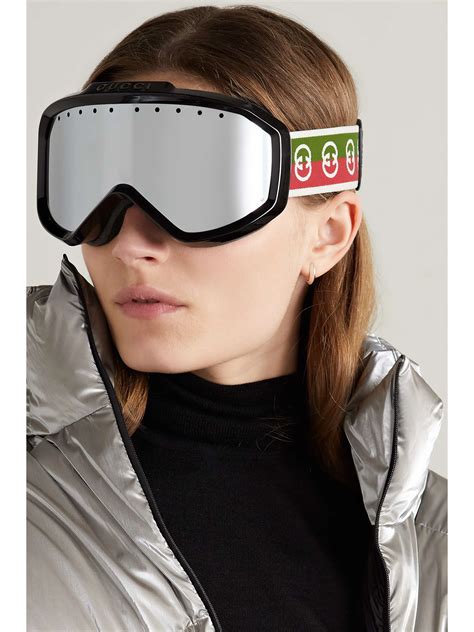
Goggles are a cornerstone piece of gear in any skier and snowboarder's kit. The best goggles help you see clearly, fit comfortably, look good, and last for several seasons if cared for properly. With a dizzying array of new goggles to choose from, we've narrowed it down to the essential characteristics that you should take into account when making your eyewear choice. These include lens quality, ventilation, breathability, comfort, ease of changing lenses, durability, and style.
Your choice of ski goggles will depend on your budget, the climate, and how often you plan to use them. Fortunately, this review includes options for the casual skier and the 100-day-a-year veteran, across various price points.
Some, like the Smith Squad ChromaPop, Glade Adapt 2, or the Giro Roam, are low-cost options that meet or exceed the basic needs of a goggle. At the same time, models like the top choice Smith 4D Mag, feature toric lenses and high-quality optics in all conditions and come at a premium price. Top-tier ski goggles are best suited for committed skiers and riders who don't mind spending the extra money for an enhanced visual experience.
Entry-level models such as the Smith Blazer and Wildhorn Roca fit the needs of fair-weather skiers, who find themselves out less than 10 days a year. They provide adequate weather and UV protection but lack optical enhancements and a low-light lens for storm skiing. Our eyewear is a foundational component to allow us to perform our best in all kinds of lighting conditions.
Key Features to Consider
Lens Quality and Optical Accuracy: Lens quality and optical accuracy are the most important performance-based aspects for most skiers and riders. The quality of your goggle lens directly impacts your safety and ability to enjoy riding in marginal lighting conditions. Companies have recognized this as one of the most important aspects of goggles, and they now offer high-quality lenses across many price points.
Premium goggles feature proprietary optical enhancement technology to improve the visual experience. These lens technologies are all intended to do roughly the same thing: increase contrast, enhance definition, and generally make you see the world around you more clearly, especially in challenging light conditions. The Giro Contour and Shred Simplify+ provide excellent visual enhancements that boost the contrast and give you a better view of changes in the terrain and snow quality.
Based on our visual assessments the aforementioned models, along with the Smith 4D Mag, Anon M4 Toric, Smith I/O Mag, Julbo Cyrius, Spy Marauder, and Oakley Flight Deck M, are optically the best goggles in this review. The Giro Contour and Smith 4D Mag offered true color accuracy and enhancements which provided an excellent visual experience.
Lens Shapes: Lenses come in various shapes, like cylindrical, spherical, and toric.
Photochromic Lenses: Some lenses even adapt to your current light conditions by adjusting tint for varying environments, whether you're skiing in the midday sun or pre-sunset dusk. These photochromic lenses are convenient, as you rarely have to change the lens. The Julbo Cyrius and Glade Adapt 2 have wide photochromatic ranges and are offered in many lens types. Both models can be one lens for any condition with the right preliminary lens selection.
Many high-quality lenses exist in this review; The Smith 4D mag (Left) and Oakley Flight Deck (right) are two top performers.
Comfort: The comfort of your goggles greatly influences the quality of your day, they can either seamlessly blend into your experience or contribute to headaches. Several factors come into play here: goggle shape and size in relation to the wearer's facial size, structure, and nose shape. A goggle's frame material and flexibility, padding material, and strap comfort are also important considerations when making your goggle selection.
Top Ski Goggles
Smith 4D Mag: The Smith 4D Mag is a standout pair of goggles that delivers top-notch performance across the board. Smith, with over 50 years of eyewear expertise, has poured its know-how into this model. The 4D Mag upholds Smith's legacy of innovation with a distinctive curved bottom lens edge that expands your field of vision-a feature you won't find elsewhere. It boasts premium optics, a flexible frame, and a medium fit that suits most skiers and riders. Plus, it's got style and toughness to spare.
“I've never seen better clarity on the slopes,” says longtime skier Isaac Laredo.
Glade Adapt 2: The Glade Adapt 2 offers great value with its impressive lens tech, top optical quality, and superb ventilation. Its six lens options adapt to all weather-sunny or stormy-and rival premium brands at a lower price. The lens adjusts quickly, enhancing color and snow contrast. It resists fogging well, even on tough climbs. “I had no fog issues, unlike with others,” said one tester. With vents everywhere and a strong anti-fog coating, it ensures clear vision.
Smith Squad ChromaPop: The Smith Squad ChromaPop offers strong performance at a budget-friendly price. It includes two quality lenses-one ChromaPop for bright light and a yellow one for low light-outshining pricier options. The cylindrical lenses deliver crisp, clear mountain views. Well-ventilated, it works for resort or backcountry use. “I love how light and packable they are,” said one reviewer.
Anon M4 Toric: The Anon M4 Toric goggle is outstanding, and the performance scores reflect that. This model is best suited for individuals with a larger facial structure. We recommend considering this model if you have a rather large mug or find goggles to fit a little small on you. The M4 has the most effortless lens-swapping capabilities, featuring secure magnetic attachments that allow the lenses to be interchanged in seconds.
Julbo Cyrius: The Julbo Cyrius is a true one-lens wonder. This model is offered in seven different photochromatic lenses. The largest split is category 0 to category 4, which is approximately 8% to 83% VLT. We used these goggles in every condition, from bluebird to snowglobe-like blizzards, and we always had the right lens. Julbo offers the widest photochromatic range with fast transition times not influenced by temperature.
Comparative Table of Ski Goggles
| Goggle Model | Lens Quality | Comfort | Ventilation and Breathability | Ease of Changing Lenses | Durability | Style |
|---|---|---|---|---|---|---|
| Smith 4D Mag | 9.0 | 9.0 | 7.0 | 8.0 | 9.0 | 7.0 |
| Glade Adapt 2 | 8.0 | 8.0 | 8.0 | 8.0 | 8.0 | 7.0 |
| Smith Squad ChromaPop | 7.0 | 7.0 | 6.0 | 4.0 | 8.0 | 7.0 |
| Anon M4 Toric | 9.0 | 8.0 | 7.0 | 9.0 | 8.0 | 8.0 |
| Julbo Cyrius | 9.0 | 8.0 | 8.0 | 8.0 | 8.0 | 8.0 |