Palm Beach County's 45-mile coastline serves as a playground for millions of residents and tourists every year. However, the ocean is a dynamic, ever-changing entity with incredible power. It is important for beachgoers to be aware of potentially hazardous conditions unique to that particular beach. Here’s how you can stay safe and help preserve these beautiful beaches.
Understanding Beach Warning Flags
The easiest and most visible way to find out what’s happening at the beach is to look at the colored flag flying from the manned lifeguard tower.
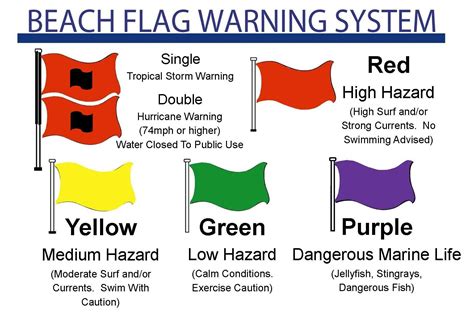
Here’s a breakdown of what each flag means:
- Low Hazard: Conditions are calm; normal care and caution should be exercised.
- Medium Hazard: Moderate surf and/or currents are present. Swimming for experienced ocean swimmers only.
- High Hazard: Very hazardous rough surf and/or strong currents exist; swimming for experienced ocean swimmers only.
- Water Closed to Public: The water and/or beach are closed.
Remember, the absence of flags does not assure safe waters. Conditions change daily or even hourly! It is important for beachgoers to be aware of potentially hazardous conditions unique to that particular beach.
To know what you might expect to encounter, please talk to the lifeguards. They are there to help you. County beaches have condition boards near the beach accesses. The water conditions, tides and hazards for that particular beach are listed daily along with the beach rules.
Read also: The Story of the Palm Beach Breakers
If caught in a rip current swim parallel to shore. Then swim straight in to shore.
Inlet Safety Tips & Facts
Navigating inlets requires caution and knowledge. Here are some essential tips for safe passage:
- Drive to the inlet or ocean and look it over for at least 5 - 10 minutes before heading out.
- Monitor and listen to your VHF CH 16 and WX weather channel for pertinent information before setting out.
- If unfamiliar with the inlet, seek local knowledge from credible sources and watch local boaters run the inlet to gain knowledge for safe passage.
- Wear a comfortable life vest when underway.
- Rig and attach a lanyard engine kill switch to you and your boat. You should always remain under power while maneuvering in the inlets.
- Keep your passengers and general weight located in the stern or mid ship area of your vessel so not to be bow heavy.
- Never allow passengers to ride the bow pulpit, especially in an inlet.
- Know how to recognize shallow sandbars, where wave height increases rapidly and where breakers form, indicating the location and to some extent the depth of water over the sandbars.
- Be aware of the water both ahead and behind your craft. Keep your bow up and control your speed accordingly, matching it to that of the waves.
- Always ride on the back of a wave, keeping the boat the same speed as the wave.
- “Standing” steep choppy waves are from the outgoing flow of current butting up to the incoming prevailing sea waves.
- Suggested equipment: anchor and sufficient amount of anchor line, bilge pump or bailing bucket, oar, paddle, VHF, GPS, and an auxiliary motor.
Before snorkeling gather all your equipment. Check your mask, snorkel and fins to be sure they work and are adjusted to fit you properly. Decide where to snorkel. If you snorkel in an unguarded area you will need a diver’s flag which can be purchased at any dive shop. The flag is red with a white stripe from the upper left corner to the lower right corner. Attach the flag to a float; inner tubes, boogie boards, surfboards, or small inflatable boats make good surface floats. The flag should stand high above the float so that boater’s can see it. Check the ocean conditions from a viewpoint. Observe waves, currents, wind, water visibility and weather. Always snorkel with a buddy!
Palm Beach County’s Shoreline Enhancement Program
Our beaches serve as one of the best defenses against wave damage caused by winter storms and hurricanes. However, the constant erosion of our beaches is an undeniable reality.
The Palm Beach County Department of Environmental Resources Management, through its Shoreline Enhancement and Restoration Program, builds environmentally-sensitive, cost effective projects to protect and restore the natural function of beaches and dunes.
Read also: History of the Palm Beach Hawks
Since 1989, Palm Beach County has participated in or constructed over 22 miles of beach and dune restoration projects for the benefit of tourists, residents and coastal property owners.
How Beach Nourishment Works
Beach nourishment - pumping or trucking sand onto the beach to rebuild an eroding shoreline - is the most natural beach restoration solution. Sand along our coastline moves north or south depending on the wave climate, but the predominant movement is to the south. Lake worth Inlet and Boynton Inlet have sand transfer plants that bypass sand from the north to south across the inlets. Jupiter Inlet and Boca Inlet were natural inlets that have been altered over the years primarily to serve boaters. Both are routinely dredged to maintain navigable depths, and the sand is placed on adjacent beaches.
Protecting Dunes
Dunes are accumulations of wind-blown sand behind the beach. They are stabilized by salt tolerant native plants that have deeply-penetrating, extensive root systems. As the plants become buried, new roots develop on the recently buried stems while new stems emerge from the sand.
The grassy sea oat is one of several plants in the dune that help beautify Florida's beaches. The attractive flowers of the sea oats become seeds in the fall that provide more plants to help protect the dunes. Because of its importance, the sea oat plant is a protected species. Sea grapes, which grow on the back dune and have large ping-pong paddle-shaped leaves, act as a highly efficient barrier to blowing sand. A dense stand of sea oats and sea grapes can greatly minimize erosion during high tides and storms.
Here's how you can help:
Read also: All About Twin Tips
- Use the designated boardwalks. A few extra steps may be all it takes to protect the plants that hold the dune in place. Pedestrian traffic or dragged objects across the dune makes weak points in the dune line, which can be rapidly eroded by storm waters.
- Pick up your trash. Dispose of all trash properly, particularly plastic objects, fish netting, and other materials that may entangle sea turtles and water fowl. Remember: runaway balloons can end up in the ocean, and to a sea turtle they look like food.
- Leave seaweed in place.
Additional Beach Safety Tips
Here are a few more tips to ensure a safe and enjoyable beach experience:
- Drink plenty of fluids at the beach. Dehydration can cause heat exhaustion or heat stroke. If you are feeling dizzy, weak, faint, have nausea or a headache, it’s time to get out of the sun. Sit in an air conditioned car, or in the shade.
- Wear shoes in the summertime. The sand gets HOT!
- Look out for tar! Tar should be removed from feet - it is a known carcinogen. In your beach bag, have an old rag and use suntan lotion, baby oil, or vegetable oil to rub it off.
- Read the condition boards at the beach accesses.
- Be aware of color of the condition flag being flown from the lifeguard tower.
Did you know that those clumps of seaweed have a name? It’s called beach wrack, and it’s “a pivotal part of the beach ecosystem,” says the Florida Fish and Wildlife Conservation Commission. It drifts near the Gulf Stream and provides vital food for young sea turtles. While maintenance staff regularly removes litter and hazardous debris that wash ashore, beach wrack is typically left behind and serves as fodder for crabs, beetles, and other small creatures, which in turn are food for shorebirds. It is also important for collecting wind-blown sand and encouraging plants, which help hold dunes in place to protect property.
Seaweed is constantly present in the Atlantic Ocean and is washed ashore more frequently during sustained onshore winds combined with seasonal shifts in the Gulf Stream, particularly when the Gulf Stream nudges closer to the coast in the summer. Occasionally, weather conditions exist in which an unusual amount of beach wrack is washed ashore continuously over a period of time. Check our beach conditions page for locations where concentrations may be heavy.