Look Pivot bindings have garnered a dedicated following among freestyle and bump skiers, known for their unique design and performance. These bindings stand out on the ski shop wall and have been a staple in the skiing community for decades.
So, what makes Look Pivot bindings so special? Let's break down the techy bits, explore how they feel on the snow, and address some common myths. There are three main reasons Look Pivot bindings are sought after: how it rides on snow, durability, and “safety”. We’ll dive into all of these and even do a little myth-busting. We’ll also talk about the new, Look Pivot 2.0, launched this fall for the 24/25 season.
Bindings are the unsung heroes of your setup - the interface between boot and ski that transfers energy efficiently and releases when it should. A ski binding’s job is simple - to keep you locked in when you should be, and release you when you shouldn’t.
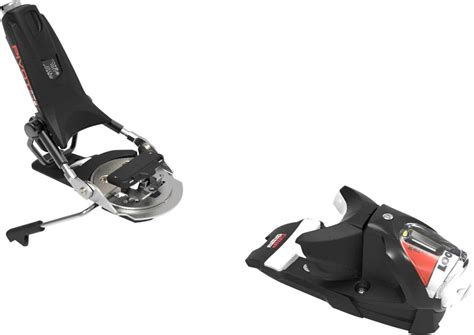
The Look Pivot uses a unique turntable-style heel piece. The pivoting design started all the way back in the 1960s and while the binding evolved over the years, the mechanics are generally unchanged. Let’s delve into the key features and benefits of these bindings.
Read also: Battle Bindings: Performance and Value
Key Features and Benefits
Elastic Travel
Elastic travel is the side-to-side and up-and-down movement the binding allows your boot to take while skiing. It sounds a bit spooky when first describing it (wait, my boot moves around while skiing?), but it’s a necessary feature to help your ride feel smooth. If the binding were to be totally static and rigid, any icy patch or vibration would feel harsh and rough on the body.
A Look Pivot binding offers 45mm of elastic travel in the toe and a whopping 28mm in the heel. Here, the turntable-style heel of the Pivot allows for more travel in the toe, while maintaining contact with the boot. By allowing the boot to move just a few millimeters during rough conditions or a weird turn, the binding can bring you back in if the force doesn’t exceed a certain amount. The higher the elastic travel, typically the more plush the binding will feel. Just like more suspension or travel on a mountain bike. Elastic travel also helps prevent pre-release.
If you’re curious, the other major bindings we love to recommend, like the Marker Royal Family series and Tyrolia Attack all ring in with very similar numbers with 30mm in the toe, and around 15mm in the heel. This is the standard, so these bindings still provide plenty of suspension.
Short Mount Zone
Another unique feature on the Look Pivot is its short mount zone. The footprint of the binding is considerably smaller than comparable downhill bindings. The small footprint can allow the ski to follow its more natural flex pattern underfoot. It’s also likely that this is only noticeable on softer skis that don’t feature a metal plate underneath them. You can see the tight screw holes on this mount, showing the smaller footprint of the Pivot.
Neutral Ramp Angle and Low Stack Height
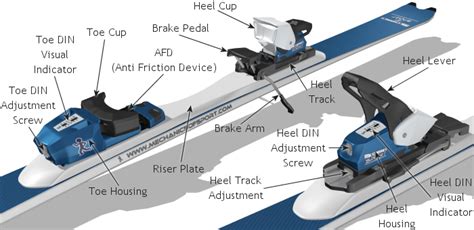
Stack height refers to how high the binding sits off the ski. The heel sits higher than the toe, which creates a situation where your foot is positioned at an angle, often referred to as the “ramp angle”. The Pivot is unique with a nearly neutral ramp angle.
Read also: All About Twin Tips
The toe sits at 18mm above the ski, and the heel sits at 19mm above the ski. That’s just a one-millimeter difference between the two, which is just about as neutral as you can get. Low stack heights are great for easier turn initiations and releases. Most other bindings ring in pretty similar to the Pivot’s toe height (right around 18-21mm), but their heel usually features more like 4-6mm delta from the toe.
Durability
In a rock, paper, scissors style match between metal and plastic, metal usually wins. The hefty metal construction of the Pivot 15 and 18 adds to their colorful character and makes them highly desirable. Metal adds heft and greater durability for the use and abuse we put our gear through. Some find peace of mind knowing their bindings are extra strong. The Pivot 11 and 13 use plastic in their toe construction (and a slightly different toe wing design), but still offer the metal heel tower and turntable base.
Plastics save weight but can be prone to cracks and other damage if they take a rough impact. Plastics also don’t last as long over time after seasons of use. Those bindings shave a lot of weight for skiers who aren’t putting as much use and abuse on their bindings, or prioritize a lighter weight when carrying their skis.
On-Snow Performance
How To Adjust Downhill And Ski Touring Bindings | The Ski Workshop
Read also: Safely Remove Bindings
The cocktail of tech that we broke down above creates a very unique ride. High elastic travel provides suspension and a smooth ride. With the binding doing the bulk of the work dampening inconsistencies in the snow and at higher speeds, you get less bad vibrations passed up to you from harsh skiing and harsh snow conditions. Some say they feel less fatigue in their legs with a Pivot, with fewer jolts wearing down the muscles and joints throughout the day.
If you’re spending a lot of time in the air and taking big landings, the Pivot’s extensive elastic travel (especially in the heel) can help prevent pre-release on those mega stomps - especially if the landing wasn’t quite perfect. This one reason why you might see a lot of freeride or freestyle park skiers in Pivots. The neutral ramp angle and low stack height add to the very natural and intuitive feel of the binding.
Addressing the Safety Myth
You’ll often hear on the ski forums that Pivots are a “safer” binding alternative. While the turntable design does work to prevent pre-release, the turntable design still does not allow for full horizontal heel release. The only bindings that do that are the new Tyrolia Protector binding (with 30 degrees of rotation either way to release the boot), and the venerable Knee Binding. Of course, some accidents can be caused by pre-release, which the Pivot design helps prevent. While we do all we can to minimize risk, skiing is not without any danger.
Look Pivot 2.0
For the 24/25 season, Look launched a special edition Pivot 2.0 with some updates that Pivot fans will be excited about. For 25/26, Look is transitioning completely to the 2.0 style. The wizards at Look managed to get a longer adjustment range out of the heel. This version is 20mm, or 10mm forward and back. That should cover you for a boot size change.
Look also changed the heel tower’s adjustment mechanism. Rather than a flathead, the heel tower now accepts a hex or pozi drive. That is multitudes easier to adjust at high DIN settings as opposed to the flathead. They’ve also included new plastic bumpers on the heel tower to preserve the lovely paint job.
Are Pivot Bindings Worth It?
We’ve gone pretty far into the weeds breaking down why the Look Pivot bindings are so unique. But, as with many things in life, it comes at a price. The Pivots clock a sizeable higher cost than traditional bindings. And whether or not you notice these features on snow is up for debate.
For a lot of us here at the shop who spend lots of time in different bindings (sometimes back to back) we can start to pick up on subtle differences. But, they’re always subtle. For most people, a standard binding will be entirely suitable.
Choosing the Right Ski Bindings: A Comprehensive Guide
Ski bindings allow the skier to control his skis. Of course, they also have the function of limiting the risk of injury in the event of a fall, and this is a particularly important role: they are designed and certified in accordance with the applicable ISO standards. It is therefore essential to ensure compatibility between bindings and ski boots for which there are different standards.
1. Choose the Model Adapted to Your Skis and Your Practice
Most skis are now offered with an associated pair of bindings, the PACKS. If you select your bindings yourself, make sure that the adjustment range of your bindings allows for a sufficient latitude of adjustement and check the width of the brakes to ensure that they are best suited to the width of the skis.
"Systems" Bindings
Piste skis and some All Mountain skis are equipped with interfaces compatible with only one type of binding, this is called a "SYSTEM". The KONECT system is used on high-end, high-performance skis. The XPRESS system focuses on lightness and comfort for leisure skiing. Children's skis are equipped with the KID system which is automatically compatible with children's "C" ski boots and adult "A" ski boots.
Open or To Be Screwed Bindings
Freeride and touring skis and some All Mountain skis do not have an integrated ski system. The length adjustment range of "open" bindings is often reduced in order to favour transmission, ski-snow contact and lightness: in this case it is necessary to be as close as possible to the snow and without interface.
Here, in a few lines, are the main families of LOOK bindings :
- The PIVOT binding is a mythical product, the reference in the world of Freeskiing for those who are looking for a product without concessions.
- The SPX technology was developed for the World Cup in collaboration with the athletes.
- NX bindings are ideal for all skiers who are looking for a secure, lightweight and easy to use binding.
- TEAM models are designed specifically for children, with a constant focus on safety and lightness.
- The HM, ST or SUPERLITE touring bindings with PIN TECH technology allow mountain skiers to practice touring or ski mountaineering.
2. Choose the Model Adapted to Your Skis Boots
There are several standards for ski boot soles:
- The flat soles that you have all known for more than 30 years, conform to the ISO 5355 standard, adult "A" or child "C" type.
- The new GRIPWALK walking soles that make life easier for skiers when they walk... and conform to the future ISO 23223 standard, adult "A" or child "C".
- The soles of ski touring boots, generally conform to the ISO 9523 standard.
All LOOK bindings (except the "RACE" racing range) are now compatible with the first 2 standards:
- ISO 5355, "A" and "C".
- GRIPWALK (future ISO 23223), 'A' and 'C'.
"RACE" bindings are only compatible with ISO 5355 "A" flat soles.
The use of ISO 9523 touring boots (with metal inserts) is only possible with LOOK bindings dedicated to touring with PIN TECH technology.
BINDINGS / BOOTS Compatibility table:
| ISO 5355 A | ISO 23223 A | ISO 5355 C | ISO 23223 C | |
|---|---|---|---|---|
| Markings A | X | |||
| Markings AX | X | |||
| Markings AXX | X | |||
| Markings C | X | |||
| Markings CA | X | X | ||
| Markings CAX | X | X | X | |
| Markings CXX | X | X |
Ultimately, the Look Pivot 2.0 is an upgrade in many ways. But, with the new models out this year, it makes it a great time to scoop up an old generation Pivot for a little less bucks.