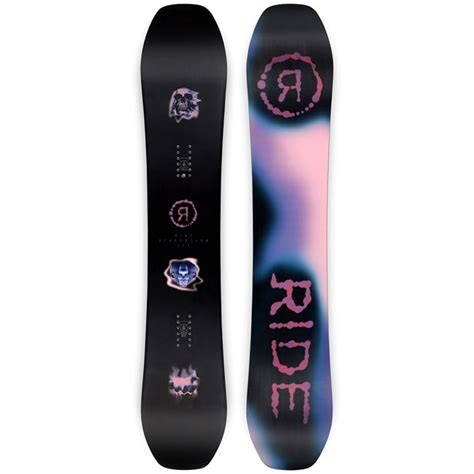
The Ride Algorythm has quickly become a favorite among the Ride team and staff. This high-end all-mountain Directional Twin Standard Camber stick is designed to do everything and the versatility of this shape is unmatched. From park jumps to pow lines to high-speed groomers, this board won't disappoint. The Algorythm will feel comfortable and familiar to snowboarders looking to up their game.
Let's delve into the specifics of what makes this board tick.
Construction and Technology
The RIDE Algorhythm Snowboard 2026 is packed with features designed to enhance performance and durability:
- Quadratic Sidecut: Improves turn initiation/exit and edge grip.
- Performance Core: Combines Aspen, Bamboo, and Paulownia wood to provide the perfect balance of strong and light.
- Carbon Array 5: Provides extra pop without adding stiffness.
- Urethane Weaves: Added underneath each binding area to improve compressive strength and prevent board breaks where it matters most.
- Slimewalls® Technology: RIDE’s exclusive Slimewalls® are forgiving and ductile, absorbing impacts rather than defending against them. The urethane in Slimewalls® smoothes the interaction with the snow, wood, or metal surfaces you may ride on, just like your skate wheels.
- Carbon Slimewalls®: This totally unique sidewall combines layers of Slimewalls® material and carbon strategically placed at the inserts out to the contact points in the tip and tail on a twin, and the back inserts to the contact points in the tail on a directional board. Unique 3D structure built around the urethane Slimewall® sidewalls.
- Linear Carbon: Widespread carbon stringers, placed at the binding zone, cross over each other and taper to the contact points on the tip and tail. This power distribution technology provides total board control, quicker turn initiation, and torsional rigidity.
- Biaxial Glass: USA-made pre-cured fiberglass optimizes glass to resin ratios to create the most consistent flex pattern possible.
- Stone Finish: Nice and flat base, no weird bumps or extra material.
Blending of three radii improves turn initiation/exit while providing the best grip possible. This power distribution technology provides total board control in every stance location. Widespread carbon stringers placed at the binding zone gather input from any stance width and all pressure angles. Rider input is then channeled to the opposing contact point for maximum board control. USA-made pre-cured fiberglass optimizes glass to resin ratios to create the most consistent flex pattern possible. Added underneath each binding area to improve compressive strength and prevent board breaks where it matters most.
Read also: Is the Ride Zero the Right Park Board for You?
Riding Experience
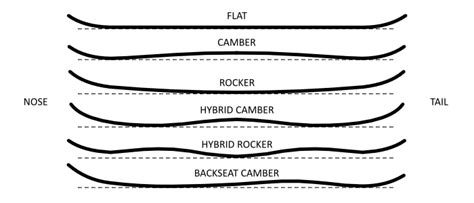
The Ride Algorythm has some of that old super damp feel that the older ride boards had mixed with some of that lively poppy feel the new ones have. The base had good glide to it and kept its speed well enough. The Ride Algorythm has mellow camber between the bindings, going to mellow rocker after. It’s stable one footing/flat basing and tracks well without being that catchy/locked in. It can skid turns really easily if you get off your game, and just about any ability level can have fun on it.
Here's a breakdown of its performance in various conditions:
- Groomers: Nice fast turn initiation happening here. It really snaps quickly edge to edge and it felt great in tight spots. There is enough camber to make a harder turn fun.
- Bumps: It can weave around bumps well but also power over them pretty well too.
- Hardpack: There is pretty solid grip with the Ride Algorythm and it held an edge pretty well in some hard patches I had. On one steeper run, I had to keep the edge on a really hard spot, and it held enough to get me through it. It wasn’t confidence-inspiring but it held. So all in all, the Ride Algorythm does a great job in just about anything except icy snow.
It felt more medium/stiff between the feet but then softer in the tip/tail. This is a great board for all-day resort riding.
2023 Ride Algorythm Snowboard Review (2024 Same Tech; Different Graphic) | Curated
Personal Experiences and Fit
Snowboards are a bit like pants, if they don’t fit...well, then they don’t work very well - so I’ll give a bit of a description for why this snowboard didn’t fit my needs, and maybe it can help potential buyers know if this fits what you need.
Read also: Lock & Ride Snowmobile Accessories
One rider's experience highlights the importance of finding the right fit:
I'm 43 yo, 5'9”, 160 lbs with US Size 10 boots (mondo 28.2cm), advanced-level rider. When I purchased this board prior to the 21/22 season, I had been riding the Yes Hybrid 157 (which I love), and I was looking for a quicker turning groomer day board to add to the quiver. I went for the Algorhythm because it (allegedly) had the Nidecker/Jones/Yes style hybrid camber that I love (or at least on paper it did). It was also well reviewed for carving, listed as medium flex, and had quick turn initiation. This was a mistake. I have since lost another 20 lbs, which has exacerbated the fact that the 157 just doesn’t fit me (even with my mid-widish boot size).
FLEX - As I mentioned, I was looking for a groomer board to play around on, so I was looking for a medium flex board. I may have gotten an anomaly, but my board is fairly stiff. It’s not Hovercraft stiff, but it is MUCH stiffer flexing throughout the board than my Yes Hybrid. Oddly enough, even though the Ride board is stiffer, I feel like my Yes Hybrid has much better pop than this board.
CAMBER - I mentioned above, one of my main reasons for wanting this board was that is listed as having similar hybrid camber to the Yes boards. Unfortunately, it does not ride this way. When placed next to my Yes boards, the Yes boards have significantly more camber between the feet, but they also have a tinge of rocker that starts further behind the contact points on the nose. The Ride board has significantly less camber, but the tiny amount of early rise rocker starts almost at the contact point, so it doesn’t really ride like hybrid camber. To me, this board rides much more similar to flat camber than it does hybrid camber. It lacks the pop of camber between the feet, and it doesn’t really spring out of turns. Comparing the float to the Hybrid is obviously not fair, and not what I bought the board for anyway, but it is worth mentioning that the lack of rocker in the nose/tail does greatly diminish how I thought this board would perform in deeper snow.
My main complaint is that the combination of stiffness and flatness (of camber) takes all the playfulness away from this board. I’ll be the first to admit that freestyle is the weakest part of my riding, but this board is just not fun for me when trying to butter, ollie, and play around. The flatness gives it an almost catchy feel, and unlike typical hybrid camber boards, this thing hates being on a flat base.
Read also: Is the Ride Jackson Boot Right for You?
Maybe if I had the appropriate size, I might have liked this board a little better. It has some really fantastic reviews, and came highly recommended from Mr. Biesty, which makes me think it comes down to this board really not matching my style well. I’m just not sure what niche this board fits. It’s a little too stiff for playfulness, but the stiffness doesn’t really shine in the jump line. I ended up trading for a Yes Hybrid 153 (best board I’ve ever ridden btw) after losing so much weight, and the Hybrid 153 rides WAY better in the park for me than the Algorhythm does (and better on the groomers, and better in the trees, and better on the steeps, and better...well you get it). By the same token, it does not have great float, even by all-mountain standards. One would think with the stiff side of medium-stiff flex, that it would be a hammer for carving, but it’s just okay - it just doesn’t have enough camber between the feet to give that rebound out of the turns. A different style rider may unlock the secrets of this board in ways that I just have not, but as for my own verdict, this was too much of the stereotype of “all-mountain” - it just doesn’t do any one thing well.
One other item to mention as a side note, is that the 21/22’ version of this board has a top sheet which chips something awful - I mean it pulls away from the edges without even being dinged, which is disappointing for a board at this price point.
Set-Up
One recommended set up includes:
- Stance: 21.5” Wide
- Angles: 15 front, -15 back
The 157 Ride Algorhythm matched up really well with a specific boot size.
Additional Observations
Firstly, the board has an impressive appearance; a flat black top sheet that appears to be abrasion resistant and minimalist art work for the style. The sidewalls are typical Ride quality and it rides damp due to the sidewalls + pre-cured top-sheet. Plenty of energy for high speed carving while having perfect compliment of tip/tail compliance for nimbleness even at low speed. The Algorythm brought the stability I wanted for a true all-mountain experience with great maneuverability in the trees while giving up little riding switch. Very happy for the changes especially considering it rides better set back for powder or riding surfy. This board can be paired with Salomon Highlanders set on the reference holes with Ride Lasso boots.
Flex Explained
The amount a snowboard flexes varies significantly between boards. Snowboard flex ratings are not necessarily standardized across manufacturers, so the flex may vary from brand to brand. Many manufacturers will give a number rating ranging from 1-10, 1 being softest and 10 being stiffest. Here at evo we have standardized the manufacturers' number ratings to a feel rating ranging from soft to very stiff. Generally you will find flex ratings of 1-2 as soft, 3-5 as medium, 6-8 as stiff, and 9-10 as very stiff. Flex ratings and feel may ultimately vary from snowboard to snowboard.
Snowboard Types
To better understand if the Ride Algorhythm is right for you, consider these snowboard types:
- All-Mountain Snowboards: These are designed for exploring the whole mountain. They feel at home on groomers, powder, park runs and almost anything in between. The vast majority of snowboarders choose all-mountain boards for their great versatility. If you’re just getting started or unsure of exactly what you need, an all-mountain snowboard is a great choice.
- Freestyle Snowboards: Freestyle or park snowboards tend to be a bit shorter in length and love terrain parks, rails, jibs, trash cans, tree trunks, riding switch (non-dominant foot forward), wall rides and more. Freestyle boards often feature a true twin shape, and are typically selected by those looking to ride the terrain park.
- All-Mountain Freestyle: A more versatile variant of a freestyle board is the all-mountain freestyle, which combines the versatility of an all mountain snowboard with the playfulness of a freestyle snowboard.
Skill Level
Whether you’re a progressing intermediate exploring new runs and terrain, or an accomplished rider seeking new thrills, the majority of skiers and snowboarders fall into this level. Intermediate to advanced skis and snowboards may be somewhat wider or stiffer than beginner-intermediate skis and snowboards, usually with a stronger wood core and sandwich sidewall construction. Intermediate to advanced boots and bindings range from softer flexing freestyle options to stiffer choices built for stability at speed.
Camber Profile
Rocker/Camber/Rocker shapes seek to give you both hard-carving edgehold on firm snow from camber underfoot with enhanced turnability and float in powder from the rockered tip and tail. This profile is increasingly popular for freeride boards designed primarily for soft snow.
| Feature | Description |
|---|---|
| Quadratic Sidecut | Improves turn initiation/exit and edge grip |
| Performance Core | Aspen, Bamboo, and Paulownia wood blend for strength and light weight |
| Carbon Array 5 | Extra pop without added stiffness |
| Slimewalls® | Forgiving and ductile, absorbing impacts |
| Linear Carbon | Total board control, quicker turn initiation |
tags: #ride #algorhythm #snowboard