In Minnesota, playing hockey is more than just a game; it's a cherished pastime and a rite of passage. Whether it's under the lights at a neighborhood park or inside one of the many small-town arenas, the rink serves as a vital gathering place for the community.
Before the establishment of formal recreation departments, the St. Louis Park Recreation Planning Committee played a crucial role in maintaining recreational activities through various donations and grants.
In April 1948, responding to the Planning Committee's request, a year-round Recreation Superintendent was appointed. The funding for this position came from the St. Louis Park Community Fund, which conducted its own fundraising efforts in the Park. The School Board and Park Board also contributed funds to support a limited Playground and Municipal Athletic Program. This arrangement continued, with increasing financial allocations, until 1955, when the Recreation Commission was established.
For seven years, the Recreation Department operated under the guidance and direction of the Recreation Planning Committee. During the last year, it has been operating under the Recreation Commission - a legal body created by an ordinance adopted by the School Board and the City Council.
When this transition took place, the St. Louis Park Community Fund (who had in the meantime joined the Hennepin County Chest) decided to divert the funds they had been contributing to the Recreation Department -to the COMMUNITY CENTER.
Read also: A Look at St. Thomas Hockey
The Community Center building belongs to the City of St. Louis Park, but the staff and supplies for running the program come from the allocation of funds given by the St. Louis Park Community Fund. The program and the staff at the Center are under the direction of the Superintendent of Recreation and the Recreation Commission. The repairs and maintenance are done by the Park Board because the Center is a city building.
In 1955, the electorate voted for the first time to support a Recreation Department in a school board election. Thus in 1955, the Recreation Commission came into being. At this time, the Community Fund changed the recipient of its funds from the Recreation Department to the Community Center.
Although the land for the St. Louis Park Community Center was purchased as tax-forfeited land in 1944, discussions about the Center started in earnest in 1949. A location was chosen on land on Lake Street that the State had given the Village for drainage purposes in 1944.
In 1950 citizens came together to draw up plans and raise funds, but then the Federal government ordered no new construction for “recreational, amusement or entertainment purposes.” This also put the kibosh on a new stadium for the Minneapolis Millers, who had planned to build on Wayzata Blvd.
A solution was found when the city bought the old Holy Family Church for $495, and it was moved (Doepke Building Movers) to 6212 W. Lake Street in 1950. One acre had been obtained from the State in October 1944. The building was opened as the St. Louis Park Community Center in November 1953.
Read also: Convenient Ski Services in Park City
In 1950 the old Holy Family Church was for sale for $400. The Park Board purchased it and moved it for $2,000 to park property at 6212 West Lake Street where it now stands. In the next two years the building got a foundation, windows, plumbing, light, heat, etc. We then asked for donations to furnish the building. Civic groups and individuals responded generously. The St. Louis Park Woman’s Club, the Lion’s Club and the St. Louis Park Community Fund gave the big start - then the Golden Agers swung into line. The list of donors to date is as follows: American Legion, War Mothers, Brookside Garden Club, Community Fund, Mrs. Sykes, John Billman, Mrs. Harriet Roseberry, Chester Hyland, Mrs. Janes, Thompson Lumber Co., Citizen’s State Bank, Sam Segal, Ecklund and Swedlund Contractors, Square Dancers, Dr. Walter Johnson, Mr. E. C. A common project in a fast growing community is a fine thing to weld people together.
A 75 by 25 ft. Patched together as it was, the old building was in bad shape, with crumbling ceilings, inadequate plumbing and heating, and an electrical system that could only take four or five lights at a time. The Center had become too small for the needs of the community.
In the 1950s, outdoor recreation in the Park consisted of many neighborhood parks, a swimming hole called Johnson Lake, and the St. Johnson’s Lake was the result of rock and gravel mining done by the Glen Johnson Contracting Co. The address of the business was given as 3724 Quentin Ave., between Excelsior Blvd. and 38th Street. Other names for it were “Glen’s,” “The Glen,” and “Johnson Lake,” depending on the era. The lake was 80-90 ft. deep and full of minnows and stolen cars (well, for sure minnows). All manner of activities took place here, not the least of which was illegal swimming. It was the place to be if you wanted to hang out, drink beer, and smoke cigarettes.
Work was done on Johnson Lake in 1964 to reshape the lakebed and create a sandy beach.
Mayor Ken Wolfe appointed a 10-member committee to study the need for a recreation center. The commission came back in 1965 with a recommendation that the Park build a $550,000 center with an indoor-outdoor pool but no hockey rink. It recommended a 20,000 sq.ft. building for meeting rooms, etc. The commission found the suggestion to link forces with the YWCA or Jewish Community Center infeasible, but did recommend coordinating with the pool facilities at Westwood Jr.
Read also: Ice Skating in Central Park
On June 3, 1969, Park held a referendum for the construction of the Rec Center, as designed by architect Carl Graffunder and Associates at a cost of just over $2 million.
In a controversial move, in March 1970, without voter approval, the Council voted to spend $1.7 million for the Rec Center and hired the firm Smiley and Associates to come up with a new design. Gone were some of the frills, like a community theater, handball courts, kitchen, etc. General construction was by Mikkelson Construction Co.
The area between Raleigh and Natchez south of 36th Street to Excelsior Blvd. had originally been platted as Westmoreland Park in 1911. The City bought up lots throughout the 1950s and ’60s, some for $100, some for maybe $500. Westmoreland Park was platted for a residential community, with the streets Westmoreland Ave., Quincy, and Ottawa drawn in, if not actually built. Before the Rec Center, the site was the Acme Field baseball diamond, sponsored by Acme Stone and Lumber. Also on the property, Holt’s nursery requested permission from the City to use the property for a woodlot and storage in exchange for landscaping.
In order to assemble the required pieces of land, the city had to buy several homes. The house pictured below, which was built in 1920, was moved to Mound in June 1970. It had had the address 5005 W.
The Rec Center opened for its first summer on July 14, 1971, slightly delayed by a strike of concrete truck drivers and cloudy weather. An estimated 1,200 attended on opening day. There were three pools; one was 50 meters long with 8 lanes. There was also a 12 ft. diving well with two boards, 1 meter and 3 meters. There was also a separate wading pool. The complex covered 40,418 square feet. The hockey arena had a seating capacity of 2,000. The director was Ken Vraa.
The Rec Center was dedicated at a hockey game on December 16, 1971. Its first address was 5005 W. St.
The origin of the St. Louis Skating Club can be traced as far back as November, 1932, as evidenced by an article in the November, 1932 issue of Skating magazine, the official publication of the United States Figure Skating Association. The article announced plans for the very first “Midwestern Championship to be held and sponsored by the St.
The first ever annual Midwestern Championship was held on January 30, 1933 at the Winter Garden Ice Rink, which was located on DeBalivere Avenue between Forest Park and Delmar Boulevard. The Winter Garden was home to the St. Louis Skating Club until 1962, when the rink was closed and demolished to make way for a new shopping center. Since that time the club’s skating headquarters have been Winterland on St. Charles Rock Rd. and Castle Oak in Chesterfield (now the Double Tree Hotel).
In 1979, the St. Louis Skating Club merged with the Gateway FSC, which was skating at the Brentwood Recreational Complex located on South Brentwood Boulevard. The newly merged club was renamed the Gateway/St. Louis FSC. Due to the rising popularity of figure skating nationally and in St. Louis, in May, 1997, the Board of Directors decided to return to the original club name. The St.
The St. Louis SC, member club of the United States Figure Skating Association, can legitimately claim its place as the predominant supporter of organized amateur figure skating in the St. Louis Metropolitan area.
Figure Skating National Championships in St. Louis happen. All of these activities result in progress and advancement of its skating members.
Our goal for St. Louis Park’s new Recreation Outdoor Center (ROC) was to design a structure that salutes Minnesota’s hockey roots while also operating as a year-round, multi-use facility. The result? A truly unique indoor-outdoor experience that offers ice in the fall and winter, and dry concrete and/or turfed field in the spring and summer.
As the seasons change, the facility transforms to accommodate a variety of community events. Like Minnesota Wild hockey practices and open skating in the winter. Soccer games on the turfed field in the spring and summer months. And movies, picnics and wedding receptions on the concrete floor on warm days. With expansive vaulted wood beams covered by a lightweight fabric roof and sides open to the outdoor elements, the possibilities are endless for St.
In addition to accommodating a multitude of events, the $8.5M facility was designed to maintain a low operating budget with innovative and sustainable technologies. The team created a comprehensive stormwater management plan to accommodate the structure’s heavy columns, refrigerated slab and unique roof structure. Along with our engineering partners, we designed pipes, roof drains and catch basins to collect rainfall and excess runoff, then directed to a new underground infiltration system.
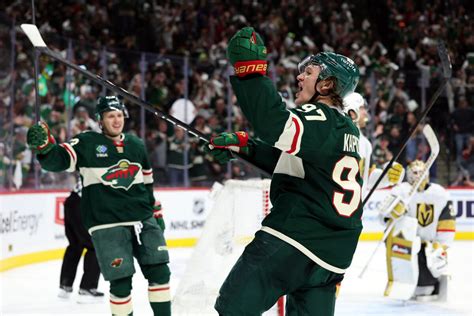
Minnesota Wild hockey practices
Here's a summary of key developments and features of the Recreation Outdoor Center (ROC):
| Feature | Description |
|---|---|
| Goal | Design a facility that honors Minnesota's hockey heritage while serving as a year-round, multi-use space. |
| Experience | Offers a unique indoor-outdoor experience with ice in fall and winter, and a dry concrete or turfed field in spring and summer. |
| Seasonal Transformation | Adapts to various community events, including hockey practices, open skating, soccer games, movies, picnics, and wedding receptions. |
| Design | Features expansive vaulted wood beams covered by a lightweight fabric roof and open sides to the outdoor elements. |
| Budget | $8.5 million facility designed to maintain a low operating budget using innovative and sustainable technologies. |
| Stormwater Management | Comprehensive plan with pipes, roof drains, and catch basins to collect rainfall and runoff, directed to a new underground infiltration system. |