Sights common to the Iowa countryside include rolling hills, fields of corn, beans and cows, tractors and family farms. Less common is that of Siberian huskies training to be sled dogs, but that is exactly what you might see in the rural area of Lucas County, where Cheyeanne Carter, musher and breeder of Cheye’s Crazy Colored Sled Dogs, breeds, raises and trains sled dogs while mushing along the way.
The sport of dog sledding has been around for thousands of years, with its popularity noted in the Arctic north but not well known outside of there. As colonization of Canada and the northern United States led to the introduction of dog sledding to areas, the less-snowy parts of the States mostly overlooked the use of dogs and sleds. The discovery of gold, however, changed that as dog sleds became a vital mode of transportation.
As a sport, the first recorded race took place in Alaska in 1908, the All Alaska Sweepstakes, a 408 mile race from Nome to Candle and back; it ran until 1917 with two races held decades later. Outside of Alaska, the American Dog Derby began in Idaho in 1917 and ran until 1961 and was reformed in 1993. Perhaps one of the most recognized dog races - The Iditarod Trail Sled Dog Race, began in 1973. It covers just under 1,000 miles from Anchorage to Nome and back. Midwestern races - such as the Lake Minnetonka Klondike Dog Derby and John Beargrease races - have been in existence since the 1970s and 80s.
Declines in mushers, however, leads to uncertainty about the sports’ future. With people not as involved anymore due to canceled or rescheduled races, Carter said it’s hard to keep the sport alive, but she hopes to get other people interested in it. She’s the only person in the area she is aware of who trains sled dogs, with most of her musher friends located in Minnesota. However, one’s location does not mean they can’t take up the sport if interested.
“Any dog can not necessarily be a sled dog, but can enter into these sled races,” Carter said, stating she’s seen different working breed dogs race.
Read also: Maximize Savings on Mount Snow Skiing
Inspiration and Early Beginnings
For Carter, breeding and training sled dogs is something she has been passionate about since she was a kid. She was inspired by the Disney movie “Snow Buddies,” which follows a group of puppies that accidentally find themselves in an in cream truck bound for Alaska, where they them team up with a sled dog to enter a race and various other adventures on their journey for home.
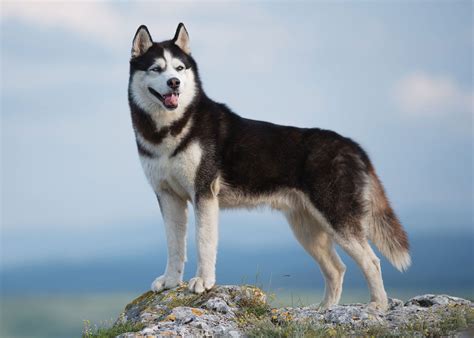
“When I watched it I thought, I’m gonna do that when I’m older,” Carter said. Studying the sport of mushing since she was about 10, Carter purchased her first purebred sled dog three years ago, a black and white male Siberian husky named Yukon.
In 2023, she purchased her first AKC-registered Siberian husky, Yuri, a red sable female. Last year, she added Halo - a black and white female - and Apache - a red and white male - to her pack. Today, both Halo and Yuri are expecting their first litter of puppies, sired by Apache.
Training and Racing
Carter has been training her dogs since they were puppies. Starting at about 8-weeks-old, she would put a baby harness on them and hook them up to the sled to follow her around her yard to get comfortable with the harness and pulling. From there, they worked their way up to pulling her on larger equipment.
Working the overnight shift at Altec, Carter’s training is mostly relegated to weekends and mornings. When she gets home from work, she works with one or two of dogs either together or separately on commands.
Read also: MLine Pro Deck: Three-Season Performance
“This season, we’re focused on puppies so not as much runs, but I am going to work more with the boys this season,” Carter said, adding the females back in once the puppies are weaned.
The dogs learn that when they see the drop line - the tether or rope that attaches the dogs to each other and implement being pulled - that they’re going for a run, same as when they see the bike or their harness.
The weekends are when the run work happens. Some days there is training in just the morning and evenings, other times it’s twice-a-day training. This is where Carter hooks the team up to the bike or to her four-wheeler. While a Siberian husky can pull up to three times their body weight, Carter doesn’t push them that far. Mushing from the four-wheeler, Carter drives at a low speed to help the dogs run at a good, constant speed. She utilized the Cinder Path Trail, found in the Chariton River Valley, for training when weather permits. And when it snows, out comes the sled.
“That’s when they really love it the most,” Carter said.
Most races require dogs to be at least 1 year of age to race, so thus far Carter has only been able to race with Yukon and Yuri. In their first race last year at the Byllesby Dryland Derby in Minnesota, the team took first in the two-dog scooter race and third in the two-dog bike race. Next year, Carter will be able to take all four dogs to races.
Read also: Summit County Ski Report
Carter’s goal is to work up to the John Beargrease Sled Dog Marathon’s 40 mile race that takes place in northern Minnesota. “I would consider it the Iditarod of the Midwest,” Carter said. In fact, the Beargrease’s 300 mile race is one of the approved qualifiers for the Iditarod. While Carter doesn’t think she will ever take her team up to the Iditarod, she did have the chance to go there in 2021 to watch the Iditarod’s 50th anniversary restart and official start. There, she even got to talk to Dallas Seavey, a musher who went on to win the 2021 Iditarod. But when it comes to her dogs, she said they generally are not used to that type of weather or racing in those kinds of weather conditions.
“My goal is, to eventually before the [Beargrease] 50th anniversary, I’d like to run eight dogs in the 40 mile race,” she said.
With races in other states of Wisconsin, Montana and Idaho, Carter’s main focus is on the Minnesota and Wisconsin. In addition to the Beargrease race, she also has her eyes on competing at a race at Lake Klondike in Minnesota and a four-dog sled race in Wisconsin. Being a sport that relies on snow, however, means that some races have been canceled in years past for lack of it.
The Team and the Kennel
Each of the four dogs has a position on the team. Yukon is the main leader with Halo in second. Lead dogs steer the team and set the pace of the run. Apache and Yuri are the wheel dogs, those who run nearest the musher and sled/bike/scooter. When Carter has more dogs, she will move Yuri to be a team dog, a position in between wheel and swing (dog directly behind the leader that “swings” the rest of the team for turns and curves) that adds power to the team, as she’s a good swing dog already.
Her kennel name, Cheye’s Crazy Colored Sled Dogs, comes with two meanings. “When I first got started, I wanted to stand out from other teams,” Carter said. To do that, she dyed the huskies’ tails, which earned her notice at races. The second meaning is that eventually, Carter would like to have all varieties of colored huskies, adding to the “crazy colors” part of the kennel name. With a black husky, a dark black husky and two reds, they also come in white, spotted, and white with black, red or gray.
She also aims to always keep Siberian huskies, not Alaskan huskies that are often mistaken for sled dogs. Where Siberian huskies are purebred, Alaskan huskies are a mix of different breeds. Appearance-wise, some difference include: Siberians are leaner than Alaskans; have blue, green, brown or heterochromatic eyes vs. typically brown; have longer coats in a variety of colors and Siberian’s ears are pointy, set high on their head while Alaskans are rounder and on the sides of the head.
“You can run with both. I like the traditional, this is kinda what they were bred to do… I like the originality of the original sled dogs, so I choose to do all purebred Siberian huskies,” she said.
As to how the dogs do in the Iowa weather, Carter said that while summer is not their favorite season, they stay cool with fresh water, getting sprayed by a hose, playing in baby pools, finding shade and shedding.
Alaskan Huskies: An Overview
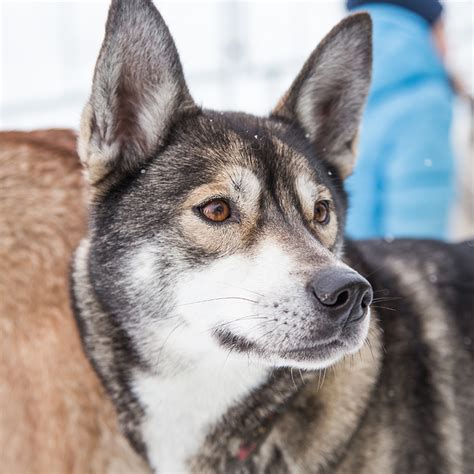
Alaskan Huskies are energetic, hardworking dogs bred to pull sleds. This breed isn’t officially recognized by the American Kennel Club (AKC), since they’re not an official breed but a mix of several breeds, including the Siberian Husky, Saluki, and Greyhound.
Huskies were originally bred by tribes of nomadic peoples for tasks like herding reindeer and pulling sleds. Some Huskies, like the Siberian Husky and Samoyed Husky, got their names from their home region.
Dog-sled racing with Huskies became popular in the 1890s and early 1900s and became a formal sport in 1908. Huskies had a reputation for doing a great job transporting goods, but they had some traits that held back their athletic potential. For one thing, their bulkiness slowed them down. So breeders started to experiment by adding other dog breeds to their line of racers.
“People tried to breed out obstinance while keeping the big double coat and strong feet and the attitude toward work. They wanted to breed in more appetite and trainability and get the perfect mix of traits that make a good sled dog,” Piano says.
While some do have a similar look to their Siberian cousins, others definitely take after their hound ancestors instead. However, Alaskan Huskies do share some general traits. Most have pointed ears and long, wolfish snouts.
The size of an Alaskan Husky depends on what job they were bred for. Sprint racers tend to be bigger, weighing between 45-65 pounds. Mid-distance or long-distance racers are lighter at 35-45 pounds.
They were bred to run all day, every day, and they need a human who can keep up with them. If you can direct that energy toward a task like racing or hiking, you’ll have one of the most steadfast workout buddies around.
Alaskan Huskies have an incredible work ethic, especially if you put them in a group. They also get along tremendously with other dogs.
“Consistency is huge when training an Alaskan Husky,” says Piano. These dogs also need good discipline, which means clear communication and firm commands with consistent training. But of course, even though they’re working dogs, they still need affection to strengthen your bond!
Alaskan Husky Care and Health
Alaskan Huskies shed twice a year in winter and spring. Typically dogs wear their nails down through friction with the ground-but snow is so soft that an Alaskan Husky’s nails can grow without stopping.
“Through the winter, we have to trim nails about every 10 days or so,” Piano says. This kind of maintenance helps prevent injuries to your dog’s paws, so it can’t be skipped.
Due to their genetic diversity, Alaskan Huskies as a whole don’t have many inherited health issues. Some dogs may carry a gene for Alaskan Husky encephalopathy, a neurological condition that interferes with their ability to see, walk, and eat. This condition is rare, though. Generally, Alaskan Huskies are very healthy and often have a long lifespan.
Piano says her sled dogs run 20 miles a day, 6 days a week. That level of fitness lends itself to longevity. Of course, injuries can happen while a dog is pulling a sled. Piano says it’s important to train new sled dogs slowly, gradually increasing their mileage so they can build endurance. If a dog strains a muscle and doesn’t get time to heal, that can become a recurring injury throughout their career, she says.
Pet parents who want to adopt young Alaskan Huskies need to be willing to spend plenty of time outside every day. These dogs are very pack-oriented, so they do best in multi-dog households.
“They really need a dog companion,” Piano emphasizes. They can do well with kids too, though you’ll need to teach them how to play gently with small children. Just proceed with caution if you have a cat.
Alaskan Huskies do best in the environment they grow up in. If you raise a dog to pull sleds all day, they probably won’t do well transitioning to a cramped apartment with a bunch of furniture they can’t climb on.
According to Piano, older sled dogs tend to make the transition to pet life much more easily than young dogs. If you’d like to adopt an Alaskan Husky, you can start by researching rescues near you. Just keep in mind this working breed isn’t officially recognized, and they tend to have a mix of parent breeds, so they may not be as widely available as other standardized dog breeds.
Alaskan Huskies can cost anywhere from several hundred dollars to a few thousand dollars, depending on their age, background, and health history. Younger Alaskan Huskies from a racing line will cost more.
| Breed | Origin | AKC Recognition | Typical Weight | Common Traits |
|---|---|---|---|---|
| Siberian Husky | Siberia | Yes | 35-60 lbs | Lean, blue/green/brown eyes, longer coat |
| Alaskan Husky | Alaska | No (mix of breeds) | 35-65 lbs | Pointed ears, wolfish snout, high energy |