Whistler Blackcomb is a world-renowned ski resort nestled in the stunning landscapes of Whistler, British Columbia, Canada. Known for its vast terrain and exceptional facilities, it attracts skiers and snowboarders from around the globe. Let's delve into some interesting facts that make Whistler Blackcomb a truly unique destination.
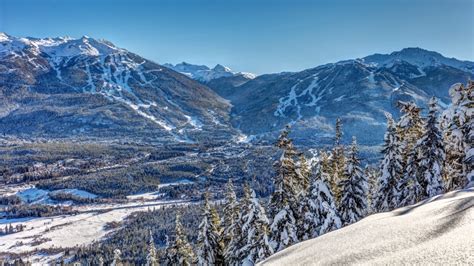
Whistler Blackcomb is often considered the largest ski resort in North America by many measures. Together, Whistler and Blackcomb form the largest ski area in North America at 8,171 acres (33 km2). It also boasts the greatest uphill lift capacity, ensuring that skiers and snowboarders spend more time on the slopes and less time waiting in line.
A History Rooted in Olympic Aspirations
Whistler was originally conceived as part of a bid to win the 1968 Winter Olympics. Although the bid failed, construction started anyway and the resort opened for the first time on January 15, 1966. Blackcomb Mountain, originally a separate entity, opened for business in December 1980. The two resorts underwent a period of intense rivalry through the 1980s and 1990s, with constant upgrades and improvements that were unseen at other resorts. By the mid-1990s, the area was repeatedly named the best resort in many skiing magazines.
Whistler Blackcomb was the centrepiece of a renewed bid on the part of nearby Vancouver for the 2010 Winter Olympics, which they were selected in July 2003. Whistler Blackcomb then hosted the alpine skiing events. This included downhill, Super-G, slalom, giant slalom, and super combined races for both Olympic and Paralympic athletes. Britt and Michael Janyk, both title holders of the Canadian Skiing Championships, competed on the same team at the 2010 Olympic Winter Games and, having skied at Whistler Blackcomb since childhood, felt right at home. The siblings have been living and training in Whistler since their teens, and are local heroes to Whistler residents.
There are a total of 13 Olympic and 5 Paralympic ski and snowboard athletes from the Sea to Sky Corridor who competed in the 2010 Winter Games. The #1 ski resort in NA, by Condé Nast Traveler's annual reader choice awards, is home to one of the longest ski seasons in North America. This season marks more than just another winter. It’s a celebration of 60 years of first tracks, bold summits, and unforgettable stories carved deep into the Coast Mountains.
Read also: Renting Snowboards in Whistler Blackcomb: What You Need to Know
Peak 2 Peak Gondola: A Record-Breaking Connection
A defining feature of Whistler Blackcomb is the Peak 2 Peak Gondola. This special gondola connects Whistler and Blackcomb mountains high up in the sky. Before 2008, the only connection between the two mountains was via the village. But on December 12, 2008, the Peak 2 Peak Gondola opened. This gondola connects the two mountains high up, at about 1,800 meters (5,900 feet). It's 4.4 km (2.7 miles) long. It also has the longest unsupported span for a lift of its kind, at 3.02 km (1.88 miles).
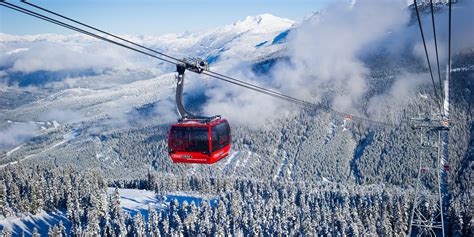
The PEAK 2 PEAK Gondola has become a canvas for the artistic visions of three First Nations artists: Chief Janice George and Willard 'Buddy' Joseph of the Squamish Nation, and Levi Nelson of the Lil'wat Nation.
Whistler Blackcomb Opening Day 2024/2025
Terrain and Lifts: A Skier's Paradise
The ski areas at Whistler and Blackcomb are situated on two ridge-lines running roughly northwest to southeast. The two are separated by a deep valley with Fitzsimmons Creek running along the valley floor. The ski runs generally run northwest towards the village area, or into the valley area between the two ridges.
Whistler Mountain is the basis of the southern of the two ridges, on the right when looking at the Whistler-Blackcomb ski area from Whistler Village. It has a summit elevation of 2,184 meters (7,165 feet). The total vertical drop is 1,530 meters (5,020 feet) and 4,757 acres (1,925 ha) skiable inbound terrain. Whistler is served by a total of 19 lifts; 2 gondolas, 5 high-speed detachable quad chair lifts, 4 high-speed detachable sixpack chair lifts, 2 fixed grip triple chair lifts, 1 T-bar and 7 carpet lifts. It also hosts the drive station for the Peak 2 Peak Gondola, connecting it with Blackcomb mountain to the north.
Blackcomb Mountain is the northern ridge, on the left when viewed from the village. It has a lift-serviced elevation of 2,240 metres (7,350 feet) at the top of the 7th Heaven chair - Blackcomb Mountain itself is higher at 2,440 meters (8,010 feet), but unlike Whistler, the peak is not lift-served. Blackcomb has a higher skiable vertical, at 1,565 meters (5,135 feet), but less in-bound skiing area at 3,414 acres (1,382 ha). It is served by 15 lifts; 2 gondolas, 6 high-speed quads, 1 fixed-grip triple and 7 surface lifts (1 T-Bar and 5 carpet lifts), as well as the end-station for the Peak 2 Peak. Blackcomb is the location of the world-famous "Couloir Extreme" run, which is one of the top ten steep in-bound runs in the world, according to Skiing Magazine.
Read also: Whistler Blackcomb Conditions
Together, the lifts can carry 65,507 skiers per hour. The primary skiing terrain starts about one-third up the mountains. Ski-outs to the valley are usually possible during the months of December through April. The mid- and upper- areas are serviced by 10 high-speed detachable chairs and 5 fixed-grip lifts made by Lift Engineering, Doppelmayr and Poma. Two T-bars service the Horstman Glacier and the Whistler alpine regions and take skiers to the entrance to Blackcomb Glacier.
You have over 200 runs to choose from, from the mellow beginner slopes, to gladed tree runs and advanced steeps, cliffs and chutes. There are also five terrain parks and a half pipe to play on. Whistler Blackcomb has some of the most varied and advanced terrain in the world, making it the home of many professional athletes.
Whistler Village: A Vibrant Hub
Whistler Village, which is part of the Resort Municipality of Whistler, is situated at the base of the Whistler Mountain Village Gondola and Blackcomb Excalibur Gondola. The village incorporates community services, shops, entertainment venues, restaurants, bars, hotels, condominiums and vacation properties. Whistler Village, widely recognized for its livable design, formed the basis of similar Tyrolian-inspired developments at their expanding series of resorts, as well as other resorts that hired Intrawest to build similar developments on their behalf.
This village behaves more like an Austrian outpost than any other ski town in North America. If you've been to St. Anton or Zürs or anywhere else where ski lifts, German-speaking people, neon pants, large umbrellas and overflowing glasses of Stiegl mingle, then you have an idea of how this place carries on. The parties here dwarf what passes for a bash in other North American ski towns. Dining-wise, this may be the best ski town for food, period. A wide range of choices can satisfy the picky gastropubbing burger hound all the way up to somebody who dines only at Michelin-starred restaurants.
The village isn't old, but it pulses with the life and activity of a dense European town square. Cars aren't necessary here. Just some Loonies, waterproof boots and caffeine. Whistler’s massive village caters to all tastes, from five-star dining at Araxi to funky Japanese at Harajuku and comfy Mexican feasts at The Mexican Corner Restaurant. It’s also the best place to grab a snack after getting down from the hill, with options like classic poutine from Zogs Dogs Inc or a sweet treat from Rocky Mountain Chocolate Factory. Whistler Blackcomb offers more choices than nearly any other mountain destination in the world.
Read also: Whistler Blackcomb Ski Passes
Snow Conditions and Preservation
Being part of the coastal range brings Whistler-Blackcomb a lot of storms at all times of the winter, but the storms can often be warm, resulting in capricious displays of precipation that can change rapidly as one travels from the base of the resort to the top (which, vertically, is nearly a mile). At Whistler/Blackcomb 18.0% of winter days see 6 inches or more of snow, 35% of winter months see 90 inches or more, and only 11% of months see less than 30 inches.
Snow preservation in the north facing high alpine is excellent, with packed powder conditions common up there well into April. Spring snow is generally better at 55% north-facing Whistler than at 30% north-facing Blackcomb. Nonetheless Whistler closes in late April, while the upper sectors of Blackcomb continue through most of May, with ski camps and limited public skiing in June.
Whistler/Blackcomb skiing resembles the Alps in many ways. Wet or sketchy conditions in the base village do not reflect where most people are skiing 3,000 - 5,000 feet higher. Lower lifts can be downloaded at the end of the day if there is rain or difficult snow low on the mountain.
Evolution and Ownership
The two previously separate ski areas of Whistler and Blackcomb were integrated into one operation in 1997 after Intrawest merged with Whistler Mountain Ski Corporation. Ticketing, pass, and access control systems for the two ski areas were fully integrated in 2003. Over the next decade, Intrawest expanded by purchasing additional ski resorts across North America, before expanding into golf and other resorts as well. In August 2016, the American company Vail Resorts bought Whistler Blackcomb Holdings for $1.39 billion.
Key Facts
| Fact | Details |
|---|---|
| Location | Whistler, British Columbia, Canada |
| Skiable Area | 8,171 acres (33 km²) |
| Vertical Drop (Whistler) | 1,530 meters (5,020 feet) |
| Vertical Drop (Blackcomb) | 1,565 meters (5,135 feet) |
| Number of Lifts | 34 |
| Peak 2 Peak Gondola Length | 4.4 km (2.7 miles) |
Whether you're a seasoned skier or a first-time visitor, Whistler Blackcomb promises an unforgettable experience amidst breathtaking scenery and world-class amenities.