Herbert Paul Brooks (August 5, 1937 - August 11, 2003) was an American ice hockey player and coach.
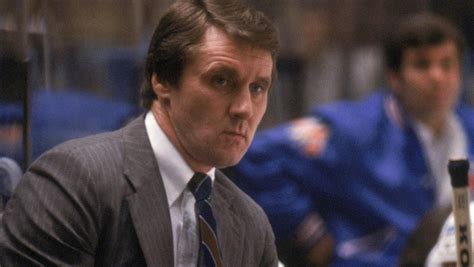
Herb Brooks
Known as a motivator, Brooks was selected to coach the American team at the Lake Placid 1980 Olympic Winter Games. It was there that a team full of minor leaguers and college players pulled off perhaps the biggest upset ever in sports.
“The strength of hockey in the United States is a testament to Herb Brooks and the historic Olympic triumph in 1980,” NHL Commissioner Gary Bettman said.
Brooks was inducted into the United States Hockey Hall of Fame in 1990 and the IIHF Hall of Fame in 1999.
Read also: Features of Custom Hockey Gloves
Early Life and Playing Career
Brooks was born in Saint Paul, Minnesota, to Pauline and Herbert David Brooks. As a player, Herb Brooks won a Minnesota high school ice hockey state championship and played for the University of Minnesota Golden Gophers.
Brooks continued his ice hockey career with the University of Minnesota Gophers from 1955 to 1959. He was a member of the 1960 Olympic team, only to become the last cut the week before the Games started. Three weeks later, Brooks sat at home with his father and watched the team he almost made win gold in Squaw Valley. Afterwards, Brooks went up to the coach, Jack Riley, and said, "Well, you must have made the right decision-you won".
He made the American Olympic squad for both the Innsbruck 1964 Olympic Winter Games and Grenoble 1968 Olympic Winter Games, but neither team won a medal. Lou Nanne, who played with Brooks on the 1968 team for the United States, helped recruit Brooks to become a coach.
Coaching Career
Miracle on Ice coach Herb Brooks
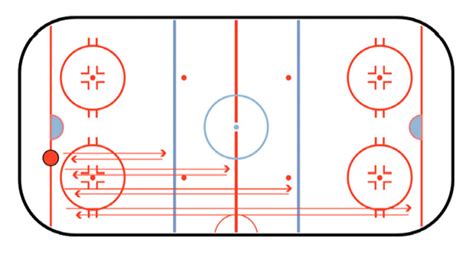
Hockey conditioning drills
Read also: The story of Craig Needham
After retiring as a player, Brooks first tried his hand at selling insurance. He was brought on to coach the freshmen at his alma mater, the Minnesota Golden Gophers in 1970. He coached the Minnesota Junior Stars from 1971 to 1972. Brooks was hired as head coach of Minnesota in 1972. He would lead them to three NCAA championship titles in 1974, 1976, and 1979.
Brooks had been hired due to lobbying from Nanne and USA Hockey executive Walter Bush (after Jack Parker declined the position). After coaching Team USA at the 1979 World Championship, Brooks was named general manager and head coach of Team USA for the 1980 Winter Olympics. Hand-picking his team, he named several of his Minnesota players to the team, as well as several from their rivals, Boston University and the University of Wisconsin-Madison.
To compete with the Soviet Union team specifically, Brooks stressed peak conditioning, believing that one of the reasons the Soviet team had dominated international competition was that many of their opponents were exhausted by the third period. Brooks got Jack Blatherwick to work with him on testing the team in conditioning, as he had done for Brooks with testing the 1978-79 Minnesota Golden Gophers team on the ice and in a laboratory setting. The two worked on developing practice plans and drills to get the team in the best condition possible.
Then, working with team doctor George Nagobads, shifts would be timed on the bench to make sure no one would be on the ice longer than 40 seconds to keep them ready to endure the Soviets in crunch time. The schedule for the team would be 63 games long, considerably longer than previous US Olympic teams. One particular game inspired a famed exercise when the team had a 3-3 tie with Norway. Brooks had his team do a sprint from the goal line to the first blue line and then back before then getting them to go to the red line and back, then making them go from the goal line to the second blue line before finally having them go from the goal line to the other goal line, which was called a "Herbie". It lasted for over an hour, even after the rink lights were turned off.
Miracle on Ice
The American team went into the February 22 game for the Olympics having not lost once (with a tie to Sweden). They were tied 2-2 after one period and trailing 3-2 entering the third period before rallying with two unanswered goals to win 4-3.
Read also: Inside Aaron Ness's Career
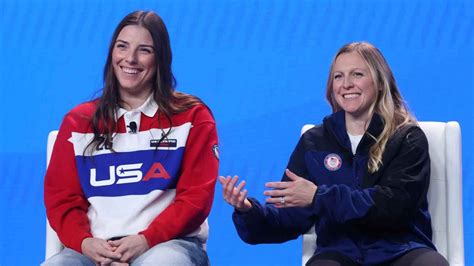
US Olympic hockey team celebrates victory
The victory was labeled by Sports Illustrated in 1999 as the greatest moment in 20th century sports.
Brooks thus did not get his gold medal and 20 years later, as the coach of the American "Miracle on Ice," he would again be denied that honor because the coaches do not receive medals.
Post-Olympics Coaching Career
After his team's Olympic gold medal win, Brooks moved to Switzerland to coach HC Davos in the National League A. From 1981 to 1985, he coached in the National Hockey League for the New York Rangers, where he became the first American-born coach in Rangers' team history to win 100 games.
Brooks was offered the position to coach at St. Cloud State University, an NCAA Division II school (as presided by university president Brendan McDonald, who had ideas of elevating the program to Division I in the future) in May 1986 and turned it down initially. However, he was convinced by John Mariucci (head coach at Minnesota for Brooks in the late 1950s) to take the position because Mariucci (who died the following year) felt Brooks could get the school to think about elevating itself to Division I in the future; at the time, the state of Minnesota had just two Division I programs for hockey.
Brooks took the job with the condition that the team would elevate itself from its status at NCAA Division II to Division I level along with start work to try to build a new arena. Brooks spearheaded funding for an arena with sheets of ice in Olympic size in his one season with the team. With practices dedicated to the power play and penalty kill on a constant basis as opposed to the norm of dedicating to it once a week, the team won 25 games, a team record for over a decade and won the Northern Collegiate Hockey Association tournament to reach the NCAA Division II Tournament for the first time, where they went all the way to the Third Place game; Brooks later called it the most enjoyable year he had had in coaching.
Brooks left the team after the season, with his assistant Craig Dahl stepping in as head coach, where he would coach for the next 18 years before being succeeded by Bob Motzko, who was also an assistant to Brooks at St. Cloud State. Brooks returned to the NHL to coach the Minnesota North Stars in 1987 on a two-year contract.
Brooks was hired to coach the Utica Devils of the American Hockey League on July 11, 1991, which raised speculation he could be tapped to coach the NHL affiliate New Jersey Devils (who had four head coaches since the 1987-88 season) in the future. This came to pass on June 5, 1992, when he was announced as the new head coach of the NHL Devils to replace Tom McVie. He stressed a need for youth and speed to build a winner but argued with players such as Claude Lemieux, who was both the leading scorer on the team and one that Brooks labeled midway through the season as a "cancer". A perception of having little support from general manager Lou Lamoriello and owner John McMullen did not help matters for Brooks. The team won 40 games and finished tied for third place in the division but lost to Pittsburgh in five games.
After leaving the Devils, Brooks became a scout for the Penguins. Twenty-five games into the 1999-2000 season in December 1999, Brooks was hired by general manager Craig Patrick to replace Kevin Constantine as head coach of the Penguins. On January 13, 2000, Brooks confronted Colorado Avalanche announcer John Kelly for suggesting that Matthew Barnaby faked an injury after being hit by Alexei Gusarov with 27 seconds left. He was suspended two games for that confrontation on January 18, having been suspended indefinitely since January 15. The night before Brooks got suspended, Gusarov was suspended two games for the hit.
Brooks stepped down after finishing the season to be a scout again while Ivan Hlinka was named the new coach in 2000. In 2002, Brooks turned down an offer to potentially coach the New York Rangers.
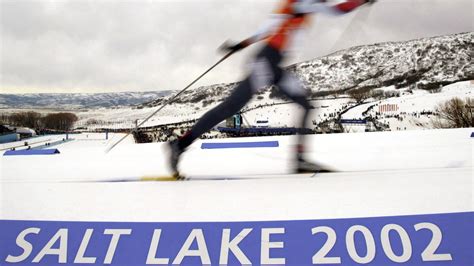
2002 Winter Olympics in Salt Lake City
Brooks also coached multiple National Hockey League (NHL) teams, as well as the French team at the 1998 Winter Olympics. He coached the men's team to a silver medal at the 2002 Winter Olympics in Salt Lake City. The bringing in of Brooks in 2001 to coach the team along with Patrick as general manager saw a handful of players retained from the 1998 team, which had lost three of four games. Brooks had asked the NHL to cancel its 2002 All-Star Game to get days for players to practice before the Olympics, but this was denied by the league, which gave the teams one day to work together before the tournament. The 2002 team defeated the Russians in the semi-finals on the road to a silver medal, losing in the gold medal game to Canada.
Legacy
“He made us better men, better husbands, better fathers. He just cared. The biggest compliment I would give Herb … if someone were to ask every one of us who his favorite was, we all would’ve said ourselves.
Brooks went on to coach in the NHL with the New York Rangers, Minnesota North Stars, New Jersey Devils Pittsburgh Penguins and coached St. Cloud State University for one season. Brooks then returned to the NHL, working in the Pittsburgh Penguins front office.
Coaching career
| Years | Team | Role |
|---|---|---|
| 1970-1971 | Minnesota | Assistant |
| 1971-1972 | Minnesota Junior Stars | HC |
| 1972-1979 | Minnesota | HC |
| 1980 | US Olympic Team | HC |
| 1980-1981 | HC Davos | HC |
| 1981-1985 | New York Rangers | HC |
| 1986-1987 | St. Cloud State | HC |
| 1987-1988 | Minnesota North Stars | HC |
| 1991-1992 | Utica Devils | HC |
| 1992-1993 | New Jersey Devils | HC |
| 1995-2002 | Pittsburgh Penguins | Scout |
| 1998 | France Olympic Team | HC |
| 1999-2000 | Pittsburgh Penguins | HC |
| 2002 | US Olympic Team | HC |
| 2002-2003 | Pittsburgh Penguins | Director of Player Personnel |
Death and Memorials
On the afternoon of August 11, 2003, six days after his 66th birthday, Brooks died in a single-car accident on Interstate 35 near Forest Lake, Minnesota. It is believed that he fell asleep behind the wheel before the accident, and neither drugs nor alcohol was responsible.
In 2004, Disney released a film about the 1980 Olympic team called Miracle featuring Kurt Russell playing the part of Brooks. Karl Malden had previously played Brooks in a 1981 television film called Miracle on Ice. Brooks served as a consultant for the Disney film during principal photography, which was completed shortly before his death. At the end of the movie there is a dedication to Brooks. It states, "He never saw it.
On the 25th anniversary of the Miracle on Ice, the Olympic ice arena in Lake Placid, New York, where the United States won the gold medal, was renamed Herb Brooks Arena. The National Hockey Center at St. In 2006, Brooks was posthumously inducted into the Hockey Hall of Fame in the Builders' category. Brooks's original expressions were known by his players as "Brooksisms", some of which were included in Miracle.
“You were born to be a player. You were meant to be here.