Innovation in the snowmobile world is very present every year, manufacturers introduce new technologies. This is especially true for engines. After presenting us more powerful engines, manufacturers are now offering new entry-level engines and even engines designed for teenagers and children. Here, I will focus on two-stroke engines. Another article will deal with 4-stroke engines.
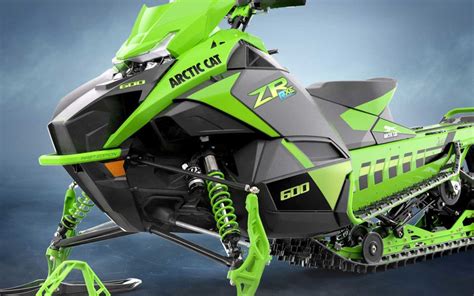
Arctic Cat 2-Stroke Engines
The American manufacturer offers a nice variety of 2-stroke engines. These engines were designed and are manufactured by Arctic Cat at their St-Cloud plant.
397cc Engine
This 397cc engine was introduced in the new Blast family in 2020. Arctic Cat cut its 794cc twin-cylinder engine (C-TEC2) in half, so to speak, to design this entry-level engine. By the way, it’s not just teenagers who have a great time riding Blast snowmobiles.
6000 C-TEC2 Engine
Introduced in 2014, the 6000 C-TEC2 engine is a 599cc twin-cylinder engine that makes about 125hp. It offers good performance for an engine in this class.
8000 C-TEC2 Engine
The 8000 C-TEC2 was introduced in 2018. It was greatly anticipated back then. In short, it is a 794cc twin-cylinder engine that generates around 160hp.
Read also: LEGO City Arctic Snowmobile
Polaris 2-Stroke Engines
Since 2015, Polaris only offered snowmobiles powered by 2-stroke engines. Thus, the variety of engines is quite large. Moreover, for 2023, Polaris introduces a new 900cc engine to its 2-stroke engine family.
Liberty 550 Engine
The Liberty 550 engine has proven its reliability and versatility over the past 20-25 years. It is the last carbureted 2-stroke engine in the industry. It is also the last fan-cooled 2-stroke engine. This engine had a resurgence in popularity when it found itself on the Indy platform. In the EVO lineup, the Liberty 550 develops approximately 55 hp, while on the other full-size models, its power is around 60 hp.
650 Patriot Engine
Introduced in 2021, the 650 Patriot engine is built with the same technologies as the 850, which means that it offers increased reliability, according to the manufacturer. In addition, it uses less gasoline and oil. As for power, it develops around 131 hp. This engine is available in several models in the Polaris line and is a very good buy. For many snowmobilers, it would be an excellent alternative to the 850 Patriot depending on their real needs.
850 Patriot Engine
This engine develops about 154hp and was used extensively until the arrival of the 850 Patriot in 2019. Since 2021, it is only offered in the Titan line.
850 Patriot Boost Engine
This engine has been the talk of the town over the past year. In 2022, it was offered exclusively on mountain models. However, for 2023, this engine is also offered on the Indy VR1 and Switchback Assault. The approximate power of this engine would be very close to 185hp. If this estimate is true, the 850 Patriot Boost would be the most powerful production 2-stroke engine offered in the snowmobile world.
Read also: Installing Handguards on Your Arctic Cat
Patriot 9R Engine
It’s fair to say that this engine was highly anticipated when it was introduced in the 2019 lineup . Indeed, at the time, there were many rumors circulating within the industry. Polaris did not disappoint its fans by introducing this engine. The latest addition to the Polaris family of engines, the Patriot 9R makes a remarkable and, above all, unexpected entrance. This engine comes straight from the racing world, but Polaris reserves it for mountain use. In fact, it offers more punch than the 850 Patriot, but without the extra weight of about 20 lbs of the 850 Boost. The estimated power of this engine is 180hp at sea level. So, since the Patriot 9R is naturally aspirated, its power will be affected by altitude unlike the 850 Boost. However, for use below 2,000 meters, the 9R retains an almost equivalent power-to-weight ratio.
Ski-Doo 2-Stroke Engines
All 2-stroke engines in the Ski-Doo fleet are manufactured by Rotax. The engines offered cover the needs of all types of snowmobilers. In fact, the uninitiated can get 40 hp snowmobiles while those looking for high performance can opt for engines that can reach 180 hp.
600 EFI Engine
For 2021, Ski-Doo has made a big sweep of its entry-level two-stroke engine offering. In fact, it has replaced all of its carbureted engines with the new 600 EFI. With 85hp, this engine is more economical, more powerful and cleaner than the ones it replaced. Plus, it meets EPA standards.
600 EFI (NEO/NEO+)
In its 2023 snowmobile lineup, Ski-Doo has thought about people who want to start snowmobiling. Thus, the manufacturer introduces the NEO and NEO+ snowmobiles. These vehicles are powered by adapted versions of the famous 600EFI engine launched in 2021. Thus, the NEO snowmobiles have 40hp while the NEO+ have 55hp. The NEO/NEO+ are available in two models, the MXZ and the Summit.
600 H.O. E-TEC Engine
Launched in 2009, the 600 H.O. E-TEC marked a turning point for Ski-Doo. It was the industry’s first direct injection engine.
Read also: Arctic Cat 440 Performance
600R E-TEC Engine
In January 2018, Ski-Doo announced the 2018 Ski-Doo MXZ 600R E-TEC. This model was powered by the second generation of the 600 E-TEC, the 600R E-TEC. This is the engine that will be in the Ski-Doo lineup in 2023. This second version of the engine provides 5 more hp, while improving its performance. It develops 125-126 hp.
850 E-TEC Engine
In fact, in 2017, Ski-Doo launched its 2nd generation E-TEC engine in the 150-170 hp class. This new engine increased the displacement from 800cc to 849cc. In addition to the 10 extra hp it provides, the 850 E-TEC offers better acceleration and recovery performance.
850 E-TEC Turbo Engine
In 2020, Ski-Doo introduced the industry’s first turbocharged 2-stroke engine. Available only in mountain snowmobiles, this engine produces 165hp of power up to an altitude of 8000 feet. In 2023, Ski-Doo improves this engine by allowing it to generate no less than 15 additional hp. However, unlike Polaris, this turbocharged two-stroke engine will not be available in trail or hybrid models.
Yamaha 2-Stroke Engines
Considering the late launch of the 2023 models, this article will focus on the 2022 Yamaha offering. For the past 15 years, the manufacturer has been focusing all its efforts on 4-stroke engines.
397cc Engine
In 2020, Yamaha introduced a 397cc single-cylinder 2-stroke engine. This engine is used in the new Venom snowmobile family. This engine develops 65 hp of power.
535cc Engine
Present in the Yamaha lineup since the 1980s, the 535cc engine is a sure bet. This engine received a major update when it returned to America in 2017. In 2021, this engine replaced the Arctic Cat 600cc engine that had been available in the Transporter since 2020. In addition, Yamaha introduced it in the Mountain Max marking the manufacturer’s return to the world of mountain sleds.
A Look Back at Arctic Cat's Engine History (2013)
My original plan was to post an image of each of the six engines that power 2013 Arctic Cat snowmobiles. So I’ll start with that. The 120cc 4-stroke for the Sno Pro 120. This baby produces 125 hp, 95-ft.-lbs. of torque and… oops… wait a minute, I’m getting ahead of myself.
For adult-sized snowmobiles, the introductory/lowest-hp engine is the 570cc fan-cooled 2-stroke twin. Rated at 62-63 hp, it’s found in the F570, T570 touring and Bearcat utility machines.
Next up, the 500cc liquid 2-stroke twin, which produces something in the neighborhood of 80-85 hp. I’ve been a big fan of this non-APV-valve engine since it came in the Sabercat. Other than at elevation, it’s powerful enough for half of all Arctic Cat riders.
Half of all Arctic Cat riders??? Yep. Meaning most youth, most family-type riders and even hard-chargers who ride the Sno Pro 500. Granted, the Sno Pro-riding hard-charger is able to ride with the bigger iron due in large part to the capability of the chassis, but the fact that the 500 is light and decent in the mid-range means that it’ll go toe-to-toe with nearly anything when in the woods.
There’s a 40-hp jump from the 500 to this, the 1100 naturally-aspirated (NA) 4-stroke twin. As everyone here knows (and has an opinion about), this is the 120-hp option for Arctic Cat, going up against both 4-stroke and 2-stroke options from the other brands.
Thanks to improvement in nearly every category of performance from the ProCross chassis (compared to the Twin Spar), I’ve grown to enjoy this engine for its inherent strengths: quiet; good mpg; 120-class hp; wonderful reliability. As a 4-stroke its significantly heavier than a 600 2-stroke. And because of the 360-degree firing order, the sound quality isn’t inspiring.
It got something of a bad-rap when it debuted in the Z1 in part because that whole sled was too heavy, and a lot of people just dismissed it from that point onward. 2-stroke is truly a sweatheart, which is a conclusion that took me a couple years to arrive at. Its 160 ponies can be truly intoxicating, in part because they hit instantly. I ponder the future of snowmobile engines and wonder: will we really want/demand MORE performance than this? I know history would answer “yes,” but… really!?!
The reason I fell in love with this baby is because for all its outstanding thrill factor, it can be equally tame and easy to ride for non-hardcore riders. For the 125-hp rider who won’t ride anything but a 2-stroke, yet who worries about this having too much power, I can assure you that it’s manners will erase that fear.
Yet, as others have written, it does come with additional costs compared to a 600 twin, both in terms of up-front cost and insurance.
From the hp standpoint, this is the mac-daddy of the entire snowmobile industry. And as anyone who has experienced a 2012 Arctic Cat will attest, it’s amazingly-fast. Maybe even crazy-fast, at least at lower elevations and on hardpack.
The numbers 177 hp/121-ft.-lbs. torque sound impressive, but it isn’t until I actually felt them for the first time that I truly understood. And even after many days of experiencing this engine over the past few years, I’m still as impressed and WOWed as I felt the first time.
Is it the perfect engine? Not for me. As a 4-stroke that gets the extra heft of the inter-cooled turbo, it definitely weighs enough. And, in the ProCross/ProClimb, the turbo waste-gate sound is too loud for my liking.
I was thinking about this and was reminded of the 900/1000 triple-triple 2-stroke that powered the old Thundercat. I had pretty much the same complaints about that engine that I do the 1100 Turbo. It’s true that I loved riding these engines for a day or two, but they weren’t the kind of engines that I wanted to spend my own money on.
Back in the late 1990s I always opted for the 500/600 twins. And that’s still the engine category I’m most attracted to. So while pondering this recently, I grabbed my 1998 Arctic Cat snowmobile brochure, just to look at the power choices available 15 years ago.
Here’s the list:
- 60 fan (Kitty Cat)
- 340 fan
- 440 fan
- 440 liquid twin
- 500 liquid twin
- 550 liquid twin
- 580 liquid twin
- 600 liquid twin
- 600 liquid triple
- 800 liquid triple
- 1000 liquid triple
That’s 11 engines, compared with the six we have for 2013.
Of course we can thank (or despise) the EPA for that, as the onset of emissions requirements has all but forced the consolidation of resources to produced fewer, cleaner engines.
Yes, economics plays a HUGE role in the reduced selection of engines. The snowmobile industry is currently selling about half as many snowmobiles as it did in 1998. It wouldn’t be financially viable to develop/certify/produce 11 different engines for the current market size.
Yet even if the market were back to 1998 numbers, it still wouldn’t make sense to have 11 different engines. There’s too much overlap (there were four engines in the 500-600 category alone… which I think we can agree is at least two too many).
Were I the Grand Wizard in charge of all things Arctic Cat back in 1998, I can see grabbing the red marker and cutting the engine options. Here’s probably what I would have been left with:
- 60
- 440 fan
- 500 liquid twin
- 600 liquid twin
- 600 triple
- 1000 triple
That’s six engines total, the same number we enjoy today. Yes, compared to the original list of 11 engines, there would be some slight gaps in the line-up, but nothing detrimental.
The same is true today. Were I again given the green light to be Grand Wizard, I’d add a 600 2-stroke twin to the current line and call it a day.
These are interesting times for Arctic Cat. It will be fascinating to see what unfolds in 2014 and 2015 in the wake of Cat divorcing themselves from Suzuki engine supply. And I think the effort that’s in place for that is why we haven’t seen more, new engines to date.
The days of whipping up hair-splitting engine displacements to satisfy niche categories are over, at least as far as I can see into the future.
Arctic Cat: Company Overview
Arctic Cat is an American brand that makes snowmobiles and all-terrain vehicles (ATV's) manufactured in Thief River Falls, Minnesota. The company was formed in 1960.
Arctic Cat was formed by snowmobile pioneer Edgar Hetteen in 1960 after leaving his previous self-started business, Polaris Industries. The company has produced many other product lines including snowblowers, generators, mini bikes, personal watercraft, along with two-wheel drive vehicles.
The brand's headquarters has relocated several times, but Arctic Cat continues most of its manufacturing, along with snowmobile engineering, in Thief River Falls, Minnesota. The company also manufactures engines at a facility in St.
On January 25, 2017, it was announced that Textron would acquire Arctic Cat for $247 million in a cash transaction. The all-terrain vehicles and side-by-side models branded as Arctic Cat were either discontinued or rebranded as Textron.
Textron announced in December 2024 that manufacturing operations in Thief River Falls and St. On April 24, 2025, Arctic Cat announced that it was acquired by former Arctic Cat executive and current Argo President Brad Darling, along with an investment group that owns a significant stake in Argo.
The next month, in May of 2025, Arctic Cat announced that it would continue production of snowmobiles in both the Thief River Falls, MN and St. Arctic Cat currently sells multiple models such as the M Alpha One, M Mountain Cat Alpha One, with the new 858 model alpha one and many more. Many models are configurable.
tags: #arctic #cat #snowmobile #engines