When it comes to bucket-list skiing, the Swiss Alps are at the top of most people’s lists. Their magnificent scenery, powdery slopes, and world-class ski resorts are what ski dreams are made of. If skiing (or snowboarding) is your hobby of choice, consider paying a visit to one of Switzerland’s snowy slopes. They’re known as the best in the world - after all, royalty, celebrities, and other high-rollers ski there for a reason.
It is possible to ski & snowboard in Switzerland every day of the year - just go to Zermatt, its always open (well mostly anyway)! One can be safe in the knowledge it is possible to ride a ski lift & schuss a piste every day of every month of the year. But seriously, we always get asked, ‘When is the best time to go skiing in .......?’ (insert country name)! It is always the second question asked after, 'Where is the best place to ski in ……..?’(insert country)!
Skiing in the Swiss Alps is an amazing adventure, and it’s one that you want to time correctly, to make sure that you have optimal skiing conditions without too much crowding on the slopes.
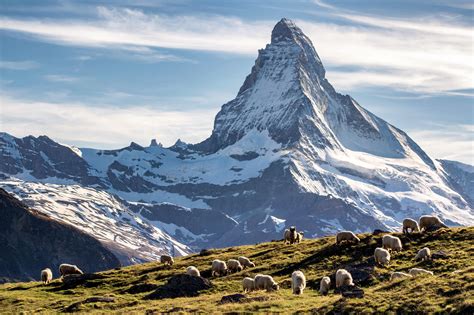
The Matterhorn, one of the most iconic peaks in the Swiss Alps.
Factors to Consider
When planning your ski trip, consider these factors:
Read also: Comprehensive Review: Men's Swim Goggles
- Crowds: Avoiding peak times can significantly enhance your experience.
- Snow Quantity & Quality: Optimal snow conditions are crucial for a great ski trip.
- Open Lifts & Terrain: Ensure that the lifts and terrain you want to access are open.
- Price: Prices can vary significantly depending on the time of year.
- Accessibility: Consider how easy it is to reach your chosen resort by train or other transport.
Factors 2 & 3 are often beyond our control due to mother nature. Factors 4 & 5 are what they are - the price is high or not (online dynamic lift pass pricing is making a difference to costs in Swiss resorts), & trains go there or they don’t! But crowds (Factor 1) can make even the greatest powder snow day a relative disappointment.
Best Times to Ski in Switzerland
With several notable exceptions, ski season in Switzerland is generally October through March. December, January, and February are typically the best months for skiing, as the temperatures tend to be below freezing and the snow quality is at its best.
December holidays and the month of February tend to be the busiest times, though, so expect crowds and plan accordingly.
Year-Round Skiing
When planning your alpine ski extravaganza, it’s helpful to know that there are two Swiss ski resorts that remain open year round, or nearly year round: Zermatt and Saas-Fee.
- Zermatt Ski Resort: Built on an extremely high-elevation glacier that is perpetually covered in snow, and is able to offer skiing 365 days a year.
- Saas-Fee Ski Resort: Also on a high-elevation glacier, and its runs are open from mid-July through April each year.
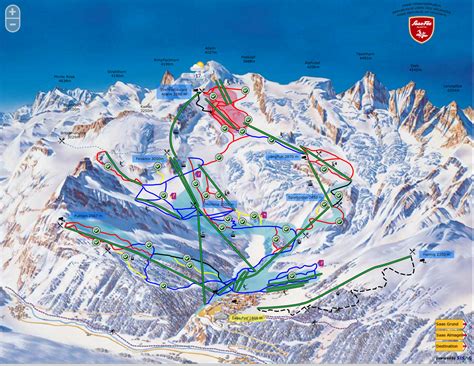
Skiing in Saas-Fee.
Read also: Ultimate Hockey Audio Guide
Specific Months
- October: At the start of October, the Swiss glaciers are starting to recover from increasingly hot summers. The year-round ski resort of Zermatt will start the month with around 20km of ski trails open & then gradually increase as the month goes on. Later in the month, Zermatt’s ‘Matterhorn Glacier Paradise’ interlinked Italian neighbour, Cervinia, will start skiing on its glacier. Saas Fee has its extensive glacier skiing & terrain parks open. Other Swiss glaciers that usually open in October include high up on Titlis at Engelberg. By the middle of the month the awesome freeride mountain of Diavolezza will open some limited terrain, but mainly for race team training on the upper chairlift. Watch the rocks off-piste early in the season - lots of sharks lurking under the snow at Diavolezza.
- November: Through November, many ski resorts are beginning operations as conditions allow, although most will only be on weekends and with limited lifts/terrain. The glacier up on Glacier 3000 near Gstaad & Les Disblerets should start up early in November. Zermatt & Saas Fee are open. By the end of the month it is just getting cold again for the snow to drop right down into the low valleys. Winter is back. Yay!
- December: Early December can see huge snowfalls. Christmas in Switzerland in a village at the snow fields is gorgeous, quintessential Europe. Prices are up & crowds are aplenty, but it can be a magical time to visit, especially as a family. Expect decent snow mostly everywhere in the higher elevations. An amazing Swiss Alps family Christmas can be had at Aletsch Arena, neighbouring Belalp or lovely Brigels. Zermatt & Saas Fee are still open & absolutely stunning during the Christmas festive season.
- January: January is the best time to ski both the popular Swiss ski resorts & those with low elevation bases (1000m+). Temperatures are super-cold & the snow quality can be sublime, although avalanche dangers increase too. All resorts should have wonderful snow and the valley runs will be open. As it is quieter after the first week of January, it can be a good time to hit the off-piste & freeride routes at some of the Swiss mega-resorts like in Arosa-Lenzerheide, Crans-Montana, Laax, Davos-Klosters, 4-Vallees, Jungfrau, Portes du Soleil plus St Mortiz’s Corvatsch or Corviglia.
- February: The most popular month of the year for skiing, February can be a good time to seek out those many ‘forgotten’ Swiss Alps resorts. Visit places like Anzere (near Crans Montana), Arolla-Evolene (between Verbier & Zermatt), Bivio (near St Moritz but the polar opposite of …….. St Moritz!), Klewenalp (near Engelberg), Leukerbad-Torrent (near Crans Montana), Ovronnaz, Rosswald, Scuol, Savognin (between Lenzerheide & St Moritz), St Luc Chandolin, Torgon (at the far north end of the incredible Portes du Soleil), Unterbach and a plethora of others. In the Italian Speaking south of south, check out Airolo (easily accessed by train) & Bosco Gurin (harder to get too). In the Valais, one could do worse than to spend extended time at the fabulous Val d’Anniviers resorts of Grimentz Zinal, St Luc Chandolin & Vercorin. Alternatively, in Graubuenden, when the snowpack is deep, the long freeride descents at Disentis are super. For freeriders, the peak of Säntis in north-eastern Switzerland has wonderful descents from its incredibly snowy peak. Generally, the start of the next ‘high season’ will coincide with the beginning of the various school holiday periods throughout the month. Know that the price of lift tickets and lodging are higher accordingly, even in the smaller resorts. Zermatt & Saas Fee are still open.
- March: Everywhere is glorious at the start of the month, but the high-altitude Alps locations are the best in the last two weeks.
- April: April can bring some huge snow dumps to the higher elevations but expect lots of milder temperatures and ego corn snow. The vast majority of ski resorts will close in the first two weeks of April. The sun is out, snow is soft, days are long, and partying is on. Turn an eye to a ski tour along the Urner Skiers Haute Route between Andermatt and Engelberg or the many peaks above Saas Fee. A few resorts are still spinning lifts early in the month before closing until late autumn. Andermatt, Engelberg Corvatsch & Diavolezza chief among them. Zermatt is still open!
- May-September: It is getting hot & high-altitude glacier-based skiing is the ’only show in town’. Lifts start early & skiing will finish just after lunchtime. Lean times (and getting leaner as the glaciers rapidly melt due to climate change), but Zermatt & Saas Fee are still open! Early September can be the toughest time to find some white stuff to slide on. Thankfully, Switzerland has Zermatt & Saas Fee & they are still open. Temperatures are getting colder by the end of the month, and in the high Swiss Alps, winter is just around the corner.
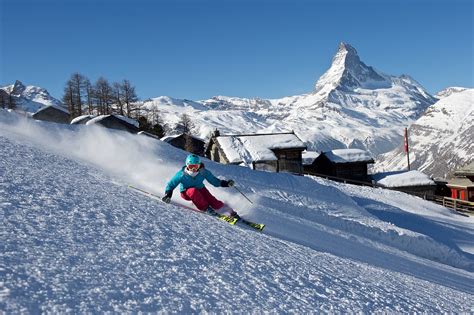
Zermatt Ski Resort offers year-round skiing.
Tips for Avoiding Crowds
If you’d prefer to avoid long lines at the chairlift and on the slopes, then you’d do best to avoid peak ski times and the high price tags that come with them. Early and late in the season tend to be lower volume times, so visiting October through November, or March through April should be a quieter time (providing the weather cooperates). Mid to late-January tends to incur a moderate volume of skiers on the slopes, but when February rolls around, the crowds will be in full swing. Much of Switzerland has school and regional holidays that fall in February, so the locals tend to hit the slopes in greater numbers. Once February ends, things slow down and tend to remain low through the end of the season, with the exception of the Easter holiday, whenever it may fall.
- Ski Early: It should go without saying that sleeping in until 10am & starting skiing at 11 is not a good crowd avoidance strategy. Dress for the cold, get to first lifts & let it rip for a couple of hours of bliss.
- Lunch Strategy: Have an early lunch & then hit it again when everyone else heads in for theirs.
- Weekends: As a general rule, any self-respecting Powder hound is skiing backcountry on weekends & avoiding the inbounds at resorts. HOWEVER, Saturdays are often a changeover day for those staying on week-long packages & so many do not ski or board. If the nearby local population isn’t large, it can be surprisingly good at some resorts on a Saturday - go figure! Sunday is a regular family ski time in Switzerland & generally, the busiest day of the week.
Top 5 Ski Resorts in Switzerland - Travel Video
Other Swiss Ski Resorts
Here are some other Swiss ski resorts to consider:
- In the ultra-snowy Valais region of Switzerland, this high-elevation resort boasts more than 85 miles of pistes (marked ski runs) and 61 slopes at varying levels of difficulty.
- Also in the snowy Valais region, this resort is on the smaller side and is best suited to intermediate skiers and above.
- In the also-snowy alpine region of Vaud, this trifecta of interconnected ski villages offers 67 pistes totalling more than 50 miles.
- Also located in the Vaud region, this interconnected ski territory is linked by a complimentary shuttle bus, which makes it easy to hop from one area to another within the resort.
Additional Tips for Traveling in Switzerland
- Transportation: The best way to travel through Switzerland is by train, as the Alpine region has an extensive railway network.
- Currency: Switzerland is not a member of the European Union, so unlike many of their neighboring countries, they don’t use the Euro - their currency is the Swiss Franc.
- Power Adapter: Bring a universal power adapter with you for charging personal items on your trip, as power requirements in Switzerland vary.
- Languages: The most common languages spoken in Switzerland are German, Italian, and French, and will vary by town and region.
Read also: Ski Goggle Clarity and Comfort