There are many good snowboard boots available today. The Burton Moto BOA boots are a comfortable ride and a great choice for beginners or those who want a soft, comfortable boot for occasional use. If you're looking for an affordable option to get into snowboarding, the Burton Moto BOA might be the perfect fit.
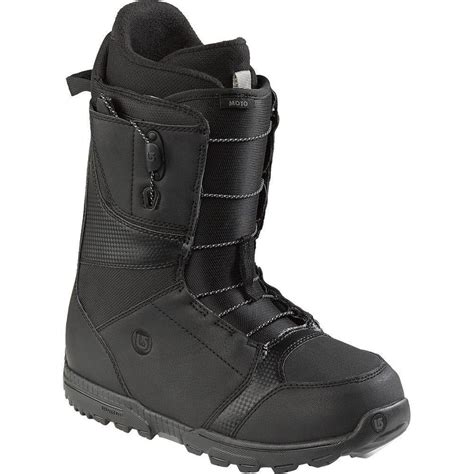
In this review, we'll delve into the features, performance, and overall value of the Burton Moto BOA, helping you decide if it's the right snowboard boot for you.
Key Features and Benefits
The Burton Moto has been around for a while. These lightweight, comfortable boots are super easy to wear and are ideal for cruising the resort. Here's a closer look at what makes these boots stand out:
- Comfort: Burton's imprint liners are some of the best in the game, coming from decades of experience with millions of customers.
- Lightweight: As soon as you pick up the boots you can feel how light they are. It’s not every day you can have really light boots that also hold up well.
- Footprint: Burton’s footprint is almost a full size smaller on the outside but the same size on the inside. So a size 10 boot is still a size 10 on the inside but more like a size 9 on the outside. This really reduces toe drag and Burton is the best in the industry when it comes to this.
- Flex Retention: The 2014+ Burton Moto has a little more flex retention than past years thanks to a little articulation in the ankle.
Performance and Ride Feel
Once riding, the big thing that stands out is the boot’s stiffness, or rather lack thereof. It’s by all measures a softer boot, and for many could be the biggest dealbreaker right there. But that said, for those just learning or those who simply want to be in cruise mode, these boots will do well.
The warmth and feel of the ride are unaffected and all you have is a bootless likely to catch the snow on a hard turn or in steep terrain. It’s gone speed lace in 2010 and 2011 to make it a good choice for beginners.
Read also: Stretch Slim Jacket Performance
Snowboard Boot Guide: How To Find The Perfect Fit!
Pros and Cons
Like any product, the Burton Moto BOA has its strengths and weaknesses. Here's a quick overview:
Pros:
- Affordable
- Comfortable
- Lightweight
- Easy to adjust with single BOA dial
Cons:
- Softer flex may not be suitable for advanced riders
- Single BOA doesn't offer a super tight or custom fit
- Traction: Nothing great and the single mold EVA foam isn’t good on hard to icy snow.
Who is This Boot For?
The Burton Moto BOA snowboard boots are an ideal boot for someone who is price-conscious and is a more casual rider. People wanting to just get better at snowboarding and have a boot that they can rely on will find this boot an ideal choice to start out on and begin progressing. They might outgrow the boot when it comes time to hit big jumps and do fast turns in variable conditions.
Technical Aspects Explained
When choosing snowboard boots, several technical aspects can impact your overall experience. Here's a breakdown of some key features:
Fit and Flex
The most critical factor of a boot design is how it fits. It should feel snug without any pressure points. The flex rating plays a role in how versatile the boot is. The softer it is, the less likely it is to be an everyday queen.
Read also: From Garage to Global: Burton's Story
Lacing System
A huge variety of systems are out there. Double, single, and triple BOA. Traditional laces. And a hybrid of the two, as well as speed laces and power straps. Each system has tradeoffs between speed, comfort, personalization, rigidity, dependability, and durability.
Liner Quality and Heel Hold
Most of our favorite boots have heat-moldable liners. Liners have unique internal harnesses for security, so we test how easy those are to enter and exit, as well as the degree of security. The heel hold is a huge factor. We need our heel to stay put and for cushion to be in all the right places.
Comfort and Cushioning
These points go up in a boot depending on the comfort and design of the footbed, as well as the midsole cushioning and the overall breathability of the liners and exterior.
Outsole Grip
The outsole is the rubber located on the underside of the boot, which grips the snow and ice. If you’re in the market for a backcountry or splitboard mountaineering boot, pay attention to this feature.
Snowboard Boot Categories
The three most common categories are all-mountain, freeride, and freestyle, followed by a fourth small category that’s growing in popularity: backcountry. Most backcountry boots are freeride boots with backcountry-specific features, but they’re not the only boots that work in the backcountry - far from it.
Read also: Choosing the Right Snowboard
Hard Boots vs. Soft Boots
The vast majority of snowboarders are looking for soft boots - these are traditional snowboard boots crafted from materials like leather, rubber, and various fabrics, and they’re traditionally considered the best boots for snowboarding. Hard boots are crafted from plastic and closely resemble ski boots.
Step-in Snowboard Boots
Step-in snowboard boots are designed to be used with step-in snowboard bindings. For some riders, these systems minimize time while strapping in and also help make the boot’s connection with the binding consistent across runs.
Sizing and Fit Tips
It’s important to determine your correct boot size for a particular boot, which can vary slightly from brand to brand. When you wear snowboard boots, your toes can lightly graze the front of the boot, but you don’t want your toes to curl under. Be sure to go to your local snowboard boot shop to try on boots across different brands so that you have an idea of which size boot for each brand fits your feet.
Many skiers won’t shop for ski boots without visiting a trusted boot fitter. Snowboarders, on the other foot, don’t place as much value on boot fitters, which is, in our opinion, a huge mistake. Boot fitters can point you to the right boots for your skill level and foot shape, or, if you already have a pair of boots, help customize the fit to the shape of your foot.
Heat-Mold Liners
Heat molding liners is a great way to speed up the break-in process. Finding the right boot fitter is tough, as many boot fitters are skiers, and you want an expert boot fitter who also is an expert snowboarder.
Matching Boots, Bindings, and Boards
One important thing to consider when shopping for snowboard gear is that there is interplay between boots, bindings, and boards. Always match your boot size to the binding size. When a boot fits in a binding correctly, you’ll have better performance.
tags: #burton #moto #snowboarding #boots