Choosing the right boots and blades as an adult beginner is essential for comfort, safety, and progress. This comprehensive guide focuses on budget-friendly figure skates for adult beginners (with a few premium picks for comparison), covers both recreational skates and those for aspiring competitive skaters, and shares tips on proper fit, stiffness, and what to avoid.
Why the Right Skates Matter
Using the wrong equipment can stall your learning. Starting out with quality skates may save you money in the long run. Cheap, low-quality skates often have floppy materials and low-quality blades that fail quickly or cause frustration. Skaters on forums often warn: “Avoid going too cheap - you’ll end up frustrated and replacing them soon”.
Support and Safety
Adult skaters typically carry more weight and strength than children, so flimsy “toy” skates won’t cut it. A good boot provides the ankle support and stability you need to stay safe. Without enough support, a heavier adult’s ankles may wobble or collapse, leading to falls or injuries.
Comfort Is Key
If your skates give you blisters, numb toes, or cramping, skating quickly becomes not fun. A well-fitted boot feels like a snug handshake on your feet - secure in all the right places, without painful pressure points. When your feet feel good, you’ll enjoy skating more and progress faster. This is especially important for adults, who may not “push through pain” the way kids do.
Progress and Confidence
A boot that’s too soft will break down fast and leave you unsupported; too stiff and you can’t bend your knees or learn proper technique. The right boot for a beginner strikes a happy medium, giving enough support to hold you up, but enough flexibility so you can bend and improve your skating skills.
Read also: Ultimate Ski Trousers Guide
Understanding Stiffness
Choosing skates involves more than picking a pretty boot. “Stiffness” refers to how resistant the boot is when you flex your ankle. Boots are often given a stiffness rating number by manufacturers - higher numbers mean stiffer (more supportive) boots.
Recreational vs. Competitive Stiffness
A purely recreational skater can use a softer boot than a skater who plans to do jumps. For example, entry-level boots like the Jackson Mystique or Artiste have stiffness ratings around 15-30, which is sufficient for basic skating moves. If you’re a beginner aspiring to do single jumps, you’ll want a boot in the next stiffness tier. Many coaches recommend models like the Riedell 223 Stride (around stiffness 50) as a great balance of support and flexibility for adults starting single jumps. In general, adult skaters might choose a boot slightly stiffer than a child of the same level, to accommodate the extra strength/weight of an adult.
Finding “Just Right”
The goal is a boot that’s not a limp noodle on your feet, but not a concrete block either. If you’re unsure, err on the side of a little more support for an adult. Many experienced skaters note that the lowest-tier skates are often too soft for adults. For instance, Reddit users mention that Jackson Mystique is “the cheapest that is safe to learn on” but was outgrown (literally broken down) within months by a strong adult skater. They often advise starting one model up, like the Jackson Artiste or Elle, so you don’t out-skill your skates too quickly. On the flip side, if a boot is too stiff and made for more advanced skaters, a beginner might struggle to bend properly - one skater found the Jackson Elle (stiffness ~35) “almost too stiff at first” when she was learning basic skills.
Boot Ratings Quick Reference
To give you an idea, here are typical stiffness ratings for popular models (higher = stiffer):
- Jackson Artiste ~25
- Jackson Elle ~30-35
- Jackson Freestyle ~40-45
- Riedell Emerald ~25 (light support)
- Riedell Diamond ~35-40
- Edea Overture 48 (medium)
- Higher-level boots like Edea Chorus or Jackson Premiere go 70+ (far beyond what a beginner needs)
Proper Fit: Snug but Not Painful
Even the best boot will feel terrible if it doesn’t fit your foot properly. Sizing in figure skates doesn’t always match your street shoe size, so getting measured or trying on is important. A good skating boot should fit snugly like a glove, with your toes just slightly touching the end when standing straight (they’ll pull back a bit when you bend your knees). There should be zero sloppiness or heel lift - your heel must stay locked in when laced. However, snug doesn’t mean “cutting off circulation.” You shouldn’t have severe pain or numbness. If your feet start to go numb within 10-15 minutes of skating, the boots might be too tight or you laced too tightly.
Read also: Essential Ski Equipment
Adult Foot Shapes
Adult feet come in all shapes - narrow heels, wide toes, high arches, bunions, etc. Different brands cater to different foot shapes. For example, Jackson skates often have a wider toe box, Riedell boots tend to have a narrower heel and more tapered toe, and Edea boots are known to fit a wide front foot but with a snug heel. That means if you have wider toes, a Jackson or Edea might feel more comfortable out of the box, whereas someone with very narrow heels might favor Riedell’s fit. Try on a few brands if possible to see what feels best on your feet. Also, most brands offer multiple width options (e.g., medium, wide).
Heat-Molding
Many modern boots (especially in the mid-range and up, like Jackson’s Fusion series, higher-end Riedells, and all Edeas) are heat-moldable. This means a skate technician can warm the boot in a special oven and then mold it to your foot’s shape while you wear it. Heat molding doesn’t change the size, but it can relieve pressure points and customize the fit around bumps or arches. If you have tricky feet (bunions, one foot bigger than the other, etc.), definitely take advantage of heat molding on boots that allow it.
Trying On
When you go to try skates, wear thin, synthetic socks or skating tights (avoid thick socks; they can cause rubbing and a loose fit). Lace the boots fully and stand, walk, do a couple of knee bends. Your feet should feel supported from all sides but not painfully crunched. If something feels really off (like a hot spot or your toes curling), speak up - a good skate fitter can sometimes adjust the boot or recommend a different model.
Blades: Sets vs. Separate
For beginners, an important decision is whether to buy a skate set (boots that come with blades attached) or to buy boots and blades separately.
Beginner Skate Sets
Most entry-level skates come as a set with factory-mounted blades, and this is perfectly okay (even preferable) for brand new skaters. These stock blades - often something like a Mark II, Mark IV, or equivalent - are generally good enough to take you through your basic skills and even small jumps. All the popular beginner models (e.g. Jackson Mystique/Artiste, Riedell Pearl/Emerald, etc.) include blades out of the box This is cost-effective and convenient.
Read also: Finding Budget-Friendly Ladies Ski Pants
When to Buy Separate Blades
As you progress and start doing more advanced moves (or if you’re an adult beginner who is very serious from the start), you might eventually upgrade to buying boots and blades separately. By the time you’re working on more difficult jumps or entering competitions (intermediate level), many skaters choose a higher-level boot and pair it with a higher-quality blade like the MK Professional or John Wilson Coronation Ace. These blades have better materials, sharper edges, and designs that aid in jumping and spinning. However, there’s no need for a beginner to jump into expensive blades right away. The stock blades on beginner skates are sufficient until your skills outgrow them. As one guide put it: Beginners: sets are fine.
Budget Consideration
If you do opt for separate boots and blades, remember to factor in the blade cost and mounting fee. A decent beginner blade purchased separately might cost $100-$200 on its own. Also, you’ll need a professional to mount the blades to the boots for proper alignment. For most adult beginners on a budget, a ready-to-skate set is the way to go initially. You can always upgrade blades later.
Common Mistakes to Avoid
Looking for beginner-friendly ice skates? Here’s the deal: the right skates can make learning fun and comfortable, while the wrong ones can lead to frustration.
What kind of ice skates to buy for beginner adult skaters
Buying Unknown or “Too Cheap” Skates
It’s tempting to go on Amazon or eBay and grab a $50 pair of pretty white skates. Don’t do it! Skates from non-specialist brands (or department store brands like American Athletic) are often not built for real skating. They may have floppy vinyl boots and low-quality blades that won’t hold an edge. These skates can actually hinder your progress and even be dangerous (blades that won’t stay sharp or boots that don’t support can cause falls) Seasoned skaters warn that going too cheap will cost you more in the long run. Stick to reputable brands that coaches recommend (we’ll list many below).
Too Stiff “Expert” Boots
The opposite mistake is buying an elite boot thinking it’s “better.” High-end boots (the kind used by skaters doing double/triple jumps) are very stiff and usually sold without blades - overkill for a beginner. An adult beginner in, say, Edea Ice Flys or Graf competitive boots will struggle because they can’t bend properly to do basic skills. Avoid boots with stiffness ratings far above your level. As a beginner, you shouldn’t be in a boot meant for axels and doubles (even if you plan to get there eventually - wait until your skating justifies it).
Skipping Professional Fitting
If possible, visit a pro shop or skate retailer to get fitted. Trying on multiple brands with a knowledgeable fitter is ideal - they can guide you on size, width, and model. Going in blind (or just guessing your size online) can lead to a lot of back-and-forth and pain. If you must order online, do your research on sizing (each brand has a size chart; measure your foot length and width) and consider shops that allow returns or exchanges. Some online retailers even offer virtual fittings.
Ignoring Pain or Poor Fit
Lastly, once you have your boots, don’t ignore red flags. If you experience persistent foot pain, numbness, or your ankles are wobbling even when tightly laced, something is wrong. You may need to get the boots adjusted, heat-molded, or, in some cases, switch to a different model that suits you better. A little discomfort during break-in is normal (boots will soften a bit with use), but sharp pain or unstable ankles are not normal - address it sooner rather than later.
Recommended Skates for Adult Beginners
In this section, we highlight some of the best boots/blades for adult beginners, broken into two groups: recreational skates for those mainly skating for fun/exercise, and beginner competitive skates for those taking lessons and learning jumps/spins. All of the options listed are widely recommended by skating coaches or frequently praised on forums like Reddit. We focus on models that offer good support and value for adult skaters.
Recreational Skates
If you’re an adult who wants to skate occasionally - say public sessions, some group Learn to Skate classes, or to have fun with family - these skates will do the job without breaking the bank.
Jackson Ultima Artiste - Approx. $150-180 (set)
The Jackson Artiste is often cited as a great starter skate for adults. It’s a step above the entry-level Mystique, with stiffer support (rating ~25) and a leather build that can handle a beginner’s practice schedule. The Artiste comes with a quality Mark IV blade attached. Skaters say this model has enough ankle support to learn basic jumps without being too stiff, and it’s heat-moldable for a better fit (older versions weren’t, but the newer Fusion sole model is). Coaches frequently recommend the Artiste for adult students who want a reliable, budget-friendly skate to begin with.
Riedell “Gem” Series (Pearl, Emerald, Diamond) - Approx. $90-$200 (set)
Riedell is another respected brand with several beginner models. The Pearl (114) and Emerald (119) skates are more recreational, while the Diamond (133) is a higher-end beginner boot with more support. For an adult, Riedell Emerald or Diamond are often suggested as a starting point, since the lower models (like Pearl) might be too soft. For example, the Riedell 119 Emerald has a support level around 25 (light support) and comes with a Luna blade suitable for beginning spins and jumps. The 133 Diamond is stiffer (support ~40) and can hold up to more advanced basic skills - a good choice if you want a skate that will last into learning single jumps. Skaters on Reddit praise the Riedell “Gem” series for their comfort and quality at reasonable prices, noting they are “great stiffness for beginners” and also look beautiful.
Jackson Softec / Riedell Soft Series (Recreational) - Approx. $100-150
If your priority is pure comfort for casual skating (and you’re not focused on jumps or advanced skills), there are “soft” recreational skates like Jackson Softec or Riedell’s Soft series (e.g., Riedell Soar). These have a sneaker-like feel with lots of padding. They are very comfortable for casual skating and keeping your feet warm. However, note: soft boots lack the firm support needed for more than basic skating. Adult skaters who just want to glide around occasionally may enjoy them, but if you plan to learn spins or jumps, you’ll quickly find them limiting. For example, an older adult who only does light skating might choose a Jackson SoftSkate for comfort, but most coaches would still encourage a traditional boot (like the Artiste or Emerald) for anyone taking lessons.
Graf Bolero (Graf 500) - Approx. $150 (set)
Graf is a Swiss brand popular in Europe. The Graf 500 (often just called Graf Bolero) is commonly recommended as a solid beginner skate in the UK and elsewhere. It has a decent leather construction and medium support (Graf rates it about 20/100 on their stiffness scale, which translates to beginner support). It’s a viable option for a recreational adult of lighter build. Caution: Some experienced skaters note that Graf 500s are designed for youth/recreational use - a heavier adult may break them down quickly. If you’re over ~120-130 lbs and plan to skate frequently, you might outgrow these. But for a petite adult or someone who skates infrequently, Graf skates can be comfortable and well-made.
Botas Dagmar / Ceska / Other European Budget Skates - Approx. $100-150
Botas is a Czech brand that offers affordable figure skates (the model names vary: e.g., Botas Dagmar for women, Cezar for men, etc.). They are not as famous as Jackson/Riedell, but some skaters report good experiences with them as a first skate. They tend to have adequate padding and support for basic skills, and often come at a lower price point. If you’re in Europe and Jackson or Riedell are harder to find, a Botas beginner model could be an option. Note: All the above skates come with blades included, typically pre-mounted.
Alternative: Snowfeet Mini Ski Skates
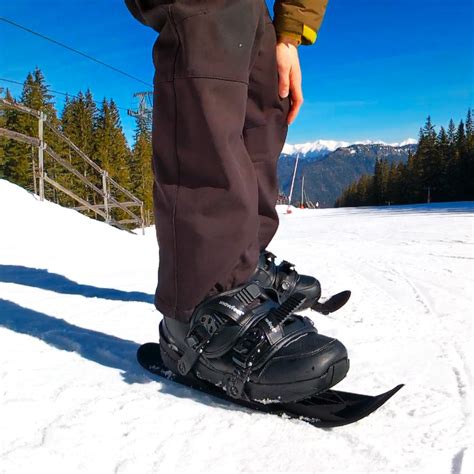
Enter Snowfeet* Mini Ski Skates. At 38 cm (15 in) for $250, or the PRO model at 50 cm (20 in), these skates are a game-changer. Why? They work with your regular winter boots. Yup, no need for specialized, pricey boots. Just lace up your own boots, and you’re ready to glide on snow. Unlike traditional skates that keep you tied to an ice rink or skis that come with lift tickets and resort fees, Snowfeet* transforms any snow-covered spot - your backyard, a local hill, or a nearby trail - into your personal playground. The shorter length gives you better control, and the forgiving snow surface helps you build skills without the pressure of perfection.
Care and Maintenance
If you use your skates often, blades are prone to rust and losing their edges quickly due to poor care. Sharpen your blades: The sharper your blades, the better your performance. On average, you should sharpen your blades after every 20 hours of skate time. This figure can increase or decrease depending on how often you skate.
Here are some tips to keep your skates in top condition:
- Keep them Dry: After a skating session or hockey game, skates collect moisture from the ice, which can rust your precious blades.
- Invest in soakers: Drying the blades alone may not be enough. Soakers are a thick cloth that covers your entire skate blade and will absorb any leftover moisture while you have them in your bag.
- Protect your blades with skate guards: When you're not skating, blades can develop dust, get nicked, or develop scratches. A blade skate guard protects your blades from the locker room to the rink when walking in your skates.
- Dry your boot: After spending time on the ice, a dry skate is a healthy skate. That cloth that dries your blades can also dry your boot. Give your skate some time to air dry after using the cloth.
- Protect your figure skates with a waterproof seal.
Figure Skates Comparison Chart
| Skate Model | Approximate Price (USD) | Stiffness Rating | Recommended For |
|---|---|---|---|
| Jackson Ultima Artiste | $150-180 (set) | ~25 | Recreational skating, basic jumps |
| Riedell Emerald | $90-$200 (set) | ~25 | Recreational skating, beginning spins and jumps |
| Riedell Diamond | $90-$200 (set) | ~40 | More advanced basic skills, learning single jumps |
| Jackson Softec | $100-150 (set) | Soft | Casual skating, comfort-focused |
| Graf Bolero (Graf 500) | $150 (set) | ~20 | Recreational skating, lighter build adults |
| Snowfeet Mini Ski Skates | $250 | N/A | Versatile winter fun, beginner-friendly |