The International Hockey League (IHL) was a minor professional ice hockey league in the United States and Canada that operated from 1945 to 2001. After 56 years of operation, financial instability led to the league's demise.
The IHL served as the National Hockey League (NHL)'s alternate farm system to the American Hockey League (AHL). The IHL was formed on December 5, 1945.
Early Years and Expansion
Initially, the IHL consisted of four teams in Detroit, Michigan, and Windsor, Ontario. However, the expansion did not take hold, and for 1949-50, the league was back down to teams in Detroit and Windsor as well as two nearby Canadian cities, Sarnia and Chatham, Ontario.
Expansion began again, with Toledo rejoining the league and new teams added in Grand Rapids, Michigan (1950), Troy, Ohio, (1951), Cincinnati (1952), Fort Wayne, Indiana (1952), and Milwaukee (1952). At the same time, the last Canadian team left the league in 1952, when the Chatham Maroons pulled out. cities were added in 1953. The league would expand and shrink between five and nine teams through the 1950s, with another major expansion in 1959.
In the 1962-63 season, the IHL played an interlocking schedule with the NHL-owned Eastern Professional Hockey League, which itself folded in 1963. Starting in the late 1960s, the IHL's quality of play significantly improved.
Read also: Features of Custom Hockey Gloves
By the mid-1970s it was on par with the American Hockey League (AHL), the longtime top feeder league for the National Hockey League. Many IHL teams became the top farm teams of NHL teams.
Geographic Expansion
That began to change in 1984, when the IHL absorbed several clubs from the folding Central Hockey League, including the CHL’s former Salt Lake City, Utah club, the Golden Eagles. Salt Lake is over 1,600 miles from what was then the IHL’s easternmost franchise in Toledo, Ohio.
Major market expansion got under way in the late 1980’s and a speculative bubble in franchise valuations came along with it. In 1984, the IHL’s Muskegon Mohawks club changed hands for $1.00. A decade later in 1994 the league’s expansion fee was $6 million. Small market Midwestern clubs like Muskegon, Flint and Saginaw fell by the waysideas the IHL planted its flag in Atlanta, Chicago, Detroit, Las Vegas, Orlando, San Francisco and beyond.
Expansion into Major Markets
Beginning in the late 1980s, the IHL began an expansion into major markets such as Atlanta, Cincinnati, Cleveland, Denver, Houston, Indianapolis, Kansas City, Las Vegas, Minneapolis-Saint Paul, Orlando, Phoenix, Salt Lake City, San Antonio, San Diego, and San Francisco. Many of these were markets that had been served by the defunct World Hockey Association or abandoned by the NHL, but the IHL also placed teams in markets that already had NHL teams, such as Chicago, Detroit, and Long Beach (near Los Angeles).
The rise and fall of the International Hockey League (1945–2001)
Read also: The story of Craig Needham
Demise
The IHL's expansion into NHL markets put a strain on relationships between the leagues. In response, many NHL clubs shifted their affiliations to the AHL, and by 1997-98, only four of 18 IHL teams had NHL affiliations.
With the loss of subsidized salaries, high expansion fees (by the end the league was charging as much as $8 million US for new teams), exploding travel costs, the NHL itself moving back into some of its markets, and the league's rapid expansion proved a critical strain, the 2000-01 season ended up being the final season of the IHL.
The expansion bubble popped in the mid-1990’s after fees topped out around $7 million and the league went into a financial free fall in the latter part of the decade.
Absorption into the AHL
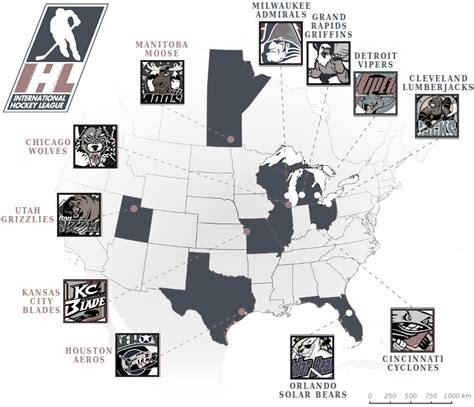
The IHL did not merge into the American Hockey League. The six IHL franchises that were admitted into the American Hockey League as expansion teams were the Chicago Wolves, Grand Rapids Griffins, Houston Aeros, Utah Grizzlies, Milwaukee Admirals and Manitoba Moose for the 2001-02 season. Among them, the Chicago Wolves (2002, 2008), Houston Aeros (2003), and Milwaukee Admirals (2004) have all won Calder Cup titles since joining the AHL from the IHL.
The Cincinnati Cyclones were admitted back to the East Coast Hockey League, which hosted the team from 1990-1992 before they moved to the IHL. The Orlando Solar Bears (the final IHL champions) and the Kansas City Blades were not admitted into the AHL because their owner, Rich DeVos, also owned the Griffins, and could only own one AHL franchise.
Read also: Inside Aaron Ness's Career
Two of the former IHL teams that moved to the AHL have since relocated, as the Utah Grizzlies moved to Cleveland, Ohio to become the Lake Erie Monsters in 2007, and the Manitoba Moose moved to St. John's, Newfoundland and Labrador to become the St. John's IceCaps in 2011.
As well, two IHL franchises have been relaunched in the ECHL since the IHL's demise, those being the Utah Grizzlies (formerly the Lexington Men O' War) in 2005 and the expansion Orlando Solar Bears in 2012.
IHL Teams
- Akron Americans
- Albany Choppers
- Atlanta Knights
- Chatham Maroons
- Chicago Wolves
- Cincinnati Cyclones
- Cincinnati Mohawks
- Cleveland Lumberjacks
- Colorado Rangers
- Columbus Checkers
- Columbus Golden Seals
- Columbus Owls
- Dayton Gems
- Dayton Owls
- Denver Grizzlies
- Denver Mavericks
- Denver Rangers
- Des Moines Capitols
- Des Moines Oak Leafs
- Detroit Auto Club
- Detroit Bright's Goodyears
- Detroit Hettche
- Detroit Jerry Lynch
- Detroit Metal Mouldings
- Detroit Vipers
- Flint Generals
- Flint Spirits
- Fort Wayne Komets
- Grand Rapids Griffins
- Grand Rapids Owls
- Grand Rapids Rockets
- Houston Aeros
- Huntington Hornets
- Indianapolis Checkers
- Indianapolis Chiefs
- Indianapolis Ice
- Johnstown Jets
- Kalamazoo Wings
- Kansas City Blades
- Lansing Lancers
- Las Vegas Thunder
- Long Beach Ice Dogs
- Los Angeles Ice Dogs
- Louisville Blades
- Louisville Rebels
- Louisville Shooting Stars
- Manitoba Moose
- Marion Barons
- Michigan K-Wings
- Milwaukee Admirals
- Milwaukee Chiefs
- Milwaukee Clarks
- Milwaukee Falcons
- Minneapolis Millers
- Minnesota Moose
- Muncie Flyers
- Muskegon Lumberjacks
- Muskegon Mohawks
- Muskegon Zephyrs
- Omaha Knights
- Orlando Solar Bears
- Peoria Prancers
- Peoria Rivermen
- Phoenix Roadrunners
- Port Huron Flags
- Port Huron Wings
- Quebec Rafales
- Russian Penguins
- Saginaw Gears
- Saginaw Generals
- Saginaw Hawks
- St. Paul Saints
- Salt Lake Golden Eagles
- San Antonio Dragons
- San Diego Gulls
- San Francisco Spiders
- Sarnia Sailors
- Toledo Blades
- Toledo Goaldiggers
- Toledo Hornets
- Toledo Mercurys
- Troy Bruins
- Utah Grizzlies
- Windsor Bulldogs
- Windsor Gotfredsons
- Windsor Hettche Spitfires
- Windsor Ryan Cretes
- Windsor Spitfires
- Windsor Staffords
Trophies and Awards
- Turner Cup
- Fred A. Huber Trophy
- Commissioner's Trophy
- Leo P. Lamoureux Memorial Trophy
- James Gatschene Memorial Trophy
- Norman R. "Bud" Poile Trophy
- Gary F. Longman Memorial Trophy
James Gatschene Memorial Trophy Winners
(IHL Most Valuable Player)
| YEAR | PLAYER | POSITION | TEAM |
|---|---|---|---|
| 1946-47 | Herb Jones | Right Wing | Detroit Auto Club |
| 1947-48 | Lyle Dowel | Center | Detroit Bright's Goodyears |
| 1948-49 | Bob McFadden | Wing | Detroit Jerry Lynch |
| 1949-50 | Dick Kowcinak | Center | Sarnia Sailors |
| 1950-51 | John McGrath | Defenseman | Toledo Mercurys |
| 1951-52 | Ernie Dick | Center | Chatham Maroons |
| 1952-53 | Donnie Marshall | Center | Cincinnati Mohawks |
| 1953-54 | Phil Goyette | Center | Cincinnati Mohawks |
| 1955-56 | George Hayes | Center | Grand Rapids Rockets |
| 1956-57 | Pierre Brilliant | Right Wing | Indianapolis Chiefs |
| 1957-58 | Pierre Brilliant | Right Wing | Indianapolis Chiefs |
| 1958-59 | Len Thorson | Center | Fort Wayne Komets |
| 1959-60 | Billy Reichert | Center | Minneapolis Millers |
| 1960-61 | Len Thorson | Center | Fort Wayne Komets |
| 1961-62 | Len Thorson | Center | Fort Wayne Komets |
| 1962-63 | Len Thorson, Eddie Long | Center, Right Wing | Fort Wayne Komets |
| 1963-64 | Len Thorson | Center | Fort Wayne Komets |
| 1964-65 | Chick Chalmers | Center | Toledo Blades |
| 1965-66 | Gary Schall | Center | Muskegon Mohawks |
| 1966-67 | Len Thorson | Center | Fort Wayne Komets |
| 1967-68 | Len Thorson, Don Westbrooke | Center, Right Wing | Fort Wayne Komets, Dayton Gems |
| 1968-69 | Don Westbrooke | Right Wing | Dayton Gems |
| 1969-70 | Cliff Pennington | Center | Des Moines Oak Leafs |
| 1970-71 | Lyle Carter | Goaltender | Muskegon Mohawks |
| 1971-72 | Len Fontaine | Right Wing | Port Huron Flags |
| 1972-73 | Gary Ford | Center | Muskegon Mohawks |
| 1973-74 | Pete Mara | Center | Des Moines Capitols |
| 1974-75 | Gary Ford | Center | Muskegon Mohawks |
| 1975-76 | Len Fontaine | Center | Port Huron Flags |
| 1976-77 | Tom Mellor | Defenseman | Toledo Goaldiggers |
| 1977-78 | Dan Bonar | Center | Fort Wayne Komets |
| 1978-79 | Terry McDougall | Center | Fort Wayne Komets |
| 1979-80 | A Dumba | Right Wing | Fort Wayne Komets |
| 1980-81 | Marcel Comeau | Center | Saginaw Gears |
| 1981-82 | Brent Jarrett | Center | Kalamazoo Wings |
| 1982-83 | Claude Noel | Center | Toledo Goaldiggers |
| 1983-84 | Darren Jensen | Goaltender | Fort Wayne Komets |
| 1984-85 | Scott Gruhl | Left Wing | Muskegon Lumberjacks |
| 1985-86 | Darrell May | Goaltender | Peoria Rivermen |
| 1986-87 | Jock Callander, Jeff Pyle | Center, Left Wing | Muskegon Lumberjacks, Saginaw Generals |
| 1987-88 | John Cullen | Center | Flint Spirits |
| 1988-89 | Dave Michayluk | Left Wing | Muskegon Lumberjacks |
| 1989-90 | Michel Mongeau | Center | Peoria Rivermen |
| 1990-91 | David Bruce | Left Wing | Peoria Rivermen |
| 1991-92 | Dmitri Kvartalnov | Left Wing | San Diego Gulls |
| 1992-93 | Tony Hrkac | Center | Indianapolis Ice |
| 1993-94 | Rob Brown | Center | Kalamazoo Wings |
| 1994-95 | Tommy Salo | Goaltender | Denver Grizzlies |
| 1995-96 | Stephane Beauregard | Goaltender | San Francisco Spiders |
| 1996-97 | Frederic Chabot | Goaltender | Houston Aeros |
| 1997-98 | Patrice Lefebvre | Right Wing | Las Vegas Thunder |
| 1998-99 | Brian Wiseman | Left Wing | Houston Aeros |
| 1999-00 | Frederic Chabot, Nikolai Khabibulin | Goaltender | Houston Aeros, Long Beach Ice Dogs |
| 2000-01 | Norm Maracle | Goaltender | Orlando Solar Bears |
tags: #international #hockey #league