Here’s a hot take for you: The most important piece of gear in your snowboard kit is the right pair of snowboard boots. After all, it’s easy to hop on a buddy’s board or demo new bindings, but picking a new pair of boots can be a torturous and time-consuming affair. Land on the right boots, and progression is yours for the taking. To help you on your quest for the perfect snowboarding gear this season, we tested boots from all the top brands.
We also divided this list into specific categories so you can easily find a pair of boots that match your riding style and budget. If you’ve been in the boxing ring for a while, check out our two favorite pairs for guys and gals: the Men’s Vans Infuse and Women’s ThirtyTwo Lashed Double BOA.
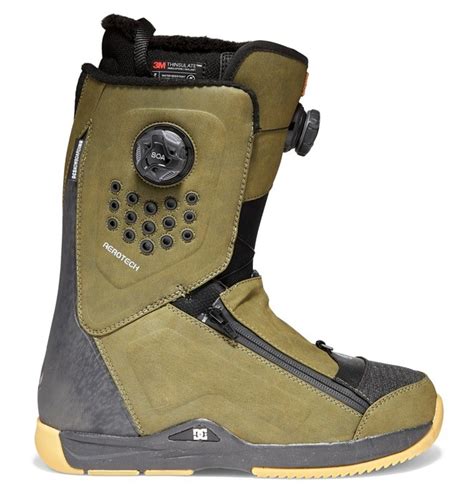
For 2021/22, DC have overhauled their liners into a streamlined 1,2,3 system, with the Travis Rice Boa boasting the top-of-the-line Response 3, a warmer, more customizable option than previous years. With moisture wicking Thinsulate insulation, heat mouldable multi-density foam and an independently functioning liner lace system including an internal heel harness. Underfoot you’ll find an anatomically designed, recycled EVA foam insole, with moulded arch support to alleviate foot fatigue. When you’re boot packing, splitboarding or just crushing groomers all day long, you’ll be thankful your feet are getting the VIP treatment.
Let’s be real, any product that Travis Rice puts his name to is held to a higher standard than others. We wanted to find a fault with this, honestly, we did, it’d be like finding a spelling mistake in the dictionary, but this is just a damn good boot. Travis Rice is a visionary, from game changing gear to industry shaking contests, he’s always one step ahead of the curve. The 21/22 Travis Rice Boa is no different, not for the faint of heart, this boot packs a hefty punch.
Who Is This Boot For?
Travis is the master of blurring the lines between freeride and freestyle, his big mountain exploits are peppered with floaty back 3’s and tweaked out methods. Travis fanboys for one (nothing wrong with that, the man is a certified legend). Come on, you probably have at least one of the Orca fleet waxed up and ready to go, you’ve been watching Art of Flight all summer and tingling in anticipation of the first proper snowfall.
Read also: Choosing Hybrid Snowboard Boots
Or you’re a super gnarly big mountain rider and multi-day missions into the unknown are your bread and butter. Either way, you’ve gotta have some experience to rock a pair of these, they’re stiff with a capital S for unparalleled control when you need it most, so if you’re underprepared, they’ll be taking you for a ride instead.
Although Travis can more than back up his freestyle credentials, we probably wouldn’t recommend this boot to those who want to spend the whole day hitting the medium kicker line. It’s just too heavy duty, but if you’re looking to take your bag of tricks outside the park ropes and into the backcountry, then this rugged son of a gun has got its best foot forward.
Key Features and Technologies
Asymmetrical ANTI DRAG Outsole
The Asymmetrical ANTI DRAG Outsole is another of Travis’ little tricks to give him the edge when the stakes are high.
Response 3 Liner
For 2021/22, DC have overhauled their liners into a streamlined 1,2,3 system, with the Travis Rice Boa boasting the top-of-the-line Response 3, a warmer, more customizable option than previous years. With moisture wicking Thinsulate insulation, heat mouldable multi-density foam and an independently functioning liner lace system including an internal heel harness.
Recycled EVA Foam Insole
Underfoot you’ll find an anatomically designed, recycled EVA foam insole, with moulded arch support to alleviate foot fatigue.
Read also: High-Performance Snowboard Boots: K2 Orton
Ботинки для сноуборда DC TRAVIS RICE M BOAX распаковка, обзор
Additional Considerations for Snowboard Boots
The most critical factor of a boot design is how it fits. It should feel snug without any pressure points. While there’s a spectrum of foot shapes and sizes, there’s a general quality to a boot fit that makes it a solid match for most people. The flex rating plays a role in how versatile the boot is. The softer it is, the less likely it is to be an everyday queen. The firmest boots also tend to be best for specific objectives versus all-day, every-day rippers.
A huge variety of systems are out there. Double, single, and triple BOA. Traditional laces. And a hybrid of the two, as well as speed laces and power straps. Each system has tradeoffs between speed, comfort, personalization, rigidity, dependability, and durability.
Most of our favorite boots have heat-moldable liners. Liners have unique internal harnesses for security, so we test how easy those are to enter and exit, as well as the degree of security. The heel hold is a huge factor. We need our heel to stay put and for cushion to be in all the right places.
These points go up in a boot depending on the comfort and design of the footbed, as well as the midsole cushioning and the overall breathability of the liners and exterior.
The three most common categories are all-mountain, freeride, and freestyle, followed by a fourth small category that’s growing in popularity: backcountry. Most backcountry boots are freeride boots with backcountry-specific features, but they’re not the only boots that work in the backcountry - far from it. If you’re a splitboarder, you’ll want a stiffer, technical, off-piste-oriented boot like the K2 Waive. However, depending on personal preference, mode of transportation, and your backcountry objectives, some freeride, all-mountain, or even freestyle snowboard boots could work well in the backcountry, too.
Read also: Comfort & Performance: Burton Imprint 1
Snowboard boots are broadly categorized for men or women. The biggest difference between the anatomy of women and men is that the calf muscle is lower on a woman’s leg. Women’s boots also generally have a narrower heel, a more streamlined shape, and greater flex. Some women with longer or wider feet find men’s boot options work great.
The vast majority of snowboarders are looking for soft boots - these are traditional snowboard boots crafted from materials like leather, rubber, and various fabrics, and they’re traditionally considered the best boots for snowboarding. Hard boots are crafted from plastic and closely resemble ski boots. The benefit of a hard boot over a soft boot is the walk mode. Hard boots have much better walk modes than their soft boot cousins, as the hard plastic pieces can pivot much more efficiently than high-friction materials in soft boots.
Step-in snowboard boots are designed to be used with step-in snowboard bindings. For some riders, these systems minimize time while strapping in and also help make the boot’s connection with the binding consistent across runs. On the other hand, some riders will miss the ride quality and feel of traditional bindings, as well as the customized pressure from run to run. As such, we mainly recommend these systems for aging parents trying to keep up with their kids, riders with injuries that make bending over difficult, and adults who are just learning how to snowboard.
Beyond these two broad categories - men’s and women’s snowboard boots - snowboard boots can have a narrow, wide, or regular width. It’s important to determine your correct boot size for a particular boot, which can vary slightly from brand to brand. When you wear snowboard boots, your toes can lightly graze the front of the boot, but you don’t want your toes to curl under. Be sure to go to your local snowboard boot shop to try on boots across different brands so that you have an idea of which size boot for each brand fits your feet.
With an age-old perspective, many aggressive or elite snowboarders swear on “sizing down.” Sizing down refers to getting a smaller snowboard boot size than your standard shoe size - say, an 8 boot if you usually wear a 9 shoe. But with the advancement of snowboard boot designs, available customization, and the skills of boot technicians, we recommend going to a local shop to work with the on-site boot fitter and customize the materials to your foot.
Breaking in and packing out smaller boots can be extremely painful, as circulation problems and blisters are par for the course. The benefit of sizing down is that you’ll eventually find better responsiveness with a snugger fit. If your feet are swimming around in your boots after they pack out, you’re not going to get next-level response. However, it’s tough to enjoy snowboarding if your feet are on fire, so for the most part, we recommend you find a pair of boots that are snug and reasonably comfortable, or at least tolerable, from the jump.
Many skiers won’t shop for ski boots without visiting a trusted boot fitter. Snowboarders, on the other foot, don’t place as much value on boot fitters, which is, in our opinion, a huge mistake. Boot fitters can point you to the right boots for your skill level and foot shape, or, if you already have a pair of boots, help customize the fit to the shape of your foot.
Heat molding liners is a great way to speed up the break-in process. Finding the right boot fitter is tough, as many boot fitters are skiers, and you want an expert boot fitter who also is an expert snowboarder.
While punching and heat-molding will provide you with more room inside snowboard boots, sometimes, you’re actually going to want less space. Less space can result in less blister-inducing foot movement and more response. Some boots, like those from ThirtyTwo, come with helpful heel-hold kits, making it easy for casual riders to tweak the fit. Burton has a J-bar pack, too, that can be a lifesaver.
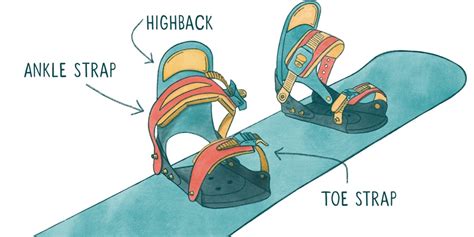
One important thing to consider when shopping for snowboard gear is that there is interplay between boots, bindings, and boards. We already touched on step-in boots, and how Step On boots from Burton and their partner brands, as well as K2 Clicker boots, aren’t compatible with traditional strap bindings.
Beyond these specific examples, all soft boots are more or less compatible with all hard boot bindings. Always match your boot size to the binding size. When a boot fits in a binding correctly, you’ll have better performance. Also, each binding size fits a range of boots (e.g., a medium fits sizes 8-10), but they better accommodate different sizes when adjusted. Don’t be afraid to tweak the heel cup positioning, strap placements, strap lengths, etc.
Furthermore, it’s worth noting that two boots that are the exact same size may have different profiles. You might not think about it while shopping for snowboard boots, but your boot sizing also impacts what size boards you can ride. For all of these reasons, we like to recommend shopping for boots first before purchasing a snowboard and bindings - at least if you’re buying a full setup.
A boot’s overall comfort is delivered through the combination of the midsole, liner, and footbed as well as the level of overall support, which prevents fatigue. Generally, an all-around soft boot might provide immediate comfort but doesn’t necessarily deliver stability for preserving energy on a bell-to-bell or big-objective day.
Snowboard boots are constructed on a flex range from soft to medium to stiff. Often brands use a scale of 1 to 10, with 10 being the stiffest.
- 1-4: These are softer boots with forgiving flex and comfortable constructions.
- 5-7: These are moderately stiff boots, a solid middle ground for intermediate riders and all-mountain riding.
- 8-10: These are the stiffest boots out there. These boots are more suited to expert-level riders who demand instantaneous response.
Soft boots like the ThirtyTwo Shifty, Burton Moto BOA, DC Phase, and Ride Harper, are the most comfortable boots, meaning they’re best for beginners or instructors who need to be on their feet all day. Some park riders also prefer a softer boot, as the flex makes locking into jibs and tweaking grabs much easier.
Medium-stiff boots, like the ThirtyTwo Lashed Double BOA and Women’s K2 Trance, are ideal for progressing intermediates and all-mountain riding. Stiffer boots, including the Burton Supreme, Men’s Burton Ion BOA, and Vans Viaje Range, are best for freeriding. Backcountry riders also often prefer a somewhat stiffer boot like the K2 Waive.
Stiffer boots provide better response on the uphill and the descent, which can be critical in technical, exposed terrain. While these are general guidelines, they’re not written in stone. A rider’s preferred stiffness level can also come down to personal preference. Other advanced or expert riders don’t necessarily prefer the stiffest boots, despite heading into steep and challenging terrain, because they can take away comfort depending on your foot shape.
The outsole is the rubber located on the underside of the boot, which grips the snow and ice. If you’re in the market for a backcountry or splitboard mountaineering boot, pay attention to this feature.
Conventional quick-pull closure systems are faster and easier to operate while wearing gloves. Various designs exist across brands, like the speed zone lacing on the Burton Supreme. Some folks feel quick closures provide a more uniform hug that doesn’t pack out compared to lace setups. One tradeoff is that laces are simpler to replace as they wear out or if they break in the backcountry.
A handful of designs mix these options with laces plus a single BOA. And several backcountry and powder-conscious boots feature a zippered shroud to protect the lower portion and closure of the boot from ice and snow, like the Vans Viaje Range.
You’ll often see affordable boots, like the Burton Moto, using a single BOA system, while more expensive boots, like the Burton Ion, have a double BOA. The pros of a single BOA design are simple: you have fewer breakable parts, and tightening the boot is extremely easy. Vice versa, the more BOA dials you have on a pair of boots, the more complex the lacing system, and the more breakable parts you have to deal with. However, this also enables way more adjustability.
Replacing traditional laces is easy, and many boots come with a spare pair of laces in case yours breaks. Replacing BOA, on the other hand, is more complicated. If your BOA breaks, it’s possible you just might need a new lace or cable to rethread, which you can learn how to do here. However, it’s also possible that you’ll need to replace the dial itself, which you can also learn how to do here. If DIY fixes aren’t your cup of tea, just bring your busted BOA to your local snowboard shop.
Solid snowboard shop techs are usually familiar with typical BOA issues. BOA is extremely convenient - until it’s not. That’s why we like using a backcountry boot that doesn’t exclusively rely on BOA, like the K2 Waive.
The liner is a boot-shaped layer that fits inside the boot’s exterior shell. Liners are typically constructed with EVA foam, a lightweight and malleable polymer. The foam provides a cushion-like feel and stabilizes the foot. Some liners are heat-moldable, which is great for a more custom fit and shorter break-in period. The liner slides into a boot and is cradled by its own lace system, which typically tightens down with a drawstring that also has a release tab.
It’s also worth noting that liners are the source of stinky boots, and more and more brands are experimenti...
DC Status Review
A great Super expensive boot for the ultra-technical backcountry rider or ultra-rich. The DC Status is for the very aggressive and loaded with DC’s high-end tech. It is here to compete with the Burton Driver X and others high end stiff/responsive boots like it. Most DC boots have a very flexy forward lean but these don’t. They have a pretty stiff forward lean. The DC Status is the stiffest boot in DC’s Line and doesn’t act like many of the other boots. The articulating cuff also helps a little with the longevity of flex it won’t deteriorate too much over a season of riding.
Another thing we like about this Double Boa system is the boots have true upper and lower adjustability Many BOA boots have cables that share the same midpoint around the ankle. So if you tighten the upper or lower the ankle tightens as well.
We have ridden boots that are more responsive with a softer flex and we have encountered stiffer boots as well. Still, this sits in the place with the stiffer and more responsive world of boots.
There are some boots that take some time to break in to become comfortable and others that feel broken in from day one. The DC status takes some time to adjust to the shape of your foot so you might want to keep your old boots around if you have sensitive feet. All agreed that they weren’t that comfortable from the start but some didn’t care because they were so stoked on the response. The biggest issue was the inside liner was almost as stiff as the outside.
The sole looks like it’s going to be incredibly comfortable and shock absorbent but it’s not exactly what it seems. The somewhat thick sole actually has a very stiff feel to improve response and absorb shock on large maneuvers. It is not that forgiving on the little bumps but it’ not chattery. Its actually very damp but it doesn’t give you a lot of minor shock absorption like some boots do. You feel more like you are directly connected to the board. This is a great combo with a stiff aggressive board.
For me the editor, it was too tight and narrow around the heel and a little loose around the ankle but the turn initiation was exceptional. DC has a great shell but as of late, their liners have not been on par with their shell as of late. It can make for a ride that isn’t as comfortable as some boots out there. We didn’t have time to break them in but felt they would be better after a few weeks of riding. So you sacrifice a lot of initial comfort for performance with this boot but it will make many aggressive riding stiff boot loving people happy.
All in all, this is a great boot and one we would like to add to our quiver. I can only compare these to my old 2011 F22s, which were a great boot. I wanted a dual zone BOA boot that was as stiff or stiffer than the F22. I ended up with this boot and really like it. When I want I can crank that BOA upper zone and get super support or if I'm just playing around loosen the upper zone up a bit for better comfort.
I don't know if it's this boot or the BOA lacing system but it's possible to get these boots to tight/stiff. The lower zone is completely separate from the upper zone so you have true lower/upper adjust ability. I tighten the lower zone just enough to keep the heels planted. Speaking of heels these boots have excellent heel hold and it's obvious they would by looking at the strap system in the lower zone.
Sizing was dead on to the foot measuring device used in stores. TIP- my toes were just a hair crunched against the front of the boot when I put them on but after walking on the treadmill to warm them up and kicking a tire they packed out perfectly. I put in new insoles from the beginning, for better arch support but you have to do this with any boot I'm told. I've never had a sore spot, pinch point, or any other issue since the first day I wore them on the slopes. I did about 3 hours of break in time on the tread mill and wore them around the house a couple times for about an hour.
The one problem I have with these boots are traction compared to my F22s. IT's horrible. I really have to be careful walking in the ice/snow.