Eagles Nest Wilderness soars above Summit County, inviting us into its embrace. Our beautiful Eagles Nest Wilderness was established as a Wilderness Area by Congress in 1975. The original Wilderness Act was passed in 1964 (the first of its kind in the world), but the Eagles Nest was not added by Congress until July 12, 1976. When it was established it contained over 80,000 acres in Summit County and 50,000 acres in Eagle County, and it gained another 160 acres in the Slate Creek drainage in 1997. It currently totals over 134,000 acres.
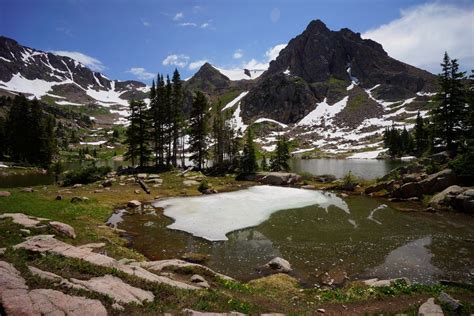
The Eagles Nest Wilderness lies in the southern area of the Gore Range of mountains. The area’s dominant geographic feature is the Gore Range, which forms the north-south spine.
The Naming of Gore Range: A Contentious History
However, the history of the name of the Eagles Nest’s central mountain range - currently known as the Gore Range - is wrapped in confusion. Like Gore Pass, Gore Creek and many other regional spinoffs, the craggy reach - which also touches parts of Grand and Routt counties - is named for a 19th century Irish aristocrat named Lord St. George Gore. The Gore Range was named in honor of Sir George Gore arising from a hunting expedition led by Jim Bridger (1804-1881), an early trapper and explorer of the Rocky Mountains.
George Gore, an Irish baronet and notorious hunter, never stepped foot into our Summit County “Gore Range.” Although he was recorded crossing Gore Pass west of Kremmling, he is not believed to have ever set foot in the peaks. While traveling in the 1850s on his killing sprees through Colorado and Wyoming, he shot thousands of buffalo, elk, deer and other wildlife, and leaving them to waste, while local indigenous people depended on these animals for survival. Gore’s three-year stopover in the American West had him traversing what is today the Dakotas, Montana, Wyoming and Colorado. The figures are difficult to substantiate, but Gore himself claimed to have killed more than 2,000 buffalo, 1,600 elk and deer and 100 bears for mere sport.
In August 1868, John Wesley Powell and William Byers, the publisher of Rocky Mt. News, were members of a party that completed the first non-indigenous ascent of Long’s Peak. The first known published reference to the “Gore’s Range” was in the Sept. 1, 1868 edition of Rocky Mt. News. It had an article written by Byers that says they could see a number of mountain ranges from the summit of Long’s, including “Gore’s Range.” That same summer, Powell made the first ascent of Mt. Powell, which was then named after him in today’s Gore Range.
Read also: A Look at the USA Eagles
In 1876, the General Land Office’s Colorado territory map shows no Gore references. Geological Service map based on Hayden’s 1873-76 surveys shows Gore’s mountains. Another annual report based on the Hayden Survey in 1873 shows references to the Blue River Range, which included Mt. Powell and the Park Range north of Kremmling.
For roughly 10,000 years and before formal government removal to a Utah reservation in 1879, the Ute tribe, who called themselves the Nuntzi, resided in the valley they referred to as Naa Ohn Kara. The native Ute spoke of the Rockies as the Shining Mountains, and if a local group gets its way that’s what they intend to re-label the local range.
Inappropriate names have been slowly changing in order to reflect our values in the board’s carefully crafted naming criteria. Naming a feature after a person requires that the person has resided in the community and contributed to the community’s betterment. For instance, Mt. Evans was officially changed to Mt. Blue Sky September 2023, honoring the Cheyenne and Arapaho people. The proposal to change the Gore Range to the Nuchu Range is to honor the Ute people (Nuchu) who lived in this area for thousands of years before being forcibly removed to reservations following the Ute Removal Act that denied the Ute the 12 million acres of land that had formally been guaranteed to them in perpetuity.
“I am amazed how few people know anything about Lord Gore,” said Commissioner Karn Stiegelmeier. “It’s universal in any writing that he was despised by the time he left. “In those days, there were fast and furious names being placed on things,” Stiegelmeier said of the state’s pre-Gold Rush era. “It was just haphazard. As review of historic handles has spread in recent years, so too has the desire to place additional value on the contributions of the nation’s earliest ancestors.
“I humorously say that was the day the Native Americans discovered Columbus lost at sea,” said Leon Joseph Littlebird. Littlebird, a longtime Silverthorne resident of Navajo descent, helped inspire the county to take up the charge of changing the Gore tag. “It’s one of the most beautiful and spectacular areas we have,” said Littlebird. The official resolution is an initial step in the process, and, in conjunction with the Friends of the Eagles Nest Wilderness and support from the Colorado Mountain Club, the county will also host a public meeting in Frisco as a formal kickoff on Monday, Oct. 9.
Read also: History of the Eagles Mere Slide
“I think there’s just a lot of good reasons why they would want to do it, because it just doesn’t meet the criteria that they have for naming,” said Stiegelmeier. “And especially just to honor the natives who were marched out by gunpoint soon after Lord Gore left.
Early Challenges to Eagles Nest Wilderness
The Eagles Nest had to survive other efforts to block its designation. In the 1960s, the Denver Water Board had plans to construct the 40-mile-long East Gore Collection System. This would have collected water from streams on the eastern flank of Eagles Nest, including Cataract and Slate creeks, and conveyed the water by canal to the Dillon Reservoir.
The size of the proposed Eagles Nest Wilderness also was highly controversial. In the early 1970s, the Forest Service proposed that only 87,775 acres be included, most of it above timberline and free of old wagon roads and logging from the 1920s and 1930s. Local environmentalists, like Bill Mounse, and Colorado’s Sen. Floyd Haskell and Rep. James Johnson, proposed upwards of 136,000 acres.
From Sheep Pasture to Skiing Gold Standard: The History of Vail
Most histories of Vail start with the fateful day on March 19, 1957, when Pete Seibert and Earl Eaton parked Seibert’s army-surplus jeep on the side of US Highway 6 (long before Interstate 70), attached climbing skins to their skis, and slogged up what would become the front side of Vail Mountain. Eaton had grown up in a ranching family downvalley in Edwards, later working ski jobs in the winter and prospecting for uranium in the summer. The quiet westerner led Seibert, a boisterous New Englander from Sharon, Massachusetts, to the promised land that day.
Fifty years after first opening on December 15, 1962, Vail in many ways is the gold standard in the ski industry, having shaped major trends in lifts, ski schools, season-pass products, ski-patrol techniques, airline access, ski and snowboard competition, sustainability, and, most recently, social media. “It’s the center of the skiing universe,” says Susie Tjossem, executive director of the Vail Village-based Colorado Ski & Snowboard Museum and Hall of Fame.
Read also: Developing Hockey Players at NEST
Even the method by which Vail rose from sheep pasture to fledgling ski area in just five years was an innovative funding miracle. Eaton was “The Finder” and early on the force behind the physical on-mountain construction of Vail. But it was Denver oilman George Caulkins whom many deem “The Funder,” because he borrowed oil-drilling financing techniques and came up with the concept of selling a hundred $10,000 shares that included four lifetime ski passes and the deed to a home-site parcel for another $500.
Another innovator in the early days was Vail’s first marketing and public relations director-a fellow 10th Mountain Division veteran named Bob Parker. Parker also understood branding, coining the moniker “Colorado Ski Country” for Vail-a name later assumed by the lobbying group for the entire state ski industry-and courted national air carriers to service Vail at a time when the Eagle County Regional Airport was a remote and dusty airstrip.
And it was Parker who, along with initial Vail investor Dick Hauserman and original ski-school director Morrie Shepard, lured Austrian ski-racing great Pepi Gramshammer away from Sun Valley, Idaho. To disguise their intentions from other ski-area speculators, Pete Seibert and Earl Eaton, along with Denver lawyer Bob Fowler and real estate appraiser John Conway, formed the Transmontane Rod and Gun Club.
That privately owned land, at 8,150 feet in elevation, would over time become Vail Village, but the proposed ski slopes that would rise upward to more than 11,000 feet south of town were all on federal land. One condition of the federal permit required the fledgling company to raise $1.8 million-the price of a modest condo in Vail Village these days-to ensure that the project, on public land, would be adequately funded.
Many of those disasters were man-made. A forest fire had fortuitously cleared Vail’s iconic Back Bowls in 1879, but in the summer of 1962, before the mountain even opened for skiing, another conflagration-this one sparked by a coal-fired locomotive in Minturn-threatened to take care of all of the front-side trees, too. With Eaton leading the construction charge, Vail somehow opened on schedule with a gondola out of Vail Village, two chairlifts, and not much snow.
But the price was right. Lift rides were free on opening day and later cost $5 ($38.14 today, adjusted for inflation). Still, that first season, livestock grazing nearby pastures outnumbered skiers on Vail Mountain. Slifer worked for VA ski school for three seasons for $500 a month, plus tips. “You couldn’t make a living,” Slifer says of tepid initial sales. “We did have lots for sale-and they were about $5,000 to about $15,000-but the partners had first choice, and they picked all of the really good lots. What was left was a little bit less desirable-so very, very few sales.
After Eck returned from Vietnam in October 1971, Vail’s first doctor, Tom Steinberg, who had come to town in 1965, added him to the resort’s expanding medical staff. For the first three seasons (1962-64) a clinic had been housed in the Red Lion building, but when Dallas Cowboys cofounder and original Vail investor John Murchison broke his ankle while skiing in 1965 and had to be driven by car to Aspen, the Texas oilman donated money toward a bigger and better-equipped medical facility in his Mill Creek Court building. The clinic then was relocated to the site of the current VVMC administrative offices, around which a modern, comprehensive hospital would grow up.
Eck says he won’t ever forget that morning in late March 1976, when he was again working as an intern at Denver Presbyterian Hospital and received an urgent call from ski patrol headquarters on Vail Mountain: two filled-to-capacity cars from Gondola 2 had detached from a frayed lift cable and had plummeted 125 feet to the ground; two more cars were in danger of falling; and 176 skiers were stranded, suspended in the sky.
The accident produced numerous ripple effects, including the sale of Vail Associates to Texas oilman Harry Bass for $13 million in 1976 and the eventual ouster of founder Pete Seibert amid fears of mounting litigation. For Seibert, the gondola tragedy marked the nadir of a decade that had opened with so much promise: in May 1970, the International Olympic Committee (IOC) had selected Colorado to host the 1976 Olympic Winter Games. Vail’s founder then purchased land at the base of present-day Beaver Creek that he intended to develop as an Olympic venue, only to have his dream snatched away when Denver voters rebuffed the IOC’s offer in 1972.
In February 1976, the Games were held not in Avon, but in Innsbruck, Austria, which had hosted them just a dozen years earlier. While Vail’s founder exiled himself to Utah, Eck and Vail’s hospital prospered. After two guests suffered fatal heart attacks at Mid-Vail, he set up an on-mountain cardiac program and was instrumental in establishing the hospital’s first intensive care unit in 1980.
“We didn’t have a clue,” Eck says of the humble ski-town clinic that grew into a regional health-care powerhouse. “[I was] just trying to leave Vietnam behind me and all those traumas I had, and just get through life.
The difference between mounting a vintage fixed-grip chairlift and boarding a modern detachable high-speed quad is the difference between being whacked in the calves by a nine iron and settling into a plush sectional sofa. “It was a game changer,” George Gillett says of Vail’s first four high-speed quads, installed for the 1985-86 ski season.
Widely credited with launching the arms race that had US resorts rushing to build high-speed lifts, Gillett allows that the four lifts were already in the works when he bought the company from the Bass family for $130 million in August 1985: “They had been ordered, but I don’t think they had been paid for,” he laughs.
Before their tenure ended in bankruptcy in the early 1990s, the Gilletts (by Vail founder Pete Seibert’s reckoning in Vail: Triumph of a Dream) pumped $65 million in improvements into Vail: adding and upgrading snowmaking equipment, installing still more high-speed quads, and opening China Bowl in December 1988. Although real estate developer Harry Frampton deserves credit for initiating many of these infrastructure upgrades in his time as VA president from 1982 to 1986, for Gillett the goal wasn’t just increasing the mountain’s capacity but improving the overall guest experience, through such steps as expanding parking and public transportation and shrinking lift-ticket and ski-school lines.
Fresh from owning and running the Harlem Globetrotters, Gillett and his guest-first focus initially ran counter to the operations-first mentality of company stalwarts like the late mountain manager Bill “Sarge” Brown and ski patrol director and later COO Paul Testwuide. Gillett says his experience in sports entertainment bumped up against the “10th Mountain psyche” that implied guests had to suffer somewhat if they wanted to ski. That attitude changed with the Gilletts and was copied throughout the industry. He knew he-and his business philosophy-finally had been accepted when one day Brown, a former senior sergeant major in the army, gave Gillett a new radio code: “Oh-one.” As in no.
“We came as guests; we didn’t come as owners,” George Gillett says, referring to his family’s ski trips to Vail, which started in 1972, well before they bought the resort. “That’s how we thought about people,” adds Rose Gillett, for whom Rose Bowl at Beaver Creek is named.
The rough patch began in early 1990, when charismatic Vail Associates owner George Gillett severely injured his knee while skiing on Vail Mountain with his wife. Noticing his swollen leg at dinner that evening, Olympic skier Cindy Nelson referred Gillett to renowned orthopedic surgeon Richard Steadman, who, as physician for the US Ski Team, was packing for the International Ski Championships in Europe. After Steadman performed emergency ACL surgery at his Lake Tahoe clinic the next day, the doctor flew with the resort owner in Gillett’s private jet to JFK and offered physical therapy en route, forming a friendship that ultimately led Steadman to relocate his practice to Vail.
In the wake of an October 19, 1998 arson attack, environmental protesters converge on Vail Mountain to try and block construction of Blue Sky Basin. Activists perch in trees, chain themselves to heavy equipment, and cement themselves into overturned cars. “Everybody was really concerned when Apollo bought it, because [CEO] Adam Aron and Leon Black-they were skiers, but they weren’t real skiers,” says real estate mogul and former Vail Mayor Rod Slifer.
First the company acquired Arrowhead, a small private ski area west of Beaver Creek that Vail founder Pete Seibert helped develop in the 1980s, and connected it to Bachelor Gulch and Beaver Creek. Apollo also pursued, and won, a bid for an unprecedented second World Alpine Ski Championships, which returned to the valley in 1999. Then in 1996, the company installed a new, high-tech gondola connecting Lionshead with the mountaintop Adventure Ridge area, offering nonskiing visitors access to a slew of year-round activities, including laser tag, tubing, ice skating, snow biking, and nighttime dining.
In 1997, Vail Associates, renamed Vail Resorts, went public while simultaneously acquiring the nearby Breckenridge and Keystone ski areas via a merger with Ralston (yes, the cereal and pet food company). But the spark to the powder keg was the looming construction of Blue Sky Basin, where environmentalists feared the new bowls (known today as Pete’s and Earl’s)would destroy endangered Canada lynx habitat.
All the lifts were repaired, and a temporary replacement for the torched Two Elk Lodge was up and running for the 1998-99 ski season. “I got admonished for my statement because there were kids in the audience, but at the same time it was something that people took away and remembered,” Daly says. “It was sort of a rallying cry for the community.
After weeks of buildup, including a benefit concert by Roger Daltrey at Dobson Ice Arena, the new millennium at Vail officially began with a ribbon cutting on Jan. 6, 2000, a classically crisp, cold Colorado winter day along the frozen banks of Two Elk Creek at Blue Sky Basin. The new Pete’s and Earl’s Bowls, north-facing gladed runs south of Vail’s existing Back Bowls, added an area larger than all of Aspen Mountain to an already enormous complex of ski terrain.
Named for the Ute Indians who inhabited the Vail Valley in the 1800s-the “Blue Sky People”-the new terrain dramatically changed how visitors skied the mountain, alleviating crowds in the existing Back Bowls and providing a north-facing, 650-acre stash of fresh snow far from Vail Village. It was a breathtaking decade of reinventing a town that had been somewhat hastily conceived and constructed in the boom days of the ’60s and ’70s; at one point town officials joked that the construction crane was the official bird of Vail Village.
In mid-decade, Vail Resorts’ chief executive Adam Aron (now co-owner and CEO of the NBA’s Philadelphia 76ers) passed the baton to longtime Apollo Management executive Rob Katz. “I had an understanding of the ski industry, and the history of the company, and the people within the company,” Katz says.
Katz immediately rankled locals by moving the company headquarters from Avon, at the base of Beaver Creek, to Broomfield, a suburb north of Denver. But as Katz sees it, the move to Broomfield better positioned the company as it expanded its holdings nationally, acquiring three ski areas near Lake Tahoe (Kirkwood, Northstar, and Heavenly), summer resorts in Wyoming, and hotels and lodging management contracts from Washington state to the Caribbean.
Like his predecessors throughout the years, Katz continues to pump money back into the company, investing heavily in on-mountain social media, signing big-name winter sports stars like Lindsey Vonn and Shaun White to marketing deals, and luring the 2013 US Open Snowboarding Championships and the 2015 World Alpine Ski Championships, continuing the emphasis on big-name events championed by Pete Seibert.
The Future of Vail
Fast-forward to Vail’s centennial in 2062. “I always compare Vail and Beaver Creek to an island,” real estate guru Rod Slifer says. “Islands are surrounded by water, and we’re surrounded by national forest, so we’re really limited in terms of growth.
Slifer also notes that about half of visitor dollars spent in the valley derive from Colorado’s Front Range. With few federal and state dollars available to add more lanes to the highway (not to mention local opposition), former Vail Resorts President Andy Daly says the only viable long-term solution along I-70 between Denver and Vail may be high-speed rail.
What Is The History Of Vail? - Action Sports Arena
But, he adds, the only way such a system is likely to be built is if Colorado finally fulfills Peter Seibert’s ultimate dream and lands the Olympic Winter Games. Seibert modeled his dream ski area on the great European resorts, many of which are connected by state-funded rail.
Mountain of the Holy Cross
The cross is the symbol of Christianity, so it is intriguing that Mountain of the Holy Cross - an immense natural formation of a perpetual cross - exists in Colorado, south of the Vail Mountain resort. Mountain of the Holy Cross isn't just any mountain. It is one of Colorado's "14ers" (14,000-foot-peaks), of which there are 58.
The mountain used to be a national monument, and many Christians made rugged pilgrimages there in the early 20th century for its reputed healing powers. How big is the cross? Simply gigantic. The arm is about 750 feet across and its vertical length is at least twice that, at about 1,500 feet high.
Ice and snow accumulate in a deep gully to form the shape of the white cross on the mountain's northeast face. Located in the Sawatch Range, the Holy Cross is also only about 15 miles from Vail Resort and visible from the 10,300-foot summit at the Eagle's Nest of Vail.
Today Vail Mountain Resort has a wedding deck that faces directly toward the Mountain of the Holy Cross. "There are tons of weddings performed there during the summer," Katie Coakley, a spokeswoman for Vail Resort, said. A sunrise Easter morning service at Vail's Eagle's Nest is a regular religious event held annually.
There's also the Mount of the Holy Cross Lutheran Church in the Vail, Colorado Valley, named after the unusual mountain. The Rev. Beebe said the first recorded "pilgrimage" took place in 1912 when a party of Episcopalian priests and bishops climbed Notch Mountain for a communion service facing the "Cross of Snow."
In the 1920s a Protestant dentist from Eagle, Dr. O.W. Randall, and a Catholic priest from Glenwood Springs, the Rev. John P. Carrigan, conceived and conducted the first official pilgrimages up Notch Mountain. The first pilgrimage party of Boy Scouts and Campfire Girls was led by Randall in 1927. By the following year, the Denver Post began to promote the pilgrimages. They attracted thousands of people from all over the world.
The Denver Post reported in 1930 that some people afflicted with rare maladies were indeed cured when they saw the cross. In 1934, the Forest Service built a new trail and shelter house for the pilgrimages on the south summit of Notch Mountain. The pilgrimages were discontinued in 1939 because of World War II.