Everysportforless.com takes pride in its strong relationships with top manufacturers in the sports equipment industry. One such manufacturer with a rich history is Easton, which has evolved from archery equipment to become a prominent name in hockey.
The story of Easton begins long before the company we know today. While Easton Sports, Inc. was not formed until the Mid-Eighties, the company can trace its roots to the youth of James Douglas (Doug) Easton.
At 15 years old, Easton became an archery enthusiast under somewhat strange circumstances. Hunting near his home in Watsonville, California, a shotgun propped up against a car fell, fired, and seriously wounded him in both legs. To help him pass the time while recovering, a friend gave him a copy of a new book written by Dr. Saxton T. Pope, "Hunting with the Bow & Arrow".
Easton became fascinated with archery and soon he began to craft bows from yew wood and wooden arrows from straight grained woods like cedar and pine. His excellent work was quickly recognized, especially his arrows, which were soon regarded as the best tournament arrows in the country.
At 17, while shooting a round of archery in San Francisco's Golden Gate Park, he met a gentleman who complimented him on his craftsmanship. Easton made bows and arrows on a part-time for the next ten years before deciding to devote himself entirely to his craft and in 1932 he moved to Los Angeles, where he opening Easton's Archery Shop. He soon outgrew his shop and moved to a larger facility in Los Angeles.
Read also: Easton Gloves: Are they right for you?
Here he began to experiment with aluminum as an arrow shaft, the result of his frustration with the inconsistencies of wood. He presented his first set of aluminum arrows to archery champion Larry Hughes, a local who went on to win a number of Championships using them.
A year after the war ended, aluminum finally became available again and Easton was able to continue his work soon trademarking an aluminum arrow shaft, the 24SRT-X. By 1949, Easton had stopped making finished aluminum arrows, instead only manufacturing the shafts to avoid competing with his customers.
In 1953, he incorporated the business with help from his wife, his young son James, and part-timers. The 24SRT-X was so successful, that in 1957, he needed more room and moved the business to Van Nuys, where he took over a new 10,000-square-foot building.
Easton had tried to convince his son, who was studying engineering, to quit college and come work for him. At first he refused but after five years he soured on the idea of working for a large company, and in 1960 went to work for his father.
The two would soon come into conflict about the direction of the business, and finally due to the prodding of the younger Easton that the company began to expand beyond archery. In 1964, Easton introduced aluminum ski-pole shafts. In 1967 it used its expertise in precision tubing to make the thermal shroud for the seismometer used on the Apollo moon landing. In 1969, Easton began producing aluminum baseball bats.
Read also: Features of Custom Hockey Gloves
Easton didn't invent the aluminum bat, but developed the technology that made them a viable product. The only advantage of early aluminum bats over wooden bats was that they did not break. Other than that early models were too heavy, poorly balanced, and hit the ball the same distance as Wood Bats.
At the time Easton was working out technical problems of producing a superior aluminum bat, the company's founder died from cancer on December 31, 1972, leaving his son Easton in charge.
Easton had been making aluminum baseball bats under a private-label arrangement with another company. Easton insisted on having its name printed somewhere on the bat so that its work was recognized and to prevent the customer from building a reputation due to Easton's quality then later dropping them in favor of a cheaper source.
The Company refused, so Easton launched its own bat brand in the 70s and sold it through an independent distributor. Jim Easton felt the company was simply becoming a job shop, one that was vulnerable to economic cycles, and he concluded that the business was better off devoting its energies to product development.
In 1976, Easton began to make tent tubing and two years later was contracted by PRINCE to manufacture aluminum tennis racket frames. In the late 1970s, an Easton engineer who was an amateur hockey player began working on an aluminum hockey stick.
Read also: The story of Craig Needham
During the 1980s, Easton bought Hoyt Archery Company, maker of high-end bows and accessories and two years later Curley-Bates, its aluminum bat distributor. The Easton brand name would have to gain greater recognition, product lines would have to be expanded to all seasons, and the company would have to gain an international presence.
Easton Sports Canada was launched and the company began to produce mast and boom tubing for sailboards and bike frame tubing. Easton tried to bring out its own line of bicycles but soon found that the economics did not work due to the expense of the frames versus the bikes other components. In 1990, that money-losing venture was brought to a halt.
The company was more successful in adding to its line of baseball and softball bats and expanding its hockey business. It not only introduced composite-based golf shafts in 1990 but ventured into developing aluminum drum sticks.
In 1992, nine out of ten Olympic archers used Easton arrows. From 1972, when archery was reintroduced as an Olympic sport, until 1992, every gold medal winner used Easton arrows. All together, archery products accounted for 30 percent of Easton's total revenues.
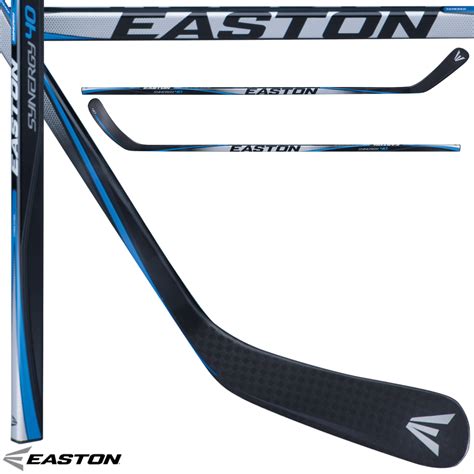
Although Easton was also developing a formidable line of hockey products, they took time to catch on. In the late 1980s top goal scoring forward Brett Hull began to use Easton aluminum sticks, but the real turning point took place in 1990 when superstar Wayne Gretzky, now of the LA Kings Los Angeles Kings,visited Easton to try its sticks.
He liked the product so much that he agreed to a seven-year, $2 million endorsement deal, providing Easton with instant credibility in the hockey world. By 1994, more than 150 NHL players would be using Easton hockey products.
The company introduced shafts and blades, developed with input from Paul Kariya of the Anaheim Mighty Ducks and other NHL players. Although Easton was capable of producing hockey sticks and blades much lighter than traditional wood versions, it was the players who advised the developers about the need for weight in certain situations, such as winding up for a slap shot.
As a result, Easton added weight to the composite material to produce a stick that was lighter than wood and stronger, yet provided the feel that a player required. The sticks proved so popular with professional players, that Easton signed very few to stick deals, because most of them simply wanted to use Easton sticks whether they were compensated or not.
Other Hockey related innovations followed with Easton's first skate offerings, the first skates to provide a drainage system to release moisture and keep them lighter, stiffer, and dryer after a game. In addition, they were heat moldable for a tighter fit or to make them ready to wear right out of the box.
Along with sticks and skates, Easton developed protective hockey gear: gloves using a special foam to pad the back of the hand where players were often stick checked, shoulder pads and caps using Easton's proprietary Bio-Dri liner treatment to help keep players cool, a spinal pad called Spine Tec, and a three piece system that combines all the upper-body pads into a single unit capable of moving in unison.
In the early 1990s, the Easton became a victim of its own success when it introduced a titanium softball bat that performed so well that softball associations banned it, maintaining that the bat was dangerous and would add too much offensive to the game. Despite this, Easton continued its innovations in bat design. In 1997, it launched the Redline series, introducing the first Scandium bat to the marketplace. Two years later, Easton offered the ConneXion series of bats, the first two-piece system that significantly reduced vibration and offered a more forgiving sweet spot.
To round out its bat lines, Easton began producing wooden bats, which remained the only material allowed in Major League Baseball. The company's use of wood came by way of expansion. Over the years, Jim Easton was approached by suitors wanting to buy the company and investment bankers wanting to take it public, but he remained steadfast to keep the business private and family owned.
The acquisition added Easton Hockey's heritage of innovation to the Company's existing Bauer Hockey business, including intellectual property assets that will add to the Company's product lines under the EASTON and BAUER brands.
The acquisition provided Performance Sports Group with exclusive control of the EASTON brand in all sports other than cycling and archery. Performance Sports Group had owned the EASTON brand since the Company's April 2014 acquisition of the Easton Baseball/Softball business and has been licensing the use of the EASTON brand in the hockey, cycling and archery categories.
So that is the Easton Story to date!

Beyond the Game: Wayne Gretzky's Impact on Society | NHL background stories
Easton Stealth RS: A New Generation of Hockey Sticks
Despite the original Stealth RS hitting stores last fall, Easton has updated and refreshed the Easton Stealth RS stick for release this fall. The new 2012 Easton Stealth RS stick has a refreshed look, but still sticks with the stealthyâ¦
Easton continues to make impressive strides with their sticks as they look to make light weight, yet durable models to satisfy the needs of players of every caliber, and the Easton Stealth RS appears to be no exception.
Easton Hockey Stick Shafts
At SidelineSwap, we offer an extensive range of Easton hockey stick shafts tailored to meet the needs of players at all levels. Our collection includes both new and used options, ensuring you can find quality gear at competitive prices. With discounts reaching up to 70% off, shopping for hockey equipment has never been easier.
Our selection spans various flex ratings, including 46-50, 51-55, 66-70, and more, allowing you to choose the perfect fit for your playing style. Whether youâÃôre looking for junior, intermediate, or senior shafts, our marketplace categorizes products to simplify your search.
In addition to Easton, we stock shafts from other reputable brands like Bauer and CCM, ensuring you have a broad spectrum of options. Each listing details the condition -- new or used -- helping you make informed decisions. For added peace of mind, shop with our buyer protection, which secures your purchase against unforeseen issues.
Join our growing community of athletes who buy and sell their gear with ease. Listing your own equipment is a straightforward process, letting you turn unused items into cash.