Ice play is a fantastic activity suitable for children of all ages. It's easy to set up, and you can enhance the sensory experience by adding scented herbs, flavored oils, coloring, and textured natural materials. Here are some engaging ideas to make the most of ice play!
Understanding Ice: A Mini Science Lesson
Water can exist in three states: gas (water vapor), liquid, or solid (ice). Ice is formed when liquid water freezes into a solid state. Water molecules, composed of hydrogen and oxygen atoms (H2O), are constantly bonding, breaking, and reforming.
When water is heated, these molecules speed up and spread apart, making the substance less dense as it evaporates into a gas. At freezing point, the molecules stabilize into rigid chains, increasing the surface area and making ice less dense than liquid water.
Ice plays a crucial role in our environment, creating landmass, habitats, and insulating layers on bodies of water. You can demonstrate how water expands when freezing by half-filling containers with water, marking the level, and freezing them. Observe how the ice expands beyond the initial water level.
Creative Ice Activities for Kids
1. Sensory Ice Cubes
Ice is a wonderful material for sensory play and exploration. All you need for this activity is an ice cube tray, water and some edible sensory materials like scented herbs, edible flowers, fruits or food flavourings. Lavender and mint also wonderfully calming herbs to use, but you could also use uplifting fresh citrus fruit slices.
Read also: A Look at Hockey Games
Simply place a selection of the different sensory materials into the ice cube tray and then fill it with water. Place the tray in a freezer for a few hours or overnight to freeze. Then pop out the ice cubes and enjoy them in sensory play. You could also incorporate them into water play or use them in pretend play with mud kitchens. The children will enjoy exploring all the different scents, tastes and textures as the ice melts.
2. Ice Blocks and Bowls
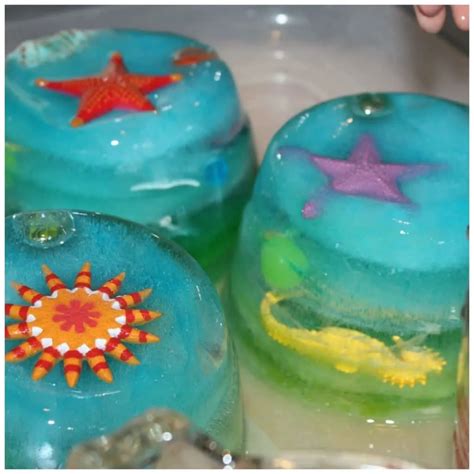
Another way to incorporate ice into sensory play is to make different shaped blocks of ice. For this you simply pour water and any additional sensory materials into different shaped and sized recycled containers to freeze and play with as ice blocks. It’s fascinating to see the objects trapped in the ice.
You can hold the ice up to the light or experiment melting or breaking the ice in different ways using warm water, tools or even salt (please be aware salt is harmful to plants and wildlife so please don’t use it outdoors). You can make your ice block shapes even more interesting by creating holes and hollows in them by stacking different container inside each other when you freeze them.
Fill your largest container or bowl of water and materials and then then place another bowl half full of water inside the first container to create a hollow or hole inside. You could then put an even smaller container inside and so on and so on. You should be able to remove the ice blocks from the containers by leaving then to thaw for a minute or two, then turn over the containers and gently tapping the ice blocks out.
The children can then have fun stacking, building and playing with the bowls and blocks or melting them with warm water to release the natural treasures inside.
Read also: A Look Back: X Games Big Air Snowboard
3. Rainbow Ice and Colorful Ice Blocks
One of our absolute favourite ice play activities is to make rainbow ice and colourful ice cube building blocks. Simply fill the yogurt pots, ice cube tray or silicone moulds with water and then add different drops of food colouring to each pot or segment. Then pop them in the freezer for a couple of hours or overnight to freeze.
Pop the colourful ice blocks out onto a tray or outdoors surface and have fun experimenting with stacking, building and sliding the blocks in any way you like.
4. Rainbow Ice Block
Making a rainbow ice block takes a little patience as you have to freeze each layer of colour one after the other, but it’s well worth the time as you get a beautiful rainbow block of ice at the end. Simply mix up each colour of the rainbow using food colouring and water.
Then pour the first colour into a freeze able pot or container. Then pop it into the freezer for an hour to freeze. Then pour the next colour and refreeze for an hour, and so on and so forth until you have a full rainbow. You can then have fun using the ice block in sensory play.
5. Ice Globes
You can easily use a balloon to make some beautiful ice globes. To make a plain ice globe simply stretch the neck of a balloon over a tap and hold it firmly in place whilst you semi fill the balloon with water. Tie the end up securely and freeze the water filled balloon overnight.
Read also: UBS Arena at Belmont Park
You can also add extra sensory elements to your ice globes using scented herbs, food colouring and flavourings, flowers and other natural materials. *Please don’t pick any wild flowers, only collect flowers you have grown yourself or fallen ones you find on the floor.
6. Fake Snow and Oobleck
We have been experimenting with making fake snow and came up with this wonderful sensory snow experience that my children love. All you need is some ice cubes and cornflour or tapioca flour. The flour sticks to the ice cubes making them fluffy and soft to the touch. It also stops the chill from the ice so they are nicer for little hands.
When the ice melts the flour then turns into Ooblock. Oobleck is named after a Dr Seuss story and its a non-Newtonian fluid. This means it acts like a liquid when its relaxed or being poured, but when you push, squeeze or exert any kind if force onto it, it becomes temporarily solid. This makes it a fantastic material for tactile and sensory play.
7. Ice Cube Igloo
Making an ice cube igloo is a simple activity that helps develop fine motor skills and patience. All you need is somewhere to freeze water, an ice cube tray and a round tin. When you start building you need to dip each ice cube briefly in a bowl cold water.
Then when the blocks touch the water freezes between them helping them stick together. When your first layer is finished its best to put it back into the freezer for a short while to refreeze, this prevents the blocks melting and sliding apart. You can then complete each layer in the same way until your igloo is finished.
When you finish your igloo you can have fun using it in roleplay and small play games with some toys, ice blocks and coloured water. Or how about adding some fake snow to your igloo when you have finished building? Cornflour or tapioca flour make great natural fake snow, the flour sticks to the ice cubes making them fluffy and soft to the touch.
You could also make your igloo into an ice lantern, using a candle to illuminate it in the dark and see how long the heat takes to melt the igloo.
8. Arctic and Antarctic Models
How about making your own mini versions of the Arctic (North pole) and Antarctic (South Pole) to demonstrate the physical differences between the two, as well as learning about the different wildlife and animals that live in the Arctic and Antarctic. To make your modals you will need blocks of ice that you can male by freezing water in different recycled containers and some toy animals.
For the Arctic you will need a bowl of water and for the Antarctic you will need a tray or frozen ice. The Arctic otherwise known as the North Pole is mainly a sea of ice (the Arctic Ocean) surrounded by land that extends into 6 countries from Canada, and Alaska (USA) to Greenland (Denmark), Russia, Norway and Iceland. The Arctic is home to animals such as polar bears, arctic foxes, reindeer, snow owls and snow ox.
Antarctica is different to the Arctic as it’s actually a continent (rather than a sea) covered in a large ice cap. Animals that inhabit Antarctica include penguins, leopard seals, sea lions, whales and a variety of birds.
9. Ice Volcanoes
Creating a simple chemical reaction using acids and alkalis is a fun and easy activity children of all ages can enjoy. When you combine the acid with a carbonite alkali they react to create salt, water and carbon dioxide. As the carbon dioxide gas is released it bubbles up and out of the liquid.
You can easily freeze bicarbonate of soda (which is an alkali) mixed with food colouring and a very tiny amount of water.
10. Ice Fossils
A fossil is the preserved remains, imprints or impression of a once living thing like as animal or plant. Fossils can form in several ways, one of these is when the remains of animals and plants become trapped or encased in permafrost or ice.
It is so easy to make your own ice fossils by freezing toy insects or dinosaurs in old recycled containers filled with water. You could also add in extra sensory elements using scented herbs, flavoured oils, colouring and textured natural materials.
If your feeling a bit more adventurous then you could let the children loose with hammers and tools to break the dinosaur or insect toys free. Safety note: Be careful to supervise children carefully with tools and taken precautions so they don’t break any of the toys or hurt themselves.
11. Dinosaur Ice Eggs
You can also use a balloon to make dinosaurs ice eggs. Carefully push a dinosaur toy through the neck of a balloon. You could even place a small toy figure or animal in the balloon in the same way.
Freeze the water filled balloons overnight. When the water inside the balloon is fully froze you can cut and peel the balloon away to reveal your dinosaur ice egg. Now you have an icy dinosaur egg you can have fun hatching or rescuing the dinosuar trapped within. Then the children can have fun releasing whatever is trapped within the globe.
12. Evaporation Experiment
Water can exist in three different states as gas (water vapour), liquid (fluid) or solid (ice). Most of the water on earth is constantly moving and changing state as it passes through various stages of the water cycle. The water cycle is the process by which water travels between the surface of the earth and the atmosphere in continuous cycle.
This is a simple science experiment that demonstrates the processes of evaporation. Simply pour hot water into the jam jar (caution this may make the glass too hot to touch) and then cover the top with foil or cling film. place a few ice cubes onto the top of the foil or clingfilm. Now you can watch and see what happens.
As the hot water evaporates and turns into water vapour it rises and meets the cold air and surface caused by the ice cubes. As the air cools the water vapour turns back into water droplets which form on the side and top of the jar as condensation. As more condensation forms the water begins to clump together forming bigger and bigger droplets that eventually become too heavy.
13. Ice Decorations
Ice decorations are something we make every summer as my children love the magical effect of a frozen flower sun catcher and they are so simple and easy to make. Once you have collected some natural materials like flowers, petals and leaves simply put them in your recycled plastic container.
Fill the the container with enough water to cover the natural materials. Then drape a loop of string into the container so the ends are submerged in the water but a loop handle dangles over the edge. When they freeze you can use the string to hang your decorations from. Now you simply pop all your containers into the freezer and leave them overnight to freeze.
14. Ice Snowmen
For this activity you stack two blocks of ice or two ice cubes on top of each other to make a snow mans body. Then add on paper eyes and buttons (they stick really well to the ice) and tie on a scrap bit of fabric or old ribbon as a scarf.
Its a great activity for practising fine motor skills and developing imaginative play.Afterwards you can have fun using your snowmen in role play games or experiment with melting them with salt and warm water.
15. Reindeer Ice Blocks
Reindeer ice blocks are even simpler to make, just stick some small branched twigs into old yogurt pots filled with water and then freeze them overnight. Once you take the ice blocks out of the pots you can then add on eyes and a nose with paper and pens.
Its a great activity for practising fine motor skills and developing imaginative play. Afterwards you can have fun using your reindeer in role play games or experiment with melting them with salt and warm water.
16. Ice Wreaths
Ice wreaths make great Christmas decorations outside in cold weather and they are also great fun for sensory and exploratory play. You can make them using any round recycled plastic pots or tubs with a smaller container placed in the middle.
Just fill both containers water and any natural materials you can find. You could go on a nature hunt outdoors, exploring and looking for materials like leaves, plants, sticks, nuts and berries to put into your wreath.. (Please be aware that berries can be toxic. You can also use ringed cake tins filled with water to make your wreath, we found a little Bundt cake tin worked perfectly for this.
How about adding in some scented oils (taste and skin safe) like peppermint to add an extra sensory element. You could also drape a loop of string into the water to hang your decorations from when they are frozen.
Ice Skating Games and Activities
Ice skating isn't just for figure skating or hockey; it's a chance for kids to learn something new or enjoy a favorite hobby differently. Here are some exciting ice skating games and activities:
- Red Light, Green Light: A classic racing game that's fun for all skill levels. The watcher calls out "green light" for skaters to move and "red light" for them to stop.
- Freeze Tag on Ice: A twist on the playground favorite, where the person who is "it" tries to tag and freeze the other skaters.
- Obstacle Course: Set up obstacles like cones, lightweight chairs, or ropes for skaters to navigate.
- Charades: Act out words or concepts on the ice, combining fun with balance.
- Gliding Competitions: See who can glide the farthest on two feet, or one foot for a challenge.
- Curling: Introduce this cool winter sport for a fun and competitive game.
More Ice Rink Games
- Broomball: A team sport played with a rubber ball and brooms, either with or without skates.
- Freeze Skate & Tag: A DJ plays music, and skaters must freeze when the music stops.
- Tic Tac Toe: Skaters race to place their game pieces on a tic tac toe grid.
- Skate Races: Create speed races with handicaps for different skill levels.
- Dodgeball: Play dodgeball on ice with softer, foam-filled balls.
Ice Rink Skating Skills Activities
Our rinks have also been used by families or individuals looking to improve their overall skating skills in general. This may be a hockey player performing drills to increase their speed skating forward or backward or a figure skater growing their repertoire.
Игры на вечеринку | Конкурс на одну букву | Прикольный конкурс на корпоратив
Games for Beginner Skaters
Here are some game ideas suitable for beginner groups with limited skating ability:
- Statues: Ask kids to stand like statues to improve balance.
- Monkeys on a Bed: Sing the "5 Little Monkeys" song and have kids dip down on each verse.
- Elevator: Dip to different "floor" levels.
- Head, Shoulders, Knees, and Toes: Sing the song to get them moving.
- Finger Family: Sing a song about fingers and dance with your hands.
- Ocean: "Drive" to the blue hockey circle, put on swim gear, and "swim" in the ocean.
- Race to Fall/Get Up: Count to three and race to fall and then stand up.
- Wall-E: Have students march to the wall and pretend to be robots picking up trash.
- Bubble Gum: Wiggle backwards to blow up a giant bubble and then "pop" it.
- Bubble Popping: Blow soap bubbles and have kids reach to pop them.
- Zoo: Use beanie babies for throwing, retrieving, and balancing.
- Color Match: Match colored plastic bowling pins around a hockey circle.
- Going down the slide: Draw a playground slide on the ice, with a staircase to march up and a long line to glide down.
Ice Party Ideas
Planning an ice skating party? Here are some creative ideas to make it memorable:
- Theme: Winterfest or Superheroes
- Decor: Twinkling lights, snow-capped trees, and a photo booth
- Food: Themed snacks, drinks, and cakes
- Location: Consider a backyard rink with synthetic ice
Creating the right theme is not enough. It should combine thoughtful planning and personal touches that resonate with guests. It's a great opportunity to introduce ice skating to those who've never skated.
With these fun and creative ice game ideas, you can turn any cold day into an exciting adventure for kids and adults alike! Bundle up and enjoy the magic of ice!