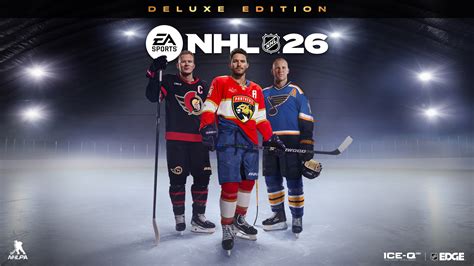
The evolution of hockey video games mirrors the broader journey of gaming itself-from simple pixels bouncing across screens to sophisticated simulations that blur the line between virtual and reality. For hockey fans who couldn’t get enough of the sport, video games provided a way to experience the thrill of the ice year-round, and over four decades, developers have transformed crude representations into experiences that capture the speed, physicality, and emotion of professional hockey.
From simple pixels to near-photorealism: the evolution of hockey video games spans more than four decades.
The Primitive Era: When Hockey Was Just a Mode (1970s-Early 1980s)
The first hockey video game was essentially Pong with a twist-most Atari sets came with a “hockey” function that differed from regular Pong only by adding an extra player in front of your opponent’s goalie. This rudimentary attempt at hockey gaming offered little in the way of authentic gameplay, but it planted the seed for what was to come.
It wasn’t until 1981 and the release of Ice Hockey for Atari that a game depicting something resembling actual hockey gameplay emerged. While primitive by any standard, it represented the first dedicated hockey title that attempted to capture the sport’s fundamentals beyond the basic back-and-forth of Pong.
The Arcade Revolution: Blades of Steel vs. Ice Hockey (Mid-1980s)
The mid-1980s brought hockey gaming into arcades and living rooms, establishing two titles that would define the era and spark debates that continue among retro gaming enthusiasts today.
Read also: Features of Custom Hockey Gloves
Hat Trick (1984)
Hat Trick appeared in arcades offering the first appearance of ice resurfacing in a hockey game, with players leaving skate marks as the game progressed and a strange tank-like machine with a periscope resurfacing the rink between periods. While the game was essentially one-on-one action, it represented an important step forward in bringing hockey’s atmosphere to the arcade.
Blades of Steel (1987-1988)
Blades of Steel was released by Konami for North American arcades in 1987 and ported to the Nintendo Entertainment System in December 1988. The game became legendary for several reasons that transcended its gameplay.
Blades of Steel featured five skaters on the ice for each team, shots and passes, and a fighting engine that made in-game fisticuffs better than some boxing games at the time. When two players bumped into each other three times in a row, a fight would break out, and the loser was sent to the penalty box, creating a power play opportunity. This consequence-driven fighting system added strategic depth and became one of the game’s most beloved features.
The game featured distinct voice samples, which were rare at the time in NES games, including “Blades of Steel!” on the title screen, “Faceoff” before each faceoff, and “Fight” when a fight broke out. The passing call-out became the subject of intense debate among players-was the announcer saying “Hit the pass,” “With the pass,” or “Get the pass”? Players who experienced the arcade version with clearer audio confirmed it was “Get the pass.”
Adding to Blades of Steel’s charm was its creative intermission programming. During the second intermission, either a playable mini-game would appear or a Konami ad featuring a bear shooting the puck into a net, with the mini-game being an advertisement for Contra, Jackal and other Konami games. This early form of in-game advertising was decades ahead of its time.
Read also: The story of Craig Needham
The game had its quirks that departed from real hockey. Blades of Steel had no offside rule and used shootouts to determine tied games-roughly 17 years before shootouts would be implemented in the actual NHL.
Blades of Steel chased realism with fights and voice samples, while Ice Hockey leaned into arcade chaos and hilarious body types.
HOCKEY NHL VIDEO GAMES EVOLUTION [1979 - 2023]
Ice Hockey (1988)
Ice Hockey was developed by Nintendo and Pax Softnica and published by Nintendo for the Famicom Disk System and Nintendo Entertainment System in 1988. While Blades of Steel aimed for realism, Ice Hockey took a more arcade-style approach that proved equally captivating.
Teams were made up of five players including the goaltender, as opposed to six in real life, and featured a unique player customization system where you could select from skinny, medium, and fat player body types. The skinny players were fast but easily knocked down, medium players were balanced, and fat players were slow but could unleash powerful slap shots that would find the net from the red line.
Ice Hockey debuted on January 21, 1988, as part of Nintendo’s Sports Series and featured teams including the United States, Sweden, Czechoslovakia, Canada, Poland, and the Soviet Union. The international focus rather than NHL teams gave the game a different flavor from its competitors.
Read also: Inside Aaron Ness's Career
The game was rated the 142nd best game made on a Nintendo System in Nintendo Power’s Top 200 Games list and was included in IGN’s list of the top 100 NES games, ranking at 100. Electronic Gaming Monthly listed it as number 94 on their list of the 100 best console video games of all time, praising its hilarious yet skillful gameplay that accurately represented the excitement of real hockey.
The Licensed Era Begins: EA Sports Takes the Ice (1991-1994)
The early 1990s saw Electronic Arts enter the hockey gaming space, and their impact would prove transformative. However, the road to establishing dominance wasn’t without complications.
NHL Hockey (1991)
EA Sports NHL ’91 for the Sega Genesis launched the franchise, with the game featuring licensing from the NHL so teams were well represented, though Kelly Hrudey was prominently displayed on the cover despite player names not being used in actual gameplay. In NHL Hockey from 1991, game modes were season and playoff, and due to the license, the game was called EA Hockey in Europe and featured 22 national teams instead.
NHL Hockey was met with acclaim by contemporary video game publications, with reviewers praising the available options, multiplayer modes, and visuals. The game’s replay value and accessible controls made it an instant classic, with Electronic Gaming Monthly awarding it “Best Sports Game” of 1991.
NHLPA Hockey ’93 and NHL ’94
The early EA hockey games navigated a peculiar licensing landscape. The franchise skipped the ’92 installment altogether and released NHLPA Hockey ‘93, which was finally able to get licensing from the NHLPA but not the NHL, meaning players’ names were used but team names were not.
This licensing issue was resolved with NHL ’94, released in October 1993. The NHL and NHLPA came to terms on NHL ’94 and both team and player names were used. The game became legendary and is still considered by many to be the greatest hockey video game ever made, spawning the annual “King of 94” tournament that continues today. Its influence was so significant that it earned a memorable reference in the 1996 film “Swingers,” cementing its place in pop culture.
The success of the EA franchise early on can be chalked up to its ability to customize gameplay by adjusting penalties, offsides, and more, giving players unprecedented control over how the game was played.
EA’s early NHL titles, especially NHL ’94, set the blueprint for licensed hockey games and still fuel competitive “King of ’94” tournaments today.
The 3D Revolution and Feature Expansion (1995-2000)
The Jump to 3D
As the mid-1990s approached, EA introduced 3D graphics and the multiplayer online feature, with NHL 97 being the first full 3D installment that also embraced online multiplayer gaming. This allowed hockey fans to compete against each other without being in the same room, foreshadowing the rise of online gaming.
On PC, NHL 96 was in 3D with 2D player textures and fights returned, while NHL 97 was the first full 3D installment with national teams from Canada, USA and Russia added.
NHL 99: The Career Mode Pioneer
NHL 99 was a landmark release, introducing career mode with real-life simulations like drafting, player trading, and a retirement feature. This depth transformed the series from pure arcade action into something approaching a management simulation.
NHL 99 was the first game in the series to feature fully licensed music from artists including David Bowie for the intro video, leading to the development of EA Sports Trax for NHL games. This marriage of hockey and popular music became a hallmark of the series.
Expanding the Game (2000-2002)
The turn of the millennium saw EA consolidate and refine their hockey offering. In NHL 99, career mode was added and in NHL 2000, tournament mode arrived. When it came to NHL 2000 and NHL 2001, there was a pause in innovation, with no major breakthroughs until NHL 2002, where developers focused on injecting realism through improved physics, better player models, more detailed arenas, and realistic cutscenes.
The Competition Heats Up: NHL 2K Series (2000-2011)
While EA Sports dominated the hockey gaming landscape, they faced legitimate competition from an unexpected source.
The late 90s and early 2000s brought full 3D graphics, online play, and a true rival in the NHL 2K series.
The Dreamcast Launch
The NHL 2K series launched on the Dreamcast on February 7, 2000, as part of the Sega Sports line-up of sports titles, with its success leading to it becoming one of the few Sega All Stars titles. The follow-up, NHL 2K2, was released on February 14, 2002, and was the last game released for the Dreamcast before the system was discontinued.
Establishing Identity
NHL 2K3 was released on November 19, 2002, and was the first in the series to feature a franchise mode, while the Xbox version became the first online console hockey game. The 2K series began to establish its identity as a more simulation-focused experience compared to EA’s arcade-style approach.
The $19.99 Gambit
ESPN NHL 2K5 was released on August 30, 2004, and was the last game in the series to be published by Sega, and the last to be released under the ESPN branding. In a bold marketing move, the game was priced at $19.99 at launch rather than the typical $49.99, earning it a wide audience among more casual hockey fans. However, EA soon signed an agreement with ESPN to become the sole licensee of ESPN’s brand in sports games.
The Final Years
NHL 2K6 was released on September 7, 2005, as a launch title for the Xbox 360, being the first game to be published under Take-Two’s 2K company after the acquisition of developer Visual Concepts. New features included an expanded franchise mode and a new goalie control feature.
The series continued through NHL 2K10, but NHL 2K10 was the last game in the series to be released on PlayStation 3, PlayStation 2 and Xbox 360. NHL 2K11 was released on September 7, 2010, for iPhones and the Wii only, with CEO Ben Feder explaining they decided to reevaluate their NHL strategy.
On May 25, 2011, 2K Sports confirmed the NHL 2K series would not be published on any console, effectively ending the competition and leaving EA Sports as the sole major publisher of NHL-licensed hockey games.
Innovation and New Features (2007-2013)
With diminished competition, EA Sports continued to innovate on their established foundation.
The Skill Stick Revolution
In NHL 07, many more realistic gameplay features were introduced, notably in stickhandling, where the Skill Stick Revolution feature allowed gamers to use different types of dekes and shots. This control scheme gave players unprecedented command over individual player movements and became a defining feature of the modern NHL series.
NHL 10: The 2010s Begin
NHL 10 marked the start of the 2010s and the start of a decade of remarkable advancements in the franchise, with intimidation tactics, 360-degree precision passing, better goalie intelligence, and new modes such as Be a GM Mode and Battle for the Cup Mode. The game demonstrated the sophistication possible thanks to more advanced gaming consoles.
Commentary Evolution
Live play-by-play commentary was introduced in NHL 97, with Jim Hughson providing the play-by-play for much of the series. Gary Thorne provided commentary for the Xbox 360 and PlayStation 3 versions of NHL 08 through NHL 11, followed by Mike “Doc” Emrick from NHL 15 until NHL 19. These authentic broadcast voices added immersion and connected the virtual experience to real NHL telecasts.
The Next-Gen Transition: Growing Pains and Recovery (2014-2016)
The leap to PlayStation 4 and Xbox One brought both technical marvels and significant controversy to the series.
NHL 15: A Beautiful But Incomplete Launch
NHL 15 was released on September 9, 2014, in North America and served as the debut entry in the series for eighth generation consoles, receiving releases on the PlayStation 4 and Xbox One. The game introduced stunning visual improvements, but came at a cost.
NHL 15 introduced integration of NHL on NBC presentation into the game across all modes, including on-air graphic elements across two networks, NBC and NBCSN, and the lead commentary team of Mike Emrick and Eddie Olczyk, with TSN analyst Ray Ferraro as an ice-level analyst. Full motion video of Emrick and Olczyk was shot and digitally inserted into pre-game introduction scenes, representing a revolutionary step in sports game presentation.
However, the next-gen version launched without several popular modes. The GM Connected, Live the Life, NHL 94 Anniversary, and EA Sports Hockey League modes didn’t make the cut. Producer Sean Ramjagsingh explained that the team’s focus was on building new technology from the core out to deliver a truly next-generation gameplay and presentation experience, but this decision disappointed many longtime fans.
EA Sports responded with a series of free updates throughout fall 2014, gradually adding back features like Playoff mode, Online Team Play, and Be a GM Rookie Draft functionality.
NHL 16: Course Correction
NHL 16 was released on September 15, 2015, with Jonathan Toews of the Chicago Blackhawks as the official cover athlete. The game received significantly more positive reviews compared to its predecessor.
The fan-favorite EA Sports Hockey League mode returned to the game after being left out of the PlayStation 4 and Xbox One versions of NHL 15, marking a major step in restoring fan confidence. Critics generally felt NHL 16 was a substantial improvement, with better game modes and restored functionality alongside the enhanced graphics and physics of the new console generation.
International Expansion and League Integration
Throughout its evolution, the NHL series has expanded well beyond North American professional hockey.
The different installments of the game include development leagues like the American Hockey League and ECHL, major junior leagues like the member leagues of the Canadian Hockey League, European national leagues from Russia, Sweden, Finland, Germany, Austria, Switzerland and Czech Republic, and the European Champions Hockey League.
A Nordic expansion of NHL 2001 was published by EA Sports Nordica introducing Finland’s SM-Liiga and the Swedish Hockey Leagu...