Goalie interference is a contentious penalty in hockey, often sparking debate among players, coaches, and fans alike. By definition, Goalie Interference in hockey is a penalty called when an opposing player initiates contact with the goalie, whether intentionally or unintentionally, and therefore impairing the goalie’s ability to move freely.
Furthermore, this penalty can be called whether the goalie is inside or outside of the goal crease. However, if an opposing player is pushed into the goalie, while he is in his crease, by one of the goalie’s teammates, then it will typically not be called a penalty.
The overriding rationale of this rule is that a goalkeeper should have the ability to move freely within his goal crease without being hindered by the actions of an attacking player. If an attacking player enters the goal crease and, by his actions, impairs the goalkeeper’s ability to defend his goal, and a goal is scored, the goal will be disallowed.
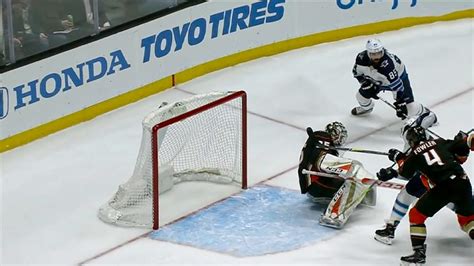
Penalties for Goalie Interference
In all cases in which an attacking player initiates intentional or deliberate contact with a goalkeeper, whether or not the goalkeeper is inside or outside the goal crease, and whether or not a goal is scored, the attacking player will receive a penalty. In most instances, the referee will call a two-minute Minor Penalty for Goalie Interference but can also call a five-minute Major Penalty depending on the severity of the situation.
The referee crosses both arms to form an “X” motion in front of the chest when calling the penalty. Both hands clenched in fists.
Read also: Goalie Equipment: A Comparison
If an attacking player has been pushed, shoved, or fouled by a defending player so as to cause him to come into contact with the goalkeeper, such contact will not be deemed contact initiated by the attacking player for purposes of this rule, provided the attacking player has made a reasonable effort to avoid such contact.
If a defending player has been pushed, shoved, or fouled by an attacking player so as to cause the defending player to come into contact with his own goalkeeper, such contact shall be deemed contact initiated by the attacking player for purposes of this rule, and if necessary a penalty assessed to the attacking player and if a goal is scored it would be disallowed.
The Official NHL Rule Text (Rule 69)
This rule is based on the premise that an attacking player’s position, whether inside or outside the crease, should not, by itself, determine whether a goal should be allowed or disallowed. In other words, goals scored while attacking players are standing in the crease may, in appropriate circumstances be allowed. Goals should be disallowed only if:
- an attacking player, either by his positioning or by contact, impairs the goalkeeper’s ability to move freely within his crease or defend his goal; or
- an attacking player initiates intentional or deliberate contact with a goalkeeper, inside or outside of his goal crease.
Incidental contact with a goalkeeper will be permitted, and resulting goals allowed, when such contact is initiated outside of the goal crease, provided the attacking player has made a reasonable effort to avoid such contact. The rule will be enforced exclusively in accordance with the on-ice judgment of the Referee(s) but may be subject to a Coach’s Challenge (see Rule 38).
For purposes of this rule, “contact,” whether incidental or otherwise, shall mean any contact that is made between or among a goalkeeper and attacking player(s), whether by means of a stick or any part of the body.
Read also: Women Making History in the NHL
Goalie interference issue turning into a nightmare for NHL
Controversies and Inconsistencies
Goalie interference or not goalie interference? That is the question that continues to resurface in the NHL. While some version of the NHL's goalie interference rule dates back to the 1931-32 season, we are now in the ninth season where coaches can challenge a goal for it.
Per NHL rule 69, “Goals should be disallowed only if: (1) an attacking player, either by his positioning or by contact, impairs the goalkeeper’s ability to move freely within his crease or defend his goal; or (2) an attacking player initiates intentional or deliberate contact with a goalkeeper, inside or outside of his goal crease.”
However, it's a ruling with a lot of grey area, which leads to inconsistency from one game to the next. Just this past week, we saw two similar goalie interference calls end with different results.
Last Wednesday, the Washington Capitals thought they had taken a 3-1 lead early in the second period courtesy of John Carlson. But, after review, it was determined that Capitals forward Nic Dowd impeded Maple Leafs' goaltender Joseph Woll from making the save. The NHL stated that "Video review determined Washington’s Nic Dowd impaired Joseph Woll’s ability to play his position in the crease prior to John Carlson’s goal." The Capitals ended up losing 4-3.
Then, on Saturday night, the New York Islanders challenged a late goal that gave the Seattle Kraken a 3-2 lead as they believed that Kraken left winger Brandon Tanev interfered with Ilya Sorokin off a point shot from Jamie Oleksiak.
Read also: The Spectacle of Goalie Fights in the NHL
The Islanders not only lost 3-2 but had to play two minutes of the final 3:13 shorthanded due to the rule that if a team's challenge fails, they receive a two-minute penalty. The NHL released a statement saying the goal counted because "video review confirmed that Brandon Tanev’s position in the crease did not impair Ilya Sorokin’s ability to play his position."
The concerning part is the assumptions about what pucks can and cannot be saved. Most highlight-reel saves involve goalies stopping pucks they have no business stopping.
And with those saves and many routine saves, the difference between stopping the puck or hitting the back of the twine is an inch. So, even if goaltenders aren't interfered with by much, that slight movement of a blocker or a glove in the opposite direction of the puck could be everything.
Islanders captain Anders Lee used the ruling from the Toronto-Washington game when asked for his opinion on the ruling. "With the calls that are going on in this league right now, it's tough to even know," Lee told The Hockey News. "I saw it the other night against Toronto and Washington. So many of these are up in the air. You might as well give it a shot, but it didn't go for us tonight."
A Potential Solution: Adopting USA Hockey's Rule
There's a simple way to fix goalie interference issues, and that's by the NHL adopting USA Hockey's goalie interference rule.
In USA Hockey, if an attacking player stands, holds their stick or skates through the crease at any time, provided the puck is in the attacking zone while the attacking team has possession of the puck and the goaltender is in contact with the crease, a faceoff shall be conducted at the nearest neutral zone faceoff spot. If an attacking player physically interferes with the goaltender, they get a minor penalty.
If an attacking player is physically interfered by the actions of a defending player and ends up in the crease, however, play continues.
Now, if the whistle isn't blown and the puck goes in, the goal will only count if either (a) an attacking player is pushed into the crease or goaltender by a defending player, (b) the puck preceded the players into the crease or (c) if the goaltender is out of the goal crease area.
The NHL and NHLPA's current collective bargaining agreement expires in 2026, and a list of topics will be addressed, with goaltender interference likely at the forefront. Whether both parties agree or not, USA Hockey's rules for goalie interference could be the way to improve consistency on the calls.
Other Player Interference in Hockey
Interference Penalties can also be called against a player who makes contact with an opposing skater. In short, an Interference Penalty will be called if a player is illegally impeding the progress of an opposing player (non-puck carrier), with no intention of making a play on the puck.
tags: #goalie #interference #hockey