Synthetic ice tiles have revolutionized the way athletes train, offering a convenient and effective alternative to traditional ice rinks. Whether you're a hockey player looking to improve your skills year-round or a skating enthusiast wanting to practice at home, synthetic ice tiles provide the perfect solution. Fortunately, you can complete the installation process quickly and efficiently with just a little bit of effort, as opposed to a refrigerated ice rink.
Here’s everything you need to know about synthetic ice tiles, from setting them up to keeping them in top condition.
Advantages of Synthetic Ice Tiles
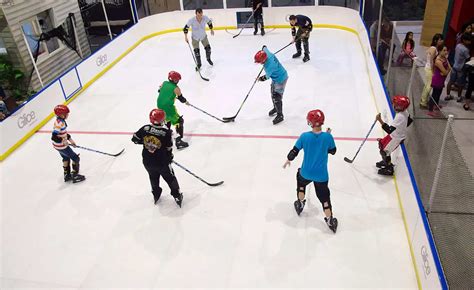
Synthetic ice has been the great equalizer when it comes to access to ice skating. It can be placed anywhere, and indeed, homes and businesses across the country are creating their own ice-skating experiences that can be enjoyed all year round. Here are some of the key benefits:
- Year-Round Training: One of the most significant advantages of synthetic ice tiles is the ability to train year-round.
- Cost-Effective: Maintaining a traditional ice rink can be incredibly costly, with expenses related to refrigeration, electricity, and regular resurfacing. Synthetic ice tiles eliminate these costs, offering a budget-friendly option for both personal and commercial use.
- Easy Installation: Synthetic ice tiles are designed for easy installation, allowing users to set up their training area quickly.
- Portability: They are also portable, making it possible to create a temporary rink that can be disassembled and moved as needed.
- Realistic Feel: Modern synthetic ice tiles are engineered to mimic the feel of real ice closely. Products like Potent Hockey's Skate-able Synthetic Ice Tiles offer a smooth and realistic skating surface that allows for effective training.
- Environmentally Friendly: Synthetic ice tiles are an environmentally friendly alternative to traditional ice rinks. They do not require water or electricity, reducing the environmental impact associated with maintaining an ice rink.
With the scalability of synthetic rinks, the experience is being opened to a wider range than ever before, too - who would have thought skating under tropical temperatures would ever have been possible?
Preparing for Installation
Before beginning the synthetic ice installation, you must take certain steps to ensure maximum efficiency and safety.
Read also: Features of Custom Hockey Gloves
Surface Preparation
Before installing synthetic ice tiles, it's crucial to prepare the surface where they will be placed. The surface should be clean, dry, and level to ensure a smooth and stable skating area.
To have a successful skating experience, you want to look for a flat and clean surface, free of debris and water. The area should be big enough to accommodate the synthetic ice rink size you chose. If you place synthetic ice tiles on irregular or abrasive surfaces, we recommend placing a protective underlay material, such as foam flooring underlayment, to prevent damage to the flooring and underside of the sheets.
Besides the synthetic ice tiles, consider purchasing a subfloor, which can be rubber, thin foam, or wood floor. Larger ice rinks should be accompanied and put in place by dasher boards to ensure a safe ice skating experience.
Check that the yard is level first.
Establishing the Perimeter
It is also important to establish the perimeter of the skating area before installation. Do this by using tape or a line to ensure a precise outline. Plan the layout of your synthetic ice tiles by measuring the area and determining the best configuration. This step will help you visualize the final setup and ensure you have enough tiles to cover the desired space.
Read also: The story of Craig Needham
Once you have your Eco Ice tiles, it’s time to prepare the area where you’ll be installing the ice rink. Follow our instructions, adapted to home rinks or larger synthetic ice rinks for the correct installation. For a small rink, we have created our specific synthetic ice panels for home use. They are a great opportunity for hockey players and figure skaters to practice their skills without having to wait for real ice.
Inspecting the Tiles
Start by removing all sheets from the pallets and inspecting the synthetic ice panels for any dirt or debris, particularly on the tongue and groove.
Step-by-Step Installation Guide
Follow these straightforward steps, on how to install a synthetic skating rink and your skating experience will be waiting in no time!
Laying Down the First Row
When laying down the synthetic ice panels, we recommend starting with one row first. Start by placing the first tile in one corner of the area. Make sure the interlocking edges are aligned correctly and press down firmly to connect the tiles. Start at the center of the panel connection, and work outward to the edges.
Adding Subsequent Rows
Once you installed the first row of synthetic ice panels, add another row and check alignment and positioning as you go. Continue adding tiles one by one, ensuring each tile locks securely into place with its neighbors. Work Row by Row5. Edge Trimming (Optional)5. Edge Trimming (Optional)When you install synthetic ice, begin by laying CA Hockey tiles one full row at a time, then proceed to the next row. Ensure that each tile is securely locked in place before continuing with the installation. If you encounter resistance while installing, avoid forcing the tiles; instead, check the alignment and surface as outlined in the ice rink installation guide.
Read also: Inside Aaron Ness's Career
To add another row of panels, check the alignment and position of each panel as you go along.
Securing the Panels
Make sure that all plug holes align - if they do not, utilize the Glice installation tool to fix the issue. Knock the plugs into all holes with the nylon hammer provided with the tool box, ensuring that the rounded bottom is down and that the flat tops of the plugs are flush with the surface.
Finishing Touches
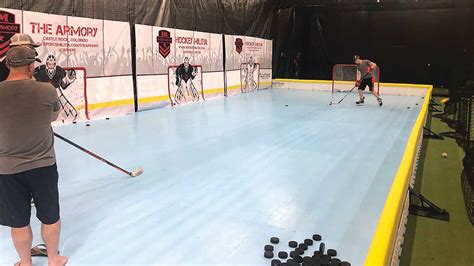
Once all tiles are in place, check for any gaps or uneven edges. For a professional finish, consider adding edging around the perimeter of your synthetic ice rink. Edging helps contain pucks and keeps the tiles in place.
Edge Trimming (Optional)
If needed, trim the edge tiles of your CA Hockey tiles using a jigsaw or circular saw to fit around walls or obstacles. For permanent installations as outlined in the ice rink installation guide, you can add rubber ramps or edge guards for safety and smoother transitions when you install synthetic ice.
HockeyShot Synthetic Ice Revolution Tiles - Setup & Features
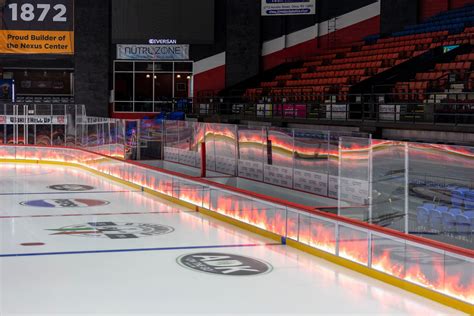
Dasher Board Installation
Larger ice rinks should be accompanied and put in place by dasher boards to ensure a safe ice skating experience.
Initial Placement
To begin the installation process, you must first place the feet on both sides of a corner. Once in place, position the curve module on top of the feet.
Positioning the Feet
Next, it is time to place the next foot at a distance of 1.96 meters (6.4 feet). This step is crucial in ensuring that the dasher board remains stable and properly positioned.
Adding the Dasher Board
With the foot in place, it is now time to add the straight dasher board on top.
Disconnecting Panels
Panels: To safely disconnect synthetic ice panels, begin by placing a wedge underneath the side of the panel. This will create a space under the panel and allow you to remove it with ease. Next, use the metal punch and nylon hammer supplied to knock the plugs out, starting from one end and working your way to the other. be reused for future installations. After removing the plugs, remove the wedge and carefully slide the panel away from any adjoining panels. It is essential to proceed carefully to prevent any damage to the surrounding area or neighboring panels.
To disconnect synthetic ice panels, lift an outside corner of the panel you want to remove and gently tap the outer edges of the adjacent panels to free the first panel being lifted.
Dasher boards: To begin the process, start by removing the screws that hold the dasher boards in place. Next, gather two people to remove the dasher board. One person should hold it from the inside, while the other person holds it from the outside. Make sure to proceed slowly and carefully to ensure that the dasher board is safely removed. After removing the dasher board, it is time to remove the foot. This step is essential to ensure that the dasher board modules are safely and efficiently dismantled.
Maintaining Your Synthetic Ice Rink
Want to know more about synthetic ice rink maintenance?
Regular Cleaning
To maintain the performance and appearance of your synthetic ice tiles, regular cleaning is essential. Sweep or vacuum the surface to remove dirt, dust, and debris that can accumulate over time. For deeper cleaning, you can use a low-pressure pressure washer, and wipe the tiles with a soft cloth or mop.
Once you complete the ice rink installation guide and install synthetic ice, be sure to wipe the surface with a soft cloth or microfiber mop. Your CA Hockey tiles rink is now ready for skating, stickhandling, or training!
There's no special cleaning required, other than using an occassional pushbroom to remove dust, pet hair, and other particles, just like any other flooring surface in your house. You can also mop the tiles with a mild soap as well without harming the surface, if you so choose. If used outdoors, be sure to remove twigs, leaves, and other debris before each use.
By carefully running the scraper over the affected areas, you can level out the surface, eliminating ruts and ensuring a consistently smooth glide. Every time a boot skates across the ice, it will kick up some amount of matter from the synthetic ice tiles, even given the hardness. These are only minuscule amounts, but they accumulate over time and will have an impact both on the safety of the rink and the amount of fun that people can have. Managing this is, thankfully, quite simple - sweeping. Using a soft-bristle broom simply brushing aside the light shavings from the rink will help to keep it safe, slick and fit for use.
There will, of course, be dirt built up on the rink. This is inevitable of anything seeing regular human use. There are fine bits of dirt on everyone, and the tiles make a good environment on which to cling and build up. Just as residual chemicals must be cleaned up, so must dirt. Noticeable patches will give your rink a shoddy appearance and will also have the impact of reducing ease of movement across the tile.
Lubrication
Some synthetic ice tiles benefit from periodic lubrication to reduce friction and enhance the skating experience. Check the manufacturer's recommendations for your specific tiles and apply a suitable lubricant if needed.
Over time the surface of the tile will start to scratch-up from the skate blades.. That’s a testament to the fun times spent on the ice and isn’t something to worry about. PolyGlide Ice offers a “Slip” Surface Conditioner to be applied when cleaning, regardless of whether the tile is infused or non-infused, to help maximize the performance of the surface. Any residual liquid does need to be cleaned afterwards, however. This can be achieved by simply moving the water off the rink and into troughs for collection or using a device such as a Vax.
Inspecting for Damage
Regularly inspect your synthetic ice tiles for signs of wear or damage. Look for cracks, chips, or areas where the tiles may have become loose. Address any issues promptly to prevent further damage and ensure a safe skating surface.
Disassembly and Storage
If you need to disassemble and store your synthetic ice tiles, do so carefully to prevent damage. Clean the tiles thoroughly before disassembly and store them in a dry, cool place.
Environmental Considerations
Climate change is a fact of life for every single individual, including those operating ice rinks. Consider what it takes to maintain an ice rink. First, water is required to freeze the surface. Then, to maintain the freezing atmosphere rinks demand, a combination of carbon dioxide, nitrogen dioxide and particulate matter-based aerosols are used to support the atmosphere. Similarly, the Zamboni rink surfacers responsible for resurfacing ice rinks also contribute large amounts of greenhouse gases. Furthermore, Inhabitat also notes the wide range of chemicals used to maintain the ice. Ammonia and brine are commonly used concurrently to maintain ice temperature; the former is a big contributor to emissions, and the latter can cause untold environmental damage when improperly controlled. More rink operators are moving to ethylene glycol, but this comes with toxic properties, too.
Synthetic ice is largely sourced from plastics, and this means there aren’t the same volume of gases being pumped out in order to maintain it, nor the water and chemical requirements. However, the impact of plastics on the planet is well understood, from the emissions created by the production cycle through to the byproducts of cleaning. Keeping the quality of your rink up to scratch is best achieved through regular cleaning.
For indoor properties, the most important step is to separate out cleaning tasks. Brush your surfaces to remove dirt, residual plastics and shavings, and then bag them up; you can use a conventional vacuum cleaner for this, too, either by sweeping and then collecting or by vacuming the entire surface. Outdoors, it’s a little tricker. If your rink is not properly bounded, you can easily end up scattering residue into the natural environment or washing it over during cleaning. The best way to mitigate this risk is to install a rink cover when not in use to ensure very little can escape.
According to the EPA, American homes waste 900 billion gallons of water every year nationwide - that’s roughly 300 washing loads, per week, per household. Part of being a responsible house owner is keeping that number down. As ice-skating enthusiasts, you’ll already have made a significant improvement by eschewing water-based ice for synthetic surfaces, but there’s always more to be done. One important way is by minimizing the amount of water used when cleaning. Aside from resurfacing, which has a specific demand for the conditioner/water balance, it would help if you looked to be economical with water usage. Clean in an organized manner, rather than simply blanketing the surface with water. A cleaning machine provides two key functions - it can remove surface shavings, and it can wash. This kills two birds with one stone when it comes to cleaning your synthetic ice surface and in helping to save the environment. The vacuming action, especially if used with a HEPA filter, will effectively remove particulates from the synthetic ice and ensure that the surface is properly fit for skating once again. Secondly, the washing action of rink cleaning machines will be more exact than handwashing.
Synthetic ice has significantly closed the gap when compared with the water-based alternative nowadays. The experience that can be enjoyed by skating on plastic-based tiles is being enjoyed more and more worldwide, and that’s good news. With the scalability of synthetic rinks, the experience is being opened to a wider range than ever before, too - who would have thought skating under tropical temperatures would ever have been possible? Synthetic ice has the maintenance and ecological safety edge on its predecessor, too - if managed properly. So when you invest in synthetic ice, make sure that you invest in proper maintenance and cleaning protocols at the same time.