As hockey continues to evolve, the physical demands on players have never been higher. To thrive in the modern game, elite players are training in a completely different way, using integrative workouts to train kinetic chains, refining their movement quality, and getting savagely strong while remaining lean, mobile, and quick. This article delves into how hockey players need to train to dominate on the ice, revealing the same formula trusted by hundreds of pros.

The Perfect Training Split for Hockey Players
Traditional training splits, such as upper/lower or push/pull, are outdated for hockey players. All hockey workout programs use a full-body approach to train the integrative chains that translate to the ice. This allows for challenging all movement patterns within each workout and improving the capacity to utilize kinetic chains.
The caveat to this full-body approach is emphasizing different movement patterns on a particular day within a workout schedule. Take a specific movement pattern and make the primary focus. Consider the following example:
- Day 1: Squat + Push - Include a goblet squat with a horizontal press-based exercise like a Landmine Press.
- Day 2: Lunge + Pull - Include a reverse lunge with pull-ups.
- Day 3: Hinge + Push - Include a Trap Bar Deadlift with an incline chest press.
While we might go heavier, or create a more intense demand on these exercises in our first block, we’ll still be using all the other movement patterns (squat, lunge, hinge, push, pull) in the rest of the workout. In summary, hockey players should use a full body split training that utilizes all the movement patterns in each workout.
How Often Should Hockey Players Workout?
This depends on training priorities, the time of year, and training age/experience. While some high-level strength coaches will have their players training 4 days per week (typically Monday/Tuesday, rest Wednesday, Thursday/Friday, rest weekend) - we see hockey players have more progress with just three strength workouts per week.
Read also: Features of Custom Hockey Gloves
The perfect workout schedule for hockey players would include 3 focused lifts, 2 speed sessions, 2-3 mobility sessions, and potentially one extra conditioning session.
Here’s a sample weekly schedule:
- Monday - Lift (60-75 min)
- Tuesday - Speed session (30 min) + mobility session
- Wednesday - Lift (60-75 min)
- Thursday - Speed sessions (30 min) + mobility session (20-30 min)
- Friday - Lift (60-75 min)
- Saturday - Speed or conditioning sessions (30 min) + mobility session (20-30 min)
- Sunday - Complete rest
This allows for on-ice skill sessions to be added without placing too much overload on the nervous system. This needs to be a priority for hockey players, because overloading the nervous system without adequate recovery will ultimately reduce output on lift days and reduce your capacity for motor skill learning on the ice.
Ultimately, you need to find and create a schedule that fits your lifestyle and training goals. Some players will be better served focusing on power skating sessions or skill development in the off-season, and others need to place emphasis on getting stronger or more powerful. Either way, you need to seek clarity on what you need to elevate your game and create a schedule around that.
The Structure of a Hockey Workout
Workouts for hockey players aren’t singularly focused on strength or developing a muscle group; instead, they need to be focused on developing the integrative systems that translate to on-ice performance. The workout structure for hockey players should look like this:
Read also: The story of Craig Needham
- Dynamic Warm-Up
- Prehab & Mobility
- Athleticism
- Strength & Power Blocks
- Extra Conditioning/Core/Mobility Work
- Cool Down
This allows for Strength Coaches & Athletes to cover a lot of basis while putting integrative concepts together throughout a workout.
Dynamic Warm-Up
From a practical perspective, a proper warm-up for recreational hockey is hard to accomplish. It is common for people to roll out of bed and head to the rink, or go right to the rink after work. Here is an example of a dynamic warm-up that can be done for 5 minutes and can be either done place or over 10-15 yard space. If you have only a few minutes to warm up before you go on the ice, at a minimum I would recommend the dynamic warm-up.
Prehab & Mobility
Prehab is essential for hockey players. Prehab can be defined as exercises that are done to prevent injuries. These are typically activation, mobility, and corrective exercises that aim to compensate or correct the imbalances caused by the demands of sport. It’s important to note that this is different from a warm-up. We’ll typically have our players go through a ~10 minute workout before getting into their prehab work.
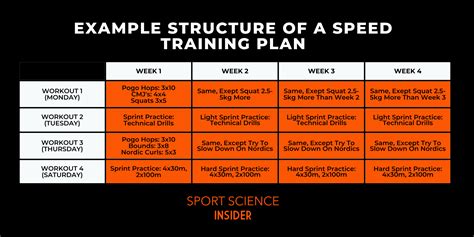
Athleticism & Speed Training
15 Fast Footwork Exercises | Increase Your Foot Speed With These Speed Ladder Drills
Speed training for hockey players is a topic worthy of its own article. Because this is a small training block of speed training and not an entire workout - our goal is to focus on one common theme of speed/athleticism. Some of these themes can include:
- Acceleration (linear, lateral, or both)
- Deceleration (including landing patterns)
- Lateral, curvilinear, & multi-directional speed
- Linear speed
- Change of direction capacity
- Agility & reactive speed
- Positional & postural focuses (landing, planting, absorbing & expressing, etc.)
- Athleticism & kinesthetic awareness development
Within our workouts, we’ll typically have hockey players perform 3-5 drills all in a similar theme. This allows for players to really challenge a specific motor skill & enhance their capacity for better movement and refined mechanics.
Read also: Inside Aaron Ness's Career
Strength Training for Hockey Players
The “primary” focus of hockey players for any workout should be getting stronger and more powerful. For hockey players, this section of the workout will typically be 2 or 3 “blocks” comprising 3-4 exercises each. These blocks are typically meant to be done in a “superset” fashion, in which all of the exercises in the block are done back to back before taking a rest. It’s important to note that this doesn’t make these exercises “circuit training” - hockey players shouldn’t be going through exercises as fast as possible to create a conditioning response, but instead giving themselves enough rest time to hit each exercise with intensity and intention.
Because our goal is full-body and movement focused training, we want to ensure that we’re getting all five movement patterns into each workout. These include:
- Squat Pattern
- Hinge Pattern
- Lunge Pattern
- Upper Body Push
- Upper Body Pull
While these can be broken down further into horizontal or vertical expressions, if hockey players can find a way to include all five of these movement patterns into each workout, their workouts will be better than 90% of other players.
Core & Conditioning for Hockey
Depending on the workout, this finishing block can be composed of three components: conditioning, extra core, or extra mobility. Let’s look at how to make each component more effective.
Conditioning
While all of our programs have independent conditioning days, we’ll still use a short and intense block of conditioning at the end of some workouts. This work allows us to get in short burst and high intensity work and continue to develop the energy systems so valuable for hockey players. This HIIT-based work is always intentional. We’re never just grinding for the sake of chasing breakdown/fatigue, but instead intentionally trying to build those energy systems.
Extra Core
While most of our workouts have core exercises built into them, sometimes extra core can be valuable for a workout that is more movement focused. Again, this work is designed to be intense and intentional - and because it’s separated from the rest of the workout we can use multiple core-focused exercises to build a synergistic effect. Our goal here is to find intentional activation in the core and really focus on creating that braced trunk position - all the value is in finding and challenging that squeeze.
Extra Mobility
All hockey players' workouts should end in some sort of mobility work. It’s important to note, that just like the rest of the “finishing work” - this work needs to be approached with intention. Here, we want to focus on using a warm body (both physically and neuromuscularly) to reclaim extra range. This is the ideal time for hockey players to use active hip mobility exercises.
For these passive stretches, we really want hockey players to emphasis two elements:
- Sinking into range - because we’re using longer holds (30-120s) we really want players to “let go” and sink into the stretch to reclaim flexibility and mobility.
- Breathing - as we transition to the “cool down phase” of a workout, we want to see players get really intentional with their breathing. Slow and deep belly breathing with an emphasis on long exhales triggers a parasympathetic response - ultimately allowing your body to slow down and start the recovery process.
Additional Tips for Hockey Training
Beyond the structured workouts, several other factors contribute to a hockey player's overall fitness and performance:
- Foam Rolling: Use a foam roller for a few minutes before stretching and warming up to address muscle trigger points.
- Static Stretching: Stretch frequently, focusing on hip flexors, quads, and hip adductors.
- Proper Technique: Ensure proper technique in all exercises to prevent injury.
- Progressive Overload: Gradually increase weight and intensity as you get stronger.
- Conditioning Variety: Incorporate steady-state cardio and interval training to improve aerobic and anaerobic fitness.
- Nutrition and Hydration: Follow a game day nutrition guide and stay hydrated.
- Recovery: Prioritize quality sleep and active recovery.
Sample Exercises
Here are a few sample exercises that can be incorporated into your hockey workout plan:
- Pelvic Tilts: Kneel on one knee and tilt your pelvis by tucking your tail under.
- Plank: Lie on your stomach and prop your body up on forearms and toes, maintaining a straight spine.
- Side Bend: From a standing position, bend at your hips and knees while leaning towards one side.