The history of hockey in Indianapolis is rich and varied, featuring numerous teams and leagues over the decades. From the early days of the Indianapolis Capitals to the modern era of the Indiana University Hoosiers, the sport has seen its share of triumphs and challenges. Let's delve into the captivating journey of hockey in Indianapolis, with a special focus on the evolution of team jerseys and the stories behind them.
The oldest team we could find information about is the Indianapolis Capitals of the American Hockey League who began play in the 1939-40 season.
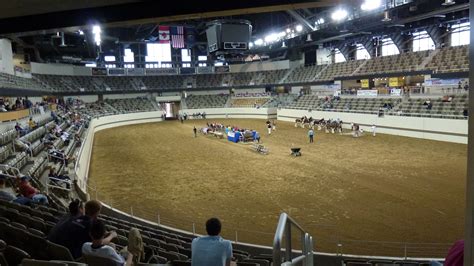
The Indiana State Fair Coliseum, now known as the Pepsi Coliseum, which opened in 1939, has been one virtual constant throughout the history of hockey in the city of Indianapolis, which also saw the arrival of the Indianapolis Capitals. It seats 8,200 fans.
The Capitals, who were a farm team for the Detroit Red Wings, started out strong, winning their division in their very first season and two seasons later, after posting a 34-15-7 regular season record went on to capture the Calder Cup as league playoff champions in 1942.
They would return to the finals in 1943 but it would take eight years for the Capitals to again win the Calder Cup following a sweep of the Cleveland Barons in 1950. The club lasted through the 1951-52 season and played its games at the Indiana State Fair Coliseum. Les Douglas was the franchise's leading scorer, with 302 points in six seasons in Indianapolis.
Read also: A Look Back at Evansville Hockey
The Indianapolis Chiefs: A Championship Run
The next team to call Indianapolis home was the Indianapolis Chiefs of the International Hockey League from 1955-56 to 1961-62.
They also called the coliseum home and started out poorly with an 11-48-1 record. They improved quite a bit in year two, but still finished under .500 at 26-29-5. The next season they again had a losing record (28-30-6), but came to life during the playoffs, eventually becoming the 1958 Turner Cup champions by outlasting the Louisville Rebels 4-3 in the finals.
Two weeks after the Chiefs had been swept out of the 1957 Turner Cup Finals, their coach was scouring Canada, looking for the half-dozen players who would turn the Chiefs from a good team into a Turner Cup contender. After finishing second in 1956-57, Indianapolis Chiefs coach Leo Lamoureux had a definite goal in mind - close the gap on the Cincinnati Mohawks.
The Mohawks were the IHL's greatest dynasty. In the 1957 Turner Cup Finals, the Mohawks swept the Chiefs in three games, outscoring them 16-2. In the Mohawks' five years in the league, they had never been challenged for first place and only once challenged in a playoff series - going seven games with Troy in the 1956 final.
With a strong nucleus back - led by the reunited "B Line" of Pierre Brillant, Bob Bowness and Marc Boileau and the stellar goaltending of Cliff Hicks, a goaltender who was once traded for Gump Worsley - the Chiefs were set, and close to being a championship-caliber team.
Read also: East Stroudsburg Field Hockey: A Look Back
While Brillant took the headlines, Bowness and Boileau were great players in their own right. Bowness was an NHL-caliber pivot whose son Rick Bowness later coached the Ottawa Senators and Boston Bruins.
Some other key players were back - 22-year-old winger Myron Stankiewicz would be one of the key ones, as he had improved his skating and shooting strength over the previous two seasons. Both times, the Chiefs picked him up from Toledo at mid-season. Frank Kuzma was back, as was Lloyd McKey and defender Ed Calhoun.
Among the newcomers were two-way defenseman Billy Short, rugged blueliner Sam Gregory and forward Ross Hughes, who spent his non-hockey time at Indiana University working on an MBA. Gregory, was a boxer in the off-season and apparently on the ice, too, as evidenced by his triple-digit PIMs. He brought a measure of toughness to the team. The Mohawks had to be knocked off their pedestal.
On the ice, Brillant had another big night, with two goals and two assists. The Chiefs roared out to a 3-0 lead after 20 minutes and rolled to a 6-2 victory. What had to make Chief boss Mel Ross just as happy as the final outcome was the opening-night crowd - 3,509, much larger than the season average of a year before.
The B Line continued its torrid pace in Game 3, a 5-2 win over Fort Wayne, in which Brillant had two goals and two assists. In just three games, the nifty Chief right wing had 13 points, including six goals.
Read also: Pioneers Hockey Championships
Still, the Chiefs' record would dip thanks to defensive lapses in the next two games - a 4-2 loss to Fort Wayne on Wednesday in which Cadou wrote, "Hicks got as much protection from the Indianapolis rearguard as a motorist crossing a railroad track would get from one of those sets of wooden crossbucks." He got less protection with a visit to mighty Cincinnati that Saturday.
When the Mohawks advanced, Hicks kicked the shots away. He stopped 36 in all, and the Chiefs had a 1-0 win in what might be their best, tightest performance in their two-plus seasons.
Before the next game, a pair of players were called in from Chicoutimi of the Quebec league - right wing Germain "Red" Leger, a 5-11, 170-pound veteran, and 21-year-old defenseman Marc Parent, a 6-1, 190-pound defenseman. Lamoureux fined the entire team $25 a man, fed up.
For the second time in as many years, the B-Line was broken up, as Myron Stankiewicz moved up and Bob Bowness dropped to the second unit. It was a move largely to spread out the scoring and take some pressure off Brillant. After giving up five third-period goals in Fort Wayne the next night and losing 6-1, the Chiefs were 4-9-1, had won just once in their last nine games, and needed a turnaround.
On Dec. 1, the Mohawks sauntered into the Coliseum in their usual position - way ahead in first place - and were their usual prohibitive favorite. In addition to scoring the game-winner, Short also had two assists in the game.
Three days later in the Queen City, the Mohawks handed the Chiefs a 6-1 scalping. Leger had the last laugh on this weekend. On Friday, he and Frank Kuzma had two goals and an assist each in a 4-2 Chief win.
The Chiefs wouldn't come out of last place for another couple of games, thanks to back-to-back losses. On Dec. 11, the Troy Bruins visited the Coliseum for a Wednesday night game. The Chiefs were much warmer than the temperature. "The squad is beginning to jell in all departments and only needs a few more games like that to jump right into a fight for first place," Lamoureux said after the game.
A three-game skid put them back there - in one of the games, the Chiefs blew a 3-1 second-period lead and fell 5-3 to Toledo. Before that contest, 188-pound defenseman Ron Morgan joined the team, as did forward Alex Viskelis.
Certainly, they were in a league by themselves. Lamoureux had a different take in responding to the claims, saying, "Why not just go out and get better talent and beat Cincinnati? Mulligan would like to turn this into an industrial league to save money."
One night after falling 3-0 in Cincinnati, the Chiefs hosted the Mohawks in a Sunday matinee. And with 54 seconds left, Viskelis beat Glenn Ramsay to give the Chiefs a 3-2 victory heading into Christmas.
Facing ex-Chief goaltender Bob Lalonde, who was filling in for regular Rebel starter Lou Crowdis, the Chiefs got first-period goals from Ken Willey, Myron Stankiewicz, Sam Gregory, Red Leger, Bob Bowness and Marc Boileau, and held a 6-2 lead after one. It was the highest-scoring game of the year.
The Chief turnaround continued. The suddenly-hot Chiefs had a five-game unbeaten string going, credited largely to tighter checking. The record was 12-15-2, and the team that was in last place in mid-December was now just three points out of second as the ball dropped to usher in 1958.
The Chiefs would trade wins and losses throughout much of January. Brillant beat Glenn Ramsay from 10 feet out on the right side after a short pass from Boileau for the game winner with 3:17 to go.
The next night, Brillant scored nine seconds into a game with Fort Wayne. Boileau took a feed from Brillant and made it 2-0 just 44 seconds in.
Another highlight was a 4-2 victory in Cincinnati Jan. 19, as the Chiefs got goals from Stankiewicz, Viskelis, Bowness and Kuzma. Combined with a 6-3 win over Louisville the night before, the Chiefs were 17-20-3.
Brillant was named an IHL All-Star - the only Chief to be named to the team - and headed to Philadelphia to meet the Eastern Hockey League's best Jan. 22.
Before thinking about playing the EHL, the Chiefs had to just get into the IHL playoffs. A five-point weekend at the end of January helped, bringing the record to 19-21-4.
The Indianapolis Racers and the Gretzky Era
Indianapolis Racers Fold 1978
Indianapolis went without a team for the next nine years until the arrival of the first major league team in the city's history in the form of the Indianapolis Racers of the World Hockey Association in 1974-75.
The Racers had a rough start as well, winning 18 and losing 57 with 3 ties their first season in the then 14 team WHA. They bounced back nicely in year two, winning their division, although with a 35-39-6 mark. Desperately trying to survive, owner Nelson Skalbania signed the then 17-year-old Wayne Gretzky to play for the Racers.
The arrangement would only last eight games before Skalbania sold Gretzky to the Edmonton Oilers. It was a death blow for the Racers, who lasted just 15 more games before folding after just 25 games and a dismal 5-18-2 record on December 15, 1978.
Bonus jersey: Today's bonus jersey is a 1978-79 Indianapolis Racers Michel Parizeau jersey from the Racers final season.
Parizeau never led the club in scoring, but through his longevity of the ever-evolving roster was the Racers all-time leader in points, with 136 during his four seasons with the Racers. Parizeau played with both the St. Louis Blues and Philadelphia Flyers in 1971-72, scoring 3 goals in 58 total games. He then joined the Quebec Nordiques of the brand new WHA in 1972 and reeled off four seasons of 25 goals or more, including a change from the Nordiques to the Racers in 1975-76.
The Indianapolis Checkers: A Return to Glory
The Indianapolis Checkers, which suggested both "a check" in hockey as well as "a checkered flag" in racing, arrived the following season of 1979-80 as members of the Central Hockey League and played out of the coliseum.
They provided the city with their first winning record since the 1950-51 Capitals when they began life with a 40-32-7 mark in their debut season. Two seasons later they improved upon that feat by winning the Adams Cup as champions of the CHL.
They brought the fifth championship to Indianapolis when they went back-to-back by winning the title again in 1983 after a league best 50-28-2 record. After one more season in the CHL, down to just five clubs, folded.
The Checkers lived on however, as they joined the same IHL the Chiefs once belonged to for the 1984-85 season.
The Indianapolis Ice: A New Era
After one season without professional hockey in the city, the Indianapolis Ice arrived in the 1988-89 season and began life at the coliseum, but had enough success to move to the larger Market Square Arena.
They were never able to repeat their championship success over the next nine seasons, but did have five winning seasons and two division titles in their 11 year run in the IHL.
After the 1998-99 season, the Ice left the struggling IHL, which lasted only two more seasons, and gained membership in the Central Hockey League, only a different CHL than the one the ill-fated 1963-64 Capitals were members of. The Ice won the Miron Cup as champions of the CHL the first time out.
Another Junior A club named the Indiana Ice began play in the United States Hockey League in 2004 following the demise of the Ice of the CHL.
Indiana University Hoosiers Hockey
The Indiana University men's ice hockey team was founded in 1967, and has played in the American Collegiate Hockey Association (ACHA) Division II Tri-State Collegiate Hockey League since 2019.
In February 2022, the Hoosiers claimed their first TSCHL Playoff Championship, after finishing the regular season as runners-up. The Hoosiers won their first ACHA National Championship in 2024, defeating rival Miami (OH) 5â4 in overtime in St. Louis, MO.
Previously, they were members of the Central States Collegiate Hockey League conference, which is part of the ACHA Division I. The team holds the 1971 and 2001 Big Ten Hockey League championships, 8 Midwestern Collegiate Hockey League (MCHL) championships during the 1980s and 1990s, and the 2002 Great Midwest Hockey League (GMHL).
The Hoosiers men's ice hockey team was the National Championship runner-up in the 1995, 1998, 2000, and 2008 ACHA Division II National Championships, winning their first ACHA D-II national title in 2024.
Home and road games are broadcast live on the team's YouTube Channel, although the IU Media School's student-run radio station WIUX (formerly WIUS) broadcast select games prior to 2005.
Throwback Uniforms
The Indiana football program will pay homage to the most-successful era in school history by wearing throwback uniforms against Cincinnati on Sept. 18. The uniforms, which are part of adidasâ reverse retro collection, mirror those worn by the Hoosiers under late head coach Bill Mallory from 1987-96.
tags: #indiana #university #hockey #jersey