The history of snowmobile racing is deeply intertwined with the town of Ironwood, Michigan. Since 1968, Ironwood has been a prominent location for snowmobile races, drawing racers and spectators alike to its challenging tracks and vibrant atmosphere.
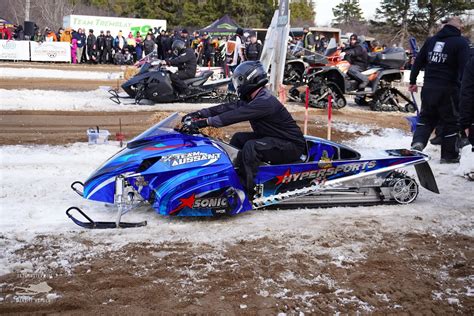
Snowmobile racing has a rich history dating back to the 1960s.
USA Snowmobile Organization Representative Brett Richter notes, “This is one of the predominant race series and race locations back in the day when oval racing with snowmobiles first started, so there’s a rich history here. Some of the greatest names in race history have raced here over the course of time, and it’s just a venue racers really put on their bucket list.”
A Historic Track
The property that hosts oval snowmobile racing in Ironwood has remained the same for over 50 years. Remarkably, the oval track itself was used for horse races more than a century ago, adding another layer of history to the venue.
The USSA ProStar Series made a triumphant return to the expansive half-mile ice oval after a two-year absence. Thanks to the cold weather, the Ironwood volunteer group, led by promoter Greg Basom, was able to create excellent ice conditions.
Read also: G-Force One: First Impressions
The track also attracts new racers, such as Haven Bouverette, a first-year USSA Prochamp Driver. "I grew up watching all these guys like Bling, Gunner, Tommy Matt, Sabrina even, so it’s pretty surreal that I’m actually racing with them now," Bouverette said, expressing her excitement about racing on the unique Ironwood track.
Richter emphasizes the track's significance, stating that it is one of the biggest and fastest half-mile tracks in the country. This makes it a thrilling and challenging venue for racers.
The Rise of Stock Racing
Snowmobile racing was booming in the late 1960s, with thousands of racers competing on fairgrounds and farm fields across the continent. Crowds would gather to watch races that lasted from morning until dark, creating a deafening and exciting atmosphere.
During the Vintage era, the United States Snowmobile Association (USSA) was the sport’s leading race organization. In spring 1971, USSA decided that all sanctioned oval sprint racing events would offer all classes. Previously many events, including virtually all the biggest ones, had only offered the loud, fast and costly Modified classes.
In 1971, Rupp dominated D Stock with its Magnum 400. Some USSA officials felt that the company had “snuck an engine over on them” as one put it privately. Arctic Enterprises responded by attempting to list its EXT Modified racers for Stock classes, but was rejected.
Read also: Register Your Snowmobile in IL
The sleek 1972 EXT with its purple laser striped hood was new from the ground up. Engineered to compete in both Stock and Mod classes, it was offered with eight free-air engines from a 250cc twin to a 650cc triple. A windshield and a five-gallon gas tank made it a reasonable semblance of a trail sled even if the headlight was optional. And with over 4,200 of them built, these “hot Stockers” were widely available. But a technical dispute erupted, and USSA banned all 1972 EXTs from Stock competition.
Family sleds were now useless as racers. USSA wanted to ensure competition between brands and availability of sleds to consumers, so it re-worked the build quantity rules for the 1973 season, settling on a sliding scale requiring anywhere from 1,000 to 3,000 units of a given model depending on overall production by its manufacturer.
Staying in Stock racing was important for one very big reason: publicity. With Stock racing now part of every event, the brands that did well received a tremendous amount of publicity that helped sell sleds, particularly the models that were winning.
Determined to avoid issues that dogged the 1972 EXT, Cat returned for ’73 with the El Tigré, the same sled with a headlight and Kawasaki green instead of Arctic purple trim. Built in big numbers with four engine sizes, the El Tigré was promoted as a performance trail sled.
Mercury stole the Stock show with its all new Sno-Twister, a sled that was very different from any previous Merc and rumored to have originally been a Rupp. About 1,100 of the free air D Stock Twisters were built, and they owned their class in ’74.
Read also: Snowmobile Tunnel Bag Comparison
By the end, single-seat performance sleds, many with free air engines, had risen to sales dominance while family sleds were in permanent decline. And most of the old brands were now history.
Ultimately, the Stock Racing War led to much more powerful machines with much better handling, improved ride quality, upgraded ergonomics, and above all else, significantly better reliability.
Ironwood 2025: ProStar Cup Tour
The USSA ProStar Series event in Ironwood featured a competitive 440 Pro Champ field with 16 sleds. Danick “Hollywood” Lambert, a Quebec racer, impressed by winning all three of his heat races, making him the No. 1 qualifier for the 15-lap final.
The final race saw Blaine Stephenson take an early lead, which he extended to a significant margin by lap 10. A red flag was raised on lap 11 due to an incident involving Gunnar Sterne, who rejoined the race after a quick tech review.
The finished order for the 15-lap round two final on the ProStar Cup Tour was Stephenson, then Lambert and Goede rounding out the podium. Fourth went to Tom Olson, followed by Fred Manke, Calvin Peterson and Sterne.
Ironwood ProStar Cup Tour Results
| Position | Racer |
|---|---|
| 1st | Blaine Stephenson |
| 2nd | Danick Lambert |
| 3rd | Matt Goede |
| 4th | Tom Olson |
| 5th | Fred Manke |
| 6th | Calvin Peterson |
| 7th | Gunnar Sterne |
| 8th | Justin Peterson |
| 9th | Quinn Wojcik |
Blaine Stephenson also secured victory in the Formula III final at Ironwood. With the 62nd World Championship approaching, this race offered a glimpse of what to expect.
The remainder of the field included Zach Dewald in third, then Olson, Sterne rounding out the top five. Sixth went to Gavin Peterson, followed by Klinger, Troy Dewald and Bouverette.
Joey Burch, who finished a close second on Saturday in this class at Beausejour and then won it on Sunday, didn’t race at Ironwood but shouldn’t be forgotten when thinking forward to W.C. weekend.
Economic Impact
These events have a substantial impact on the local economy. Each event is estimated to bring in between $1.2 and $1.5 million, making it a crucial part of the Ironwood community's financial well-being, especially during seasons with less natural snowfall.
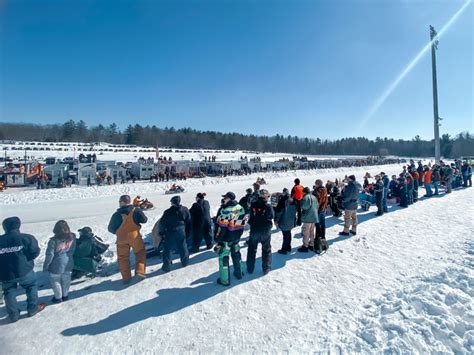
Spectators gather at a snowmobile race, contributing to the local economy.
A Close-Knit Community
The snowmobiling community is known for its supportive and welcoming nature. Bouverette describes it as a "race family," where everyone is willing to help each other. Despite the tough competition, the atmosphere is encouraging and friendly.
1973 BRUT LC 44 -- race vintage snowmobile -- triple -- restored -- HEAR IT RUN
The Ironwood snowmobile races continue to be a significant event in the snowmobiling world, blending rich history with modern competition and contributing to the local economy and community spirit.
tags: #ironwood #snowmobile #races