High school athletics continue to grow in popularity, with the number of participants reaching an all-time high of 7.9 million in the 2015-2016 academic year. Among these sports, football remains the most popular, while lacrosse and ice hockey are rapidly gaining traction. This rise in participation also brings an increase in the incidence of injuries. Research comparing player-to-player contact injuries among high school sports, especially those with varying levels of contact, is limited, hindering the development of sport-specific prevention strategies.
This study aims to describe the rates and patterns of injuries sustained as a result of intentional player contact in US high school boys’ football, ice hockey, and lacrosse.
Methodology
Data were collected as part of the National High School Sports-Related Injury Surveillance Study using the Internet-based High School RIO database for the academic years 2005-2006 through 2015-2016. High School RIO captures injury and athlete-exposure (AE) information from a large national sample of US high schools. An AE is defined as 1 athlete participating in 1 school-sanctioned practice or competition in which the athlete was exposed to the possibility of an athletic injury.
Reportable injuries are defined as ones that:
- Occurred as a result of participation in practice or competition.
- Required medical attention from an AT or physician.
- Restricted the athlete’s participation in the sport for at least 1 day beyond the date of injury or resulted in any fracture, concussion, dental injury, or heat illness regardless of whether it resulted in a restriction of the student-athlete’s participation.
For each reported injury, ATs complete a detailed injury report including athlete demographics (ie, age, height, weight), injury information (ie, site, diagnosis, severity), and injury event information (ie, activity, mechanism). Data analysis was conducted using SPSS software.
Read also: Features of Custom Hockey Gloves
In addition to descriptive statistics (ie, frequencies and proportions), rates and rate comparisons were calculated using unweighted case counts from this convenience sample of US schools reporting boys’ football, ice hockey, and lacrosse injuries. Injury rates were calculated as the ratio of case counts per 1000 AEs.
Overall Injury Rates
A total of 34,532 injuries were sustained as a result of intentional player contact in boys’ football, ice hockey, and lacrosse during 9,078,902 AEs, for a rate of 3.80 injuries per 1000 AEs. Of the 3 sports, football had the highest rates of injury overall (4.11), in competition (12.76), and in practice (2.32). The rate of injuries was significantly higher in competition compared to practice for all 3 sports, with the largest difference in ice hockey (RR, 8.28; 95% CI, 7.74-8.86).
Youth Sports and Safety: 5 Key Questions
In football, 46.6% of all injuries were caused by tackling or being tackled, while 41.1% of ice hockey and 15.3% of lacrosse injuries were caused by checking or being checked. For all 3 sports, a significantly greater proportion of injuries resulting from being tackled/checked or tackling/checking occurred during competition compared to practice. Ice hockey had the greatest difference in the proportion of such injuries sustained during competition compared to practice for both checking (IPR, 8.88; 95% CI, 4.58-17.19) and being checked (IPR, 7.54; 95% CI, 5.64-10.07).
Common Injury Sites and Diagnoses
The most commonly injured body site due to tackling/checking was the head/face for football (29.2%), ice hockey (26.6%), and lacrosse (42.8%). The most commonly injured body site due to being tackled/checked was also the head/face for football (25.1%), ice hockey (37.1%), and lacrosse (47.5%).
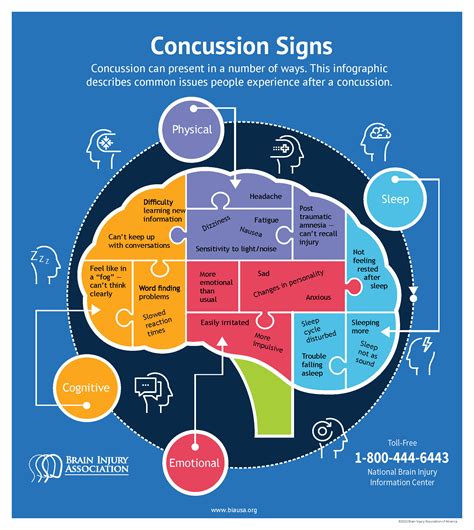
Overall, the most common injury diagnosis due to tackling/checking was a concussion for football (28.2%), ice hockey (20.5%), and lacrosse (39.1%). The most common injury diagnosis due to being checked was also a concussion in ice hockey (33.7%) and lacrosse (43.8%). However, in football, the most common injury diagnosis due to being tackled was a ligament sprain (27.3%), with concussion being the second most common (24.1%).
Read also: The story of Craig Needham
Concussion Analysis
In football, the proportion of ligament sprain injuries was significantly higher from being tackled compared to tackling (IPR, 1.36; 95% CI, 1.29-1.45), while the proportion of dislocation/separation injuries was significantly higher from tackling compared to being tackled (IPR, 1.69; 95% CI, 1.47-1.95). Although the difference was small, a significantly greater proportion of concussions sustained in football were the result of tackling (28.2%) compared to being tackled (24.1%) (IPR, 1.17; 95% CI, 1.11-1.24).
Conversely, in ice hockey, a greater proportion of concussions were sustained while being checked (33.7%) compared to checking (20.5%) (IPR, 1.64; 95% CI, 1.04-2.61). For all 3 sports, there was a significantly higher proportion of player-to-player contact-related concussions sustained in competition compared to practice; no concussions sustained in ice hockey practice were caused by checking.
Ice hockey had the greatest proportion of concussions due to being checked during competition compared to practice (IPR, 6.38; 95% CI, 4.02-10.11). On the other hand, football had the lowest proportion of concussions during competition versus practice that were caused by tackling (IPR, 1.50; 95% CI, 1.40-1.60) and being tackled (IPR, 1.72; 95% CI, 1.60-1.84).
The majority of concussions occurred during the regular season for football (tackling: 74.9%; being tackled: 77.1%), ice hockey (checking: 100.0%; being checked: 95.8%), and lacrosse (checking: 90.7%; being checked: 90.0%).
Return to Activity
The majority of injured football players returned to activity less than 1 week after an injury due to being tackled (37.9%); however, the majority of football athletes injured by tackling returned to activity within 1 to 3 weeks (37.3%). The majority of ice hockey athletes returned to activity less than 1 week after an injury due to checking (32.9%) or being checked (38.5%). In lacrosse, the majority of players returned to activity in 1 to 3 weeks after an injury sustained by checking (38.1%) or being checked (36.5%).
Read also: Inside Aaron Ness's Career
The proportion of injuries that resulted in medical disqualification for the season was higher for athletes being tackled/checked compared to athletes tackling/checking in all 3 sports (football: 7.3%; ice hockey: 5.4%; lacrosse: 7.7%).
For all 3 sports, the percentage of injuries resulting in surgery was small, both when caused by tackling/checking (football: 6.8%; ice hockey: 3.9%; lacrosse: 6.0%) and being tackled/checked (football: 6.3%; ice hockey: 5.5%; lacrosse: 3.8%).
Discussion
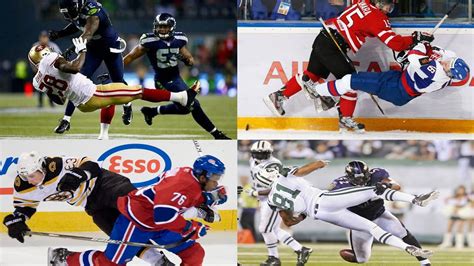
This study is the first to collectively compare injury rates and injury patterns sustained from intentional player-to-player contact in boys’ high school football, ice hockey, and lacrosse. Consistent with the previous literature, all 3 sports had overall higher injury rates due to intentional player-to-player contact during competition compared to practice. This has previously been attributed to generally more aggressive play and more body contact occurring in competition. Although intuitive, this finding has not been collectively reported in the literature previously with all 3 sports within a single study.
An interesting finding in this study is that the magnitude of this difference was significantly smaller in football than in ice hockey or lacrosse. Football had the smallest difference in the proportion of player-to-player contact injuries sustained during competition compared to practice, and this was true for both the collective injury rate as well as concussions. In contrast, ice hockey had the largest difference in the proportion of player-to-player contact injuries sustained during competition compared to practice, both collectively as well as for concussions.
Despite the differences in injury patterns between the sports studied, for all 3, the most commonly injured body site in competition and practice caused by both tackling/checking and being tackled/checked was the head/face. This association between contact sports and head/face injuries affirms previous studies of player-to-player contact injuries in football, as well as those of hockey and lacrosse injuries. The head/face is consistently the most commonly injured body site from participation in these 3 contact sports.
However, it is interesting to note that in this study, the proportion of head/face injuries, neck/cervical spine injuries, and even concussions was significantly higher for football athletes tackling compared to being tackled, although this may be related to the number of defensive players attempting to tackle a single ball carrier during each play. Although this study does not indicate a definitive reason for this finding, it can be inferred that this difference is likely because of the traditional recommended tackling technique taught to high school athletes and the nature of the sport.
Typically, high school football players are taught a tackling technique that includes making initial contact with their head and their facemask impacting the opposing player’s chest while sustaining a flexed position of the cervical spine to avoid spear-tackling injuries. This approach of leading with the player’s head is not recommended or typical during checking an opposing player in ice hockey or lacrosse.
The high rate of concussions for all 3 sports is consistent with the recent literature. In this study, a concussion was the most common injury diagnosis due to tackling/checking in all 3 sports as well as being the most common injury diagnosis due to being checked in ice hockey and lacrosse. Concussions have previously been shown to compose 15.9% of player-to-player contact injuries in high school football. Our reported proportion of concussions sustained in football as the result of tackling (28.2%) and being tackled (24.1%) is higher than previously reported.
Injury Rates in Canadian Youth Collision Sports
Collision sports are associated with high rates of both injury and concussion for male high school aged sports participants, with rates ranging from 12.7 injuries/100 participants/year (rugby) to 33.1 injuries/100 participants/year (ice hockey) for all injury types, and 12.4 concussions/100 participants/year (football) to 15.8 concussions/100 participants/year (ice hockey). These four collision sports account for 33% of all injuries to high school boys in Alberta, of which the majority come from ice hockey and football (28%).
Ice hockey had the highest rate of concussion 15.8/100 participants/year (95% CI 11.8-20.9) followed by lacrosse [13.8/100 participants/year (95% CI 5.3-31.5)], rugby [12.7/100 participants/year (95% CI 5.7-25.8)] and football [12.4/100 participants/year (95% CI 7.7-19.5)].
The most common site of injury in all collision sports was the head/face, accounting for the most injuries in rugby (50.0%) and the lowest proportion in football (24.4%). Concussion (or being “knocked out”) was reported as the most common injury type in rugby (50.0%) and football (24.4%) based on most serious injury reported in the past year.
Most injuries occurred during competition across each of the four collision sports, followed by training. The high rates of injury and concussion specifically demonstrate the need for further research into possible injury prevention strategies in these sports, with strategies such as injury prevention warm-up programs, equipment use, and rule change likely the most effective ways to reduce the risk.
The information provided in this article highlights the importance of understanding and addressing the risks associated with contact sports to protect the health and well-being of young athletes.