Joseph William Sacco, born on February 4, 1969, is an American professional ice hockey coach and former player. Currently, he serves as an assistant coach for the New York Rangers in the National Hockey League (NHL). Drafted by the Toronto Maple Leafs in 1987, Sacco transitioned from a successful playing career to a respected coaching role.
Sacco's career spans from his early days in Medford, Massachusetts, to his current position in the NHL, showcasing his dedication and passion for the sport. This article delves into his journey, highlighting his achievements as a player and his transition into a successful coaching career.
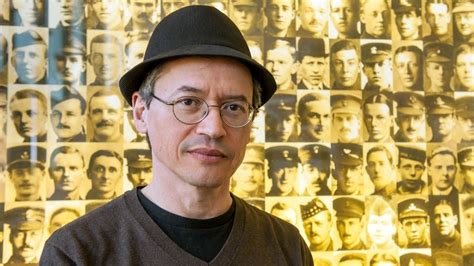
Joe Sacco during his time as head coach of the Colorado Avalanche.
Early Life and High School Career
Joe Sacco was raised in a hockey-centric area, which led his father to encourage him and his brothers to play the sport. Despite his parents' lack of knowledge about hockey, Sacco's dad coached them, even wearing work boots on the ice because he didn't know how to skate.
At Medford High School, from 1984 to 1987, Sacco starred on the varsity team, emerging as a standout player. He became the program's all-time leading scorer with 230 career points, including 52 goals and 62 assists in his final two seasons. His performance during this period highlighted his physical presence and scoring ability, earning him recognition as one of the top high school talents in the state.
Read also: Features of Custom Hockey Gloves
Collegiate Career at Boston University
In 1987, Joe Sacco enrolled at Boston University and played for the Boston University Terriers men's ice hockey team in the Hockey East conference from 1987 to 1990. As a right winger, he contributed significantly to the team's offensive efforts during his three seasons, appearing in a total of 111 games. Sacco earned notable recognition for his performance, reflecting his impact on the Terriers' lineup.
Sacco helped the Terriers to consecutive successful seasons. Sacco’s achievements at BU, including induction to the Terriers’ Century Club for scoring over 100 points in his college career, and a 52-point (24g, 28a) junior year, led to a successful career in the AHL and NHL.
In 1990, Sacco started the scoring in the final game of the Beanpot Tournament, which would end in a humiliating loss for Harvard. He also notched one more before the night was through. A long history of battles with Harvard made the win that much more satisfying for the young winger. ''We took the Beanpot back to where it belongs,'' he said.
In the 1987 NHL Entry Draft, Sacco was selected in the fourth round, 71st overall, by the Toronto Maple Leafs, validating his potential as a professional prospect early in his college career.
Professional Playing Career
Toronto Maple Leafs
Following his collegiate success at Boston University, Joe Sacco transitioned to professional hockey with the Toronto Maple Leafs organization in the 1990-91 season, making his NHL debut on October 11, 1990, against the Chicago Blackhawks.
Read also: The story of Craig Needham
Sacco continued to split time between the NHL and AHL over the next two seasons, establishing himself as a reliable depth forward for the Maple Leafs. In 1991-92, he played 17 NHL games, scoring seven goals-including his first on March 1, 1992, against the Minnesota North Stars in a 6-2 win-and adding four assists for 11 points overall with Toronto.
The following year, 1992-93, he suited up for 23 games with the Maple Leafs, contributing four goals and four assists, while logging 37 AHL games with the St. John's Maple Leafs, Toronto's relocated affiliate, where he tallied 14 goals and 16 assists.
Mighty Ducks of Anaheim
Selected by the expansion Mighty Ducks of Anaheim from Toronto in the 1993 NHL Expansion Draft on June 23, 1993, Sacco became one of the franchise's original players and quickly emerged as a key contributor during their inaugural seasons.
In 1993-94, he enjoyed a breakout year, playing all 84 games and achieving a career-high 19 goals alongside 18 assists for 37 points, helping provide offensive stability for the young expansion team that finished last in the Western Conference's Campbell division.
Sacco remained a steady presence for Anaheim through the 1995-96 season, registering 13 goals and 14 assists in 76 games, but the Ducks again missed the playoffs with a 21-41-20 record. In 1996-97, he posted 12 goals and 17 assists in 77 games as the Ducks qualified for the playoffs for the first time, defeating the Phoenix Coyotes 4-2 in the first round before losing 4-0 to the Detroit Red Wings in the second round; Sacco contributed two points in 11 playoff games.
Read also: Inside Aaron Ness's Career
The following season, 1997-98, Sacco recorded eight goals and 11 assists in 55 games with Anaheim before being traded.
By this time in his career, the forward had already identified himself as a role player, which he embraced. "I considered myself a support player, a journeyman," said Sacco. "I wasn't overly skilled. But I worked hard, and you can overcome a lot in this game if you are committed."
He would continue being a 3rd/4th liner for the remainder of his NHL career, playing with the NY Islanders, Washington Capitals and Philadelphia Flyers. In the end, he played 738 games and recorded 213 points (94g, 119a).
NHL Statistics
Below is a table summarizing Joe Sacco's NHL statistics:
| Season | Team | GP | G | A | Pts |
|---|---|---|---|---|---|
| 1990-1991 | Toronto Maple Leafs | 20 | 0 | 5 | 5 |
| 1991-1992 | Toronto Maple Leafs | 17 | 7 | 4 | 11 |
| 1992-1993 | Toronto Maple Leafs | 23 | 4 | 4 | 8 |
| 1993-1994 | Mighty Ducks of Anaheim | 84 | 19 | 18 | 37 |
| 1994-1995 | Mighty Ducks of Anaheim | 46 | 5 | 5 | 10 |
| 1995-1996 | Mighty Ducks of Anaheim | 76 | 13 | 14 | 27 |
| 1996-1997 | Mighty Ducks of Anaheim | 77 | 12 | 17 | 29 |
| 1997-1998 | Mighty Ducks of Anaheim | 55 | 8 | 11 | 19 |
| 1997-1998 | New York Islanders | 19 | 5 | 4 | 9 |
| 1998-1999 | Washington Capitals | 70 | 6 | 8 | 14 |
| 1999-2000 | Philadelphia Flyers | 76 | 5 | 11 | 16 |
| 2000-2001 | Philadelphia Flyers | 81 | 3 | 7 | 10 |
| 2001-2002 | Philadelphia Flyers | 29 | 4 | 1 | 5 |
| Total | 749 | 96 | 119 | 215 |
International Career
Joe Sacco represented the United States in international competition, including six IIHF World Championships from 1990 to 2002 and the 1992 Winter Olympics.
Sacco debuted for the United States at the IIHF World Championship in 1990 as a college player with Boston University, appearing in 10 games and recording 1 goal and 1 assist. Across these six tournaments, Sacco played in a total of 49 games, the third-most for any American at the World Championships, accumulating 7 goals and 7 assists for 14 points.
Sacco's most notable performance came in 1996 in Vienna, Austria, where his 6 points in 8 games helped Team USA earn its first World Championship medal in 36 years-a bronze-with a 3-2 win over Finland in the bronze medal game.
Joe Sacco made his sole Olympic appearance for the United States at the 1992 Winter Olympics in Albertville, France, as a forward on the men's ice hockey team. Under head coach Dave Peterson, the team integrated players from college, minor leagues, and the NHL through months of pre-Olympic training camps, fostering cohesion despite diverse backgrounds. In the competition, Sacco played all eight games, tallying 2 assists for 2 points while logging significant minutes in a checking-line role that emphasized forechecking and defensive support. team advanced to the medal round but secured fourth place after a 3-2 overtime loss to Finland in the bronze medal game, with Sacco contributing to key shifts against strong opponents like the Unified Team.

The Men's Ice Hockey at the 1992 Winter Olympics in Albertville, France, where Joe Sacco played for the United States.
Coaching Career
After his playing days, Sacco settled into a quiet life back home in Massachusetts. He worked for the family business, Sacco Specialized Moving, for two years when he received an unexpected call from Craig Billington asking if he was interested in being an assistant coach for Colorado’s feeder team, the Lowell Lock Monsters. He accepted the offer as he had a "strong passion" for the game and found himself interested in getting into coaching. Thus, in the 2005-06 season, Joe Sacco began his coaching career.
In the 2005-06 season, two years into retirement from playing, Sacco was hired as an assistant coach for the Lowell Lock Monsters, affiliate of the Colorado Avalanche.
The newly appointed assistant coach only spent two years with the Lock Monsters, however. The team was jointly owned with the Carolina Hurricanes, so the Avalanche decided to establish their own team in Ohio. Sacco was promoted to the head coaching position for the upstart Lake Erie Monsters.
On May 7, 2007, Sacco was promoted to his first head coaching role with the newly established Lake Erie Monsters, the Avalanche's expansion AHL franchise based in Cleveland. The team’s first season was a losing one (26-41-13), but the 2007-2008 season fared somewhat better. Using his natural ability to connect with young players and elevate their game, the Monsters ended the year with a 34-38-8 record. "I enjoy working with young players trying to help them further their career and trying to show them what it takes to be a good consistent pro," said Sacco.
His knack for connecting with players in this way did not go unnoticed by the Avalanche organization. Having called up and witnessed the successful play of Lake Erie forwards T.J. Hensick, Chris Stewart, and Brian Willsie and defenseman Kyle Cumiskey, Colorado turned to Sacco when they disbanded their coaching staff after the worst season in Avs’ history.
On June 4, 2009, a day after Avalanche head coach Tony Granato was fired, Sacco was promoted and later introduced as the new head coach of the Colorado Avalanche for the 2009-10 season, a job former Avs great Patrick Roy turned down days prior.
At the same time, Monsters’ assistant coach and former Avalanche player Sylvain Lefebvre found himself assisting Sacco again. "These two coaches have been at the frontlines of this organization's development efforts over the last few seasons," said Greg Sherman, Colorado’s reciently appointed GM. "Joe and Sylvain are familiar with our personnel, especially our young players within the system, and each played a role in implementing the organization's vision with these players."
Sacco was admittedly surprised by the job offer. "I wasn't expecting this job," said Joe. "I figured Patrick (Roy) was going to be in Denver and I'd be back with my family in Westlake (Ohio) for at least another year in the AHL." However, he realized this was an amazing proposition, one he was fortunate to have presented to him. "You don't know how many of these opportunities will come around. I'd certainly like to think I've worked for it, but at the same time, you just never know. I'm honored, flattered and excited to be head coach of a great organization."
After being projected finishing 15th in the Western Conference by most ice hockey pundits, Sacco coached the Avalanche to the 2010 Stanley Cup playoffs posting a record of 43-30-9 in his rookie year of coaching in the NHL. His team was eliminated in the conference quarterfinals after six games by the San Jose Sharks. He was rewarded for his excellent work by being a finalist for the Jack Adams trophy for Coach of the Year.
Untested at this level, many critics had little faith that Coach Sacco could lead the Avalanche out of the bottom rungs of the league. Bruce Ciskie of Fanhouse said in an article he wrote in June, 2009, "This is hardly a move that inspires confidence in the franchise. They were the worst team in the Western Conference, and fans aren't going to be energized by the team hiring the coaching staff from their mediocre farm team."
Fans were a little worried about the move, but the team quickly proved everyone wrong by going 10-3-1 in the first month of the 2009-10 season. The team rode the wave of youth and speed, something Sacco was very good at bringing out. Despite the constant claims that the team would hit a wall and fall back to earth, Sacco led them into the playoffs where they lost a hard-fought battle to the San Jose Sharks in the first round.
Joe Sacco is continuing to show he’s a seasoned coach, in spite of his short resume, by keeping the 2010-11 injury-depleted team, which boasts one of the youngest rosters in the NHL, in the playoff hunt. His no-nonsense approach to leadership and his style of rewarding those players who help the team win and sending messages of "shape up or ship out" to those who are not playing to their potential has kept the team strong and hard-working.
The following seasons proved more challenging for Sacco and the Avalanche. In 2010-11, the team regressed to a 30-44-8 record, finishing 14th in the Western Conference and missing the playoffs. The 2011-12 campaign saw a slight improvement with a 41-35-6 mark and 88 points, but they again fell short of postseason play, placing 11th in the conference. The 2012-13 season, shortened to 48 games by the NHL lockout, was a low point, as the Avalanche struggled to a 16-25-7 record, ending last in the Western Conference with 39 points and failing to contend.
On July 24, 2014, the Boston Bruins hired Sacco as an assistant coach. In July 2024, he was promoted to associate coach.
On November 19, 2024, the Bruins named Sacco as interim head coach after Jim Montgomery's firing. Sacco went 24-30-6 as interim coach as the Bruins finished last in the Atlantic Division and missed the Stanley Cup playoffs for the first time since the 2015-16 season.
He is in his 11th season in the Bruins organization, as he was originally named to the Boston coaching staff on July 24, 2014. He came to the Bruins with eleven years of coaching experience, which followed a 13-year NHL playing career.
After serving as an assistant coach at the AHL level in both Lowell and Albany, he was named head coach of AHL Lake Erie in 2007 and served in that capacity until 2009. He moved to the NHL ranks on June 4, 2009, when he was named as the Head Coach of the Colorado Avalanche. The 2010 Jack Adams Award finalist served in that position for four seasons with a record of 130-134-40 behind the Avalanche bench.
On June 5, 2025, the New York Rangers announced the addition of Joe Sacco to their coaching staff. In his role, Sacco has focused on special teams coordination, leveraging his prior expertise to support the Rangers' power play and penalty kill units during the early 2025-26 season.
As of November 19, 2025, the Rangers held a 10-10-2 record, with a strong road performance of 9-3-1 but struggling at home (1-7-1), amid a transitional period under the new coaching regime.
Joe Sacco’s Impact On The Bruins
Coaching Statistics
Below is a table summarizing Joe Sacco's coaching statistics with the Colorado Avalanche:
| Season | Team | GP | W | L | OTL | PTS% | Finish | Playoffs |
|---|---|---|---|---|---|---|---|---|
| 2009-10 | COL | 82 | 43 | 30 | 9 | .579 | 2nd of Northwest | Won Conf. Quarterfinals (2-4 vs. SJS) |
| 2010-11 | COL | 82 | 30 | 44 | 8 | .427 | 4th of Northwest | DNQ |
| 2011-12 | COL | 82 | 41 | 35 | 6 | .524 | 3rd of Northwest | DNQ |
| 2012-13 | COL | 48 | 16 | 25 | 7 | .406 | 5th of Northwest | DNQ |
Notes: GP = games played; W = wins; L = losses; OTL = overtime losses; PTS% = points percentage.