The London Knights are a junior ice hockey team hailing from London, Ontario, Canada. They compete in the Ontario Hockey League (OHL), a prominent league within the Canadian Hockey League. The team's journey began in 1965, marking the start of a rich and storied history.
Early Years as the London Nationals (1965-1968)
The London Nationals were founded in 1965 as a Major Junior A ice hockey team in the Ontario Hockey Association (OHA), the primary junior hockey league in Ontario and a precursor to the modern Ontario Hockey League (OHL). The franchise was granted for the 1965-66 season under the ownership of the London Gardens Limited, which operated the city's main arena facilities.
The Nationals entered the OHA with a direct sponsorship and affiliation from the Toronto Maple Leafs of the National Hockey League (NHL), who acquired the team in the mid-1960s to serve as a key development pipeline for their prospects. This partnership provided financial backing, scouting resources, and player assignments, aligning with the Maple Leafs' strategy to cultivate talent outside their traditional Toronto-based affiliates like the Marlboros after league restructuring.
In their inaugural 1965-66 season, the Nationals struggled, posting a record of 12 wins, 29 losses, and 7 ties for 31 points, finishing last in the eight-team OHA and missing the playoffs while allowing the most goals in the league at 235. The team played home games at the newly opened Treasure Island Gardens, marking a shift from the older Ontario Arena at the Western Fairgrounds and addressing logistical considerations for accommodating larger junior crowds within London, Ontario, without relocating outside the city.
Brian Murphy played the most games for the Nationals, 98 in total over three seasons. Garry Unger lead the team in career goals with 42 in only 50 games.
Read also: Christmas Ice Skating Experience
The London Nationals were coached by Jack McIntyre for the 1965-66 season.
The Transition to the London Knights (1968)
Facing financial pressures and the end of NHL sponsorship, the franchise was sold in 1968 to local businessman Howard Darwin for $500,000, prompting a rebranding to the London Knights to evoke chivalry and local pride while distancing from the prior corporate naming tied to sponsors like Canadian National Railway. In 1968, as the era of direct NHL sponsorship of junior hockey teams concluded, Ottawa businessman Howard Darwin acquired the London Nationals franchise and the London Gardens arena, renaming the team the London Knights and adopting green and gold as the official colors to evoke a sense of chivalry and local pride.
Darwin wanted to give a fresh look to the team, and so held a contest to rename the team. Londoner suggested the name Knights and the team's colours were changed to green, white & gold. Darwin, who also owned the Ottawa 67's, invested in stabilizing the club's finances and operations at a time when many teams faced uncertainty without NHL backing, providing continuity and professional management that allowed the Knights to focus on competitive development.
The Knights achieved their first playoff appearance in the 1970-71 season, marking the beginning of regular postseason contention, though initial rounds often ended in early exits. The period's pinnacle came in 1976-77, when the team, coached by Bill Long, captured the Emms Division title with an impressive 51-13-2 record and 104 points, the second-highest total in the league that year, before advancing to the OMJHL finals where they fell to the Ottawa 67's.
Long, who led the Knights for eight seasons with a winning record in six, earned the Matt Leyden Trophy as OHL Coach of the Year for his efforts in building a disciplined, high-scoring squad. Key to this development were standout players who emerged as early NHL prospects, including center Dennis Maruk, who exploded for 66 goals and 79 assists in 1974-75 to lead the OHL in scoring with 145 points despite the team's playoff miss that season, and forwards Rick Vaive and defenseman Brad Marsh, both drafted in 1974 and 1975 respectively, who anchored the lineup through multiple campaigns.
Read also: Knights' Effort Not Enough
Strategic trades bolstered the roster, such as acquiring promising juniors who went on to NHL careers, exemplified by forward John Chabot in 1979 and sniper Dave Simpson in 1980, enhancing the Knights' appeal to scouts and fans alike. The Knights played all home games at the 5,101-seat London Gardens, which Darwin's ownership upgrades helped maintain as a viable venue, fostering community ties and steady attendance growth-particularly during successful seasons like 1976-77-averaging over 3,000 fans per game by the late 1970s as the team's profile rose.
The Robillard, Martin & Willson Era (1986-1994)
In 1986, longtime owner Howard Darwin sold the London Knights franchise and the London Gardens arena for $2.3 million, ending his 18-year stewardship that had brought stability but also financial strains from rising operational costs. The sale to a group of businessmen from Paris, Ontario, ushered in a period of renewed investment aimed at revitalizing the team and venue, including upgrades to facilities and efforts to boost attendance through targeted marketing.
Under the new ownership, the Knights underwent several coaching changes to inject fresh strategies and improve on-ice performance. Wayne Maxner served as head coach from the 1986-87 season through 1989-90, guiding the team to progressive improvements in the standings. He was succeeded by Gary Agnew, who took over as head coach starting in 1990-91 and remained through the 1993-94 season. Agnew's tenure emphasized defensive structure and player development, though the team struggled with consistency due to roster turnover and injuries.
The Knights qualified for the playoffs in seven of the eight seasons from 1986-87 to 1993-94, reflecting modest operational improvements and a focus on competitive balance. Notable achievements included a strong 1989-90 campaign, where the team finished first in the Emms Division with a 41-19-6 record and 88 points, securing home-ice advantage but falling in the first round to the Kitchener Rangers. Earlier, in 1987-88, they posted a 40-22-4 mark for 84 points, advancing to the second round, while the 1988-89 season saw a 37-25-4 record (78 points) and a run to the third round.
Community relations strengthened through initiatives like youth hockey clinics and partnerships with local schools, fostering greater engagement in London and surrounding areas to build a loyal fanbase. The team maintained informal ties to NHL clubs for player scouting and development, though no formal minor league affiliations were established during this period, as the OHL operated primarily as an independent junior league. The era culminated in 1994 with the sale of the Knights to St. Thomas real estate developer Doug Tarry Sr. amid ongoing financial pressures, including higher property taxes following the city's annexation of nearby townships and venue maintenance costs.
Read also: Features of Custom Hockey Gloves
The "Knightmare" Years (1994-2000)
In 1994, St. Thomas real estate developer Doug Tarry Sr. purchased the London Knights and the adjacent arena, then known as London Gardens, from previous owner Al Martin. Tarry Sr. died shortly after the acquisition, leaving his son, Doug Tarry Jr., to assume control of the franchise. The era quickly earned the moniker "Knightmare" due to persistent on-ice mediocrity and organizational instability.
The Knights missed the playoffs in five of the six seasons from 1994 to 2000, compiling low win totals, including a dismal 18-41-7 record in 1994-95. The nadir came in 1995-96, when the team posted a 3-60-3 mark, earning just nine points and setting a Canadian Hockey League record for the fewest victories in a season, a mark that still stands. Fan backlash intensified over the rebranding, with many decrying the "Spiderknight" logo and color scheme as unappealing and disconnected from the team's heritage, contributing to dips in attendance at the renamed London Ice House.
Signs of redemption emerged in the late 1990s through stronger draft selections that began replenishing the roster. In the 1997 OHL Priority Selection, the Knights added promising talents like center Dan Tessier, while the 1999 draft yielded franchise cornerstone Rick Nash, selected first overall and poised to debut in the 1999-2000 season. These picks, coupled with incremental improvements-such as a 25-35-6-4 finish in 1999-2000 that finally returned the team to the playoffs-signaled stabilization.
The Hunter Era: A Dynasty is Born (2000-Present)
In 2000, brothers Mark and Dale Hunter purchased the London Knights from longtime owner Doug Tarry Jr., acquiring a franchise that had struggled with inconsistency in the preceding years. Mark Hunter assumed the role of general manager, while Dale Hunter took over as head coach, establishing a family-led operation focused on rebuilding the team's competitiveness in the Ontario Hockey League (OHL).
The Hunter era's early success was epitomized by the 2004-05 season, during which the Knights achieved a Canadian Hockey League (CHL) record 31-game unbeaten streak (29 wins, 2 ties) to open the campaign, showcasing their dominance and setting the tone for sustained excellence. This run contributed to an OHL-best 59 regular-season wins and propelled the team to its first Memorial Cup championship that year.
The Knights continued their championship pedigree with a second Memorial Cup win in 2016, but the era faced significant challenges during the COVID-19 pandemic, including the cancellation of the entire 2020-21 OHL season and multiple postponed games in subsequent years due to health protocols. Despite these disruptions, the Hunters prioritized player safety and virtual scouting, enabling a rapid post-2020 resurgence that culminated in back-to-back OHL championships in 2024 and 2025.
Central to the Hunters' long-term success has been the expansion of their scouting network and player development systems, with Mark Hunter personally overseeing extensive travel to evaluate prospects and foster a pipeline of NHL-caliber talent.
The London Knights franchise originated as the London Nationals in 1965, operating as an affiliate of the Toronto Maple Leafs in the Ontario Hockey Association. The pivotal shift in ownership occurred in May 2000, when brothers Dale Hunter and Mark Hunter, along with Basil McRae, former NHL players from Petrolia, Ontario, purchased the London Knights and the adjacent John Labatt Centre for $3.8 million, securing a bank loan collateralized by their family properties. The Hunters transformed the organization into a model of stability and success, with the family maintaining full control; Dale Hunter serves as president and co-owner, while Mark Hunter acts as vice president, general manager, and co-owner, overseeing player development and operations. Basil McRae holds a minority ownership stake.
Financially, the Hunters' tenure has emphasized sustainable growth, including strategic partnerships for venue enhancements.
Dale Hunter resigned as head coach on November 28, 2011 to take head coaching position with his former team, the Washington Capitals. Brother Mark Hunter assumed the coaching helm.
On October 21, 2014, Mark Hunter stepped down as General Manager of the London Knights upon being appointed Director of Player Personnel for the Toronto Maple Leafs.
London Knights coaches have won the Matt Leyden Trophy, emblematic of the OHL's Coach of the Year, five times. Bill Long won it once, in 1976-77, Gary Agnew twice, in 1992-93 and in 1997-98, and Dale Hunter twice, in 2003-04 and 2004-05.
Who Is The London Knights Coach? - Hockey Fan Network
Home Arenas: From London Gardens to Canada Life Place
The London Knights' first home arena was the London Gardens, also known as the London Ice House, where the team played from 1965 to 2002. Constructed between 1961 and 1964 at a location on the outskirts of downtown London, Ontario, the facility had a seating capacity of 5,075, with about 4,680 permanent seats.
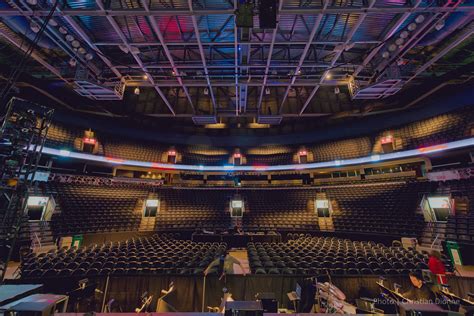
In 2002, the Knights relocated to the newly constructed John Labatt Centre in downtown London, which was renamed Budweiser Gardens in 2012 and rebranded as Canada Life Place in September 2024 following a naming rights agreement. This modern multi-purpose arena boasts a hockey-specific capacity of 9,090 seats, expandable to over 10,000 for concerts and other events, and includes amenities such as 38 luxury suites, club lounges, and advanced ice-making technology to support high-level junior hockey operations.
Beyond hockey, Canada Life Place functions as a key entertainment hub, accommodating diverse non-sporting events like concerts by artists such as Blue Rodeo and family-oriented shows, with more than 2,800 events held since its opening. These offerings have bolstered the Knights' attendance, which has averaged over 8,000 fans per home game in recent seasons, often approaching sellouts during playoffs and rival matchups.
Championships and Awards
The London Knights have achieved significant success in major junior hockey, capturing the J. Ross Robertson Cup six times as OHL champions. In 2005, the Knights defeated the Ottawa 67's 4-1 in the OHL final to claim their first J. Ross Robertson Cup, ending the longest championship drought in the CHL.
On the national stage, the Knights have won the Memorial Cup three times, aligning with their OHL successes in 2005, 2016, and 2025.
The London Knights have earned numerous individual and team awards from the Ontario Hockey League (OHL) and Canadian Hockey League (CHL), recognizing excellence in performance, leadership, and community involvement.
Key Awards and Trophies
- David Branch Player of the Year Award: Honors the most outstanding player based on overall impact, skill, and leadership.
- CHL Scholastic Player of the Year: Recognizes players who excel both athletically and academically.
- CHL Defenceman of the Year: Awarded to the top blueliner for defensive prowess and offensive contributions.
- Red Tilson Trophy: Emblematical of the league's most outstanding player, voted on by OHL general managers.
- Emms Family Award: Goes to the top rookie, selected for exceptional first-year performance.
- Max Kaminsky Trophy: Recognizes the outstanding defenseman for defensive reliability and puck-moving ability.
- Dan Snyder Memorial Trophy: For humanitarian efforts and community role modeling.
- William Hanley Trophy: For sportsmanship, based on fair play and positive conduct.
- Wayne Gretzky 99 Award: For OHL playoff MVP, underscores postseason excellence.
- Dave Pinkney Trophy: Presented to the goaltending tandem allowing the fewest goals.
- Matt Leyden Trophy: For Coach of the Year, voted by OHL coaches and GMs for strategic success and team development.
In 2024-25, Denver Barkey received the Dan Snyder Memorial Trophy for initiatives that donated over 1,500 pieces of equipment to underprivileged youth, enabling 10 new participants in organized hockey.
Coaches
The London Knights have had numerous head coaches since joining the Ontario Hockey League (OHL) as the London Nationals in 1965, with tenures often reflecting the team's evolving fortunes under different ownerships and eras. Early coaches focused on establishing the franchise amid competitive junior hockey, while later ones, particularly in the Hunter era, emphasized structured play and sustained success.
In 2001, Dale Hunter assumed the head coaching role alongside his brother Mark's ownership, ushering in the most successful period in franchise history. Hunter's tenure, ongoing as of November 2025, has amassed over 1,000 regular-season wins.
Playoff Results (Selected Years)
The London Knights have a rich playoff history. Here are some highlights from selected years:
- 1969-70: Defeated Peterborough Petes 8 points to 4 in quarterfinals.
- 1972-73: Defeated Kitchener Rangers 8 points to 0 in quarterfinals.
- 1976-77: Defeated Toronto Marlboros 9 points to 3 in quarterfinals. Defeated St. Catharines Fincups in Semifinals. Lost to Ottawa 67's in Finals.
- 1978-79: Defeated Windsor Spitfires in first round - series protested.
- 1987-88: Defeated Sault Ste. Marie Greyhounds in first round.
- 1992-93: Defeated Kitchener Rangers 4 games to 3 in first round. Lost to Detroit Jr. Red Wings in Quarterfinals.
- 1994-95: Lost to Detroit Jr. Red Wings in first round.
- 2004-05: Defeated Guelph Storm 4 games to 0 in first round. Defeated Windsor Spitfires 4 games to 0 in quarterfinals. Defeated Kitchener Rangers 4 games to 1 in semifinals. Defeated Ottawa 67's 4 games to 1 in finals. OHL CHAMPIONS. Finished Memorial Cup round-robin in first place. Defeated Rimouski Océanic 4-0 in the championship game.
- 2005-06: Defeated Sault Ste. Marie Greyhounds 4 games to 0 in first round. Defeated Owen Sound Attack 4 games to 2 in quarterfinals. Defeated Guelph Storm 4 games to 1 in semifinals. Lost to Peterborough Petes in Finals.
- 2006-07: Defeated Owen Sound Attack 4 games to 0 in first round. Defeated Sault Ste. Marie Greyhounds 4 games to 3 in quarterfinals. Lost to Plymouth Whalers in Semifinals.
- 2008-09: Defeated Erie Otters 4 games to 1 in first round. Defeated Saginaw Spirit 4 games to 0 in quarterfinals. Lost to Windsor Spitfires in Semifinals.
- 2009-10: Defeated Guelph Storm 4 games to 1 in first round. Lost to Windsor Spitfires in Quarterfinals.
- 2011-12: Defeated Windsor Spitfires 4 games to 0 in first round. Defeated Saginaw Spirit 4 games to 2 in quarterfinals. Defeated Kitchener Rangers 4 games to 0 in semifinals. Defeated Niagara IceDogs 4 games to 1 in finals. OHL CHAMPIONS. Finished Memorial Cup round-robin in first place. Lost to Shawinigan Cataractes 2-1 (OT) in the championship game.
- 2012-13: Defeated Saginaw Spirit 4 games to 0 in first round. Defeated Kitchener Rangers 4 games to 1 in quarterfinals. Defeated Plymouth Whalers 4 games to 1 in semifinals. Defeated Barrie Colts 4 games to 3 in finals. OHL CHAMPIONS. Finished 1-2 in Memorial Cup round-robin, forcing them to play a tie-breaker against the host Saskatoon Blades.
- 2013-14: Defeated Windsor Spitfires 4 games to 0 in first round. Lost to Guelph Storm 4 games to 1 in quarterfinals. Gain entrance to 2014 Memorial Cup as host team.
- 2014-15: Defeated Kitchener Rangers 4 games to 2 in first round. Lost to Erie Otters in Quarterfinals.
- 2015-16: Defeated Owen Sound Attack 4 games to 2 in first round. Defeated Kitchener Rangers 4 games to 0 in quarterfinals. Defeated Erie Otters 4 games to 0 in semifinals. Defeated Niagara IceDogs 4-0 in finals. OHL CHAMPIONS. Finished Memorial Cup round-robin in first place. Defeated Rouyn-Noranda Huskies 3-2 (OT) in the championship game.
- 2016-17: Defeated Windsor Spitfires 4 games to 3 in first round. Lost to Erie Otters in Quarterfinals.
Team Colors and Logos Through the Years
| Years | Colors | Logo Description |
|---|---|---|
| 1965-1968 | Blue and White | London Nationals logo similar in style to that used by the Toronto Maple Leafs |
| 1968-1987 | Green and Gold | Knights logo with green and gold colors |
| 1987-1994 | Green, Gold and Black | Modernized Knights logo with green, gold and black colors |
| 1994-2001 | Eggplant and Teal | "Spiderknight" logo with eggplant and teal colors |
| 2001-Present | Green, Gold and Black | Modernized version of the 1986-1994 logo with green, gold and black colors |