Don’t let winter keep you inside! It may be gray and rainy most of the winter in Seattle, but nearby are magical winter landscapes ready to be explored. Washington snowshoeing is some of the best in the country, and you won’t know until you try it! This guide is designed to help you navigate the snowy terrain safely and enjoyably.
I’m a born and raised Seattleite and have loved playing in the snow for decades. This list includes my favorite snowshoe trips for beginners and first timers. Experienced snowshoers will love these trips too! I’ve never had a lousy time surrounded by snow, frosted trees, and wonderful people.
Every year, the same snowshoe questions are asked, often in variations, but generally falling under these categories:
- What hikes within x time driving from x city should I do? (i.e. hikes <1-2 hr drive from Seattle).
- What footwear should I use for x hike? (i.e. snowshoes or boots?)
- Does x hike have avalanche danger?
This guide aims to consolidate information to help you make informed decisions for a great outdoor experience. It's not an all-comprehensive guide, but a resource to safely explore the outdoors.
Snowshoeing South Bessemer - Washington State
General Resources for Snowshoeing
Before diving into potential snowshoe hikes, let’s briefly talk about general resources you can use. Winter travel is quite different than summer, primarily due to shorter daylight, colder temperatures, and the issue of snow and avalanche danger. Being prepared prior to your hike will give you the best experience possible!
Read also: Rent Snowshoes Bend
Winter travel differs significantly from summer due to shorter daylight, colder temperatures, and snow/avalanche risks. Preparation is key to a great experience.
Since I’m in primarily PNW/Seattle groups, I will focus primarily on those hikes closest to Seattle, plus a few extra for those who want to drive a bit further. I hope you enjoy this post and that it’ll be a resource for you as you begin your journey snowshoeing around Washington. Happy trails!
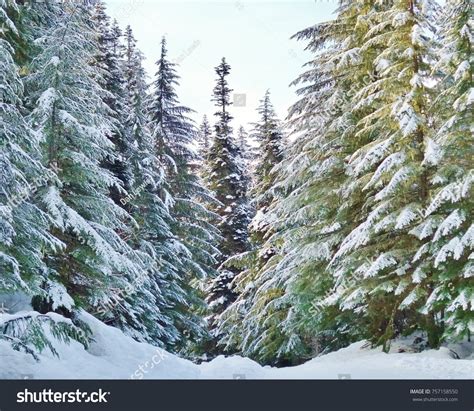
Snowy evergreens surround snowshoes.
Weather
I usually start with NOAA (or use your favorite weather app) for a general ballpark of weekend weather. Since the PNW has a unique topography and weather pattern, it’s hard to predict weather too far in advance.
If you see heavy snowfall, that can mean high avalanche danger for the few days in avalanche terrain. However, it could all just be fun if you avoid areas like that! Another great weather forecast source is Windy. It’s an hourly map that shows weather patterns like temperature, cloud cover/height, wind, etc…
Read also: Snowshoe Pack Functionality
I won’t link specific weather locations below, but be sure to check it before heading out!
Avalanche Awareness
Avalanche danger is a serious risk any time you have snow on a slope. I highly recommend taking an AIARE 1 class if you want to significantly venture into snowshoeing, especially if you might go off-trail.
Though regardless, I believe everyone should at least be avalanche aware - many PNW hikes have fairly low avalanche risk throughout the season with a few exceptions now and then. And you want to be aware of those exceptions because getting caught in an avalanche can be fatal!
The local PNW forecast is through NWAC. Generally, if they forecast green (low avalanche risk), it’s fairly safe to go; but always recommend paying attention to conditions because they can change. Low risk does not mean no risk. And often the risk is lower under tree line, which a good number of hikes fall under.
To find out if it’s in the trees, use satellite imagery on a map. I like using Caltopo, toggling for global imagery (under base layers) and then also checking the slope angle shading. Safer, avalanche-free slopes are generally < 30 degrees, but you also need to watch for the slopes above the trails too!
Read also: Best Dining in Snowshoe
For trails below, I’ve mapped out examples of avalanche terrain and which hikes you have to pay attention to at the end of this post.
Footwear
I find that footwear is a highly subjective topic. Some may say you must use snowshoes, but I find that microspikes are fine for many popular trails. Even if trails are called snowshoe trails, microspikes often work just because the trail’s been packed down well.
But for some trails, especially less traveled, snowshoes are very helpful to keep you afloat on snow. To be most prepared, the best way is bring all your options to the trailhead and then decide from there!
You may have noticed there are many kinds of snowshoes out there but for beginners, any snowshoe would work. The more technical the hike (usually steepness and iciness), the more aggressive a snowshoe you’d want.
Places to rent: Ascent Outdoors, Pro Ski Seattle, REI, Alpine Ascents (and there’s plenty more too), Wonderland Gear Exchange (for second-hand buys). And for how to use snowshoes: this REI guide is great, though as a beginner, you probably will be following a more well-traveled path that is easier to walk on.
However, whatever you choose, be mindful of which tracks to follow. Sometimes there are specific paths for skis or snowshoes and other times it’s a wide lane thru traffic for all. But unless you’re on skis, don’t step on the ski tracks!
The hikes listed here are primarily foot path, but Hex Mountain and Artist Point sees a number of skiers too.
Also, if you’re looking to keep snow out of your boots, consider getting gaiters (alpine ones are best for deep snow), or use pants that cover the top of your shoes to keep your feet dry. I love using gaiters whether I’m using snowshoes or microspikes!
See the snow travel section of my Winter Hiking post for more examples of what footwear is best for what conditions. Below, I’ll list generally what footwear will suffice for each, but please check conditions as they can change throughout the winter season.
Driving
If the trailhead is fairly close to a major highway, generally any car will make it! Just check WSDOT for highway and pass conditions and whether chains are required even if you have AWD/4WD.
It’s also good to check if forest roads are open and know when highways like SR-20 (North Cascades) and SR-530 (Mountain Loop Highway) are closed for the season. The Mt Baker-Snoqualmie National Forest has an great interactive map to check road and trail conditions.
Another thing is Sno-Park Permits are used instead of Discovery Passes for designated Sno-Park parking areas. It’s only $50 for a season vs $25 for a day! To make it easy, I’ve linked the relevant sites for road conditions/permits for hikes below.
Trip Reports
Like I mentioned before, it’s wise to look at trip reports before you go on any trip. It’ll give you a feel for what you might experience. If it’s not particularly recently, take the report and tack on whatever weather information you know the area’s had recently.
If you’re hiking mid-week, the snow will probably be less packed (snowshoes could be nicer), vs weekends where many people have packed down the trail already.
To find new trails, a great resource is searching for “snowshoe” in the trail map filter on WTA or selecting the snowshoe filter on AllTrails! I find that WTA has better descriptions than AllTrails, but use what works for you.
Also, for beginner snowshoers, I recommend filtering for < 2000 ft gain and < 8 miles on your first couple outings till you get a good feel for it.
For more in-depth information about snowshoeing and trails, The Mountaineers has a great resource here. Or use their list of snowshoe hikes by selecting snowshoe under find routes & places.
Tips for Winter Snow Travel
Days are short and temperatures drop drastically after sunset. Most people will (and should) attempt snowshoe hikes that have less gain and distance than their summer objectives. This is because snow travel is significantly slower than hiking your normal summer trails.
Added weight on your feet is actually more effort. A common saying is that for every pound on your feet, it’ll feel like 5 pounds on your back.
If you’re attempting a summit or large uphill, know that it’ll be a serious climb and you might even need to plan 2x the speed you would go without snow. I like to work backwards from when I want to be home or if I want to be back at the car before dark and get a good over estimate of how long the hike might take including long stops.
Then you can count backwards and see what time you should start and when your half way turn around point will be.
You might consider bringing a larger pack for winter snow travel than a summer day hike. Extra layers are absolutely necessary in case you have to stop for any period of time. I like to bring one extra warm layer than I think I’ll need.
My luxury item that borderlines a must-have is a thermos of hot tea or water. It’s easier than carry a stove to stop and make a warm drink, and you can drink it as you hike! If you know you’ll stay at the destination for a while, bring a foam pad to sit on. And always bring an extra pair of gloves in case your first set gets cold.
While your starting temperature will feel cold, you’ll quickly warm up while snowshoeing in Washington. I usually start with my down jacket over my fleece, but after about a half mile, the down jacket comes off. Furthermore, remember to apply and reapply sunblock. The sun’s rays bouncing off the snow will burn you if you don’t protect yourself.
It’s definitely more challenging, and you’ll feel it afterward. You use so many more muscles keeping yourself upright while snowshoeing vs. hiking. It’s hard to explain to someone who hasn’t done it, but if you have, you know what I’m talking about. Just expect to be sorer and to use more energy. This means drinking more water and eating more food on your trek.
Having hiking poles while snowshoeing will make your life so much easier. They increase your steadiness and allow you to trek through the snow more easily. Of course, you can go without them, but I don’t recommend doing so. Also, get hiking poles with baskets so your poles don’t constantly go down three feet.
Popular Snowshoe Hikes and Destinations
Even though some of these are listed as almost always low avalanche risk, it’s smart to check NWAC before you go, just to double check! Traveling on snowy terrain has inherent risks and this is by no means 100% safe, but as a general guide for your own risk assessment.
Each trail will list drive time from Seattle, difficulty, typical snow conditions, and a couple links to where you might find trip reports for them. For footwear, I list what’s usually needed, though after heavy snowfall, snowshoes are a great idea too.
Blue is very minimal avalanche risk, orange should be hiked with caution, red should be avoided if you have little knowledge in avalanche safety.
The Washington landscape changes drastically with a coating of snow. Mountain ridges are softened in the skyline as snowbanks smooth their edges. Frost-encrusted branches make trees seem as if they’re dusted with magic.
One of my favorite parts about living in Western Washington is the ability to drive to winter. There are a few things to keep in mind for safety and preparedness when planning to go snowshoeing or winter hiking in Washington. Check out this post on Winter Hiking Tips & Recommended Gear!
PLEASE DO NOT PARK ILLEGALLY OR BLOCKING ANY ROADS OR FREEWAY INTERCHANGES.
Washington state has a fabulous Sno Park system which costs $25/day or $50/year ($120/year if you want to add the groomed cross country ski trail parks, but you don’t want or need this if you are only going to be snowshoeing, just go to the sno parks that don’t have groomed cross country ski trails). You can also snowshoe at Mt Rainier National Park and Olympic National Park, where you’ll need to pay the entrance fee (or have an annual interagency pass). Other trailheads require a Northwest Forest Pass (which you don’t need if you have a park service interagency pass).
Many Sno park and national park trails do not allow dogs. It’s important not to bring your dog on any trail where dogs are not allowed, and if they are allowed, they must be on a leash. It’s also really important to NOT SNOWSHOE ON CROSS COUNTRY SKI TRAILS, especially groomed trails.
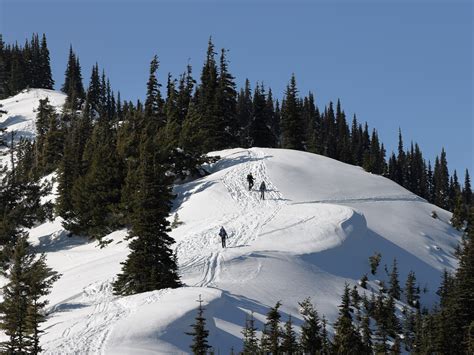
Snowshoers make their way up Hurricane Hill.
Popular Snowshoe Destinations
Here are some popular snowshoeing destinations in Washington State:
tags: #snowshoe #trails #washington