The NHL primary logo collection showcases the vibrant history of National Hockey League teams. A bold shield design defines the NHL logo in this striking primary logo collection. Team histories blend unique styles with league pride, showcasing the spirit of NHL logo team designs. Fans love NHL logo PNG formats for their clear look. Additionally, check the NHL Logo History. It provides iconic styles for collectors. NHL primary logos bring hockey games to life with dynamic style.
Drawing from team histories, NHL logo hockey designs stir passion in fans. Furthermore, logo PNG artwork grabs collectors with vivid detail. Visit the official NHL Wikipedia page.
Logos are more than just symbols on jerseys. They are the visual heartbeat of hockey culture. From the iconic crests of the Original Six NHL teams to the bold, modern marks of new expansion franchises, a logo tells a story of heritage, identity, and fan loyalty. In today’s NHL, logos serve multiple roles: they connect generations of fans, anchor merchandise and media branding, and act as rallying points for community pride.
Yet hockey’s visual identity extends far beyond the NHL. Across Europe - in Slovakia, the Czech Republic, Sweden, Finland, Switzerland, and Germany - clubs craft logos that balance tradition with contemporary design, creating emblems that resonate on and off the ice. The phrase “Original Six” in the context of the NHL refers to a specific group of six franchises that comprised the entire league for a 25-season span, from 1942 until the league’s major expansion in 1967. While the term might suggest that these were literally the first six teams in the NHL, the reality is a bit more nuanced.
The NHL was founded in 1917, and by 1942 many teams had entered, exited, folded or relocated. From a design standpoint, that means their logos are not only identifiers but cultural icons. The “winged wheel” is one of the most iconic marks - blending motion (wheel), flight (wing), and automotive heritage (Detroit’s “Motor City”). Most of these teams haven’t radically changed their core mark; rather they’ve refined it. Some marks (e.g., Chicago) face modern reconsideration of imagery; so identity is not static.
Read also: National Team Jersey Designs
When you look across more than a century of NHL history, the logos tell a visual story of the league’s evolution - from simple stitched emblems to globally recognized design icons. Each decade of hockey has left its fingerprint on how teams express identity, heritage, and pride through their marks. NHL logos have never been static.
Early Years: Simple and Functional (1910s-1940s)
In the earliest years of the NHL, between the 1910s and 1940s, team logos were often simple and text-based. Limited printing and embroidery technology meant that most jerseys carried only letters, basic shapes, and minimal color. The Montreal Canadiens’ familiar “C-H” crest or the Toronto Maple Leafs’ early text-based marks were more functional identifiers than pieces of brand storytelling.
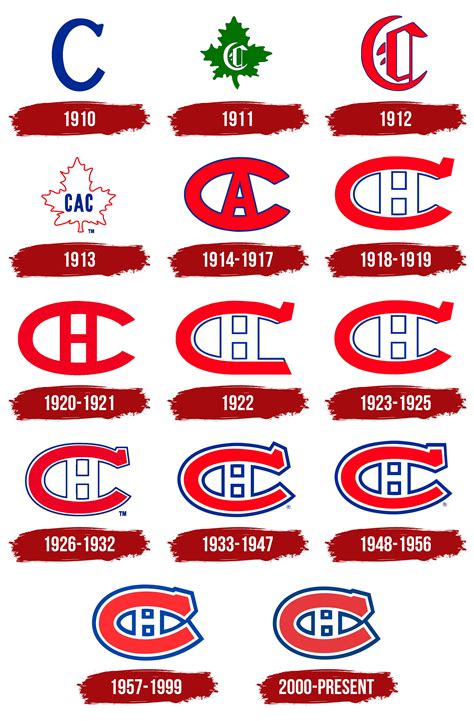
Montreal Canadiens Logo History
The Rise of Symbolism (1950s-1980s)
By the 1950s through the 1980s, things began to change. Teams realized the power of visual identity as television and merchandising grew. Logos became more symbolic and stylized - designed to stand out on screen and in print. The Detroit Red Wings’ winged wheel, the Boston Bruins’ spoked “B,” and the Chicago Blackhawks’ detailed head mark became synonymous with the sport itself.
Detroit Red Wings Logo
Read also: History of German Ice Hockey
Expansion and Experimentation (1990s)
The next big shift came with the league’s expansion and the graphic experimentation of the 1990s. New franchises entered the NHL with a clear mission - to be noticed. Clubs like the Mighty Ducks of Anaheim or the San Jose Sharks introduced sharp, modern logos that reflected pop culture, youth energy, and regional identity. Even established teams tweaked their looks with heavier outlines, metallic accents, and dynamic typography.
San Jose Sharks Logo
The Digital Age and Minimalist Design (2000s-Present)
As the 2000s rolled in, the digital age reshaped logo design again. Suddenly, a team’s logo had to work not only on jerseys but also as an app icon, social media avatar, or 4K television overlay. Shading and gradients of the early 2000s eventually gave way to the flat, clean, and minimal aesthetic of the 2010s. Teams like the Florida Panthers and the Ottawa Senators refreshed their looks with simplified geometry and modern typography, while others like the Original Six preserved their marks with only subtle refinements.
Factors Driving the Changes
- Media Evolution: As the way fans consume hockey changes, logos must remain legible and recognizable across formats.
- Market Growth and Expansion: Teams have to appeal to new audiences and differentiate their identities.
- Merchandising: A fresh logo can ignite new jersey sales and fan engagement.
- Heritage: Perhaps the most powerful force in hockey branding.
Ultimately, the evolution of NHL logos mirrors the evolution of hockey itself - a balance between innovation and respect for history. Modern marks may be flatter, cleaner, and more digital-ready, but they still carry echoes of the past. For designers and brands like Rezztek, there’s a powerful lesson here: the best identities don’t abandon their origins - they refine them.
Franchise Valuation and Logo Impact
When we ask “which logo is the most valuable,” it’s important to clarify: we aren’t just talking about the design mark, but the overall brand value of the franchise behind that logo. Based on recent valuation data, the franchise whose logo and brand appear to carry the most value is the Toronto Maple Leafs. The Maple Leafs’ logo - the stylised maple leaf symbol - itself is a strong visual anchor.
Read also: Features of Custom Hockey Gloves
Toronto Maple Leafs Logo
Modern Branding Battles
When you look at the modern era of the NHL, two of the most interesting branding battles are not only on the ice - they’re in how teams position their logos, identities and visual heritage. The Golden Knights launched in 2017-18, and even though they were “new,” their branding launch was aggressive and meaningful. On-ice success (they reached the Stanley Cup Final in their first year and won the whole thing in 2023) helped the brand credibility, but even the identity system was built so that it looked like it had purpose and history.
Because the Original Six teams benefit from decades of identity-recognition, the Kraken needed to make a splash early - not just visually but culturally. The team plays in a major metropolitan area (Salt Lake City), shares the arena with the NBA’s Utah Jazz, and is building its identity rapidly.
The Original Six (the longstanding franchises such as Montreal Canadiens, Toronto Maple Leafs, Boston Bruins, Detroit Red Wings, Chicago Blackhawks and New York Rangers) benefit from decades of brand equity: familiar logos, storied history, fan loyalty, legacy merchandise and cultural recognition. Expansion clubs, by contrast, start with a blank slate in many ways.
Relocation and Rebranding
The Quebec Nordiques were a beloved Canadian franchise, playing in the NHL from 1979 to 1995 (after a stint in the WHA). The franchise relocated to Denver in 1995, becoming the Colorado Avalanche. The Hartford Whalers played in the NHL from 1979-80 until 1996-97, when they moved and became the Carolina Hurricanes. Financial issues, arena concerns and city market size contributed to the relocation to North Carolina.
Hartford Whalers Logo
This is a more complex case of relocation, rebranding and identity evolution. The Atlanta Thrashers were an NHL franchise from 1999 to 2011. They relocated to Winnipeg and became the “new” Winnipeg Jets. Atlanta → Winnipeg (Thrashers became Jets). Winnipeg original Jets → Phoenix/Arizona Coyotes, and in 2024 significant franchise changes occurred.
The Thrashers logo (with the bird and hockey stick) is largely “retired” in the NHL context. The Coyotes’ “Kachina” style logo (one of the best ever NHL jersey ever made) has become a cult favorite and even returned as a primary mark in 2021.
Reverse Retro Programme
When you examine the modern era of the NHL branding efforts, one of the most interesting phenomena is the “Reverse Retro” programme: alternate sweaters (and by extension alternate versions of logos) that tap into past eras, heritage colour-schemes and throwback designs. The intent isn’t just nostalgia- it’s strategic: to reignite brand equity, engage fans with history, and give the core identity a fresh spin while staying grounded.
These retro versions demonstrate how a well-established brand can revisit its roots, revive visual assets, and re-energise fan and consumer engagement without abandoning the core mark. The NHL Reverse Retro programme has brought a fresh layer of creativity to the league’s visual identity, giving teams a chance to revisit and remix their past while engaging fans with something unexpected.
Among the standout designs, a few have consistently captured attention for their clever use of colour, historical reference, and visual impact. The Florida Panthers’ light‑blue alternate recalls South Florida’s unique environment and original motifs, while the Vegas Golden Knights reimagined what their logo might have looked like in a 1990s context, with stylized fonts and stars evoking classic Las Vegas flair. These designs are more than just aesthetic experiments; they show how brands can leverage heritage while appealing to contemporary audiences.
Reverse Retro logos demonstrate a careful balance between recognition, nostalgia, and excitement. By highlighting the past in a contemporary package, the league not only boosts fan engagement but also reinforces the enduring power of visual identity.
European Hockey Logos
Hockey branding isn’t limited to the NHL - across Europe, teams have created striking, memorable logos that combine heritage, regional identity, and bold design. Switzerland’s top leagues also boast remarkable logos.
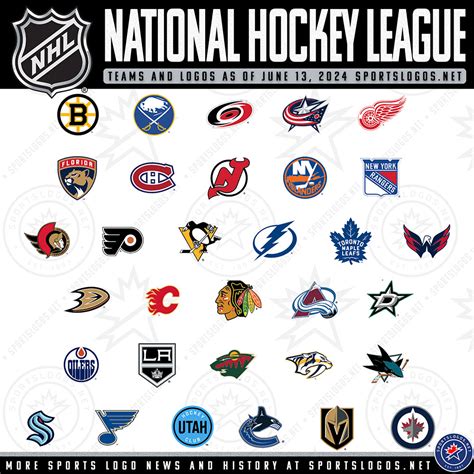
NHL Logos
Watch the expansion of the NHL through the years
Team by Team Logo History
Here's a quick look at some specific NHL team logos and their histories:
- Buffalo Sabres: The Buffalo Sabres logo features a white buffalo, a symbol of good luck, leaping in between two crossed sabres on a royal blue circle trimmed in gold. A new version of a letter "B" in black trimmed in gold with eight gold spokes within a black circle.
- Calgary Flames: The Calgary Flames return to their original logo and colors as the team goes retro for the 2021 season. Some fans prefer the red-and-orange logo on a white jersey. Others favor the reverse color configuration. Whatever your preference, it's hard to argue with the flaming "C" as one of the coolest logos in NHL history.
- Carolina Hurricanes: The 2000 logo changes to the "Eye of Hurricane" logo were very minor.
- Chicago Blackhawks: The current Blackhawk logo is a side view of an native American with war paint on his face in red, black and white. The current logo has had a little shade added to it a few years later, but the actual logo hasn’t changed.
- Columbus Blue Jackets: The red, white and blue flag is wrapping around the white and silver star in the background is the Ohio state flag, which is fitting for the only NHL team based in the state.
- Dallas Stars: The logo was a silver, beveled star with a silver and black D, outlined in Victory green and silver.
- Detroit Red Wings: With the name Red Wings came a logo that has stood the test of time and represents a perfect fit with the Motor City. No other design combines style, intricacy, relevance, and all-around coolness like the winged wheel, a fitting homage to the Motor City.
- Edmonton Oilers: The Oilers' wordmark "OILERS" is in blue in the original custom font, as well as the encompassing blue ring, and the oil drop is orange in the top center. In the never-ending Battle of Alberta, Edmonton gets the nod by a razor-thin margin. The unique font choice, coupled with a little splash of color on top, makes this a popular logo no matter how well the team is playing.
- Los Angeles Kings: A throwback logo to the one used by the club from 1988 to 1998.
- Minnesota Wild: The new and cleaner head of a black bear created using Minnesota-area scenery, green pine trees, a wheat colored river, a red sky, yellow sun set and white shooting star. While this logo isn't quite as appealing as that of the North Stars, it's close. Using a river as a mouth, a star as an eye, and fitting in a row of pine trees, a red sky, and a bright yellow sun? This is a true work of art.
- Montreal Canadiens: CHC. Club de hockey Canadien. It's so simple - and yet, this configuration with two "C"s and an "H" stands as one of pro sports' most iconic logos. Of all the variations, we like this one - featuring a thicker "H" - the best.
- New Jersey Devils: The Devils' logo is a monogram of the letters "N" and "J" rendered with devil horns at the top of the "J" and a pointed tail at the bottom.
- New York Islanders: Initials "NY" in white on blue with an orange outline circle with a hockey stick and puck and a map of Long Island below in orange. It's one of the most recognized hockey logos of all time - which makes the entire fisherman experiment even more mind-boggling. The orange Long Island outline in the middle is what really does it for us.
- New York Rangers: A red, white, and blue shield with the wordmark "NEW YORK" across the top and "RANGERS" slanted across the shield. After going with a few different iterations of this design - most of which featured strange font-size choices - the Rangers finally settled on this sleek version, and have stuck with it ever since. As shield-style logos go, this is the best of the bunch.
- Ottawa Senators: Known as the Senators Centurion logo, this design features the profile of a Roman senator wearing a gold helmet placed inside a black circle.
- Philadelphia Flyers: A black P-Wing with an orange circle in the middle. The Flyers classic orange and black winged-P that oozes hard-nosed hockey and harkens back to the Broad Street Bullies days.
- San Jose Sharks: The new and still active primary logo arrived for 2007 - 2008. The shark is much more three-dimensional, menacing, powerful. It’s bursting out of the logo to bite the hockey stick. When the Sharks broke in as the 22nd NHL team in the early 1990s, they brought a brand-new approach to logo design with them. We can't decide what we like more: the fearsome shark chomp or the implementation of teal.
- Seattle Kraken: The original Kraken logo features a custom letter "S" in two tones of ice blue and dark blue. The red-eye of the Kraken has been affixed on its prey for some time.
- St. Louis Blues: A blue musical note with yellow trim; the bottom part of the note has been made smaller and now points diagonally. Normally we could do without a city or team name within the logo - but this one is tucked nicely at the top of what is an otherwise flawless design. Combining homages to flight and music? It doesn't get much better.
- Tampa Bay Lightning: The current Lightning logo is a more traditional, simple look that removed the team’s name and city altogether. Florida's second NHL franchise came with a much livelier logo than the rival Tampa Bay Lightning; it looks like the cat is jumping right into your living room. If nothing else, it was a wildly popular jersey among younger fans.
- Toronto Maple Leafs: Inspired by the classic Leafs logo of the 1940’s to 1960’s, the club’s new mark has a number of design characteristics that distinguish it. Traditionalists were delighted to see the Maple Leafs go back to their roots last season. As great as the more angular option is, this logo harkens back to the Leafs' glory days - and it just looks better.
- Washington Capitals: The “T” in Capitals forms a hockey stick that has a red puck next to it and the three stars along the top are an addition to the original look.
- Winnipeg Jets: The merging of the WHA and the NHL in the late 1970s brought some truly great logos into the fold - including this one. It's no wonder Winnipeg fans wanted this logo brought back when NHL hockey returned to Manitoba.
The design for the new logo, which was developed in partnership with Reebok and the NHL. The notch in the white portion appropriately and deliberately points north.
Evolution of the NHL Logo
The visual identity of the National Hockey League has been very constant and stable throughout the league’s history. Once created, in 1917, its logo became just a bit modified by today, showing the strength and seriousness of the NHL.
1917 - 1946
The original logo was designed for NHL in 1971 and featured a sleek black crest with a black, white and yellow outline and a wordmark in yellow, placed diagonally in a black background, framed in two parallel yellow lines. The letters were set from the upper left corner to the bottom right one, capitalized and executed in a simple yet solid sans-serif typeface with straight lines, evoking a sense of seriousness and stability.
1946 - 2005
The redesign of 1946 slightly changed the shape of the crest, making it wider and shorter, and removed the white outline, keeping only thick dark yellow and black lines in the emblem. The shade of the yellow became more intense, almost turning orange, and the contrast between it and a black background became smoother yet made the whole badge look more professional and confident. As for the lettering, it’s typeface was changed to an extended and bolder one, making the look of the logo balanced.
2005 - Today
With the NHL rebranding of 2005, the logo was also changed, and this was the first time when there were really visible modifications. The dark yellow shade was switched to a silver-gray, which made the whole logo look sleek and powerful. The lettering changed its typeface to a sharp and elegant one, with the upper parts of the letters slightly elongated and pointed to the left, and the direction of the inscription was switched, so now the lettering is placed from the bottom left corner to the upper right one, symbolizing growth and progress.
The outline of the frame is drawn in gradient shades and looks voluminous and glossy, adding a modern and stylish touch to the emblem, and making it look powerful and masculine.
The famous shield logo was introduced in 1946 (according to other sources, in 1917). It featured a shield shape given in orange and black colors.
The current logo, which was adopted in 2005, looks very similar to the previous one, at least the core visual metaphor remains the same: a shield shape. However, the black-and-brown color scheme has been replaced by the black-and-white one (with shades of silver grey). One more notable change refers to the way the diagonal lettering is positioned (it goes upward now). The typeface has also been slightly tweaked.
The custom typeface used for the National Hockey League wordmark is neither a serif nor a san-serif one. Each letter has only one serif, while all the other ends of the characters are not “covered” by serifs.
The current NHL logo is monochromatic, using only black and white.
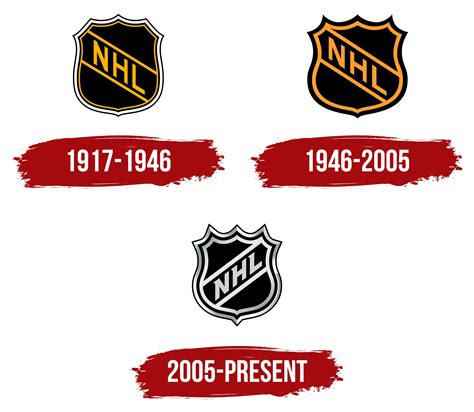
NHL logo history