Hockey holds a significant place in history. The region’s enduring love for the winter sport can be traced back through generations, with hockey becoming a cultural cornerstone for both recreation and competition.
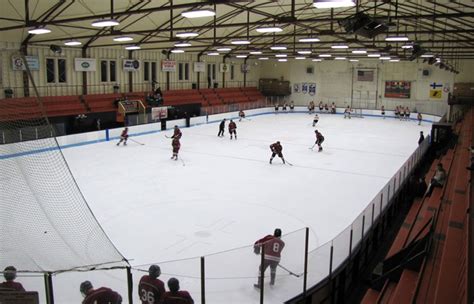
Dee Stadium in Houghton, Michigan, a historic venue for hockey.
The Birthplace of Professional Hockey
As you drive into Houghton via US-41, you will see the iconic sign that reads, “Welcome to the Birthplace of Professional Hockey.” Houghton’s designation as the Birthplace of Professional Hockey originates at the location of the present-day Dee Stadium.
The first organized professional hockey game was played in this location on December 29, 1902, between the Portage Lakes Hockey Club and the University of Toronto Hockey Club. Our local team beat the University of Toronto 13 to 2 in a riveting game attended by over 5,000 spectators. During that season, the Portage Lakes Hockey Club became the first hockey team to pay all its players, making it the first fully professional team.
In 1904, the Portage Lakes became part of the International Professional Hockey League, the first fully professional ice hockey league. The league was organized “Doc” Gibson with the assistance of James R. Dee and included five teams from Pittsburgh, PA, Sault Ste. Marie, MI, Sault Ste. Marie, Ontario, Calumet, MI, and Houghton, MI. “Doc” Gibson was the captain of the Portage Lakers and their best scoring player!
Read also: Winter Fun at Hamilton Ice Arena
In 1943, the Michigan College of Mining and Technology (now Michigan Tech) started using the Dee as their home ice. An artificial ice plant was installed in 1953 - a major facility improvement that was celebrated by a special dedication game between Michigan Tech and the Portage Lake Pioneers. This exciting game resulted in a 3-3 tie. Michigan Tech used this rink for many years, playing their last game at the Dee on December 4, 1971.
Today, the City of Houghton owns the Dee Stadium, and it is the home of the Houghton High School Gremlins Hockey Team and the Portage Lake Pioneers Senior Hockey Team. Visitors are also encouraged to stop by the Dee Stadium to explore the History of Hockey Museum in the Kenner Ruohonen Memorial History Room. This exhibit offers a timeline of hockey history in the Keweenaw and information about our historic Keweenaw teams.
The MacInnes Student Ice Arena was named after Michigan Tech’s most notable coach, John MacInnes. John J. Hockey Hall of Fame in 2007. Under his direction, Michigan Tech won the NCAA National Hockey Times three times!
Constructed in 1972, the Houghton County Arena (HoCo) is a public-owned facility that offers space for recreational and social activities. HoCo provides home ice for the Hancock High School Bulldogs and hosts the Copper Country Junior Hockey Association and the Copper Country Old-Timer's.
Built in 1976, Laurium’s Gipp arena was originally called the Bi-Centennial Ice rink. The building was later renamed as a tribute to the famous Notre Dame football player, George Gipp, who grew up in the village of Laurium. This community ice arena is smaller than regulation, but it has served as a fantastic facility for younger players in the local Initiation or Mites Programs and offers public skating.
Read also: Information on River Rink Skating
Calumet Colosseum: A Historic Landmark
Hockey UP Here: Welcome to Calumet
Construction of the Calumet Colosseum began in 1913 with a formal opening on January 1, 1914. Featuring a three-story barrel roof structure, this important community arena is considered the oldest operating continuous-use indoor rink in the world!
On January 6, 1914, the Calumet Wolverines and Portage Lake Pioneers competed in the Calumet Colosseum’s inaugural ice hockey game. In January 1942, the National Guard Armory (located across the street) burnt down, and the Colosseum was sold to the State of Michigan. At that time, it was renamed the Calumet Armory and became home-base for the Calumet Detachment of the National Guard.
In 1968, artificial ice was installed, and high school hockey returned to the arena for the first time since World War II. The National Guard eventually moved into a new armory in 2005 and Calumet Township took over the old armory building. At that time, the name was reverted to the Calumet Colosseum and became home of the Calumet Junior Hockey Association.
In 2019, the Colosseum was recognized as the winner of Kraft Hockeyville USA. The Colosseum was awarded $150,000 for upgrades, which included a new ice plant, heating system, sound system, and refurbished locker rooms. The arena also had the opportunity to host an NHL pre-season game between the Detroit Red Wings and the St. Louis Blues.
The Calumet Colosseum is also home to the International Frisbee/USA Guts Hall of Fame. This unique museum is located in the second-floor ballroom, where visitors can learn about the intense sport of Guts frisbee and teams that have played in the Copper Country.
Read also: Fun on the Water in Gatlinburg
Visitors are encouraged to catch a game at the Colosseum, visit the museum inside, or attend open skating.
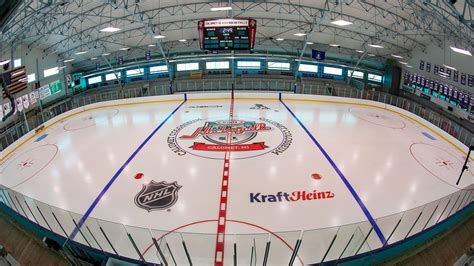
The interior of the Calumet Colosseum, showcasing its historic architecture.
Outdoor Rinks and Casual Games
Today, there are many outdoor rinks throughout the region that offer space for casual hockey games and ice skating. Some of our most beloved outdoor rinks include the Dodgeville pavilion, Laurn-Grove in Hancock, the Emil Aho Memorial Ice Rink in Ahmeek, and the Chassell pavilion at Chassell Centennial Park.
MacNaughton Cup
The oldest of these awards is the prized MacNaughton Cup. This cup was funded by James MacNaughton, an avid supporter of amateur hockey and the superintendent of Calumet & Hecla Mining Company based in Calumet, MI.
The cup is made of pure silver, standing at a height of nearly three feet, and weighing almost 40 pounds! Originally, the cup belonged to the American Hockey Association, and later it was handed over to the Western Intercollegiate Hockey League (WIHL). When this league disbanded, the seven teams competed under a new name, the Western Collegiate Hockey Association (WHCA). Michigan Tech left WHCA in 1982 and joined the Central Collegiate Hockey Association. At that time, they took the MacNaughton Cup with them. Since then, Michigan Tech has been the trustee of the MacNaughton Cup, bringing it back to WHCA when they returned to the league during the 1984-1985 season. The cup is awarded at the end of the season to the conference winner.
"Doc" Gibson Cup
The famous “Doc” Gibson Cup has been around since 1939 and is often referred to as the “Stanley Cup of the North.” This rivalry cup is one of the most coveted hockey trophies in the Midwest and the third oldest tournament cup in hockey history.
This silver-plated cup stands a little over two and a half feet tall and was originally awarded to the champion of the Northern Michigan-Ontario professional hockey league. During the late 1950’s and much of the 1960’s there was no series for the cup. After several years of inactivity, it became the rivalry trophy for an annual three-game series played between the Calumet Wolverines and the Portage Lake Pioneers. The Portage Lake Pioneers reclaimed the cup with a 3-2 victory over the Calumet Wolverines in 2023.
Community and Charity
The annual Pigs-N-Heat Charity Hockey game supports the Copper Country Police and Fire Relief Fund, an organization that serves citizens of Houghton and Keweenaw counties. This fun benefit is a lively game between local law enforcement agencies and local volunteer firefighters. It also includes raffles with thousands in prizes, including gun and cash raffles.
The Copper Country Old-Timers League hosts an annual St. Patrick's Day weekend tournament in the Keweenaw. Spectators can catch riveting (and fun) games at The Dee, Houghton County Arena, and the Calumet Colosseum. The Copper Country Old Timers Tournament consists of several different divisions with teams from across the Upper Peninsula.
The Calumet Wolverines Hockey Club is fast-paced and exciting hockey club that is heavily involved in community events. The Wolverines play in a USA Hockey-affiliated full-check league (Great Lakes Hockey League) that consists of eight other teams in Wisconsin and Michigan, including their local arch rivals, the Portage Lake Pioneers.
Founded just after the start of the 20th century, the Portage Lake Pioneers is a Senior “A” Hockey Team and is considered one of the oldest hockey teams in the world. Another local member of the Great Lakes Hockey League, you can imagine the excitement of a game being played between the Portage Lake Pioneers and the Calumet Wolverines.
Missouri River Otters
The Missouri River Otters were a minor professional ice hockey team based in St. Charles, Missouri. They played in the United Hockey League from 1999 to 2006. They played their home games at the St.
The River Otters were launched in the United Hockey League (UHL) for the 1999-2000 season owned by New York-based United Sports Ventures, an organization that operated several teams in the league.
The team's first head coach was former St. The team was sold in December 2001 to local ownership group River City Hockey LLC. consisting of Kevin Fitzpatrick, Dan O'Donnell, and David Black. The team was purchased by Mike Shanahan Jr. in 2004.
During the National Hockey League (NHL) lockout in 2004-05, NHL defenseman Barret Jackman decided to stay in St. Louis and play hockey for the River Otters during the lockout, along with center Ryan Johnson, defenseman Bryce Salvador and right winger Jamal Mayers.
On January 25, 2006, the Missouri River Otters hosted the 2006 United Hockey League All Star Classic, which included events such as an UHL alumni vs. St. Louis Blues alumni pre-game show to raise money for St. Louis Children's Hospital.
In late April 2006, team owner and president Mike Shanahan Jr. decided to fold the team due to lack of attendance, issues with the lease at the Family Arena, and a steep workers' compensation bill. The staff was then let go as the announcement was made that the team would not play in the upcoming 2006-07 UHL season. While leaving open the possibility of a sale, Shanahan said that the competition for the sports dollar in the greater St.
The logo of the Missouri River Otters.
River City Sportplex
It has been four years since the former Glacier Ice Arena reopened as the River City Sportplex. In that time the building has been given a face lift, new hockey teams have been brought in, the arena just launched its own pub and participation in all the programs on the ice have been growing.
In 2019, the Glacier Ice Arena was put up for sale and ultimately closed in early 2020 during early stages of the COVID-19 pandemic.
After conversations with friends and people in the industry, the Repsher’s decided to give the ice rink business a go. Amanda said they’ve tried to stay under the radar as the owners of the rink, preferring to put the focus on the programs they are running. She also gave credit to the prior owners for what they were able to build.
After the purchase, the rink underwent some renovations to get it ready to welcome back Grand Valley hockey players and skaters.
The process took around six months, Dave said, but they were ready to open back up in fall of that year. “We opened the doors on Oct. 8, 2021,” Amanda said. “There were beer league adult hockey league players, as well as youth players that were still in Grand Junction and incredibly excited to see that we were opening the doors. So we started with that base. And from the get-go, we knew we wanted it to be a year-round facility.”
One of the things that we’ve been most excited about growing is our women’s hockey,” Amanda said. “Within the beer league, that part of the league is growing. For the first time this year for our youth league, we have a women’s team and they are branding themselves as the Lady Hawks.”
It isn’t just hockey that’s growing. “Now we’ve got a thriving curling league and we’ve got a figure skating program,” Dave said. “And the youth hockey program is going like crazy.
After a couple years of having the rink reopened, there was growing interest in having a high school team for District 51 athletes. Caprock Academy, a public charter school within D51, stepped up to sponsor the team and any students within the district can participate.
River City Sportplex has also hosted Colorado Mesa University’s club team since the ice rink reopened. The university has a history of playing at the rink going back to its Glacier days - when it would often fill the house.
The pub will also have TV monitors that will play the games happening on the rink for patrons to watch. Dave said they’ll have the “coldest beer in town.”In addition to the pub, Amanda said they were donated ice bumper cars from Vail and are continuing their public skating opportunities, which she said would be a good option for anyone looking to beat the heat in the summer.
The River Hawks are already drawing in talent with two of their players making their country’s national team.
The games have been well attended so far, Dave said with around 400-500 people coming out to cheer on the team. The amount of community support River City Sportplex has received since opening in 2021 is what keeps them going, Amanda said, especially from the young skaters.
“This has been a massive leap of faith for us,” Amanda said.
Hockey Arenas
Here is a summary table of the hockey arenas discussed, along with their key features:
| Arena Name | Location | Key Features |
|---|---|---|
| Dee Stadium | Houghton, MI | Birthplace of Professional Hockey, History of Hockey Museum |
| Calumet Colosseum | Calumet, MI | Oldest operating continuous-use indoor rink, Kraft Hockeyville USA winner |
| Houghton County Arena (HoCo) | Houghton, MI | Public-owned facility, hosts various hockey associations |
| Gipp Arena | Laurium, MI | Community ice arena, hosts youth programs |
| River City Sportplex | Grand Junction | Pub, curling league, figure skating program, youth hockey program |