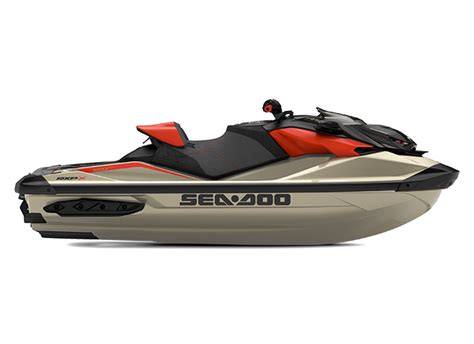
The Sea-Doo RXP-X 325 is an exciting step forward for supercharged jet skis thanks to a new and improved engine. While you can take a laid-back cruise on this jet ski, this baby is built to pin your ears back. This is an excellent option for those who want to feel the adrenaline rush of high-speed water riding.
2024 Sea Doo RXP-X 325 RS Review Top Speed Test
The RXP X 325 sets a high bar for what it means to ride at high speeds on water, with its performance capabilities, improved safety features, and luxury comfort. Let's delve into what makes these supercharged machines stand out.
Engine and Performance
The Sea-Doo RXP-X 325 horsepower engine is among the most powerful in the PWC industry. The fact is that supercharged and intercooled engines perform better. The blower pumps more air into the engine, speeding the jet ski. Meanwhile, the compressor is crucial to performance. The jet ski’s sophisticated fuel injection system is another highlight. It efficiently fuels the engine while balancing speed and efficiency. This method maintains power output, outperforming carbureted motors.
Riders may adjust the PWC’s reaction and control using Sea-Doo’s Intelligent Throttle Control (iTC). A new 1630 ACE 325 Rotax engine component is Intelligent Debris Free (iDF) to reduce debris entering the engine. This integrated cooling system cleans itself and protects the pump. This reduces engine blockages and damage from watery debris.
Key Features of the RXP-X 325 Engine:
- 325 Horsepower: Among the most powerful in the PWC industry.
- Supercharged and Intercooled: Provides enhanced performance.
- Intelligent Throttle Control (iTC): Allows riders to adjust the PWC’s reaction and control.
- Intelligent Debris Free (iDF): Reduces debris entering the engine.
Handling and Ergonomics
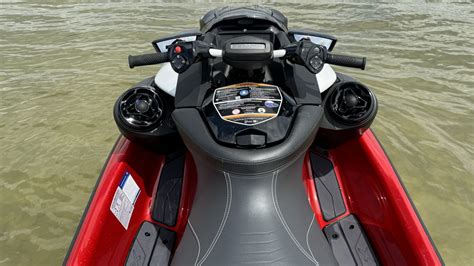
The Sea-Doo RXP-X 325’s consistent high-speed handling is partly due to the thoughtful construction of its seats, handlebars, and leg support. The RXP-X 325 has handlebars built for accuracy and command. The Sea-Doo RXP-X 325 seats are shaped in a way that’s designed to put jet ski riders in a comfortable and efficient posture even at top speed. The leg support keeps the rider’s weight where it should be when accelerating or cornering by offering a tight and secure fit. It has grooves allowing your knees to lock when leaning into curves.
Read also: Comprehensive Review: Yamaha FX Limited SVHO
Safety Features
Even on the most exhilarating excursions, the jet ski rider feels safe and secure thanks to the Sea-Doo RXP-X 325’s extensive list of safety features and upgrades. Notable safety features include the innovative Intelligent Brake and Reverse (iBR) system. It applies braking force to the water jet, allowing for accurate and speedy stopping even at high speeds. Sea-Doo offers the iControl Learning Key for customers who are new to PWCs or want an extra safety measure. Those with less expertise in riding or who wish to teach others the thrill of personal watercraft will appreciate this feature immensely. When used, the iControl Learning Key reduces the watercraft’s top speed, making for a more manageable and secure ride. The RXP-X 325 has wide-angle mirrors that increase the jet skier’s field of view, situational awareness, and safety. This aids navigational safety by eliminating blind spots and providing a 360-degree sea panorama.
Unique Features
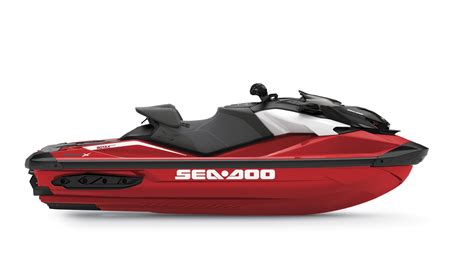
The unique ErgoLock mechanism is one of the reasons why people choose to ride this jet ski. The RXP-X 325 also has an adjustable handlebar so that riders may find the perfect position for them, regardless of their size or build. The front storage bin is another notable feature, providing a place to keep your most used items while on the water. There is an optional full-color, 7.8-inch screen with a new level of usefulness and great vision. With Bluetooth, USB, and smartphone apps, you can listen to music, check the weather, find your way around, and do more.
Sea-Doo RXP-X 325 vs. Kawasaki Ultra 310
Two exceptional high-performance personal watercraft (PWC) examples are the Sea-Doo RXP-X 325 and the Kawasaki Ultra 310. The Sea-Doo RXP-X 325’s 1630 ACE 325 Rotax engine generates 325 horsepower. Combining a lightweight design and a powerful engine gives this PWC class-leading acceleration and peak speed. The Kawasaki Ultra 310, on the other hand, has a 1,498cc supercharged engine that generates 310 horsepower.
The Sea-Doo RXP-X 325 excels in mobility and stability because of its quick turning radius and precise steering. Riders more concerned about agility like the Ergolock system, which ensures precise control and stability. On the other hand, the Kawasaki Ultra 310 is an excellent choice for long trips because of its reliability and pleasant riding quality. The Sea-Doo RXP-X 325’s tight racing seat and slanted footwells are designed to keep you secure and in command at high speeds.
Is the Sea-Doo RXP-X 325 Worth It?
The value of purchasing a Sea-Doo RXP-X 325 depends on the buyer’s intended purposes and level of involvement with the jet ski. Although it has superior features and performance characteristics, this high-end model comes at a hefty price and consumes more gasoline than less powerful PWCs. The Sea-Doo RXP-X 325 is the best option for people who value top-tier performance, speed, and agility. It flat-out flies. Experienced riders who can make the most of the RXP-X 325’s features will likely be the most satisfied with their purchase. The absolute rush that this jet ski delivers is hard to match.
In contrast, this high-performance jet ski may be overkill, both in terms of power and expense, for casual or recreational riders. Some options are easier on the wallet and the environment. Ultimately, purchasing a Sea-Doo RXP-X 325 will depend on the rider’s taste, experience, riding style, and financial situation. So, is it worth it? It is for those who will use it for its intended purpose. A severe need for speed.
Sea-Doo RXP-X 300: An Alternative
Equipped with a Rotax 1630 ACE supercharged engine, The Sea Doo RXP-X 300 delivers an intense 300 HP. An impressive suite of features, including electronics, navigation, and storage, are often overlooked compared to this jet ski’s performance. This is not a beginner-friendly jet ski. This model is meant for the experienced rider seeking a race-bred performance machine. Due to its nature, the engine will be louder than the standard jet ski and consume more fuel. Its top speed of 67 mph and control make it a power-packed adrenaline rush. If you’re looking for a watercraft to help you push the limits, you’ll want to consider looking at this beast.
The Sea Doo RXP-X 300 is a racing-tailored jet ski specifically made for high performance in calmer waters. Though a newer, faster PWC (the RXP-X 325) has landed, this supercharged ride is not for the faint of heart. The listed top speed is 67 mph, but real tests push it up to 73 mph on flat water. Additionally, the RXP-X 300 is fitted with a low-rise handlebar. It also features a Variable Trim System (VTS) and handlebar-activated launch control. This system lets the rider quickly fine-tune the handling to meet any condition.
The RXP-X 300 was designed to be ergonomic so that riders can be comfortably locked in. The Sea Doo RXP-X 300 is a jet ski made for thrill-seeking riders. The RXP-X 300 includes a full color 7.8-inch display offering a wealth of information. It can show speed, engine performance, fuel consumption, time, and distance traveled. The sport mode shows the performance-related data like RPM and acceleration. The tour mode or slow mode displays other information like no-wake zone speeds. The ECO mode will show fuel consumption, distance to empty, and the estimated time until empty.
Optional Accessories for RXP-X 300
- Premium Sound System: For $1,229.99, this includes two 50-watt speakers that are fully submersible and maintain clear sound even at higher speeds. The left speaker features a remote control that can change the volume and song while you drive. It’s Bluetooth enabled.
- Boarding Ladder: This accessory is a spring-loaded platform with an easy bolt-on installation. Without the ladder, boarding from the water can be somewhat challenging.
- USB Port: Located inside the glovebox, the USB port is equipped with a smart module that can detect the amperage your device requires to charge.
RXP-X 300 Alternatives
Sea Doo sells a more expensive variant, the RXP-X Apex, which has another aesthetic appeal and extras like a cover. The most similar jet ski to the RXP-X 300 is the Sea Doo RXT-X. The RXT-X is also equipped with a 300-horsepower engine. The RXT-X’s main advantage is that it can carry 3 riders, as opposed to the RXP-X, which is optimal for a single rider. Sea Doo lists the RXT-X as $18,499 for new models.
Another jet ski in a similar class as the RXP-X 300 is the Kawasaki 310LX. Its listed top speed is also 67 mph and has a rapid 0 to 60 acceleration rate of about 4 seconds. The Kawasaki has an incredibly powerful engine but is nowhere near as nimble as the RXP-X 300’s racing-focused design. The RXP-X 300 starts at $16,499 for a new model with the standard package. Sea Doo does offer a promotion where you can finance it for as low as 2.99% over 36 months. This option is nice for those who don’t have the money to pay upfront. Used models with the standard package are usually around $13,499. This jet ski is only worth the money if you are serious about seeking a high-performance ride.
The RXP-X 300 was not made for the casual rider. Even an intermediate rider would be overwhelmed by its aggressive style. If you’re an experienced rider that will use it in the context that it was designed for, then this is a good purchase.
2018 Sea-Doo RXT-X 300: A Detailed Look
To say we were excited to get our hands on one of the very first 2018 Sea-Doo RXT-X 300‘s would be an understatement. Our loaned unit came to us in Ice Metal & Lava Red (although the optional Neon Yellow & Lava Grey was equally enticing). Easily one of the best additions to the new ST3-platform, the BRP Premium Audio sound system - a $600 option from the factory, $900 through dealers’ parts departments - syncs with your Bluetooth-capable smartphone, allowing you to listen to your own private song selection in crisp 100-watt clarity. Although a standard feature on the GTX Limited packages, we also equipped our RXT-X 300 with the optional USB port socket. This allowed us to keep our smartphone plugged in and fully-charged.
Sea-Doo’s designers paid close attention to creating the most comfortable cockpit possible; the footwells are deep and surprisingly wide, allowing the rider plenty of room to move around the watercraft. New (and exclusive) to the 2018 RXT-X 300 is “Launch Control” - a feature that automatically positions the trim nozzle downward to keep the Sea-Doo’s nose planted upon initial acceleration. After a series of testing together with Greenhulk.net’s own Jerry Gaddis, we found that Launch Control truly did deliver superior acceleration numbers. Even when we manually toggled the trim control, we couldn’t beat the acceleration times made by the Sea-Doo’s onboard system.
Of course, the RXT-X’s centrifugally supercharged 1,630cc 4-stroke producing a solid 300-horsepower is the big draw here. Not only could the new 2018 RXT-X out accelerate the competition, but its previous model as well. Although an inch-and-a-half wider (from 48.2-inches to 49.4-inches), the new Sea-Doo platform was also a hair over 3-inches shorter (from 139.2-inches to 135.9-inches). A deeper-set seating position for the driver and passengers also gives the RXT-X a lower center of gravity.
In addition to an official Sea-Doo ST3 watercraft cover, a final feature new to the 2018 platform that we came to love was Sea-Doo’s LinQ accessory system. A pair of pop-up cleats allowed the attachment of either a 4-gallon fuel caddy; a semi-rigid, 5.5-gallon storage bag; or a 4.2-gallon ice chest. We racked up over 50 hours of ride time over the year, which was a record for us considering the many different watercraft we have to test throughout the calendar year.
With the throttle pinned, the RXT-X could drain a 15.8-gallon tank nearly as fast as a fuel pump could fill it; but when fuel mileage was a concern, we could toggle between operating in ECO Mode or simply ease off of the throttle as we glanced at the in-dash boost gauge. Although perfectly comfortable when trimmed at neutral in smooth water conditions, we did find that the RXT-X fared better trimmed far up when tracking through larger chop. The Sea-Doo’s knife-like keel is super aggressive - just like its RXP-X 300 sibling - and wants to do the steering if the rider isn’t paying close attention.
Impressively, we found that the RIVA Racing Pro-Series sponsons were the perfect addition to our RXT-X 300. The deep, angled (and 5-way adjustable) blades provided significant added traction that kept the Sea-Doo’s tail planted even in the sharpest turn. Since we liked the RXT-X’s nose trimmed lower, positioning the sponsons’ blades to the 4th lowest position gave us the grip we needed. Finally, wanting to eke out a few more miles per hour without irreversible harm, we installed a RIVA Racing Speed Override Control Unit. Commonly known as a “SCOM,” the control box doesn’t reprogram the engine’s ECU tune whatsoever, but rather, simply deactivates the GPS-controlled speed limiter.
Over the course of the year, the RXT-X began to show certain signs of wear and tear. We struggled to find the right cleaner/polish to keep the gloss black plastics looking new. Hard-to-remove waterspots became a major challenge in particular. The silver-hued Ergolock knee pads also started to yellow - a reaction to sunscreen and sweat, we believe. Spilled gas draining from around the filler cap had also stained the silver acrylic surface’s finish.
As equipped, our 2018 model would MSRP just over at $16,700. Without the BRP Premium sound system and USB port, you can expect around $1,000 off from that total - but as we’ve said before, the BRP Premium Sound is waaay worth it. Additionally, if you’re a hot dogger, or even a moderately aggressive rider dead set on a RXT-X, the RIVA Pro-Series Sponsons are almost mandatory equipment.
RXP-X vs. RXT-X
If I had ended my day on the RXT-X, I’d have been astounded by how well it handled. However, riding the RXP-X right after the RXT-X, put into perspective how much more extreme a PWC that’s essentially made for racing is when compared to one that’s touring-orientated. This doesn’t make one better or worse. The RXT-X probably gave me 80% of the enjoyment the RXP-X gave me when thrashing it around a buoy course.
The RXP-X uses the T3-R hull, which features a deep-v shape that helps it cut through chop, and makes it a comfortable off-shore race unit. But what really sets it apart from the RXT-X are its softer, rounded chines (bottom sides), which allow it to lean into turns more aggressively and react to rider inputs with incredible sensitivity. The ST-3 hull on the RXT-X also has a deep-v shape, but the main difference is its harder chines, which give you the dead-stop feeling when leaned over in turns.
Both PWCs perform like racing machines. It took me a while to see why anyone would choose the RXT-X over the RXP-X, but that’s because these Sea-Doos hit my factory reset button. The RXT-X comes with a 3-person seat, meaning you can legally use it tow a wakeboarder or someone on a tube. Even if you’re not towing someone, you can bring at least two more people out on the lake in comfort, or you could take your partner to a sandbar 30 miles away. Although the RXP-X has even more front bin storage capacity at 37.78 gallons, it’s slightly harder to reach, as you need to open the bin in front of the steering column.
In the most basic terms, the difference in seats tells you all you need to know about who and what each model is intended for. The RXP-X starts at $19,199 and the RXT-X starts at $19,999, so the price isn’t going to be what sets one of these PWCs apart from the other. Nor should it be what you’re thinking about when making a purchasing decision because, as I hope I’ve shown, one of these models is simply right for you.
tags: #sea #doo #supercharged #jet #ski