In ice hockey, a shutout (SO) is credited to a goaltender who successfully prevents the opposing team from scoring during the entire game.
In regular season games, if the score is 0-0 and the game goes to a penalty shootout, both goaltenders are credited with a shutout.
In the event that a shutout is accomplished by a team using more than one goaltender in the game, the shutout is credited to the team, and no goaltender is awarded a shutout.
For example, On December 1, 2009, the Toronto Maple Leafs won 3-0 against the Montreal Canadiens.
On March 19, 2023, the St. Louis Blues won 3-0 against the Winnipeg Jets after Joel Hofer had an equipment malfunction and was replaced by Thomas Greiss for 2:36 in the 2nd period.
Read also: Features of Custom Hockey Gloves
On March 10, 2024, the Edmonton Oilers won 4-0 against the Pittsburgh Penguins after Calvin Pickard was replaced with Stuart Skinner for the last 1:16 of the second period and did not face a shot.
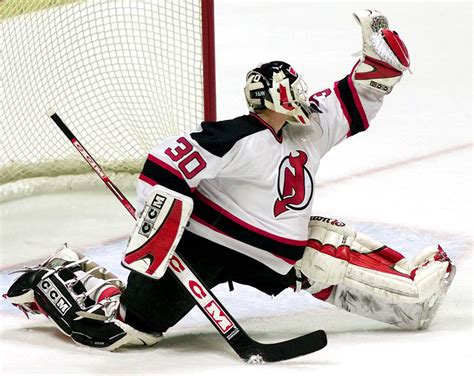
The record holder for most regular-season career shutouts in the National Hockey League (NHL) is Martin Brodeur with 125.
For a single NHL season, the most shutouts recorded by a goaltender is 22, by George Hainsworth during the 1928-29 season.
Here's a summary of the leaders in NHL shutouts:
| Record | Player | Value |
|---|---|---|
| Most Career Shutouts | Martin Brodeur | 125 |
| Most Shutouts in a Season | George Hainsworth (1928-29) | 22 |
Here are some common hockey terms related to the game:
Read also: The story of Craig Needham
- Biscuit: the puck
- Basket: the net
- Celly: a celebration after a goal is scored
- Gino: a goal
- Mitts: gloves
- Shinny: a pick-up game of hockey, the game in its purest form
A shutout can also be referred to as a "goose-egg".
NHL Best Goalie Shutouts from the Last 10 Years
While possible in most major sports, shutouts are highly improbable in some sports, such as basketball. Shutouts are usually seen as a result of effective defensive play even though a weak opposing offense may be as much to blame.
In association football and other sports with a goalkeeper, the goalkeeper may be said to "keep a clean sheet" if they prevent their opponents from scoring during an entire match. Because football is a relatively low-scoring game, it is common for one team, or even both teams, to score no goals.
A theory as to the term's origin is that sports reporters used separate pieces of paper to record the different statistical details of a game. If one team did not allow a goal, then that team's "details of goals conceded" page would appear blank, leaving a clean sheet.
Clean sheets are not common in either rugby union or league, since it is relatively simple to score a penalty kick. The 2005 Gillette Rugby League Tri-Nations final was the first time that Australia had been "nilled" since 1981.
Read also: Inside Aaron Ness's Career
There is no alternative term for the occurrence of a team failing to score, except to say that the team scored "nil" (or "zero" or "nothing" in North America). Generally, a team that is well-disciplined defensively, as well as behaviorally (not giving away penalty kicks), is most likely to not concede scores.
In Major League Baseball, a shutout (denoted statistically as ShO or SHO) refers to the act by which a single pitcher pitches a complete game and does not allow the opposing team to score a run. If two or more pitchers combine to complete this act, no pitcher will be awarded a shutout, although the team itself can be said to have "shut out" the opposing team.
The only exception to this is when a pitcher enters a game before the opposing team scores a run or makes an out and then completes the game without allowing a run to score.