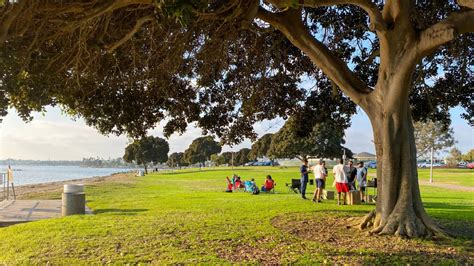
For the past 27 years, Mission Bay Park has been a source of pride for San Diego, attracting around 14 million visitors annually to its 4,600 acres of land and water. About 2,500 boaters have stationed their skiffs and yachts in its marinas. However, this aquatic resort, once a swampland, faces significant challenges from natural forces.
The Threat of Erosion
Storms, high tides, waves from winds and boats, and the continuous lapping of water against the land have significantly eroded the bay’s shoreline. Local experts warn that nature is threatening to reclaim Mission Bay Park, potentially returning it to the mud land it once was. Environmentalists and bay users have expressed concern over the reluctance of local government to fund countermeasures to prevent this.
“We’ve lost irrigation systems, trees, parts of the park,” one biologist said. “If we don’t do anything about it, Mission Bay Park will be under water.”
Harm to the shoreline is extensive. In some areas, sloping beaches have been eaten away, leaving 5-foot-high bluffs. City officials worry that park visitors, particularly children, could be injured by falling off the cliffs. Along the shores of Vacation Island, as much as 10 feet of sand or soil in various places is being eroded each year. City engineers say they can now detect differences in slopes week by week.
The engineers are afraid the island may follow the fate of several land masses east of Mission Beach: Where three islands used to stand above the water there now stand 1 1/2. East Ski Island has disappeared. West Ski Island is about half gone, and Government Island, while still intact, now is in danger from water that has broken in between the rocks along its shore, according to officials and bay users.
Read also: Hockey Equipment in Florida
Another problem is that waves eating away at beaches have created sand bars and mounds in the bay, presenting navigation problems for boaters. At Santa Clara Point, the foundations of buildings like the Mission Bay Sports Center now are only a few feet from the water. And at Mariners Point, a flock of California least terns, an endangered species, is losing its protective preserve to waves caused by storms, winds and boats.
“It wouldn’t take long for the bay to go back to swampland,” said John Leppert, who, as assistant to the city manager, handles much of the city’s involvement in bay issues. “It’s the natural thing to have happen. If you don’t maintain something you’ve constructed, you can expect it to go back to what it was before.”
On Thursday, those fears may be laid to rest--at least temporarily. That’s when the San Diego City Council will probably finalize a decision made last week to fund another year of the city’s shoreline-restoration project, a planned six-year effort initiated in 1987.
“This is good news,” said Steve Alexander, a Realtor associate in San Diego and chairman of the Mission Bay Park Committee, a group of citizens that for years has lobbied the city to get money for the project. “But we anticipate that we’ll have to go back every year to fight this battle.”
The council last Thursday, against the budget recommendations of City Manager John Lockwood, voted to allocate $1.9 million for the second year of the project. The city would contribute about $60,000, with the rest coming from state and federal grants, which have not yet been identified, a council spokesman said.
Read also: Ice Skating Rinks - Huntington Beach History
Efforts to Restore and Preserve Mission Bay
In the past, city engineers used a Band-Aid approach by simply pouring more sand in areas where beach and shoreline had been eaten away. But analysts heading the restoration project say substantial, innovative measures are being designed to stop the erosion and stabilize the beach.
For instance, sand of a larger grain may be added to some Mission Bay Park beaches, where the sand--each grain about .2 millimeters long--is very fine and small. A larger grain, perhaps 1.0 or 1.2 millimeters, would be more stable against powerful waves, said Roger Hocking, chief engineer at Pountney and Associates, a local firm contracted by the city to develop the restoration plan.
Additionally, concrete walls called bulkheads may be erected between the park and the water to stabilize the shoreline, Hocking said. Such walls, which could be up to 5 feet high, would isolate certain areas from eroding waves, but only the tops of most would be visible to visitors. Engineers also may extend rip-rap, rocks that have been placed against an embankment as a shield against erosion, along some shoreline where it already exists.
But such work won’t begin for at least a year, said Robin Stribley, a biologist and senior planner of the project. Pountney and Associates now are developing the restoration master plan, as well as an environmental impact review. Later, after public review, engineers will apply to various environmental and engineering groups for permits to begin the work.
The money expected to be allocated Thursday, as well as several million dollars more in future city funding, will be stored until actual construction can begin.
Read also: Virginia Beach Jet Ski Safety
The Future of Mission Bay is Being Decided
The Transformation of Mission Bay
Mission Bay is a large, man-made saltwater bay in San Diego, California. It was created from old wetlands and marsh areas. The bay is part of Mission Bay Park, which is the biggest man-made water park in the United States. This huge park covers about 4,235 acres, with nearly half of it being land and the rest water. Mission Bay was built to offer lots of fun activities in San Diego. People love to go wakeboarding, jet skiing, and sailing here.
Long ago, before Europeans arrived, the area we now call Mission Bay was a mix of wetlands. It had lagoons, estuaries, and marshes. Native American villages lived here and used the natural resources. In 1542, Juan Rodríguez Cabrillo called it "Bahía Falsa," meaning "False Bay."
The San Diego River used to flow into either San Diego Bay or False Bay. In the 1800s, the San Diego River started flowing mostly into San Diego Bay. This worried people because it could fill up the harbor with dirt. So, in 1852, a wall was built to stop the river from flowing into San Diego Bay. This made "False Bay" the main outlet for the river. Later, in 1877, the city built a permanent dam. They also straightened the river channel to the sea.
Some early recreation started in "False Bay" in the late 1800s. There were places for hunting and fishing. But floods later destroyed these spots. In 1944, a group suggested turning Mission Bay into a tourist and recreation spot. Starting in the late 1940s, workers began digging and filling the marsh. They moved millions of cubic yards of sand and dirt.
The first modern "triathlon" event happened at Mission Bay on September 25, 1974. It was a race that combined swimming, biking, and running.
About half of Mission Bay Park used to be natural wetlands. But when the park was built, most of these wetlands were lost. Now, only a small part, about 5%, remains. The City of San Diego manages Mission Bay Park. Rules are in place to make sure most of the park is open for public fun.
Activities and Attractions in Mission Bay
Mission Bay is a busy place with many activities on land and water. There are 8 official swimming areas. The west side has many channels and islands, perfect for water sports. You can rent sailboats, motorboats, kayaks, and paddleboards. On land, people enjoy playing in the sand, having picnics, and riding bikes on the 14 miles of paths.
Fun attractions at Mission Bay include SeaWorld San Diego, Aqua Adventures for kayaking, the Mission Bay Cross Country Course, and the Mission Bay Golf Course.
- SeaWorld San Diego: A popular marine-life theme park.
- Aqua Adventures: Offers kayaking and other water activities.
- Mission Bay Cross Country Course: A 2,000-meter grass loop for runners.
- Mission Bay Golf Course and Practice Center: The only golf course in San Diego with night lighting.
The Mission Bay cross country course is a 2,000-meter grass loop. It runs along the east side of Mission Bay Park. The first half of the course is mostly flat. The second half has five small grassy hills.
The beautiful Mission Bay Golf Course and Practice Center opened in 1955. It was designed by Ted Robinson. In the early 1960s, he designed the 18-hole course we see today. This course is 2,719 yards long and covers 46 acres. It's the only golf course in San Diego with night lighting. It's a favorite for local golfers.
Some areas in Mission Bay Park require dogs to be on leashes. Other areas, like Fiesta Island, allow dogs to be off-leash. There is a youth campground on Fiesta Island in Mission Bay. Throughout the year, youth groups and their leaders can enjoy camping. They also get to do water activities and classes during the day. You need a permit to use this campsite.
You can fish in most areas of Mission Bay. However, you cannot fish in areas set aside for swimming, water skiing, or personal watercraft. Fishing is also not allowed from any bridge. You might catch fish like corvina, spotted bass, halibut, and spotted sand bass.
Preserving Wildlife in Mission Bay
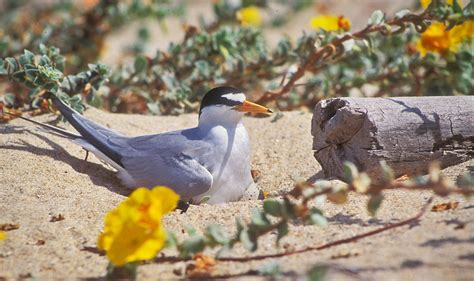
Mission Bay Park is home to many rare and endangered birds. One important bird is the California least tern. From April to August each year, a special program helps protect this bird. It nests at four sites in Mission Bay Park. The number of California least terns has grown a lot since it was put on the endangered species list.
Sometimes, other animals like skunks, opossums, and even abandoned cats and dogs can harm the tern chicks. Wildlife experts work with different groups to safely trap these animals. This helps protect the least tern nesting sites.
The San Diego Visitor Information Center
The San Diego Visitor Information Center was built in the northeast part of Mission Bay in the 1960s. It helped visitors until it closed in 2010. The building was later turned into the Mission Bay Beach Club, which opened in October 2021.
Mission Bay Park Statistics
| Category | Value |
|---|---|
| Total Area | 4,235 acres |
| Land Area | Approximately half of the total area |
| Shoreline Length | 27 miles |
| Sandy Beaches | 19 miles |
| Official Swimming Areas | 8 |
| Bike Paths | 14 miles |