Using skis to navigate snowy landscapes boasts a rich history spanning thousands of years. The first skiing competitions emerged in Scandinavia in the 1800s, evolving into a popular pastime wherever sufficient snow and slopes are available. Despite global warming impacting precipitation and necessitating artificial snow production, enthusiasts worldwide still eagerly embrace the sport.
Surprisingly, skiing as a digital experience didn't reach arcades until the early 1980s with Taito’s Alpine Ski. Prior to this, there was a projection-based game called Ski produced by Allied Leisure in 1975 that was reportedly popular in ski resorts, but despite the flyer’s impression this had no video game component as we’d consider it today. Instead, you have to look to the world of computers, as the second print run of David Ahl’s book BASIC Computer Games includes a text-based take on the sport called Slalom, written by a J. Panek of Dartmouth College. Functionally this is little more than choosing your speed as your skier moves through the slalom flags, but it is technically a skiing game.
Let's delve into the captivating evolution of ski slope games, tracing their origins from rudimentary text-based simulations to the sophisticated console versions we enjoy today.
Early Attempts at Digital Skiing
Ski enthusiasts very nearly got to experience a home console version at the very beginning of home gaming, with the 1972 Magnavox Odyssey platform. In 1973, Magnavox hired Don Emery to design a series of additional games for the console beyond those that had been sold earlier. While four of these did come out, Emery also designed another one for an unreleased cost-reduced version of the console, called Ski Festival. This was a simple time trial game where players had to navigate a course on an overlay using the dual-paddle controls on the system’s controller. In 2023 this game was recreated by the University of Pittsburgh’s OdysseyNow project, based at the Vibrant Media Lab and led by director Zachary Horton. Alongside artist Jin Jin Wu and playtester Stephanie Fletcher, they were able to rebuild the game (with two likely rulesets) based on a pre-print ad and what information they could pull together could find.
The earliest released skiing game on a home console, after a fashion, comes to us courtesy of Larry Kaplan with his VCS launch title Street Racer. Kaplan included a “slalom” variation in this title where players use the paddles to navigate between gates. Functionally this doesn’t play all that differently from the other game types on the cartridge - you’re still using a paddle to move your vehicle left and right to avoid obstacles and hit targets - but it does show how slalom courses would become a popular choice for skiing games. Alpine Skiing! Still, Street Racer held the home skiing market to itself until Magnavox published Alpine Skiing! for the Odyssey2 in 1979. This is a significant step up visually and in terms of game options.
Read also: Chicago Blackhawks Win
Most notably, this is the first skiing game that allows the player to point their skis in different directions, which affects both their speed and angle of descent. The game features the usual slalom mode, but players can also choose from “super slalom” and “downhill” races. Slalom is much like you’d expect, with players trying to move between the gates, while super slalom gives you a longer course with greater distances between the gates. Downhill is just a straight race to the bottom as quickly as possible while staying within the course. Pushing the action button on the controller will speed up your skier to speeds that make maneuvering around a bit tricky, so there is a learning curve to learning how to control your speed and course to avoid wipeouts as much as possible.
Runs are fairly quick, meaning games are fast, and since the game can also save your time on the clock running at the bottom of the screen, until you turn off the system you can continue to try and beat your time. The courses are also randomly generated, though admittedly there isn’t much on the field other than gates so it’s not as though you’re getting a lot of variety. Like Street Racer, this game assumes you’re playing with two people at once, something a number of future skiing games wouldn’t do. This particular design choice really limits the amount of real estate each player has to maneuver within, which is probably a reason why it didn’t really become the standard.
This concept of a game based on speed where players are competing to improve their own times spoke directly to the personal gaming preferences of Activision developer Bob Whitehead. Whitehead was the person behind several other solid sports games on the VCS up to this point, including Activision’s Boxing and Atari’s Football and Home Run. A self-described sports fan, Whitehead told me that he tended to be bad at playing the games himself, but still love playing and watching them. When he got into video game development, he wanted to create a way that folks who also loved these sports but weren’t good at them could put themselves into the game and have a good, successful time at it.
Owing to how quickly a trip down the virtual mountain can take, Whitehead describes Skiing as a game for “short attention spans.” As he put it, it’s a game where the player can go through the course quickly and then work on making their run more efficient to beat their time. If you fall and screw up, you can quickly reset and hop right back to it at the top of the slope, ready to try again. Accordingly, just as with Dragster and Maze Craze, you can restart a slalom run by pressing the button on the controller at its conclusion.
Immediately after booting up Activision’s game it’s clear that, even if Whitehead was not directly inspired by the Odyssey2 title, he successfully refined what that game did across the board. Like Magnavox’s cart, Activision’s Skiing includes a slalom mode, where you navigate between gates on your way down to try and get the best time, and a downhill mode, where you are aiming to make it to the goal as quickly as possible. Owing to the flexibility of the VCS hardware, the gates look like proper flags here in the slalom game types, and players get new obstacles, such as trees and moguls (essentially mounds of snow) to navigate around.
Read also: Is Splashdown Worth Playing?
In addition to the timer up top, in slalom courses the game has a counter of gates successfully navigated, with any missed gates causing a time penalty that is automatically added to the final results. Despite Skiing only including slalom and downhill modes, Whitehead ensured the game had its share of content. Both slalom and downhill modes have four predetermined courses ranging from novice hills all the way up to Olympic-level - the more difficult the course, the more obstacles and gates and the steeper the slope. But the cartridge also includes two game types that will randomly generate a slalom or downhill course, respectively.
These remain as long as players don’t change game types or turn off the system, and provide some excellent longevity for those fanatics that memorize or master the other courses. The difficulty switches add some interesting wrinkles, too - in downhill courses the right difficulty switch simply determines whether or not players have to manually jump moguls with the button on the joystick or if they’ll do so automatically, while in slalom courses it controls if extra trees will spawn in front of the gates. The left difficulty switch determines whether or not there are invisible walls on the edges of the course to keep players on track, or if skiers can wander across the mountain.
The result of Whitehead’s work is a top notch game that produces the illusion of high speed on par with Night Driver, the previous high water mark. Even for non-skiers, Activision’s Skiing is an easy game to get hooked on thanks to how quickly each run goes by and how responsive the controls are. It also joins Dragster as the second Activision title to offer up a commemorative patch; if players were able to beat a time of 28.2 seconds on gametype 3, the expert slalom run, they could send in a photo as proof and get a patch as a reward from the company. Needless to say, it’s a big step up from the slalom game on Street Racer, and likely the best of the VCS skiing games in general.
This is also, after a fashion, the first VCS game to have vertical and horizontal scrolling, as objects move from the bottom of the screen up to the top. Activision’s Skiing did get its share of accolades both in terms of its visuals and from how it plays.
Bill Kunkel and Arnie Katz referred to it as the most exciting and realistic take on the sport in February 1981’s Video magazine, even giving it the award for best solitaire game in their second annual Arkie Awards in 1981. A 1983 issue of Video Games finds the game praised as among the best titles on the VCS and one that translates the joy of being on the slopes, while the reviewers in Creative Computing remarked that the only way to really succeed is to memorize the courses.
Read also: Why SSX Tricky Is Still Amazing
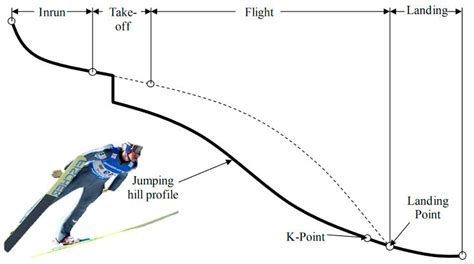
Ski Jumping Hill Diagram
Whitehead’s game also saw a sequel with an identity that more or less “flew” under the radar. As Whitehead explains, his 1982 game Sky Jinks is “Skiing 2,” in that it’s running on the same game kernel - the VCS equivalent of a modern game engine that handles the display and whatever sprite trickery is needed to make the game work. Given that Sky Jinks is similarly about flying your plane between pylons and racing the clock, it is essentially little different from your skier sliding between gates on a slope other than the graphical window dressing.
The same month that Skiing hit stores for the VCS, Mattel started shipping US Ski Team Skiing for the Intellivision. Written by APh developer Scott Reynolds, this cart offers up a single course each for slalom or downhill races for players to navigate, but allows for some real granular options to make these two courses more interesting to take on. Players can select how steep they want the hill to be, adjust the game speed and even set the game up for up to six players to compete on time.
Players get three heats to try and get the best runs when competing, though obviously when running solo this doesn’t really mean anything. The Intellivision controller does kind of work out well here, with the disc essentially being reduced to “left and right” directions for turning your skier, and the action buttons allowing for sharp turns or jumps over moguls. It is on the whole probably the most approachable of the Intellivision sports games released so far to casual fans (save for possibly PGA Golf), and while it may not reach the same highs as Activision’s game it certainly comes close.
Kunkel and Katz discussed this take on the sport in their November 1981 Video column, and note that while it doesn’t do anything new, it does pack a lot of detail into an easily grasped and entertaining cartridge; a sports roundup article in Video Games considered it on par with Bob Whitehead’s Atari cart with some appreciated quality of life improvements, such as the tight turn button and steepness selection.
US Ski Team Skiing itself would get its own direct sequel in 1988 in the Intellivision’s twilight years, with Mountain Madness: Super Pro Skiing. Built partially on the same code base, Mountain Madness has essentially the same controls and variations as the original game - adding the option of having no flags on the course at all - but what really sets it apart are the number of courses players can work with. Mountain Madness includes 32 built-in courses, a randomly generated course option, and the ability to build your own out of 28 available segments.
But there were a few other attempts at console skiing games in between 1980 and 1988, though it’s a matter of taste on whether or not they reach the same height’s as Whitehead’s game in terms of sheer fun and replayability. Starting in 1982, The Bally Arcade played host to Super Slope, a skiing game by indie development label Esoterica. Despite being published on cassette tape and loaded using a BASIC cartridge, this game runs entirely in Z-80 machine language.
It makes some interesting choices - graphical interpretations of the game code are lined along the sides to be the “crowd” watching the player ski, and while there are some aesthetic glitches and the game can crash, it’s still a pretty quick and admirable version of the sport for a console that really didn’t have anything else of the sort, and was reviewed, glitches and all, in the pages of the Arcadian newsletter.
More famously, Rare developed Slalom for the Nintendo Entertainment System and had it published by Nintendo in 1987, making it the first western-developed game for the NES or Famicom hardware period. Slalom shifts perspective from the overhead to a behind-the-skier view, which results in a very different game experience.
The VCS itself saw a particularly ambitious first-person take on skiing with Mogul Maniac in 1983, a game from Amiga that gives players the option to use the included joyboard controller to simulate being on the slopes. While these do achieve what they set out to do to varying degrees, they lose the tight focus of Whitehead’s 1980 game.
When one thinks of skiing, the speed and maneuvering around obstacles come to mind - aspects that Activision’s game nail. While later games may have different and more advanced technical tricks, Skiing remains arguably the most well regarded in its genre on its platform and of its era.
SkiFree: A Classic for Windows
SkiFree is a single-player skiing computer game created by Chris Pirih and released with Microsoft Entertainment Pack 3 for Windows 3.0 in October 1991. The player steers the skier around trees and rocks and is about to be pursued by the Abominable Snow Monster.
While SkiFree creator Chris Pirih was a student at the University of Puget Sound, he wrote a text-based game called Ski in Fortran for the VAX/VMS operating system, inspired by Activision's Atari 2600 game Skiing. Later, as a programmer for Microsoft he was writing programming utilities used in the development of software such as Microsoft Word and Microsoft Excel.
Since its debut, SkiFree has seen several ports and rereleases. In January 2013, mobile games developer GearSprout developed and released iOS ports of SkiFree and Rodent's Revenge. The company had already released SkeeFree, a skiing game with identical assets. In a Destructoid interview with GearSprout co-founder Tommy Tornroos, he explained that the company contacted Microsoft about porting their titles, and Microsoft responded that they were "no longer claiming rights" to them.
However, the SkiFree trademark was reserved by an unspecified entity, leading to the release of SkeeFree. SkiFree continues to receive critical acclaim in retrospective reviews. Josh Augustine of PC Gamer cited it as one of his favorite games of his childhood. Lisa Foiles of The Escapist ranked it No. 1 on its list of Top 5 Ski / Snowboard Games, calling it an "undeniable classic."
Computer Power User described the game as a "killer app", noting that SkiFree was not particularly groundbreaking, but as one of the MEP 3 titles, it "stood apart from Minesweeper and the various card and board-game translations that dominated the software bundles." Brittany Vincent of PC Gamer characterized it as an endless runner, rationalizing that SkiFree had no ending and that the course would loop to the top of the map when players reached the bottom.
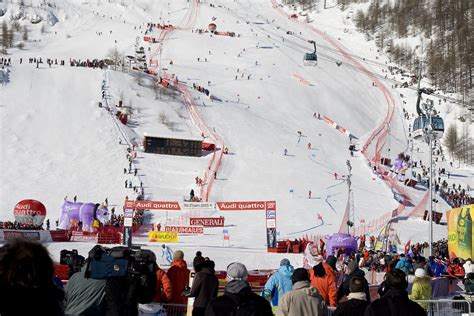
Ski-WM Val d'Isère 2009
In another PC Gamer article highlighting the history of trees in video gaming, Matt Elliott characterized the game's trees as "mean, twisted little saplings" that threaten to ruin the player's course. Games journalist Alfie Bown described the way other popular Windows games required concentration or mental energy, playing into the operating system's reputation for usefulness and productivity.
Retrospective reviews for SkiFree frequently focus on the obscure nature of the Abominable Snow Monster. Benj Edwards of PC Magazine rated SkiFree as the best of MEP 3 because of the humorous inclusion of the Abominable Snow Monster. James Kozanitis of Hardcore Gamer rated it No.
ALL-TIME Greatest Moments of X Games Aspen Compilation
Table: Key Skiing Games and Platforms
| Game Title | Platform | Year | Developer |
|---|---|---|---|
| Slalom (text-based) | BASIC Computer Games | N/A | J. Panek |
| Ski Festival | Magnavox Odyssey | 1973 (Unreleased) | Don Emery |
| Street Racer | Atari VCS | 1977 | Atari |
| Alpine Skiing! | Magnavox Odyssey 2 | 1979 | Magnavox |
| Skiing | Atari VCS | 1980 | Activision |
| US Ski Team Skiing | Intellivision | 1980 | Mattel |
| Super Slope | Bally Arcade | 1982 | Esoterica |
| Sky Jinks | Atari VCS | 1982 | Activision |
| Mogul Maniac | Atari VCS | 1983 | Amiga |
| Slalom | Nintendo Entertainment System | 1987 | Rare |
| Mountain Madness: Super Pro Skiing | Intellivision | 1988 | Mattel |
| SkiFree | Windows 3.0 | 1991 | Chris Pirih |