Skiing can seem like a sport reserved for those who grew up with it, but that's far from the truth. It's an activity that anyone can learn and enjoy, regardless of age or prior experience. While it may seem expensive and potentially dangerous, with the right preparation and guidance, skiing can become a rewarding and exhilarating experience.
This guide is designed to provide beginner skiers with the essential information they need to get started, from understanding the basics to staying safe on the slopes. It's the guide you wish you had before your first ski trip.
Is Skiing Expensive?
Yes, there's no getting around it. Skiing can be an expensive sport. However, there are ways to make it more affordable. Living close to a mountain is a significant advantage, but not always practical. Borrowing clothes instead of buying or renting can save you a lot of money. The first time you go skiing, wearing your normal old puffer jacket and borrowing ski bib is totally fine.
What to Expect at the Lodge
If you’re skiing at a place with a lot of day or weekend traffic, or it’s at a lower price point, they might have small lockers that you can rent to stash the stuff you’re not skiing with (your street shoes, keys, etc.). At some resorts, you can rent slopeside lockers where you can keep your shoes and bags during the day, and where you can leave your skis, poles, boots and helmets at the end of the day. These lockers are a great convenience, eliminating the need to carry all your equipment back every night.
Lockers will normally be at the base of the slopes, so even if you get a locker, you’ll be carrying all your things either from your car or AirBNB on the first and last days (to get them to and from the locker). If you don’t get lockers, you’ll just carry all your things with you every day. The exception to this is if you’re staying at a ski-in-ski-out place on the mountain; then, you can ski right out of your place, hence the name.
Read also: Skiing at Brighton at Night
Taking a Class is Essential
Learning to ski is frustrating at first - there’s no getting around that. The mechanics of moving from side to side weren’t hard for me (the whole “you push right to go left” thing sounds confusing until you realize it’s just like skating, so if you’ve ice skated or roller skated at all you can probably pick that up pretty quickly). But it’s hard to negotiate life with two huge slats strapped to your feet, and getting up after a fall is something I still haven’t mastered.
As a friend who loves skiing said to me, “I always want everyone to take a class because I want everyone to enjoy skiing.” That describes my experience perfectly: Without a class, I could ski, but I didn’t love it. It was only once I took a class that I actually started to like it. If you learn from your friend or family member, you will get really mad at them. They will get really annoyed with you.
I found YouTube videos more helpful after I’d been skiing because I could put the instructions into context better - before I’d ever skied, watching YouTube videos made me more confused and nervous. Having said that, it can be helpful to watch a couple of videos on how to get up after a fall. You could also search for how to snow plough (also called the “wedge,” or “pizza”), since that’s popular for beginners. I also like to watch a couple of YouTube videos after taking a class so I can review what I’ve just learned.
Kids Skiing - Learning How to Ski with New Generation Ski School
Understanding Ski Trail Ratings
There’s a code for how easy or tough something is - greens are the easiest, blues are intermediate, and black is advanced. A “double green” is doubly hard - it’s closer to a blue. There’s no agreed on system for determining these, though, so when you’re on a new mountain, it’s best to start with green and work your way up, even if you’ve been skiing before, so you get a feel for their ratings system. (The bunny slope comes before green, by the way - it’s just a very gradual incline where you can practice before you really do anything.)
My advice is to not be afraid of staying on greens until you’re really comfortable and ready for blue.
Read also: Maine ski conditions
Skiing Etiquette: The Skier in Front Has the Right of Way
It’s pretty impossible to ski while looking over your shoulder, so on the mountain, it’s the responsibility of the person who’s coming up from behind to negotiate around the person in front of them. This is super helpful for the beginner - you’re probably going to be floundering, and it’s doubly difficult if you’re trying to look over your shoulder all the time while you’re going back and forth across the mountain (like you would if you were changing lanes in traffic in a car).
Don’t purposely ski right in front of someone just because it’s their responsibility to avoid you, and definitely look at “oncoming traffic” if you’re skiing onto a new slope (like where one slope feeds into another), but otherwise, worry more about what’s in front of you than what’s behind.
Navigating the Chair Lift
A ride on a chair lift is beautiful and magical. It can also be scary (you’re several stories off the ground in a chair that’s hanging from a wire). Lifts at different places are different, so I can’t tell you exactly how your lift will work, but here’s some advice that’s applicable to any lift:
- Stay aware and watch what other people are doing (so you can copy them), especially when you’re in the lift line and when you’re getting off the lift.
- You’ll get into the lift line either as a single (if you don’t care who you ride with), or with the person (or people) you want to ride with.
- The single line goes faster, but if you’re new to or nervous about the lift, ride with people you know and ask them what to do.
- When you’re getting close to the end of the lift (you’ll see the little station coming up, and you’ll see signs on the poles that tell you how to prepare to exit), pay attention.
- Make sure your gloves or mittens are on and that you have your poles in your hand ready to get off the lift.
- Move the bar up before you actually get up to the front so you’re ready to ski out of the chair.
- As soon as your skis touch the ground at all, push yourself up and out of the chair, and ski down the little slope to either the right or the left side.
The chair will keep moving, so you really do need to get up and out of the way of the chair and the lift as soon as possible. The good news is, your only job here is to get up and out of the way. It sounds tricky, and it is tricky! But the worst thing that’s going to happen when you’re getting off a lift is that you fall - and when that happens, the attendants will stop the lift and help you up. It’s not really that big of a deal; it happens all the time. I’ve fallen while trying to get off a lift and, while it’s embarrassing when it happens to you, nobody really looks twice. Everyone falls, so don’t be embarrassed.
Falling and Getting Back Up
If you fall, take a second to collect yourself and get your bearings. One of my big mistakes when I started (and now, to be honest) is to struggle so much when getting up after a fall that I exhaust myself. It’s better to just pause and collect yourself (and maybe literally collect your poles).
Read also: Night Skiing Guide: East Coast
I’m not going to try to explain how to get up from a fall here because, frankly, I’m not good at it. (If you take a class, they will teach you how to get up from a fall. But I can give you a tip that I didn’t know until my second ski trip: You can pop the skis off your boots! And then you’re just getting up in boots! And that is easy! Press down on the lever behind your boot with your pole or with your hand - usually you only have to take one ski off to get up.
Dealing with Steep Slopes
My ski instructor gave me a piece of advice the helps me out so much when I get freaked about about an incline: If the slope is too steep, just make it flat. What he meant by this is that, instead of pointing your skis to go straight down, just do harder turns so you’re going more parallel to the bottom of the slope than perpendicular to it. Essentially, this is just zig zagging down a mountain instead of going in a straight line down. You’ll want to zig zag down anyway, but just make your zigs and zags a lot more exaggerated.
Altitude and Hydration
I never felt sick from the altitude, but I did find myself very out of breath when taking the steps or going uphill, especially when carrying my skis. I read up on altitude before I went, and the advice was: drink water, get rest and eat carbs. This seemed to be true, and I enjoyed the excuse to eat carbs. Drinking excessive amounts of coffee or alcohol can exacerbate altitude problems. I just drank my normal amount of coffee, and that was totally fine (skipping coffee would’ve been a bigger issue for me).
Staying hydrated on the slopes is extra important because of the altitude, and we bought collapsible water bottles that were perfect because they’re easier to stash in a jacket pocket than a water bottle would be. Some resorts have water refill stations all over the place, so we saved a bunch of money using these instead of buying water. I think these refill stations are pretty common in Colorado (they have them at the airports there, too), but check before you go if you’re depending on this.
Phone Safety
Most phones are water resistant now, and it won’t be in snow enough to matter. I wouldn’t keep my phone in my back pocket, because I’m afraid it could get smashed if I fell, but other than that, it was fine - most everyone brings their phones with them on the mountains. (You’ll want to selfie, duh.)
Do not bring earpods! I’ve seen so many people hunting for a lost ear pod that fell into the snow.
What to Pack
Pack as light as possible. The gear and clothing you’ll need for skiing are bulky, but you don’t really need other clothes other than comfy lounge clothes and pajamas (I generally just bring a pair of sweats that doubles as both, and a pair of light pajamas in case the AirBNB has an aggressive heater). If you have a long plane, bus or car ride, I’d bring headphones, a book and a journal. (Pack headphones with an old-school jack if you want to watch movies on the plane and they have in-seat screens.)
Bring a full bottle of your favorite pain reliever, and pack more lotion than you normally would, because the air is very dry.
Understanding Lift Tickets
The lift ticket is the pass that gets you on a chairlift. At some resorts, you might have plastic passes - those are plastic, kind of like credit cards. If there’s no hole punched it it when you first get it, go to an information desk or a counter where they sell the passes, and they’ll punch a hole for you and give you a small plastic loop to use to attach it. At other resorts, they give you sticker lift passes that you attach by threading a wire hanger through your zipper and covering it with the sticker.
If you’re skiing in warm weather and think you might drop a layer, remember to attach your pass to your pants instead of your jacket - you can’t reattach a sticker pass, and if it’s on your jacket, you won’t be able to stash your jacket in a locker.
COVID-19 Considerations
At least where we skied, they were pretty strict about wearing a mask on and around the chair lift (including the line to get onto the lift). We didn’t have to wear masks while actually skiing; just when we were around people at the lifts.
We mostly used Buff gaiters, but I kept a regular cheap paper mask in my pocket because it was easier for me to breathe with. Whether or not you have to wear a mask around town or on the lifts depends on the restrictions at the time you go, and on where you go - be sure to check up to date information about the county you’re visiting, just like you would anywhere during the pandemic.
Eating outside in the snow is pretty popular even when there’s not a pandemic, but depending on what’s going on with covid, it might be required. (It was required on our first Telluride trip, but not on our second.) It was actually pretty pleasant, though: You’re all wrapped up in cozy clothes, and when you’re skiing, you can actually get pretty warm.
Additional Tips for Beginner Skiers
The first thing a beginner skier should remember is that keeping control is key. The best way to accomplish this is by pointing your skis tips towards one another in a “V” or “pizza slice” shape, all the while going down and crossing the hill lengthwise in an “S” formation. This will help keep you in control of speed and direction and avoid any accidents.
While you’re skiing, it’s important that you remember to watch for others as you make your way down the hill. The skiers and snowboarders in front of you have the right of way, so it’s imperative that you watch for any sudden stoppers who are taking a quick break or people who lose their balance and fall. As you become a more seasoned skier, the movements will become more natural and skiing will soon be one of your favorite sports.
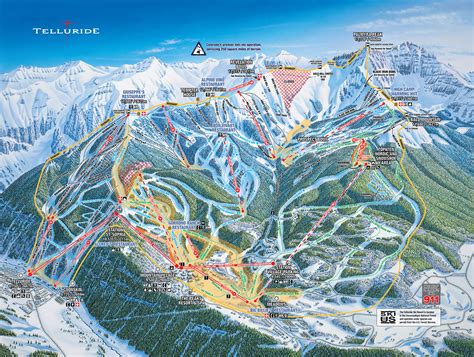
Consider destinations that offer plenty of gentle runs for beginners, as well as top-notch instruction. Telluride, Colorado is a haven for beginners, with some of the nation’s best instructors and plenty of easy trails, including one that tranquilly winds 1800 vertical feet through a stretch of trees.
If you’re heading to Aspen, you’re in luck. Beginners can test their skills at Buttermilk mountain, one of four ski areas in Aspen resort. Tiny class sizes, excellent instructors, and long and easy trails make this a respite for novice skiers.
If you’d like to take your first few runs - or heck, all of your runs - nice and slow, check out Whistler Blackcomb in Vancouver. The ski resort designates a number of beginners areas, with specially monitored slow skiing zones, which are areas where its mandated to ski at a slower pace.
Remember, even pros have coaches, and videos can’t give you real-time feedback, teach you how to read the mountain, provide personalized gear coaching, and take you to the best spots. A snow pro can. Elevate your experience with a group lesson or personalized one-on-one coaching.
Below are my favorite ski gear items.
- Wool socks: Avoid cotton, and don’t be tempted to wear super thick socks.
- Sunscreen: The sun reflects off of the snow, and without it, you can end up with a gnarly sunburn.
- Helmet: Be smart and wear one.
You don’t need to go crazy at the gym, but adding some lunges and squats to your daily routine and taking the stairs instead of the elevator will go a long way. When you’re learning how to ski, stick to green and blue runs to build up your skillset and confidence.
Key Techniques for Beginner Skiers
This article and video describe the basic techniques to learn how to ski, including:
- The proper ski stance
- How to glide
- How to walk uphill
- How to ski in a wedge
- How to do a wedge turn
- How to link wedge turns
Maintaining a proper athletic ski stance keeps you balanced and puts you in a better position to control your skis. Stand relatively tall with your feet about shoulder-width apart. Flex your ankles and tilt your shins forward. Keep your shoulders slightly in front of your hips with weight centered over both feet. Keep your arms slightly out in front and off to the side. Hold your poles with the tips pointed back, behind your feet. Look toward where you're going, not down at your skis.
After clicking into your skis, you'll learn what it's like to balance and move on skis. Gliding on flat terrain is one of the first movements you'll make. Push off with your ski poles (one on each side). Flex your ankles. Keep your shins tilted forward and your weight centered over your feet as you move with your skis.
To navigate a ski area, you'll need to learn how to walk uphill on skis. When you first learn to ski, you'll also have to get up smaller slopes to practice since you won't be using a chairlift or surface lift, such as a rope tow, just yet. There are two approaches to walking uphill: Most beginners may find it easier to side-step.
Once you start moving on skis, you'll learn how to control your speed and stop by forming a wedge with your skis. It's also called the triangle or pizza. You'll use the wedge to control your speed, stop and make turns, so practice a lot. On flat terrain, practice making a wedge with your ski tips fairly close together and tails farther apart. Your skis should remain relatively flat on the snow.
While gliding in a wedge, use your legs to twist both skis in the direction you want to go. Keep your skis in a wedge shape the entire time. Put slightly more weight on the outside/downhill ski to turn. To turn right, put more weight on your left foot. To turn left, put more weight on your right foot.To stop, turn so you're positioned across the slope.
Linking turns is how you ski down the mountain, control your speed and control where you want to go. Turn in one direction by steering the wedge by twisting your legs and feet and slightly shifting your weight slightly to the outside ski. Keep turning until you're just facing across the hill. Then go back to a neutral stance and glide straight as you transition to the next turn. Steer in the opposite direction by twisting legs and shifting weight slightly to the outside ski. Maintain a consistent wedge size and shape. Glide rather than dig into your edges. Use your lower body to steer your skis. Keep your upper body relaxed. Vary the turn shape to control your speed.
There are a lot of details involved in a ski trip, but it all starts making a lot more sense as soon as you’re there and doing it. It really is fun, and very worth it! I was scared of getting injured, and while it is possible, going slowly and learning from everyone I could (including my instructors, my family and even other people that you meet on the lift) really helped.
Choosing the Right Gear
The proper length is also determined by how tall you are. The key to improving your beginner ski skills is to find people you trust who are better than you and ski with them. Furthermore, paying for a pass upfront provides an incentive to get your money’s worth and ski as much as you can. If a season’s pass isn’t in your budget, see if your local mountain offers a bundle package that gives you a discount for buying a certain number of days in advance.
The other place you can look for discounted ski gear is your local ski swap. As far as resorts, look for the mom-and-pop type mountains. If your feet are cramping while you ski, give them a break on the lift or while you are grabbing lunch by unbuckling your boots.
Tip: If you get too cold, go to the lodge and unbuckle your boots to allow your blood to circulate better.
Ski Boot Fitting
Ski boots shouldn’t hurt, but they also shouldn’t be comfortable like a pair of slippers. When you rent boots, it’s common to end up with a pair that’s too big because that’s what’s comfortable in the shop. The problem with a boot that’s too big is that once you’re on the hill, your feet will be sliding around in it and you’ll be scrunching up your toes for balance - a common cause of foot cramps.
Boots are the most important piece of ski equipment you will buy and are like the steering wheel in your car. Don’t be tempted to buy a boot that is roomy and comfortable - a very common beginner skier mistake. The boot should be very snug. A boot fitter at a ski shop can punch out areas of the boot that are rubbing in order to give you a little more room in the areas you need it.
Tip: Don’t leave your ski boots in the car overnight.
Solo Skiing
Skiing solo allows you to focus on your form rather than worrying about your speed and trying to keep up. Leaning forward when you are moving downhill may seem scary, but it will give you a lot more control over your skis.