If you love snowboarding and have a desire to introduce new students to the sport, becoming a snowboard instructor could be your dream job. This career path offers an incredible lifestyle, combining a passion for the sport with the opportunity to live in the mountains, enjoy high job satisfaction, and explore amazing places.
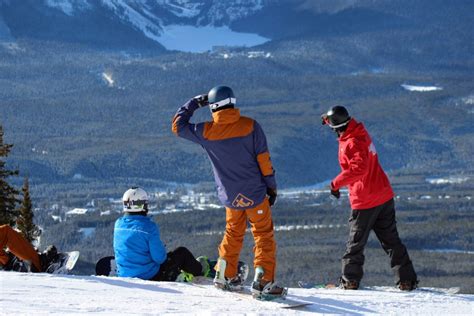
The life of a snowboard instructor offers a unique blend of adventure and professional growth.
Is the Snowboard Instructor Lifestyle Right for You?
Many people dream of becoming a snowboard instructor. To turn this dream into a career takes commitment, hard work, and tenacity. If you are considering this path, you need to have a passion for snowboarding, patience, and a desire to learn and develop into a top snowboarder.
While it's not necessary to be an amazing snowboarder to start, some experience on the mountain is recommended. As a new instructor, you will likely start by teaching beginners, which can be extremely rewarding as you witness their progression.
Setting Goals for Your Snow Sports Career
Having aspirations and goals is crucial for a career in the snow sports industry. An end goal will help you progress, improve, and become a better instructor. Your decisions, such as which instructor course to take, may be influenced by where you want to work. Choose a qualification that won’t limit your opportunities.
Read also: Is the Gnu Antigravity Snowboard Worth It?
An internationally recognized instructor system allows you to work throughout the world, in top ski resorts in countries like Canada, USA, Europe, New Zealand, and Japan.
How to Become a Certified Ski or Snowboard Instructor: Level I
Internationally Recognized Snowboard Instructor Qualifications
In the world of snow sports instruction, qualifications are the foundation for launching a career in the mountains. To travel the globe with snowboarding, you need an internationally recognized qualification. The following qualification systems are issued by a national governing body and overseen by the ISIA (International Ski Instructors Association):
- NZSIA/SBINZ (New Zealand Snowsports Instructors Alliance)
- CSIA/CASI (Canadian Ski Instructors Alliance)
- BASI (British Association of Snowsports Instructors)
- PSIA/AASI (Professional Ski Instructors of America)
All these systems are highly regarded and popular around the world.
Choosing a Qualification Level
For snowboard instructors, there are typically four levels of certification. Level 1 is the entry level, while Level 4 is the highest. Knowing your ultimate goal can help you plan your career accordingly.
- Level 1 Instructor Certification: Allows you to instruct in the country of the issuing body and teach beginners.
- Level 2 Instructor Certification: Expands your teaching scope to intermediate-level snowboarders and is recognized internationally.
- Level 3/4 Instructor Certifications: High-level qualifications that allow you to teach advanced skiers in varied terrain, increasing employment prospects.
Selecting a Snowboard Instructor Course
To kickstart your career, it is required to choose a snowboard instructor course. The course will help give you the fundamental ingredients to start your journey as a snowboard instructor. You will be trained on different criteria to pass the exam, have practical teaching experience, make industry connections, and have valuable career advice.
Read also: Battle Bindings: Performance and Value
Types of Courses:
- Snowboard Instructor Training Course: Designed to improve individual snowboarding ability and provide instructor qualifications.
- Snowboard Instructor Internship Course: Combines qualification, training, and a guaranteed job offer at a ski school in one season.
Completing the Snowboard Instructor Training Course
Once you're up in the mountains, the real adventure begins. Your primary goal here is to solidify your qualifications, so it's crucial to stay focused during your training as you refine your technique and master the art of teaching others. But don't worry, it's not all work and no play; there will be plenty of opportunities for shredding, exploring the mountains, and enjoying some epic après-ski.
By the end of your course, you should emerge as a certified snowboard instructor with internationally recognised qualifications. It's important to seize any opportunity to gain hands-on experience by shadowing real lessons and getting involved in instructing whenever possible. This practical experience will not only bolster your skills but also make you a more attractive candidate to potential employers.
Obtaining a Job at a Ski School
After landing your qualification, it is time to apply for an instructor job. Securing a job can be challenging, as most ski schools require practical experience. Networking and making connections during your training can significantly improve your chances.
Securing a Working Holiday Visa
To work as a snowboard instructor overseas, you will likely need a working holiday visa. These visas are typically available for individuals aged 18-35 and can be relatively easy to obtain in some countries. As you gain experience and advance through the certification levels, you may become eligible for sponsorship.
Embracing the Snowboard Instructor Lifestyle
Life as a snowboard instructor is extraordinary. You get paid to teach your passion, work with like-minded people, and live an adventurous and exciting lifestyle!
Read also: Renting Snowboards in Whistler Blackcomb: What You Need to Know
Career Development
Continuing professional development is crucial for a long-term career as a snowboard instructor. Progressing through certification levels and gaining experience over multiple seasons are key steps in this journey. Typically, individuals spend 2-3 seasons at the level 2 instructor stage before attempting level 3 certification.
To ensure success, focus on gaining experience, pursuing higher levels of certification, and continuously honing your skills through professional development opportunities. By doing so, you can establish yourself as a knowledgeable and skilled professional in the field of instruction.
PSIA-AASI Snowboard Certification Levels
PSIA-AASI snowboard certification has three levels, each indicating your proficiency in providing specific guest experiences on specific types of terrain.
| Certification Level | Description | Terrain |
|---|---|---|
| Level I | Qualified to teach beginner or novice guests | Beginner or novice (green) terrain |
| Level II | Qualified to teach through the intermediate zone | Intermediate (blue) and some green terrain |
| Level III | Qualified to teach all students | Expert (black) terrain |
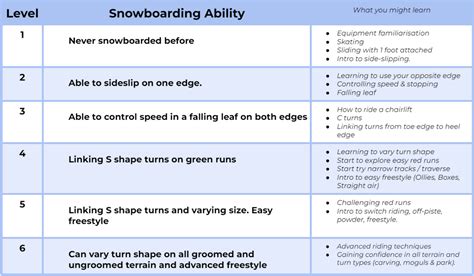
PSIA-AASI Snowboard Certification Levels
tags: #snowboard #instructor #jobs