Snowmobiles, in some ways, resemble airplanes. Just as flaps and ailerons control an aircraft's ascent and descent, adjustable limiter straps influence a snowmobile's performance. Engine power keeps the aircraft aloft, while proper suspension tuning ensures optimal handling on the snow.
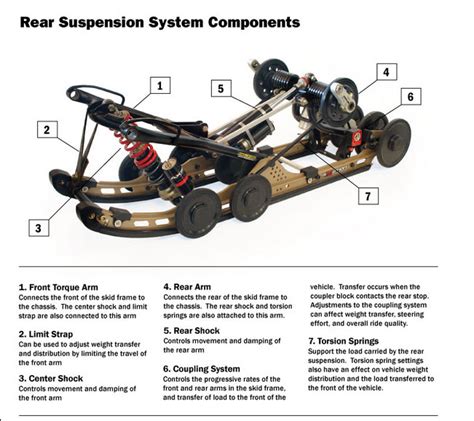
Weight transfer is the most important consideration when thinking about your snowmobile's handling, which includes turning, climbing, traction and rider feel. When throttle is applied, it is necessary to transfer as much weight as possible to the snowmobile's butt for maximum traction and minimal track spin.
Understanding Limiter Straps
The lift and dive control surfaces are like adjustable limiter straps. Change the angle of attack and zoom, up it goes; or down as gravity overcomes lift.
The simplest way to transfer weight back and forth from track to skis is by adjusting the limiter strap at the forward section of the slide rail. Depending on make and model, additional adjustments can be achieved by raising or lowering the forward mounting bolts that fasten the slide rail assembly to the tunnel.
Adjusting for Different Riding Conditions
When strictly riding trail systems, a snowmobile's rear suspension is generally set flat in relation to its approach angle to the snow. By tucking the suspension up under the tunnel, and shortening the limiter strap, the snowmobile's weight is evenly distributed (mostly) throughout its length as the fuel lever is smashed.
Read also: G-Force One: First Impressions
On the other hand, when mountain busting or deep-snow boondocking, the rear suspension's approach angle has to be changed to force a downwash of torque and weight to the snowmobile's rear-most axle.
The effects of superb natural traction are vastly diminished if the snowmobile is trying to hook up on loose snow. Depending on snow density, the skis may plow through the snow and the track can spin excessively. In this case, the snowmobile's front weight needs to be transferred to the rear, thus floating the skis on top of the powder and increasing traction.
There is a compromise here. If all weight is smacked to the rear, the front becomes nervous- ski-lift becomes apparent and turning is less than positive, regardless of whether or not your skis pack vicious carbides and a radical bowed keel.
One simple way to transfer weight is to position your body at the rear of the seat and when ripping open the carb's flood gates yank back on the bars. This cure is momentary though.
Limiter Strap Position and Weight Transfer
Remember, long limiter strap equals long transfer; short limiter strap equals short transfer. All of these adjustments- limiter strap and mounting bolt position- change the rocking chair effect.
Read also: Register Your Snowmobile in IL
If the mounting bolts are lowered, less weight will be placed on the skis. The opposite is also true, the higher the mounting bolts, the more the ski pressure.
How To Adjust Your Snowmobile Suspension for Better Riding Performance
Traction Devices and Limiter Strap Settings
When it comes to traction devices, such as gnarly ice-picks that dress-out many midwest and eastern rockets, place the limiter strap in a short position. Ice picks will force the snowmobile to push through the corners. Furthermore, as power is applied deep in a corner, the ice picks will cause the inside ski to lift. Hence, with aggressive traction devices, leave more weight on the skis and install aggressive carbide ski runners.
Expert Insights
Kirk Hibbert of Arctic Cat's ZR research and development, says modern day limiter straps provide numerous settings. He says, "For ice racing, a one-quarter inch adjustment will be critical to the sled's handling; for powder riding a half-inch to an inch will be critical to how the sled maneuvers in the mountains."
Hibbert mentions the dial-adjust Fox shock that sits aboard the ZR 440, for example, would be perfect for Cat's Powder Special. Cost, and perhaps limited demand, keep it away from the powder hounds. On-the-fly adjustments for the front rail (for difficult powder conditions and changing mountain terrain) would be a real plus for the mountain sled.
Another legendary great, Jack Struthers of Carl's Cycle in Boise, Idaho, says sleds equipped with properly valved gas shocks will make a huge difference on weight transfer. Meaning, if the shocks are well tuned, the limiter strap will lay out most of the plans for weight transfer. If the shocks are worn, exhausted or valved wrong, not only will the driver have to adjust for terrain and snow conditions but for whipped-out shocks as well (compensating with knees and back for what the shocks should be doing).
Read also: Snowmobile Tunnel Bag Comparison
Struthers says when it comes to powder and hill climbing, the driver needs to prevent the snowmobile from tail dancing, resultant of minimal ski pressure. He adds, "With a soft front track spring and with the limiter strap extended most, if not all the way out, the snowmobile will perform well in powder and in the hills.
Modern Adjustments
Years ago, adjusting the limiter strap was as glamorous as pulling main jets and adjusting needle seat positions. For example, if you rode a 1991 Polaris Indy 500, the snowmobile's front skid frame was placed on a log-similar to a wet noodle hanging over a fork- and the ritual began as the tedious adjustments were made.
Thanks to belly aching 'bilers, the manufacturers have built quick adjust limiter straps. Actually, these units are more of a turn-buckle system rather than the strong nylon or rubber straps of yesteryear where five or six fixed positions were the mainstay. These days we have easy twisting and dialing mechanisms which allow nearly infinite adjustment possibilities.
Importance of Clutch and Suspension Tuning
It suffices to say that a snowmobile is only as good as its clutch and suspension tuning. All the power in the world is useless if it can't be applied and directed to the snow in a forward motion. Have you ever said or heard statements like these:
Basic Snowmobile Adjustments
- Adjusting the Controls and Handlebar
The ideal posture is a straight back with your elbows relatively high and slightly bent. This gives maximum power with minimum effort. The easiest way to achieve it is by adjusting your handlebar angle. A low bar close to the body may feel comfortable, but it can also cause shoulder pain and fatigue. Loosen the mounting bolts slightly and test different angles. Don’t forget to do the same with the throttle, left-hand switch, and brake lever.
- Rear Suspension Adjustment: Springs and Sag
These simple steps will greatly affect how your sled behaves.
- How to Adjust Suspension Sag
It’s as simple as A - B = C! Sag is measured from the rear bumper. For a 2024 Ski-Doo MXZ 850 X-RS, sag “C” should be between 50 mm and 75 mm. If you’re still out of range at maximum stiffness, consider replacing your springs with higher-rate ones. Your dealer can guide you through this.
Steps to measure it properly:
- Adjusting Snowmobile Weight Transfer
Many manufacturers allow you to fine-tune weight distribution using a rear suspension device called a transfer block. On Ski-Doo trail models, this block has four numbered sides, each with a distinct thickness. Position 4, the thickest, minimizes rear transfer and adds weight to the skis. Steering becomes more precise but slightly heavier. Position 1, the thinnest, shifts more weight to the track, creating lighter steering and a sportier feel.
- Limiter Strap Adjustment: Balance and Traction
A longer strap increases shock absorption and lightens the skis under acceleration.
- Front Shock Adjustment
Most front shocks are adjustable, and some offer multiple settings. Like with the handlebar, experiment with different settings on the same day in similar trail conditions.
Most front shocks offer several types of adjustments.
- Spring Preload
This cam or threaded-ring adjuster increases or decreases spring tension.
- Compression Speed (on some models)
Located at the top of the shock, this hand-turn dial-often red-controls how fast the shock compresses. Make one change at a time.
- Spring Preload
Additional Tips
- Make sure your skis are aligned according to manufacturer specs.
- Some ski models allow width adjustment by moving spacers along the mounting axle. A narrower stance gives sharper, more precise steering at low speeds. A wider stance improves high-speed stability but can make steering heavier.
- Another major factor in handling and ride quality is the wear bar. We’re lucky to have specialized companies that offer products tailored to every need. Personally, I really like the carbide runner selector tool from the Québec manufacturer Qualipièces. They provide various solutions to correct issues like darting while improving control. If you’re still using stock runners, I strongly recommend looking to purchase through the aftermarket.
There are many more possible adjustments, but these are the simplest and most effective.
tags: #snowmobile #limiter #strap