The story of ice skating in Rochester is rich and varied, from natural rinks in city parks to modern indoor arenas. Thomas Creek Ice Arena stands as a testament to the evolving landscape of ice sports in the region. Before delving into the specifics of Thomas Creek Ice Rink, it's important to understand the historical context of ice skating in Rochester.
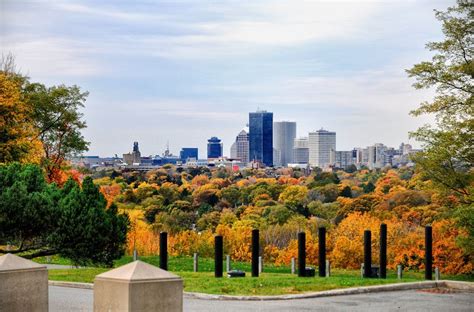
Cobbs Hill Park
The Glory Days of Natural Ice Rinks
Cobbs Hill Park provided a winter wonderland for ice skaters in Rochester for much of the 20th century as home to one of two natural rinks the city maintained. People loved skating in Cobbs Hills Park in Rochester. Skaters by the hundreds simultaneously cascaded across the frozen Lake Riley - actually, a pond - and before that, an area called the Eastern Widewaters. The city's other natural rink, at Maplewood Park, was much smaller than at Cobbs Hill, which first hosted citywide skating championships around the time World War I started.
The original Erie Canal skirted the north edge of the park before the abandoned canal became Rochester's subway and then later an expressway, as Bob Marcotte wrote in a 2003 Democrat and Chronicle story. "Part of the canal's waters spread over the broad, flat area just north of Cobbs Hill," Marcotte wrote. "The area was known as the Eastern Widewaters. Ice skaters have thronged its frozen surface for years."
The Widewaters were the first place east of downtown where canal barges could turn around. The vast expanse, when frozen in winter, was an ideal place for skating. Later named Lake Riley (after a city parks commissioner), the size was vastly reduced in the late 1950s with fill dirt from the old subway bed when the "Eastern Expressway" (now Interstate 490) was being built. That decision caused some consternation, as evidenced by a 1958 letter to the editor.
Read also: Thomas Bull Memorial Park Winter Activities
There had been a lot of history at those wide waters. A 1955 news story promoted the 42nd annual city of Rochester ice-skating championships at Cobbs Hill Park. A senior Olympic speed-skating champion from Hamlin told in a 1989 Times-Union story how he started skating at Cobbs Hill as a child. "After the Depression, there were no inside rinks, so we were dependent on outside ice," said the skater, Eugene Czerkas. "I had a grand, glorious time in those days."
Natural rinks needed at least 51/2 inches of ice for safe skating, Farr said. Too often, that didn't materialize. "It's not just waiting for the 51/2 inches of ice to form," he said. "You have to remove the leaves from the water. You have to get the snow removed from the surface. There were some winters … when it was not so cold that we would only get 15 days of skating each winter. That's a lot of effort for 15 days."
Skaters can still find places to skate on frozen ponds in Monroe County, but not like they did at Cobbs Hill.
To purists, though, there's no comparison to the way skating used to be at Cobbs Hill - outdoors and on a frozen natural body of water. Patti Singer wrote of the appeal in a 1994 Democrat and Chronicle story, after Lake Riley had already been closed to skaters.
"The biggest difference between skating at an indoor rink and on a pond is the difference between driving the expressway at rush hour and traveling a country road," Singer wrote. "Skating outdoors provides the luxury of enjoying the surroundings - the color of the sky, how clean everything smells. The noise of children is muffled by the snow; skating alone, the silence can be so loud."
Read also: A Legacy of Dedication
The Rise of Artificial Rinks
The city began operating artificial rinks for skating in the 1950s, as it still does today. At the time, as now, the city operated an outdoor ice skating rink at Manhattan Square Park (since renamed Martin Luther King Jr. Memorial Park). But that "doesn't count as natural ice," Singer wrote, "because compressors offer nature a helping hand."
The city operated oodles of ice rinks over the ensuing years, at places like Carter Park, the Webster Avenue Recreation Center, Norton Village, the Danforth Recreation Center, the Edgerton Recreation Center, Manhattan Square Park and more. Genesee Valley Park has had several incarnations, including a covered rink that opened in 1987. All except Genesee Valley and Martin Luther King Jr. Memorial are now closed. The natural rinks at Cobbs Hill and at Maplewood met that fate in 1991.
Jim Farr, director of the Rochester Public Market and a longtime assistant director of parks and recreation, said the city closed Lake Riley and Maplewood to skating for a variety of reasons. Budget cuts led to staffing cuts, he said, and maintaining the natural ponds became too cost-prohibitive. New indoor rinks, like Thomas Creek in Penfield, which opened in 1989, became more popular options for skaters.
Thomas Creek Ice Arena: A Modern Hub for Ice Sports
Thomas Creek Ice Arena, opened in 1989, became one of the popular options for skaters.
The Rochester Monarchs were a Tier II junior ice hockey team that last played in the United States Premier Hockey League's (USPHL) National Collegiate Development Conference (NCDC). The Monarchs played their home games at Thomas Creek Ice Arena. When the USPHL announced the creation of a Tier II league beginning in 2017, the Rochester Monarchs organization was the only club without an existing Tier III club to join the new league.
Read also: Ice Skating and Medicine: Debi Thomas
How Ice Rinks Are Built
The Monarchs were one of the worst teams during their three-year existence, bottoming out in 2020 with just 3 wins in 50 games.
The Inferno plays at the Bill Gray's Regional Iceplex, starting in the I-League, and now in the D- League (of which the Seals and Shooters are also members).
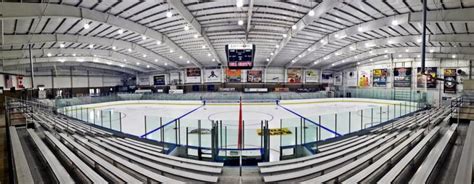
Bill Gray's Regional Iceplex
The Rochester Inferno: A Local Hockey Team
Morgan and Carpenter agreed. few of their fellow hockey playing friends if they would be interested in playing. hoping to just have a great time playing a game together. pond hockey tournament, and they waited. The tournament was initially postponed due to warm weather. cancelled. looked for another event to participate in. hockey tournament, so the team would need to grow. Ice Arena. classes that Morgan and Carpenter played for. to the roster. the "Rochester Inferno".
The Inferno registered for the novice tournament, but with not enough teams registered, the tournament was cancelled. The Inferno's first outing as a teamwas memorable, but not particularly successful. the tournament 0-4, but were able to hold their own against much more difficult opponents. in the hopes that it would be frozen more easily. team, they had to form into smaller teams for the tournament. The tournament went well, and every single team that had an Inferno member on it won at least one game. new dark jerseys for the inferno. In addition, the team is now focused on league play - which has created an influx of new players.