In ice hockey, the one-timer is a dynamic and visually striking shot executed directly off a pass, without the player first controlling the puck. It's a play that demands seamless coordination between the passer and the shooter, especially concerning timing. The definition of a one-timer is simple: It is a shot that comes right off the pass, with no stickhandling or collection of the puck by the player.
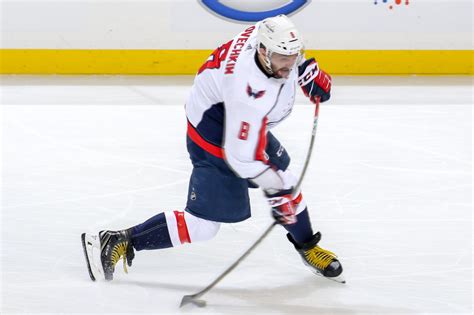
The skill of a one-timer is one of the most flashy and impressive skills in hockey. We have all seen Ovechkin rocket a shot from his knee through the traffic, leaving the goalie with no hope of saving it on the power play. There are a number of situations and shots that happen in a game, but for the sake of this article, we will be focusing on the traditional one-timer.
To understand the nuances of this technique, let's delve into its mechanics, historical development, and strategic importance.
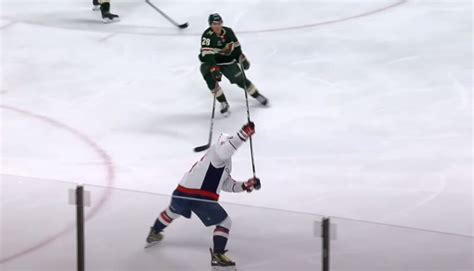
The Mechanics of a One-Timer
The mechanics of the one-timer is more detailed than it may seem at face value.
Read also: WI Snowmobile Regulations
Head: In the game, being able to receive as much information and compute quicker than the opposition all over the ice. Your head, and your eyes, need to be able to see the puck and track it successfully in order to have the puck go off your stick. Moreover, before the pass comes, your head needs to look at the net and see the goalie, the defenders, and where the other players are. Sometimes, a second cross-seam pass can work better than a simple one-timer at the net.
The head needs to be able to track so many things on the ice, and then the focus needs to transition to the blade hitting the puck. As the puck hits, it helps to have your eyes follow the stick, pointing at the net and where the puck should be going. This is the best way to ensure the rest of the body follows through, which will generate more power and accuracy behind the puck.
Chest: The chest plays a crucial role in being the steady middle space between the legs, arms, and head.
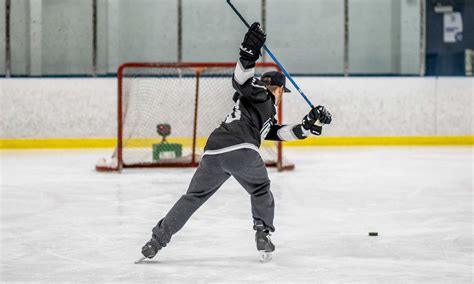
Arms: While the arms hold the stick, it’s important to realize that more power comes from the legs than the length of the wind-up. Making sure to connect with the ice, just before the puck, and think of the stick as a pendulum is key to a great one-timer. The stick should point towards the net with the toe, which requires the shooter to turn their wrists. That’s why a lot of pucks will sail over the net, because this crucial detail was skipped.
Hips/Legs: The lower half of the body is the most important generator of power for the one-timer. Both need to be a part of the transition from the pass to the puck going towards the net. Like physics, the process of a one-timer is about gaining power and changing the motion of the puck. The legs need to be bent, and the hips need to be square to the pass, until the front leg (led by the foot) turns to face the net and moves the entire body follows the puck.
Read also: What is a PTO?
Feet: If a one-timer is a song, the feet are the conductor. They need to be connected together, and separate in order to bring the entire shot together. As the puck is coming, the front foot and hip should open to point at the net, so the momentum can all go towards the net.
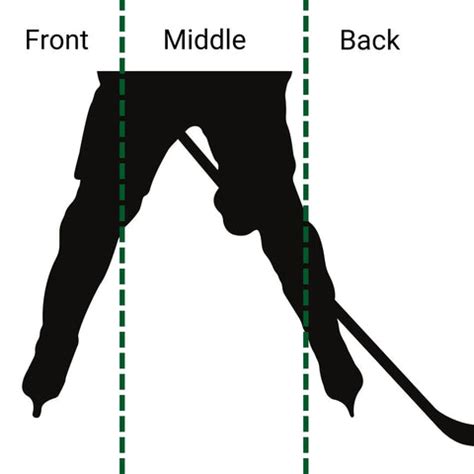
Puck: The puck is the part of the one-timer that depends on the player’s preference. There are three main areas where a one-timer pass can be sent. Towards the front foot, in the middle, and off the back foot. It’s really a matter of communication between the passer and shooter for where they want the puck to go.
An effective one-timer requires precise timing on the part of both players involved, especially the shooter. Executing a one-timer demands precise alignment between the incoming pass and the shooter's stick blade, as any misalignment can result in a failed attempt.
To execute a one-timer effectively, the shooter must position themselves in the offensive zone's faceoff circles, typically near the hash marks, to optimize forehand alignment and quick release. For a right-handed shooter, the preferred spot is the left circle, where the pass arrives on their strong side; conversely, left-handed shooters station in the right circle.
The mechanical steps begin with receiving the pass on the fly without stickhandling, aligning the stick blade perpendicular to the puck's path for clean contact. As the puck approaches, the shooter tracks it with their eyes while shifting weight from the back leg to the front leg, bending the knees for stability and rotating the hips and shoulders toward the net. The release involves a quick wrist snap and minimal backswing, akin to a slapshot, to propel the puck toward the upper corner of the net; the blade should be slightly open to impart lift.
Read also: Chicago Blackhawks Win
Equipment plays a key role in enhancing the shot's lift and precision, with curved stick blades recommended for better puck elevation and control during the wrist snap. A moderate stick flex, around 85-95 for adults, provides the necessary power without sacrificing quickness, while a lower kick point facilitates a faster release. Mastering the one-timer requires extensive training, with coaches emphasizing thousands of repetitions to develop timing and muscle memory.
Historical Evolution
The one-timer shot in ice hockey evolved gradually from earlier techniques like puck redirects, which were common in informal pond hockey settings where players practiced quick deflections off passes to surprise goaltenders. In the 1950s and 1960s, the technique began appearing more frequently in amateur and minor professional leagues, facilitated by improvements in rink conditions through widespread adoption of mechanical refrigeration systems in indoor arenas, which provided smoother ice for precise passing and reduced puck bounce.
The 1967 NHL expansion, which doubled the league to 12 teams and diluted defensive talent, further encouraged experimental passing tactics, including one-timers on power plays to exploit weaker coverage. By the 1970s, players like Phil Esposito incorporated quick-release shots off passes into power-play strategies, leveraging the era's more open ice to score 246 power-play goals over his career, many from direct receptions near the net.
The one-timer emerged as a prominent offensive weapon in professional hockey during the 1980s, largely through the Edmonton Oilers' dynasty led by Wayne Gretzky and Jari Kurri. Gretzky's visionary playmaking, often delivering precise cross-ice passes, set up Kurri for devastating one-timers, particularly on power plays, which became a hallmark of the team's high-octane style.
In the 1990s, the technique underwent further refinement, exemplified by the St. Louis Blues' dynamic duo of center Adam Oates and winger Brett Hull. Oates, renowned for his pinpoint passing, frequently threaded the puck to Hull in the slot for quick one-timers, powering Hull to multiple 50-goal seasons, including 72 goals in 1989-90, 86 in 1990-91, and 70 in 1991-92. The NHL's high-scoring environment of the 1990s, with league-wide goals per game averaging around 6.5 to 7.0, amplified the one-timer's role in offensive schemes.
One of the most memorable one-timer goals in NHL history occurred in Game 5 of the 1984 Stanley Cup Final, where Jari Kurri scored on a precise pass from Wayne Gretzky to help the Edmonton Oilers secure a 5-4 victory against the New York Islanders. In the 1990s, Brett Hull exemplified the power-play potency of the one-timer during his record-setting 86-goal season with the St.
A modern highlight came in the 2018 playoffs when Alex Ovechkin scored a crucial left-circle one-timer against the Pittsburgh Penguins in Game 3, giving the Capitals a 2-1 series lead.
Strategic Adaptations and Variations
The backhand one-timer represents a rare variation of the standard one-timer, executed by receiving a pass and redirecting the puck with the back side of the blade for shots from tighter angles where a forehand might be obstructed. This technique demands exceptional hand-eye coordination and stick control, often employed in high-pressure situations near the net or during quick transitions.
A tip-in one-timer modifies the traditional slap by involving a subtle redirection or "tip" of the incoming pass while in motion, typically mid-air or just above the ice, rather than a full blade contact. This variation blurs the line with deflections but maintains the one-touch principle, allowing for rapid scoring in crowded net-front areas during power plays or scrambles. It is particularly effective against screened goaltenders, as the puck's altered trajectory is harder to track.
Off-wing adaptations involve shooters positioning on their non-dominant side-such as a left-handed shot in the right faceoff circle-to enable cross-net one-timers that exploit angular deception. This setup increases the shot's difficulty due to reduced power from the off-side but enhances unpredictability, forcing defenders to commit earlier.
Post-2020, one-timers have evolved with hybrid integrations like saucer passes, where the puck is lofted over opposing sticks or screens before landing flat for an immediate shot, improving visibility and speed through traffic. This adaptation counters modern defensive screening tactics, allowing elevated passes to create cleaner shooting lanes.
Here’s another visual of where a common one-timer comes from. The puck sliding across the seam.
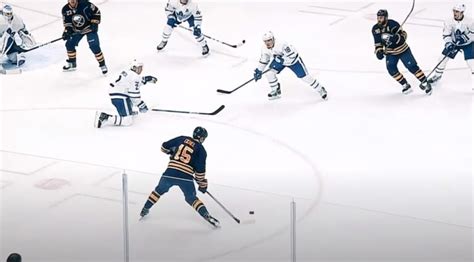
Usually on a powerplay, the player is positioned with their stick to the middle, meaning if they are standing facing the net, their stick would be towards the middle of the ice, not the wall. Typically, on a powerplay the goal will be to move the puck across the seam (see the red dotted-line) so that they can utilize the player with a strong one-timer. The most classic example is the Washington Capitals, and Alex Ovechkin. They will have tons of movement and passing with the other 4 players on the ice to work the penalty killers out of position, and then Ovechkin will get into his sweet spot on the ice, and when the penalty killers leave the slightest bit of space, they’ll pass it across the seam and he’ll hammer it home.
For a great one-timer to beat the goalie, the pass is more important than the shot position. The pass is the play that beats the goalie, and can give the shooter the opportunity to quickly put the puck away.
The one-timer is a great shot that can make a powerplay lethal when set up properly. Having a strong one-timer is incredibly detailed and in order to become great at it, repetition off ice is key.
In this diagram, the blue team is executing a one-timer on a scoring play.
Comparison to Other Sports
In soccer, the one-timer concept finds its closest parallel in the "one-touch shot" or volley, where a player receives a pass and immediately strikes the ball toward goal without first controlling it, often using the foot or head. This technique is permitted under FIFA's Laws of the Game for open play, allowing quick strikes as long as the ball is not deliberately touched twice in succession during restarts like free kicks.
A notable example is Luis Suárez's goal in the second leg of the 2015-16 UEFA Champions League round of 16 against Arsenal on March 16, 2016, where he volleyed a cross from teammate Dani Alves directly into the top corner, contributing to Barcelona's 3-1 victory that night (5-1 aggregate). Unlike hockey's stick-based one-timer, soccer variants rely on foot precision or headers, adapting to the sport's emphasis on lower-body control and aerial duels.
In other sports, analogous quick-release techniques exist but lack the one-timer's centrality in hockey. Basketball occasionally features "one-touch layups," where a player catches an outlet pass in transition and immediately finishes at the rim without dribbling, as seen in fast-break plays by teams like the Golden State Warriors to exploit spacing. Lacrosse employs "quick-stick" or quick-release shots, catching a pass and firing without cradling the ball to maintain momentum, though these are situational rather than a staple tactic.
Risks and Counter-Strategies
The physical demands of a one-timer pose risks to the shooter, as the high-velocity swing-often akin to a slap shot-can strain the wrists, elbows, and shoulders through repetitive torque and impact.
Defensive teams counter one-timers through strategies like lane clogging, where players position themselves to block direct passing and shooting lanes, particularly on power plays. Goalies often employ the butterfly technique to seal the lower net, neutralizing low one-timers that are common from the circles.