The YES Snowboards PYL Uninc DCP XTRM is a high-performance snowboard designed to tackle the most intense conditions, offering advanced riders the performance, stability, and versatility they need to push their limits.
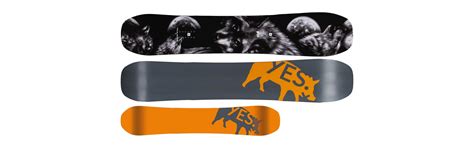
David Carrier Porcheron (DCP), cofounder of YES Snowboards and a snowboarding icon, is no slouch when it comes to extreme riding. He needs a board that can keep up with the demands of his riding, and the YES PYL Uninc DCP XTRM is up to the challenge.
Design and Construction
The YES PYL Uninc DCP XTRM is a directional freeride board with a blend of high-tech materials and thoughtful design, ensuring durability and top-tier performance.
A directional snowboard is purposefully shaped for optimal performance in one primary direction, typically with a longer and more pointed nose compared to the tail. This design enhances stability, control, and float in varied conditions, making it particularly well-suited for carving, powder riding, and all-mountain exploration. The asymmetry aids natural turn initiation and provides a more dynamic riding experience when cruising downhill.
The board sports a directional shape with a slightly tapered outline, perfect for carving and navigating through various terrains. The CamRock profile features rocker in the tip and tail, with camber between the feet. This profile gives the board a lively, snappy feel with plenty of pop, making it responsive and energetic in all conditions.
Read also: Is the Gnu Antigravity Snowboard Worth It?
At the heart of the YES PYL Uninc DCP XTRM is the Poplar + Paulownia + Bamboo core. This combination offers a balance of strength, lightweight feel, and responsiveness. The core’s construction ensures that the board remains lively while providing the necessary flex and durability for aggressive riding.
YES Snowboards' Poplar/Paulownia core is crafted from 50% Poplar and 50% Paulownia. Poplar offers lightweight consistency and flex, enhancing agility. Paulownia, even lighter, ensures weight reduction while maintaining strength.
The board comes with a sintered base, known for its speed and ability to absorb wax efficiently. This makes it perfect for riders who prioritize speed and need a base that performs well across different snow conditions. YES Snowboards' sintered bases are crafted by fusing tiny polyethylene particles under heat and pressure, creating a porous, durable surface.
The Tapered Underbite enhances edge hold and improves carving precision, allowing riders to make smooth and controlled turns.
Triaxial or "Triax" fiberglass on a snowboard refers to a fiberglass construction where the fibers run in three directions-usually along the length and width of the board and at an angle. This configuration adds torsional stiffness to the board, enhancing its overall stability and responsiveness. Snowboards with triaxial fiberglass tend to have a more precise and controlled feel, making them suitable for riders who prioritize stability at higher speeds, improved edge hold, and better performance in challenging conditions.
Read also: Battle Bindings: Performance and Value
Forever Flex is a manufacturing process that helps stabilize the flex and rocker profile of a board for its lifetime. Our boards now finish the first stages of production slightly overbuilt and then we “break them in” using a specialized machinery that mimics extreme riding use. By flexing the fresh board fibers and epoxy at the factory the materials settle into their final arrangement within the board layup much the same as if you rode the board for 20 days.
Snowboard Tested and Rider Specs:
- DCP Size: 159 cm (waist width 26.2 cm)
- Sidecut: 8,0 - 7,0 - 6,0
- Bindings: Union Falcor (Large)
- Boots: Adidas Tactical ADV size 11
- Stance: approximately 22.5″
- Rider Height: 5’11″
- Rider Weight: 195lbs
- MSRP: $599.95
Features from YES.
- CamRock 1-4-1 - Hybrid camber profile balances carving power with forgiving float
- Directional shape with YES. Tapered UnderBite extends contact length
- UnderBite contact points improve edge grip to prevent washing out
- Flex Rating - 8 (1 Soft - 10 Stiff) -Stiff flex ideal in powder conditions and through freeride terrain
- Weight-saving core with tough paulownia, low-mass poplar, and bamboo stringers
- Coreless Tail
- Sintered base for high speed and durability
- Triax glass improves torsional stiffness for more aggressive riding
- Art by James Dalton
Performance
The PYL Uninc DCP XTRM excels in various aspects of performance, making it a versatile choice for advanced riders.
One of the board’s standout features is its ability to carve effortlessly. The directional shape, combined with the camber profile, provides a locked-in feel on hardpack and groomers. I really felt I could push the board to high speeds without experiencing chatter, thanks to its stable construction. The edge hold is impressive, allowing for precise and confident turns, even on icy surfaces.
When it comes to riding in powder, the PYL Uninc DCP XTRM does not disappoint. The slight rocker in the nose helps keep the board afloat, making it easier to navigate deep snow. The taper in the tail reduces drag, enhancing the board’s ability to glide through powder effortlessly. The coreless tail design allows the tail to sink in powder, making powder riding a breeze.
Read also: Renting Snowboards in Whistler Blackcomb: What You Need to Know
While the PYL Uninc DCP XTRM is designed for freeriding, it offers enough versatility for all-mountain riding. The board’s flex allows for playful riding, making it suitable for various riding styles and conditions. The board is softer in the nose and tail but fairly stiff between the bindings due to its carbon stringers, which adds stability and responsiveness. The coreless tail intrigued me-there’s a softball-sized area without a core. DCP’s second love is surfing, and this design gives the board a surfy feel. It took me a couple of runs to get used to how light the tail is, but once I did, turns became effortless. This feature is greatly appreciated on steeps as it reduces the swing weight.
Underbite Technology
I’m a big fan of the MidBite technology. This board features Tapered UnderBite, which creates an extreme taper at the binding contact points. This proved to be extremely effective. The board is an absolute rocket, with its wide nose and two taper points, it just wants to go fast. On groomers and cat tracks, the board accelerates with ease. The UnderBite also allows for deep, rail-like carves, providing excellent edge hold. The DCP is stable at high speeds and absorbs chop with ease.
Although it’s not necessarily a park board, I felt comfortable hitting jumps and rails. It was very stable on landings and provided a lively, playful feel. The board’s versatility extends to freestyle riding, making it a suitable option for riders who enjoy a mix of park and all-mountain terrain.
HOW TO CARVE ON A SNOWBOARD // Beginner Snowboard Tips
PYL Detail
SO.k. let’s take a more detailed look at what the PYL is capable of.
- Board: YES Pick Your Line (PYL) 2025, 159cm (253mm waist width)
- Date: March 24, 2024
TESTING Conditions:
- Overhead: Not a cloud in the sky!
- Visibility: 100%
- Morning Temp: 2°C | 36°F
- Afternoon Temp: 4°C | 39°F
- 24 hr snowfall: 0cm 0”
- 48 hr snowfall: 0cm 0”
- 7 day snowfall: 0cm 0”
- Morning Wind: 0kph 0mph
- Afternoon Wind: 5kph 3mph
- On groomer: Started out hard with some icy patches. Got progressively softer throughout the day, which was unsurprising in the warm temperatures and sunshine. Was getting slushy mushy by the afternoon.
- Off groomer: Hard/crunchy to start and softened up a little, but not as much as groomers.
Set Up
- Bindings angles: +15/-15
- Stance Width: 570mm 22.44”
- Stance Setback: 10mm 0.4”
- Width at Front Insert: 263mm 10.4”
- Width at Back Insert: 261mm 10.3”
- Rider Height 6`0” 183cm
- Rider Weight 180lbs 82kgs
- Rider Boot Size: US9.5 (Adidas Response ADV)
- Bindings Used: Burton Malavita, size M
grams lbs & ozs
- Board Weight 3020g/cm 6lbs 11ozs
- Weight per CM 18.99g/cm 0.67ozs/cm
- Average Weight per cm 18.64g/cm* 0.66ozs/cm
The PYL was a little heavier than normal on the scales but felt normal on snow.
Powder
Nothing to test in on the day but from past experience with earlier models of this board and based on specs, it's a board that will be really good when the pow arrives. While it only has a small amount of taper (around 6mm) and a small reference stance setback, it has a really big nose, with a huge upturn of rocker in the nose. In contrast the tail is not only narrower and shorter, but it also has very subtle rocker.
The 1-4-2 rocker-camber-rocker profile doesn't really represent the contrast in rocker in the tail and nose that you can see and feel with the board. I suspect this is because the rocker in the nose starts so much earlier - and just keeps rising.
Carving
This thing is so darn fun on a carve. And it's one of those boards that manages to be just as good for all types of carves. Fast, slow and various radiuses.
It probably has it's limits in terms of super high speeds, but I couldn't find the limit on it and it's a rare breed that can carve well at high speed but still be good on a lower speed carve.
Turning
And for how well it rides at speed and carves, it's actually pretty easy to turn and slash as well. Another combination that I've found to be quite rare in snowboards. It's not ultra easy, but remarkably easy, given it's other qualities.
Again, the combination of the PYL's slow speed and fast speed qualities are pretty remarkable - the way it's able to do both so well. It's not among the top tier of edge-to-edge quickness at slow speeds, but it is top tier in terms of how good it is at slow speeds vs fast speeds.
Really un-catchy, even when ridden slow. Not fully catch free but for how well it rides at speed and particularly for how well it carves, it's remarkably low in catchiness.
Speed
I found and have always found the PYL to be nice and stable at speed and relatively chatter free. I did experience some chatter, but nothing crazy. The glide isn't great, so you don't get that acceleration and if you don't pick up enough speed when approaching a flat area or uphill, it can be a struggle to get through. But in terms of stability at speed, it feels really good.
Uneven Terrain
- Crud/Chunder: Not ultra damp, but damp enough, and nice and stable going through or over messy snow. Some chatter, but it's not bone-shaking.
- Trees/Bumps: Really decent edge-to-edge quickness and in powder, it goes really well in trees too.
Jumps
Really decent for jumps. Not ultra poppy but some pop there. But otherwise a really nice balance between forgiveness and stability.
- Pop: Not super easy access but not hard to extract either. Total pop isn't bad, but not super poppy overall either.
- Approach: Great balance of stability and adjustability leaning more to stability side.
- Landing: Nice solid landing platform and decently forgiving too, for when you don't quite get the landing stomped. While it's not great for landing tail heavy, it's not too bad either - there's some tail there to support you, if you land leaning back a bit too far.
- Side-hits: It wouldn't be my go-to for side-hits, but still really decent, especially for a freeride board.
- Small jumps/Big jumps: Really all sizes work well on this board. Because of it's stability, I would go with big jumps as it's best jumping quality, but really it's good for all sizes of jumps.
Switch
Was pretty forgiving on transitions to/from switch and felt quite easy to ride switch on. And while it does look/feel a little odd having that big 'ol nice on your back foot, it's not super directional feeling when not in powder, if you can put that look/feeling out of your head.
Spins
Pretty good for a directional board. Not super light swing-weight and takes some effort but not bad. Definitely doesn't over spin and not too bad at finishing a spin on the ground when you haven't quite rotated enough.
And setting up and landing switch is doable too for 1s, 5s etc.
Jibbing
Felt relatively confident with this board taking it on jibs, which I don't necessarily with all freeride boards. Still certainly far from ideal for it.
Butters
It takes some effort to press the nose and tail, as you'd expect at it's flex. But it's nothing that's oppressively stiff in its nose/tail. And when you can get that force on there, it locks in nicely. The nose and tail do feel quite different to press though, naturally.
Overview of the PYL’ Specs
Check out the tables for the PYL’s specs and available sizes.
| LENGTH (cm) | Waist Width (mm) | Rec Rider Weight (lb) | Rec Rider Weight (kg) |
|---|---|---|---|
| 156 | 250 | 130-180 | 59-82 |
| 159 | 253 | 140-190 | 64-86 |
| 160W | 260 | 160-210 | 73-95 |
| 162 | 255 | 160-210 | 73-95 |
| 164W | 265 | 170-220+ | 77-100+ |
| 165 | 258 | 170-220+ | 77-100+ |
Who is the PYL Most Suited To?
The PYL is best suited to a number of different riders. It can make a great one-board quiver for those who spend a good amount of their time riding at higher speeds, carving and in powder, but who also wants a good amount of forgiveness to go along with that. The one-board quiver candidate for this board probably isn't in the park much, but might like to hit the ocassional jump, side-hit or cliff-huck.
Or it can be a great addition to a quiver. In a two board quiver it would be great paired with a freestyle/park board or an all-mountain-freestyle board. And could form a multi-board quiver too, being the daily driver or the go-to for powder-days and icy days.
While it is relatively easy to turn for how aggressive it can ride, it's still not for beginners and for the most part, I would say you'd want to be at least solid intermediate for this board.
Score Breakdown and Final Verdict
Check out the breakdown of the score in the table below.
| Factor | Rating (/5) | Weighted |
|---|---|---|
| Powder | 4.5 | 22.5/25 |
| Speed | 4 | 16/20 |
| Carving | 4.5 | 13.5/15 |
| Turns | 4 | 8/10 |
| Crud | 4 | 8/10 |
| Trees | 4 | 8/10 |
| Jumps | 4 | 4/5 |
| Switch | 3 | 3/5 |
| TOTAL (after normalizing) | 90.2/100 | |
The YES Pick Your Line (PYL) has an uncanny ability to perform well at both fast and slow speeds. And can handle and excel being ridden aggressively, yet feel forgiving enough to still ride more slowly/casually. And that's definitely not to say that it's just a good middle ground between those things.
- The average score was 86.2/100
- The highest score was 91.3/100
- The lowest score was 79.3/100
- The average price was $689❄️
- The PYL ranked 3rd out of 27
The Pick Your Line is a great board, well before you look at the price. And then when you look at the price you realize just how good the value-for-money is for this board!