The ideal cross-country ski binding, as someone once observed, would be a simple door hinge attaching the toe of a ski boot to the ski. Considering how simple the objective is, the engineering of cross-country ski bindings became fraught with complexity and saw a period of great experimentation. It’s hard to explain how ridiculously complex and nuanced the boot/binding setups have become.
The original 75mm three-pin binding was developed prior to WWII and represented a design departure from standard cable bindings of the day. It was a competitive advantage in cross-country skiing competitions, and furthered a split between the Nordic and Alpine disciplines in boots and bindings.
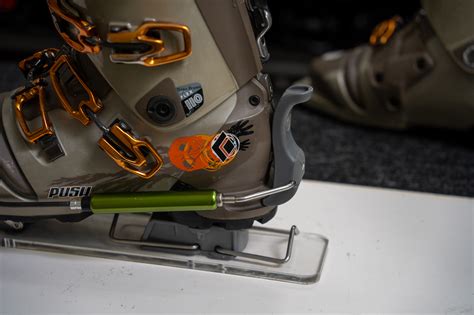
Late sixties/early seventies vintage: 75mm three-pin binding on a wood ski (a Bonna, I think).
The Evolution of Cross-Country Ski Bindings
The post-WWII economy of North America and Europe also injected middle-class disposable income and leisure time into all sorts of recreational activities. Following Bill Koch’s silver medal in the 1976 Olympics, cross-country skiing grew to its peak popularity in the USA by the early eighties. Where consumers tread, business will follow.
Starting in the late 1970s, the industry tossed boot and binding compatibility out the window in search of performance or popularity. Smelling money in the water, Salomon made a big move into the XC side of skiing, and the deluge was on.
Read also: Battle Bindings: Performance and Value
Here’s a list of distinct binding types introduced for ski touring and racing from the late 1970s to today, in rough chronological order:
- 50mm three pin
- Trakker (1970s)
- Adidas 38mm (1970s)
- Salomon Nordic System (SNS)
- Trak (1980s)
- New Nordic Norm (NNN)
- Adidas SDS (1980s)
- Salomon Profil
- Salomon Pilot
- Nordic Integrated System (NIS v1.0)
- Salomon Prolink
- NIS Xcelerator/MOVE (aka NIS v2.0)
- IFP Turnamic (2017)
From the mid 1980s till 2015, the situation for retail and rental shops, and skiers who upgraded every few years must have been crazy. Multiple systems existed at the same time and were incompatible by design, sometimes because of a tiny detail. New boots could be incompatible with the bindings on your skis.
And if old bindings were out of stock, buying new skis might mean getting a second pair of boots just to fit the bindings available. That was then: It’s better now. Starting in 2016, Salomon Prolink was designed to be compatible with NNN/NIS, and the newest entry by Fischer and Rossignol, IFP Turnamic, is cross-compatible with the others, meaning boots designed for one will work on the others (as for swapping bindings on a ski, that’s another matter).
The less good news: Today, several distinct binding systems are still supported, and it’s still possible to get boots that aren’t fully cross-compatible with some bindings. This is going to matter when you drag your old cross-country gear out of the closet and decide you want new boots. Even if you know which binding system you bought, the people at a shop might not recognize the name.
I recommend bringing your whole setup to a shop for them to check if they can reuse or source your bindings.
Read also: All About Twin Tips
Touring and Backcountry Bindings
Touring and Backcountry formerly used the same or similar 75mm three pin bindings, but Backcountry began to split off sometime in the 1980s when Telemark skiing became a Thing. First came a heavier-duty three-pin binding for Telemark. Then Rottefella introduced a heavier-duty version of NNN called NNN BC (BC = Backcountry). Salomon followed with a competing product called X-Adventure.
If you look at my graphic on the page Types of skis/skiing, General Backcountry skiing equipment becomes more specialized as the terrain gets steeper and more remote. Binding tech moved on a lot since I lost track of the evolution in XCD. The field now has a wholly different set of complexities nuances.
In addition to the old 75mm, NNN BC, and X-Adventure, the NTN Freeride (New Telemark Norm) bindings look like they bear some influence from Alpine Touring tech.
Telemark/XCD equipment is overkill for most Backcountry skiing, unless your trips involve terrain that’s pretty steep or in the wild. Those who don’t need an XCD setup but do want to venture into backwoods terrain have other choices, like the aforementioned NNN BC, X-Adventure, or even the classic 75mm three-pin.
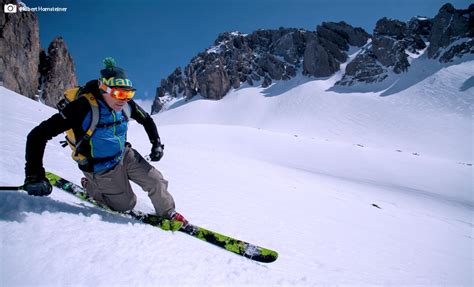
Telemark skiing.
Read also: Safely Remove Bindings
I’ve got little to say about this variant other than that it’s a very specific kind of Backcountry skiing intended for mountainous terrain similar to the Alps.
The bindings and boots derive much from Alpine skiing design, but the bindings allow you to release the heel, and boots adjust so you can ski uphill with some mobility.
Подбор креплений для беговых лыж
Free Heel Skiing: Leverage vs. Flexibility
A robust hinge at the toe of the boot is the logical mechanical engineering solution to allowing a free heel and also transmitting edging force from the boot. It is the design principle for all touring and most Backcountry ski bindings. In cross-country skiing, the foot must be free to flex at the toes and ankle.
Yet we also rely on this non-rigid assembly of bone, tendon, and muscle to exert control over twist and rotation of the ski. The mechanical engineering answer is to design the boot and binding system such that only the defined motions of proper skiing are possible, while augmenting leverage over the ski in every other direction.
This kind of thinking is what goes into heavy-duty XCD/Telemark and Alpine Touring equipment. But restraining movement of foot and ankle has downsides. It increases the weight and effort for each stride, hampers the skier’s ability to feel the skis and snow, and creates stresses on other parts of the leg that can result in injury.
This should sound familiar. The same engineering choices took place in Alpine skiing decades ago. Modern downhill bindings and boots buttress stability of the lower leg, but the hardshell boots cause stress to concentrate at the knee.
I find plenty of perceived thrill at the low speeds of light touring, especially when skiing on the narrower trails of some old-timey touring centers. The light and flexible equipment allows me to sense my foot and leg mechanics. The slower speeds give me more time to do something about it, aiding learning.
The latest breed of light touring and racing bindings are past the peak of elegant simplicity; the elaborations are mainly for racers, who are extra fussy about foot placement on the ski. Regardless, all current bindings are fundamentally a hinge attaching the toe of the boot to the ski.
Choosing the Right Cross-Country Ski Gear
There are two main ways to enjoy cross-country skiing (also known by the umbrella term "Nordic skiing"): You can either classic ski or skate ski. With each one, your heel is always "free" (not connected to the ski as with downhill skiing) and you use your muscles and gear to move yourself forward.
Classic skiing uses a forward and back striding motion that resembles how you walk or run. The familiarity of the motion makes it a logical starting point for new cross-country skiers-many beginners, including families, can enjoy shuffling along on trails even if they've never had skis on before.
Skate skiing technique resembles that of a speed skater on ice. As you push your skis out to the side, you use the edges of your skis to propel yourself forward. It's a fun and fast activity that many people can learn to enjoy, but it's not usually where beginners start.
The gear for classic skiing and skate skiing differs some, though not dramatically-to the untrained eye it can all appear the same. This article will help you understand the differences so you can get the type of skis, boots, bindings and poles you need to enjoy a day on the trails.
Types of Cross-Country Skis
To choose the right cross-country skis, first think about where you want to go and what type of skiing you're looking to do, then choose the type of skis that align with that.
Classic Skis
At REI, three types of skis fall into the category of classic skiing:
- Cross-country touring skis are designed for skiing on groomed trails with a forward and back striding motion similar to how you walk or run. The skis are generally long, narrow and lightweight for fast and efficient skiing in groomed tracks. Some cross-country touring skis have a shorter design that makes them a bit easier to turn and control, making them a popular choice among beginners.
- Race and performance classic skis are similar to touring skis in that you use them in the groomed tracks, but they're built for faster, more aggressive skiing. Race and performance skis generally have a stiffer flex than touring skis, making them less forgiving and requiring better technique.
- Metal-edge touring skis are made for skiing out-of-track or on steeper terrain. Compared to touring skis, they are typically shorter for better maneuverability and wider for more stability and flotation in deeper snow, and they have metal edges for better grip in icy conditions. Their greater sidecut enhances turning ability on steeper slopes.
Skate Skis
Skate skis are used on groomed trails to ski along similar to how a speed skater moves on ice. The skis are light, skinny and stiff, and they are generally about 10cm shorter than skis for classic skiing. It's worth pointing out that skate skis are not designed for striding as you do while classic skiing.
Cross-Country Ski Bases: Waxless vs. Waxable
Skis need to grip the snow so you can climb hills and maintain forward momentum on flat terrain. Classic skis achieve their grip in one of two ways: either the bottom of the ski has a manufactured texture pattern or grip wax (aka kick wax) is applied. Skate skis rely on their edges for traction.
- Waxless classic skis are the most popular choice because they are convenient and low maintenance, and they provide reliable grip in a variety of snow conditions. They are called waxless because rather than relying on grip wax for traction, they have a manufactured grip zone (aka kick zone) on the bottom.
- Waxable classic skis require a bit more work, but they can outperform waxless models if their grip wax is precisely matched to snow conditions. Waxable skis get their traction from rub-on grip wax that's applied to the middle third of each ski.
Cross-Country Ski Camber
Camber refers to the bow of the ski-you can see this easily when you put the ski down on a flat surface. Skate skis are designed with single camber whereas most classic cross-country skis have the more-pronounced double camber.
- Single Camber: Skis with single camber have a subtle, gradual arch in the middle. Single camber distributes skier weight more evenly over the entire ski base, which makes it easier to carve smooth turns.
- Double camber: Classic skis with double camber incorporate a second camber that's important to achieving really good glide while classic skiing on groomed trails.
Cross-Country Ski Boots
Finding comfortable boots is key to your enjoyment on the slopes. When trying on boots, wear a pair of wool or synthetic ski socks. A good fit means boots are comfortable and hold your feet solidly in place. You should have room to wiggle your toes to keep them warm.
When shopping for cross-country ski boots, it's important to choose boots that match the type of skiing you're doing.
- Boots for cross-country touring: When shopping for boots for touring, look for a combination of flexibility for striding and torsional rigidity for turning and stopping.
- Boots for race and performance classic skiing: These boots are typically lighter weight than touring boots, and sometimes have lower cuffs for a greater range of motion.
- Boots for metal-edge touring skis: These boots are stiffer to provide greater support for turning. They still have flexibility, but are higher cut, warmer and more durable than general touring boots.
- Boots for skate skiing: Skating boots offer more ankle support than those for classic skiing to help protect against the twisting forces involved in the skating technique.
How to Choose Cross-Country Ski Bindings
Performance differences between bindings are subtle so let your choice in boots guide what type of bindings you purchase. Boots have different types of soles on them, making them only compatible with specific bindings.
For many years, New Nordic Norm (NNN) and Salomon Nordic System (SNS) were the two primary binding/boot systems available and they were not compatible with one another. In recent years, this has changed some. With the release of the Turnamic system, featured on Rossignol and Fischer products, and the ProLink system, featured on Salomon products, there's much more crossover among boots and bindings. Turnamic, ProLink and NNN are all interchangeable with one another.
Boot and Binding Compatibility
The chart below will help you understand which bindings are available to you based on the types of soles on your boots.
| Boot Sole Type | Compatible Bindings |
|---|---|
| NNN | NNN, NNN Nordic Integrated System (NIS), Turnamic, ProLink |
| Turnamic | NNN, NNN NIS, Turnamic, ProLink |
| ProLink | NNN, NNN NIS, Turnamic, ProLink |
| SNS Profil | SNS Profil |
| SNS Pilot | SNS Pilot |
As you shop for bindings, you'll become aware of different features that may sway you one way or another. Here are a couple things to be on the lookout for:
- Manual versus automatic: Some cross-country bindings are manual, meaning you bend over to lock your boots to the bindings or to release them. Others are automatic, allowing you to step into them without bending over and to release them with the press of a ski pole.
- Binding plates: Some skis come with binding plates installed on them. These offer several advantages, including quick and easy binding installation without drilling and the ability to reposition the bindings forward and back based on things like snow conditions and skiing ability.
Telemark Skiing and 3-Pin Bindings
Telemark skiing, with its rich heritage and distinctive style, offers a unique approach to exploring the outdoors. Among the various setups for telemark skiing, the 3-pin binding system stands out for its simplicity, reliability, and direct connection to the ski. It may be old school, but it’s still around for a reason.
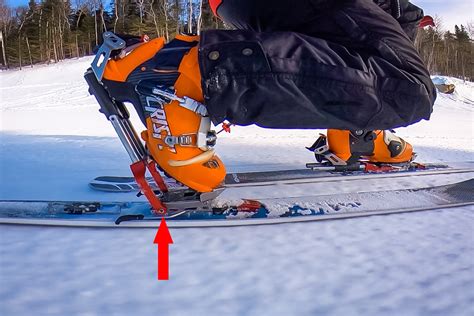
Telemark skiing bindings.
The 3-pin telemark binding system is revered for its straightforward design. Comprised of three metal pins that align with three holes in the toe of the boot, this system securely locks the toe of the boot in place, allowing for a direct transfer of power from the skier to the ski. While some 3-pin bindings feature a heel assembly for improved downhill performance, the toe piece is what makes them all “3-pin”.
Its simplicity means fewer parts can break or malfunction in the backcountry, where repairs can be challenging or impossible. It’s not uncommon for us to see Voile 3-pin bindings that are over 2 decades old still in the skiers’ daily rotation. 3-pin truly epitomizes our mantra: Simple. Solid. One of the 3-pin setup’s most significant benefits is its enhanced control and feel.
Because the boot is directly connected to the ski with minimal mechanical interference, skiers enjoy a heightened sense of the snow beneath them. This direct connection translates into more precise control over the ski, allowing for smoother turns and movement.
Backcountry skiing often involves long outings where every ounce of weight matters. The 3-pin binding system is notably lighter than many of its more complex counterparts, making it an excellent choice for skiers who prioritize efficiency and ease of movement during uphill climbs. The reduced weight helps conserve energy, enabling skiers to enjoy longer days on the mountain without unnecessary fatigue.
For those new to telemark skiing or looking to explore this discipline without a significant financial investment, the 3-pin telemark ski setup is an attractive option. Its simplicity results in a lower cost compared to more complex binding systems, making it accessible to a wider range of skiers.
While 75mm and NTN bindings provide excellent power transfer and are ideal for aggressive skiing on challenging terrains, the 3-pin setup shines in its simplicity and efficiency, making it invaluable for long-distance tours where weight and reliability are paramount.
Tech Bindings: A Modern Alternative
To understand tech bindings, it helps to understand the reason they were first invented. Traditionally touring bindings were more similar to the frame style we have today such as the Marker duke or Salomon Guardian.
What was needed was a way to eliminate the frame and this is what Fritz Barthel along with his father Manfred Barthel, began experimenting with in the early 1980's. Their concept was to use the boot as the connecting device between the heel and toe of the binding. By eliminating the connecting parts they were able to produce an extremely light weight binding which operated in a very similar way to the current tech bindings.
Most Tech bindings function in a fairly similar manner and to demonstrate I have a pair of Dynafit Radical ST bindings. The Radical is one of Dynafit's top selling bindings and rather then going for a full light weight build it is designed with more aggressive riding in mind, having said that they still only weigh 531g so not exactly heavy.
The toe piece of the binding has tow small Steel pins and these match up to 2 metal inserts on the toe of the boot. The heel insert is shaped a little like a triangle, with the narrower end pointing down. The two pins on the binding can open slightly to allow the boot to slide down, but once over the heel bracket they snap firmly into place securing the heel.
The tour mode works by simply rotating the heel so the pins are no longer facing the boot, meaning the heel wont be held by the binding and you are free to walk. The heel has two small metal risers which can be flicked down to change the angle at which the boot sits. For steeper climbs it can help to use the risers to keep you in a more comfortable climbing position.