Eager to hit the slopes, Jeanne and Tim Willoughby flex their bamboo poles. The flexible material reminds us of the long symbiotic relationship between bamboo and skiing.
Simultaneous with resources required for races, bamboo filled another early need of the sport: ski poles. Light and flexible, bamboo poles approached perfection.
While skiing through the young aspen groves, you may have wondered whether that wood would bend more easily than bamboo, but those aspens are not as straight for the required length. And aspen takes more time than does bamboo to grow to the needed height.
In the early days of skiing, slalom could not use thick pine poles to mark the course. Rather, bamboo offered enough strength to withstand a hit, yet it would flex enough to not injure the skier. Narrow Roch Run threw enough challenges at skiers as they raced down the steep face of Aspen Mountain. So, no gates complicated the route of Aspen’s early downhill races. However, a pine structure marked the finish gate. Organizers assumed that the gate’s width would preclude a racer from hitting the structure. A hit would have caused serious injury.
Even today, bamboo marks hazards. Ski patrollers use piles of poles to mark protruding rocks, warn skiers away from precipitous cliffs, and herd them through congested areas. Mountain operations with brush, boulders, and insufficient snow to cover them could not survive without these easy-to-transport, inexpensive markers.
Read also: Balance and Skiing
On the down side, they often split. Whenever that happened, I did not have to buy a new pair. From an abundance of poles, I could find one the right length, and they all looked alike. The first, flashy metal poles weighed more than bamboo, but they broke less frequently.
When the snow melted many Aspen youth hiked on Aspen Mountain, at least the lower areas. Under the chairlifts we would look for items that had fallen out of skiers’ pockets when they rode the lifts. We would find weathered trash, a few coins we could use, and keys we couldn’t. On the return trip down the mountain we gathered bamboo. Occasionally we would find a complete pole, but most were broken. We used the shorter ones as toy spears and the longer ones as vaulting poles. They also worked as a horizontal bar for high jumping and vaulting over.
Какие горные лыжи, ботинки и палки выбрать. Собираем идеальный горнолыжный комплект.
Living at 8,000 feet in the Rockies, we natives had no clue about where bamboo grew. Hundreds of straight poles, all the same length and about the same diameter, arrived each ski season. The plastic revolution took over when I was young. Its permanence and bright colors overshadowed the qualities of “green” materials.
I’m pleased to see the return of bamboo, and its use for products like bicycles. For environmental practicality, but also for nostalgia, it’s hard to beat Mother Nature’s familiar gifts.
The Modern Appeal of Bamboo Ski Poles
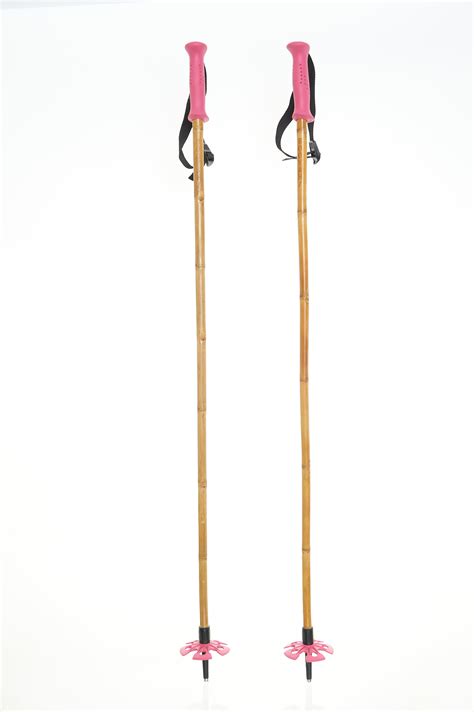
Grass Sticks recognize the importance of looking good on the mountain, which is why they custom make every pole based on your style.
As well as offering countless colorful combinations of baskets and grips, they assure us that looking great helps make you a better skier.
It’s all about the details: The sticks are hand-sanded and finished with a UV/Moisture/Cold proof clear coat. The grips are made with a soft rubber that stays put in your hand with or without the use of the 100% recycled polyester straps. At the bottom, you'll find a premium no-slip carbide tip and interchangeable basket.
Environmental Benefits
Traditional carbon fiber and aluminum ski poles are mined from the earth, industrially manufactured, and mass-produced using an incredible amount of energy. This places a significant burden on our environment.
Here's a comparison of bamboo ski poles versus traditional materials:
| Feature | Bamboo Ski Poles | Traditional Ski Poles (Aluminum/Carbon Fiber) |
|---|---|---|
| Material Source | Renewable resource | Mined from the earth |
| Manufacturing | Less energy-intensive | Industrially manufactured, mass-produced |
| Environmental Impact | Lower burden on the environment | Significant burden on the environment |
Tim Willoughby’s family story parallels Aspen’s. He began sharing folklore while teaching Aspen Country Day School and Colorado Mountain College. Now a tourist in his native town, he views it with historical perspective.