Choosing the right ski goggles can significantly enhance your experience on the slopes. The best ski goggles provide clear vision, comfort, and durability, ensuring you're prepared for any weather conditions. This review dives into some of the top models available, highlighting their key features and performance.
Outdoor Master Ultra Ski Goggles
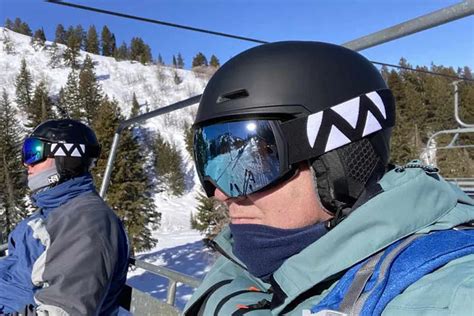
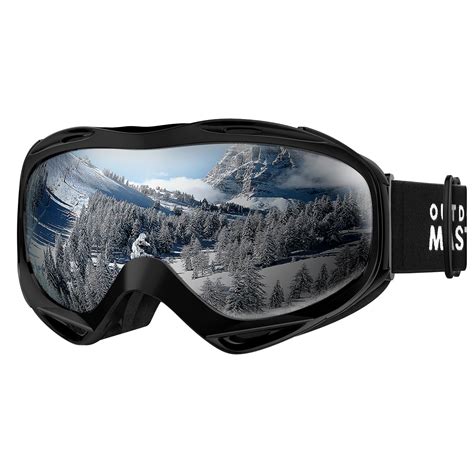
The Outdoor Master Ultra ski goggles have become a go-to choice for many skiers. These goggles combine the best features of top-tier options into an affordable package, making them an incredible value. Outdoor Master benchmarked the top ski goggles when designing the Ultra's, resulting in a high-performance product.
Key Features:
- Lens Shape: Toric
- Frame Fit: Large
- Price: $95-$105
The Ultra has a larger frame than the Pro model, which is a medium fit goggle. The Ultra goggle uses a toric shape for the lens. It has a different radius in vertical and horizontal directions. Think of a lens cut from a donut shaped object. It also has a more lean look to it than spherical lens which can look like a bulge sticking out from your face. The lens are made from a durable polycarbonate material and are treated with an advanced anti-fog coating.
They are available in a variety of colors and VLTs. The available VLT range runs from 10% Grey silver lens to a 90% clear lens. They have 4 color optimized lens that are labeled as “Optimize Orange” with VLT’s from 22-29%. These are some of the best flat light lens available. The Ultra goggles come packaged with 2 lens. They come with a primary lens that is from the 4 bright light lens or the 4 color optimized lens.
Read also: Comprehensive Review: Men's Swim Goggles
I recommend buying an extra lens with the Ultra goggle so that you have 1 bright lens VLT 10-19% and 1 color optimized VLT 22-29% lens. I personally use the following lens set that covers me for almost any ski day.
The frame of the goggles is made from a flexible TPU material that conforms to your face for a comfortable fit. If you compare the Ultra goggles face foam and nose molding you can see it’s very similar to the Smith I/O Mag design. The nose foam has a cinch to it so it doesn’t feel like it’s pinching your nose. I find them really comfortable to wear without any pressure points or pinches anywhere on my face.
The Ultra uses a magnetic lens swap system. To change lens, just flex the frame or pull up on one corner of the lens and it will pop off. The magnets are strong enough to pull the lens into place from several inches away. I have never had any issues with the lens coming off while skiing.
One key element to ski goggle performance is how well do they resist fogging. I will rate the Ultra goggles as good as any goggle out there for fog resistance. According to Outdoor Master the Ultra perform 3 times better than the EN-174 standard for snow goggle anti-fog performance.
I have used the Ultra on some pretty tough foggy, dull, flat conditions. The optimize orange lens work as well as Smith ChromaPop on low light flat days. I spent years skiing with Smith I/O goggles before switching to the Ultra last winter and don’t feel like I gave up anything at all. The Outdoor Master Ultra goggles are OTG compatible. They work very well over glasses.
Read also: Best Ski Goggles for Winter
Comparison with Other Popular Models
How does the Ultra stack up to the most popular high performance goggles out there? Let’s take a look. The current most popular top performers in the ski goggle world are the Smith I/O Mag, Oakley Flight Deck, and Anon M4.
Smith I/O Mag
The Smith I/O Mag has excellent lens. They are toric shaped similar to the Ultra. All Smith ChromaPop lens are color optimized so you will always see a yellowish/orange tint when looking through them. It improves vision in flat light conditions. Some people don’t like the yellowish tint in bright conditions which is the downside.
The Ultra and I/O Mag have very similar frame construction and face foam. The I/O Mag has a lens change system that uses latches in the frame and magnets. The latches can’t be unhooked with the goggles on your head. They are under the strap when you’re wearing it. This is a huge miss for the I/O Mag. I/O Mag comes with 2 lens like the Ultra. The primary lens is always a bright condition lens. The second lens is always a mid VLT flat light lens that compliments the main lens very well. They include a microfiber bag with 2 pockets for storing the goggles and extra lens. It works but it is a pain to get the goggles and extra lens into the bag.
Oakley Flight Deck
Oakley is known for having really excellent lens and good style in their goggles. The Flight Deck is a spherical lens frameless design. It uses Oakley Prizm lens which have really good clarity. They do not have an orange or yellow undertone to them. Their mid VLT lens use the same color inside and out.
The Flight Deck goggles use Oakley’s Ridgelock system. The Ridgelock system requires you to take the goggles off and pull the frame off the lens. You have to align a ridge to the lens and snap it all back into place. It takes a couple of minutes. Oakley uses generic face foam on their goggles. Flight Deck goggles do not come with an extra lens. The extra lens cost as much as a set of OM Goggles by themselves.
Read also: Best Goggles for Skiing & Snowboarding
Anon M4
Anon created the magnetic goggle lens swap system with their M2 goggles. The M4 is their latest model. It is available with either toric or cylindrical lens. The Anon M4 have a magnetic face mask that attaches to the goggles. They sell a whole system of face masks that work with the goggles.
The downside of the Anon M4 is its lens. They do not have a bright mirror appearance to them in person. Their Perceive lens don’t really have any other special tech going on. Their clarity and flat light performance are average. Anon paid attention to every detail of their goggles except for making lens that really match the price of these goggles. The M4’s come with a second lens and a face mask. They also include a microfiber bag for storing the goggles and a hard case for the extra lens.
If you’re in the market for a new pair of ski goggles, I would highly recommend checking out the Outdoor Master Ultra. They are one of the best values out there in ski equipment. At under $100 they’re priced less than half what Oakley and Smith charge for similar performance goggles.
Additional Ski Goggle Options
Here are some additional ski goggle options, each with its own strengths and weaknesses:
How to Choose Ski & Snowboard Goggles & Lenses
- Smith 4D Mag: Known for its extra-wide field of view and excellent lens quality. The Smith 4D Mag is a standout pair of goggles that delivers top-notch performance across the board. Smith, with over 50 years of eyewear expertise, has poured its know-how into this model. The 4D Mag upholds Smith's legacy of innovation with a distinctive curved bottom lens edge that expands your field of vision-a feature you won't find elsewhere. It boasts premium optics, a flexible frame, and a medium fit that suits most skiers and riders. Plus, it's got style and toughness to spare. The 4D Mag has temple cutouts so it can also be worn over eyeglasses, too.
- Smith Squad ChromaPop: Offers strong performance at a budget-friendly price. It includes two quality lenses-one ChromaPop for bright light and a yellow one for low light-outshining pricier options. The cylindrical lenses deliver crisp, clear mountain views. Well-ventilated, it works for resort or backcountry use. With a comfy medium-to-large fit, it suits most faces and pairs well with helmets.
- Glade Adapt 2: Provides great value with its impressive lens tech and superb ventilation. The lens adjusts quickly, enhancing color and snow contrast. It resists fogging well, even on tough climbs. The Glade Adapt 2 is the same goggle but in a smaller size, designed for those with more petite faces or people who don’t want oversized goggles that take up half their face. One tester brought these goggles-and these goggles alone-on a ski touring trip to Norway. Some transition lenses make your eyes feel strained after a day of squinting in bright light, but these lenses offer solid protection from glare. No eye fatigue here. The lenses extend to the edge of the frames, making for a wider than average field of view.
- Anon M4 Toric: Features effortless lens-swapping capabilities and durable lenses. This model is best suited for individuals with a larger facial structure. The M4 has the most effortless lens-swapping capabilities, featuring secure magnetic attachments that allow the lenses to be interchanged in seconds. Along with the extra lens, Anon ships these goggles with a face covering with magnets inside, allowing them to snap into and stay in place quickly. The lenses are built to last, and their quality leaves nothing to be desired.
- Julbo Cyrius: A true one-lens wonder with a wide photochromatic range and excellent ventilation. This model is offered in seven different photochromatic lenses. The largest split is category 0 to category 4, which is approximately 8% to 83% VLT. We used these goggles in every condition, from bluebird to snowglobe-like blizzards, and we always had the right lens. Julbo offers the widest photochromatic range with fast transition times not influenced by temperature.
Key Considerations When Buying Ski Goggles
When choosing ski goggles, consider the following factors:
- Lens Quality: Optical accuracy and contrast enhancement are critical for safety and enjoyment.
- Comfort: The shape, size, and padding material should fit your face comfortably.
- Ventilation: Adequate ventilation prevents fogging, ensuring clear vision.
- Ease of Changing Lenses: A quick and easy lens swap system is beneficial for varying conditions.
- Durability: Sturdy construction ensures the goggles last for several seasons.
- Style: Choose a design that fits your personal preferences.
Lens Shapes: Cylindrical, Spherical, and Toric
Lenses come in various shapes, like cylindrical, spherical, and toric.
- Cylindrical lenses are curved across your face but are flatter up and down.They have a more low-profile, smaller volume and they’re easy to keep scratch-free since they’re flatter against your face.
- Spherical lenses have a rounded, bubble-like effect, with wide peripheral vision that curves away from your eyes on both axes.
- Toric lenses split the difference between spherical and cylindrical lenses. They’re still curved horizontally and vertically but are much less pronounced and lie flatter, like a cylindrical lens. Toric lenses let you have all the benefits of a spherical lens without taking up as much room.
Premium goggles feature proprietary optical enhancement technology to improve the visual experience. These lens technologies are all intended to do roughly the same thing: increase contrast, enhance definition, and generally make you see the world around you more clearly, especially in challenging light conditions.
Lens Technology
Colored lenses provide benefits for specific lighting conditions. There’s no doubt that opting for a pair of goggles with fixed lenses is much more expensive than an interchangeable frame with some extra lenses. Interchangeable lenses give you the distinct advantage of being able to choose a lens appropriate for the conditions of the day. You can use high light lenses on sunny bluebird days, and low-light lenses when there’s variable light.
Additional Features
- Ventilation System: One of the biggest features that a solid pair of goggles can have is a good ventilation system.
- Waterproof Treatment: Goggles oftentimes have other features such as a waterproof treatment on the inside of the lens, and moisture-wicking foam layered around the frame.
- Frame Size and Style: To sum it up, large frame goggles will be higher-volume on the inside and less prone to fogging up. Frameless goggles have a sleek, fighter pilot look to them, they have the added benefit of giving you a little wider field of view.
Table: Top Ski Goggles Comparison
Here's a comparison table of some of the top ski goggles mentioned in this review:
| Goggle Model | Lens Quality | Comfort | Ventilation | Ease of Changing Lenses | Price Range |
|---|---|---|---|---|---|
| Outdoor Master Ultra | 9.0 | 9.0 | 7.0 | 8.0 | $95-$105 |
| Smith 4D Mag | 9.0 | 8.0 | 7.0 | 9.0 | $300-$350 |
| Smith Squad ChromaPop | 7.0 | 7.0 | 6.0 | 4.0 | $70-$100 |
| Anon M4 Toric | 9.0 | 8.0 | 8.0 | 9.0 | $300-$400 |
| Julbo Cyrius | 9.0 | 8.0 | 8.0 | 8.0 | $250-$350 |