Goggles are not just a style statement, making you look rad and cyborg-like; they provide high-value function when the snow blows sideways, and good visibility is required. The past few years have seen wide full-view lenses provide near windshield-like coverage.
To help you navigate the options, we've compiled a detailed review of several Julbo ski goggle models, including the Lightyear, Launcher, Cyrius, and Aerospace.
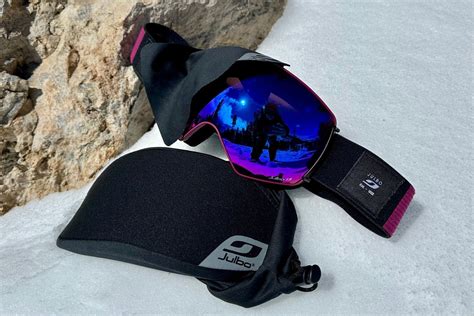
Julbo Lightyear: A Detailed Look
The Julbo Lightyear goggles offer a photochromic lens for snow play in almost every condition - from low visibility storms to high altitude bluebird days. Unlike most snow goggles, with the Julbo Lightyear, there’s no need to carry extra lenses.
The Julbo Lightyear goggles shine for people who often find themselves overheating at the resort or who want some airflow without exposing their eyes to UV light in the lift line. With a VLT range as big as 80-7% for one of the lens VLT options, they’re appropriate for every condition except maybe frequent night skiing by headlamp.
Key Features of the Lightyear
- Reactiv Photochromic Lenses: Julbo’s branded photochromic lens technology adjusts to UV conditions, eliminating the need for multiple lenses.
- Magnetic SuperFlow System: Hinges with magnets encourage extra airflow through mechanical venting. Opening the lens is a simple operation and involves pulling from the corners of the goggle lens with the thumb and index finger. To close, our tester just pushed on the middle of the lens, and the magnets would do the rest with a satisfying click.
- Anti-Fog Coating: A permanent chemical application prevents water droplets from fogging up the lens.
- Adjustable Strap: Wide strap with silicone strips for secure helmet adhesion.
- Dual Density Foam and Ventilation: Two layers of foam provide breathability and a comfortable seal.
- Frameless Construction and Field of Vision: Large, frameless lens for a wide, unobstructed view.
Performance Insights
We found that the Julbo Lightyear transitions from nearly clear out of its storage bag to fully dark in typical mountain sunny conditions in about 30-45 seconds. It transitions from dark to clear again in similar time while loading a gondola at a resort.
Read also: Comprehensive Review: Men's Swim Goggles
The Lightyear has a high contrast lens similar to other companies, like Chromapop from Smith or Prizm from Oakley. The technology works by managing colors to highlight small variations in the terrain. This helps boost a skier or snowboarder's confidence and safety.
The foam is soft, the goggles are on the lighter side at 130 grams, and fit forgettably flush on our face.
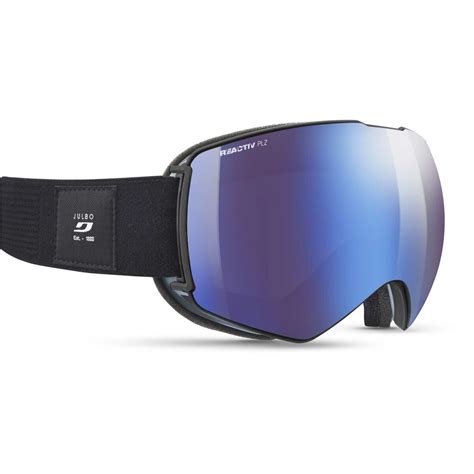
Julbo offers the Lightyear in an OTG (Over the Glasses) model, too, which is the same goggle with a cutout in the goggle foam to help accommodate some prescription glasses lenses. This isn’t exclusive to Julbo.
Julbo Launcher: A Versatile Option
The Julbo Launcher is built around a photochromic lens that adapts to changing light, and I tested it with their most versatile option: the 0-4 Reactiv lens. It spans a wild VLT (visible light transmission) range of 7% to 80%, meaning it’s designed to cover everything from blazing sun to night skiing. Even more impressive, it lived up to that promise. I used the Launchers in full daylight, thick fog, falling snow, and under the lights at night, and the lens never felt overwhelmed or out of sync with the conditions.
Key Features of the Launcher
- 0-4 Reactiv Photochromic Lens: Adapts to a wide range of light conditions, from bright sunlight to night skiing.
- SuperFlow Pro Ventilation: The lens can pop slightly away from the frame, creating airflow while maintaining eye protection.
- Two-Layer Foam Construction: Comfortable and provides a consistent seal.
- Hybrid Carrying Case: Combines soft and hard storage for travel and protection.
Performance Insights
The lens provided natural, slightly warm tones with barely any noticeable color shift, especially in low light. Contrast was good across the board, and the lens highlighted terrain changes without making anything feel overprocessed.
Read also: Best Goggles for Skiing & Snowboarding
As with the Julbo Lightyear and Aerospace before it, the Launcher’s ventilation system is one of the best on the market. The SuperFlow Pro hinge allows the lens to pop slightly away from the frame, creating just enough space for air to circulate while still shielding your eyes from sun, wind, or snow. That extra airflow can make a big difference when things heat up. And the magnets make it easy to pop the lens back into place.
Julbo lists the Launcher as an extra-large fit, but as with the Lightyear, the goggles felt a bit smaller than advertised. In practice, the fit is much closer to a standard medium/large and was a great match for my face.
Julbo Lightyear Anti Fog Photochromic Ski Goggles
Julbo Cyrius: A Classic Shape with Modern Tech
Julbos… anyone who does mountain sports knows Julbo eyewear is nice - in some ways incredible. But I’m not sure I’d ever spend more than $200 on goggles. Would they be worth the money to you?
Key Features of the Cyrius
- Photochromatic-reactive lens: Adapts to changing light conditions for optimal visibility.
- Double Lens: Ensures clarity and reduces fogging.
- Minimal Bezel: Provides maximum peripheral vision.
- Cylindrical Frame: Curves around the face for a comfortable fit.
- Microporus Foam Venting: Keeps snow out while maintaining airflow.
- Beefy Strap: Includes silicon friction bands for helmet compatibility.
- Protective Soft Case: Offers built-in stiffening for added protection.
Performance Insights
Zebra Light is the most useful photoreactive goggle lens I’ve ever tested. Fast reaction (about 30 seconds), excellent percentages.
The frames are soft, they feel comfortable in the hand and friendly on the cabeza, easily conforming to my head shape, compatible with carrying in a backpack.
Read also: Best Ski Goggles
Julbo Aerospace: Ventilation and Photochromatic Excellence
The Julbo Aerospace offers a ventilation system to help prevent fogging and the option for a 0-4 photochromatic high contrast lens.
Key Features of the Aerospace
- SuperFlow System: A four-point hinged lens that pops out and away from the frame for added ventilation.
- REACTIV 0-4 High Contrast Lens: A photochromatic lens that adjusts to changing light conditions, enhancing contrast.
- Compatibility with Eyeglasses: Suitable for those who wear prescription glasses.
Performance Insights
Confirmed, the SuperFlow System provides ample enough airflow to prevent fogging. In this same scenario, with rain and wet snow falling, the airflow is still great, but I did experience some subtle lens fog.
The lens doesn’t darken considerably in mid-winter low-angle light and in cloudy conditions, so it is still excellent for low-light conditions. When the clouds part, these photosensitive lenses darken right up.
As the lens transitions from clear to dark, it does so with an amber tint, which helps enhance contrast. Many skiers opt for an amber/reddish tint to get better contrast in flat light.
Comparison Table
| Goggle Model | Lens Type | Ventilation System | Frame Size | Best For |
|---|---|---|---|---|
| Lightyear | Reactiv Photochromic | Magnetic SuperFlow | Large | Ski touring, resort skiing |
| Launcher | Reactiv Photochromic | SuperFlow Pro | Extra-Large (fits like M/L) | Versatile conditions |
| Cyrius | Photochromatic-reactive | Microporus Foam | Cylindrical | All mountain sports |
| Aerospace | Reactiv Photochromic | SuperFlow System | N/A | Eye protection in inclement weather |
Choosing durable outdoor gear is perhaps the most effective way to reduce environmental impact-the longer it lasts, the less it needs to be produced. Our proprietary longevity rating evaluates overall build quality based on factors such as materials, fabric denier, component durability (including zippers and toggles), real-world performance as reported by our field testers, and our experiences with the brand.