The fast-paced world of ice hockey is undergoing a significant transformation, with technology revolutionizing how the sport is played, coached, and experienced. From cutting-edge video analysis tools to the latest wearable tech, the impact of technology in ice hockey is undeniable, transforming it into a more dynamic, data-driven sport.

Video Analysis: Precision and Strategy
Video analysis has become an essential tool for coaches and players, enabling them to break down games and practices with precision. This technology in ice hockey allows teams to analyze opponents’ strategies, assess player performance, and fine-tune tactics. Coaches can use video analysis to identify weaknesses in an opponent’s defense, providing their team with a strategic edge. Players can review their own performances to enhance their skills, honing in on specific aspects such as skating techniques or puck handling.
Beyond individual improvements, video analysis fosters a culture of continuous learning and collaboration. Teams can share insights during training sessions, fostering open communication and teamwork.
Wearable Technology: Real-Time Data and Player Health
Wearable technology is taking hockey tech innovations to the next level, offering real-time data on player performance and health. Devices such as smart jerseys and sensors track metrics like heart rate, speed, distance covered, and even impact forces. Imagine a scenario where a player’s fatigue levels are monitored during a game, allowing coaches to adjust their ice time to prevent overexertion. Similarly, wearable tech can detect potential injuries before they become severe, providing early warnings that lead to preventive measures.
Wearable tech also offers insights into player conditioning, helping tailor training sessions to individual needs. By analyzing data collected during practice, coaches can create personalized programs that address weaknesses and build on strengths.
Read also: Features of Custom Hockey Gloves
Smart Pucks: Enhancing Gameplay Insights
The introduction of smart pucks is one of the most exciting developments in hockey technology. These high-tech pucks are equipped with sensors that provide real-time data on puck location, speed, and trajectory. Coaches benefit from smart pucks by gaining insights into puck possession and movement, helping them develop strategies that capitalize on their team’s strengths. Players gain a better understanding of their puck-handling abilities and can make adjustments to improve their performance.
For fans, smart pucks bring the game to life in new and exciting ways. Real-time data can be displayed on screens in arenas or through mobile apps, providing a deeper understanding of the game’s dynamics.
Artificial Intelligence and Machine Learning: Strategy Development
Artificial intelligence (AI) and machine learning are playing a pivotal role in strategy development within professional hockey. These technologies analyze vast amounts of data to uncover patterns and trends that inform coaching decisions. Coaches can use AI-generated insights to make data-driven decisions, such as determining line combinations or identifying opportunities for power plays.
Machine learning also aids in scouting and talent identification. By analyzing player performance metrics, teams can identify potential prospects and develop recruitment strategies.
Augmented and Virtual Reality: Immersive Experiences
Augmented reality (AR) is transforming the way fans interact with ice hockey, enhancing engagement both in arenas and at home. In arenas, AR can enhance the atmosphere by displaying interactive graphics on the ice or providing fans with virtual experiences during breaks. This technology bridges the gap between fans and the action, creating a sense of connection that extends beyond the physical confines of the arena.
Read also: The story of Craig Needham
Virtual reality (VR) is reshaping how players train and prepare for games, offering a safe and controlled environment for skill development. For example, goalies can use VR to practice saves in various scenarios, honing their reflexes and improving their positioning. VR training also benefits players recovering from injuries, providing a platform to maintain skills and confidence during rehabilitation.
Data Analytics: Informed Decisions
Data analytics has become a game-changer in ice hockey, enabling teams to make informed decisions based on a wealth of information. Coaches can use data analytics to evaluate team performance, identifying strengths and weaknesses in different areas. Analytics also play a crucial role in player evaluation and recruitment. Teams can assess potential recruits based on quantitative data, ensuring that new additions align with their performance goals.
Injury Prevention: Safeguarding Players
Injury prevention is a top priority in ice hockey, and technology is playing a significant role in safeguarding players. Wearable sensors can detect unusual movement patterns or impacts that may lead to injuries, alerting coaches and medical staff to take immediate action. Additionally, data analysis identifies trends in injury patterns, allowing teams to implement preventive measures and adjust training regimens.
Coaching Technology: Refining Methods
Coaching in ice hockey sees a transformation with the integration of technology, refining traditional methods, and introducing innovative approaches. Real-time data analysis allows coaches to make quick adjustments during games, optimizing line changes and strategy implementations. Technology also facilitates remote coaching and collaboration, enabling teams to review game footage and discuss strategies regardless of location.
The Future of Hockey Technology
The future of technology in ice hockey promises even more exciting developments, with innovations on the horizon set to redefine the sport. One emerging trend is the integration of AI-driven coaching assistants, which provide real-time feedback and strategy recommendations. Another trend is the expansion of fan engagement through interactive experiences, such as virtual reality broadcasts and personalized content delivery.
Read also: Inside Aaron Ness's Career
The Carolina Hurricanes: A Case Study in Innovation
North Carolina is a state of passionate sports fans. From college teams like the Tar Heels, Wolfpack and Blue Devils, to pro teams like the Panthers and Hornets, sports are deeply woven into the local culture. But only one professional team has brought home a major championship: the Carolina Hurricanes.
As Stanley Cup champions, the Hurricanes are more than a hockey team-they’re a symbol of excellence and community. Today, that spirit of innovation continues through a strategic partnership with Lenovo. Together, they’re transforming the team’s tech infrastructure to stay on the cutting edge of sports science and entertainment.
A Championship Legacy
The franchise’s roots go back to 1972, when the Hartford Whalers were founded. In 1997, they moved to North Carolina and became the Carolina Hurricanes. In 2006, the Canes made history by defeating the Edmonton Oilers and bringing home North Carolina’s first pro sports title.
Now, that same drive for greatness is powering the team’s digital transformation. “We brought the only pro sports championship home to the state of North Carolina,” says Glenn Johnson, CIO of the Hurricanes. “And we won’t stop improving until we bring the Stanley Cup back.”
More Than a Partnership-A Shared Hometown
The Canes have always been a part of the North Carolina community-and so has Lenovo. Although a global tech leader, Lenovo’s western hemisphere headquarters sits just miles from the Canes’ arena in Raleigh.
“Lenovo is a member of our local community,” says Johnson. “With one of their two major headquarters located just down the road, they’ve been calling Raleigh home for over twenty years. It was our biggest strategic advantage to partner with them and take us to the next level.”
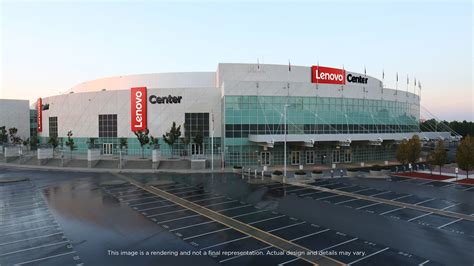
Renaming the home arena as Lenovo Center marked the beginning of an ambitious collaboration between two community pillars.
A Digital Backbone for Game Day and Beyond
Lenovo Center is a bustling ecosystem-complete with restaurants, retail, and offices-relying on seamless operations every day. That’s where Lenovo’s tech comes in.
Before the partnership, the Canes used a legacy three-tier infrastructure. Now, they operate with Lenovo’s hyperconverged ThinkAgile VX solution-boosting efficiency and enabling scalability.
“Lenovo’s intelligent devices and infrastructure solutions support just about everything we do,” says Doug Warf, President of the Hurricanes. “We’re on the precipice of a new tech world in the sports industry, and with Lenovo, we feel like we’re at the cutting edge.”
From arena apps and digital signage to mobile devices and office workstations, Lenovo powers the experience behind the scenes and in the stands.
“Every game, hundreds of employees work in tandem to deliver a great experience for our fans,” adds Johnson. “We couldn’t do that so successfully without our reliable Lenovo technology.”
Tech on the Ice: Driving Performance Through Data
Hurricanes players and coaches are also reaping the benefits of Lenovo’s tech. In today’s NHL, elite performance depends on advanced data-and Lenovo helps the Canes turn raw stats into strategic advantage.
With Lenovo’s ThinkAgile VX, coaches track player movements, puck paths, and gameplay dynamics in real time. Tablets on the bench put that intelligence directly into the hands of decision-makers.
“Speed is the name of the game,” says Johnson. “We need to calculate more data at a much faster rate. The faster we run the data, the more agile and nimble we can be with our decision making”.
“There are millions of data points that all have to be handled in real time,” explains Eric Tulsky, General Manager of the Hurricanes. “It’s amazing what these devices can do and how fast they process.”
A Vision for the Future
The partnership has already delivered dramatic results. “This upgrade Lenovo has delivered has tripled the performance of key analytics workloads,” says Johnson. “We’re enabling our teams to complete jobs three times faster. This simplifies our data operation, allowing us to handle much faster speeds with virtually unlimited room to scale.”
But the vision doesn’t stop with the team-it extends to the entire community.
“In partnership with Lenovo and the city of Raleigh, we’re redeveloping the entertainment district around the arena,” says Warf. “We’re transforming it into a cutting-edge smart city with concert venues, retail, restaurants, and efficient parking arrangements. With this technology investment, we’re looking for new ways to excite our fans and bring them closer to the sport they love.”
From AR/VR experiences to next-gen suites, the Canes are aiming to make their home a flagship for innovation across North Carolina.
Chasing Greatness, Together
Amid all the innovation and growth, the team remains focused on its ultimate goal. “Everything we do is for the fans,” says Tulsky.
HELIOS: Measurable Progress
HELIOS gives players and coaches the tools they need to turn effort into measurable progress. With cutting-edge AI wearable technology and an easy-to-use app, gain instant access to detailed skating metrics, performance trends, and personalized feedback. Train Smarter, Not Just Harder.
No manual editing needed. Use any video software, and shifts are clipped automatically and synced with performance data. Pull up shift videos minutes after the game ends. Combine HELIOS metrics with video to truly understand how you play.
Own Your Development
Progress isn’t just about putting in the work-it’s about knowing where you stand and how to get better. Don’t just train - train with purpose. HELIOS gives the power to track personal development over time and see how you stack up against peers.
Apex Hockey: Skating into the Future
Hockey is one of the most dynamic, fastest-moving sports in the world, and that doesn’t stop at the final whistle. Apex Hockey works with the most innovative tech companies, academic researchers, equipment manufacturers, coaches, and sports scientists to accelerate players into the future of the game. Hockey tech is still in its infancy, but we’ve been pushing the limits for years.
Vision Training
Discover how Apex Hockey uses cutting-edge vision training technology to improve players' spatial awareness, reaction timing, and multi-tasking skills. Specialized drills and advanced equipment train the eyes and brain to work together, helping players process multiple pieces of information simultaneously. This training enhances their ability to track the puck, read opponents, and anticipate plays, giving them a competitive edge.
3D Motion Capture
At Apex Hockey, we're dedicated to revolutionizing skating performance through cutting-edge technology. Our industry-leading 3D motion capture system is at the forefront of our training methodology, enabling us to quantify and optimize every aspect of your skating technique. By meticulously analyzing your movements, our coaches derive invaluable insights from the kinematic data collected, empowering us to tailor personalized training interventions for each athlete. This specialized service is only available during one-on-one private bookings.
Foot Pressure Mapping
At Apex Hockey, we leverage cutting-edge foot pressure mapping technology to revolutionize skating biomechanics analysis. Our system captures precise force values transmitted through the kinetic chain, offering invaluable insights into foot function and skating efficiency. Moreover, we utilize this technology for internal research, continuously enhancing our on-ice programming and coaching capabilities during skills instruction.
Video Analysis
Apex Hockey uses on-ice video technology to analyze posture and skating movement patterns in real-time. This stack of technology and analysis allows our performance coaches to provide instant, personalized technical feedback and instruction, creating an engaging and immersive learning environment for our athletes.
Technology Integration in Hockey
Technology is changing the face of many sports, including hockey. From player performance analytics to advanced match scoring systems, innovation is becoming an integral part of the hockey industry.
Data analytics has become an important tool in hockey. Teams use it to evaluate player performance, tactics and strategy. The introduction of tracking technologies such as video capture systems and sensors allows trainers and analysts to collect vast amounts of data.
Artificial intelligence (AI) is also finding widespread use in hockey. For example, AI can analyze the behavior of players on the ice and predict the results of matches. This allows teams to proactively assess risks and optimize their strategies.
Virtual reality (VR) and augmented reality (AR) are opening up new horizons in hockey. They are used to train players and create unique experiences for fans.
Digital platforms and social media play a key role in promoting hockey and interacting with fans. Teams actively use social networks to communicate with fans, broadcast games and publish content.
NHL Sense Arena: Virtual Reality Training
Sense Arena, the world leader in virtual reality ice hockey training, announced a multiyear agreement to launch the first interactive NHL VR platform titled NHL Sense Arena. NHL Sense Arena will feature the uniforms and logos of all 32 NHL teams, giving hockey players and fans alike the opportunity to hone their skills and compete as a member of their favorite NHL franchise within the Sense Arena hockey experience.
Sense Arena’s ground-breaking VR technology provides a cutting-edge off-ice platform for skaters and goalies of all ages, allowing them to play hockey in confined spaces and non-traditional environments such as basements, garages, hotel rooms and more.