Understanding Snowboard Boot Differences
While the differences may be a bit less noticeable than with the board itself, boots can also be classified based on where you want to use them.Men's vs. Women's vs. Kids' Boots
Men’s boots can be found in sizes 6-15. While brands vary in fit, a few make models that are specifically for wider feet. Women’s boots are built a bit differently than men’s. First, women’s calves are lower on their legs then men’s, so the cuffs of their boots don’t come up as high. This makes the boots less restrictive and more comfortable. They are also generally softer in flex, so women can transfer energy easier. You may notice a bit of an overlap in sizes 6 and 7 between kids and adult boots. Kids boots will generally have a lower cuff and will be a bit narrower than an adult boot. It’s also important to note that the flex of a kid’s boot will likely be softer. If the rider is under 110 lbs.Boot Flex Based on Skill Level
* Beginner: A beginner rider is normally within their first season of riding. For many, this means trying to keep control of your speed and basically make it down the hill in one piece. You may be starting to connect turns but aren’t consistently. A soft flexing boot will aid in keeping your set up forgiving so that you aren’t transferring energy to the board unintentionally.* Intermediate: This is generally the rider that has had a few seasons under their belt. If you’re getting more and more comfortable linking turns and can generally make it down a blue run without catching an edge then you probably could consider yourself at least an intermediate level rider.* Advanced: Riders at this level usually have a feel for what type of terrain they prefer. They are comfortable with making quick turns and are in control at any speed. They may be specifically interested in riding in the terrain park or prefer carving hard on steep runs but either way they are confident in their abilities and generally have a preference as to what they’re looking for in their equipment. They also want a boot with performance and response, which usually means added stiffness.* Expert: An expert rider is extremely confident in their ability to take on any terrain under any conditions. No inbounds run at a resort is too challenging and they may be exploring terrain out of bounds as well.Riding Style
* Freestyle: Freestyle refers to the various types of riding often done in the terrain park including hitting rails, jumps, boxes, and other tricks. Boots designed for this may still be on the softer side even as they increase in price, built from materials that allow them to maintain this softer flex without breaking down too much over time. They often also have additional areas of cushion underfoot to absorb shock from landing tricks.* All Mountain Freestyle: The majority of boots fit into this category. As like with All Mountain boots these generally vary from soft to stiff as they increase with price, however many medium flexing options still exist at the high end.Finding the Right Size
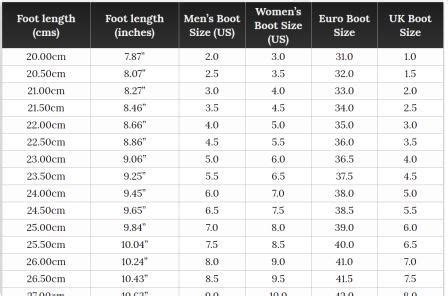
While most boots are “true to shoe size”, it’s important to note that they aren’t shoes and therefore shouldn’t fit like them! When you buy a shoe, you generally wear them roomier and a little larger than necessary. A snowboard boot is made for performance, and therefore if it’s too big, your foot will move around instead of directly transferring energy to the boot and then to the binding. That being said, you should try to get the smallest size you can get away with without the boot being uncomfortable. If you are in between sizes, the smaller of the two is likely the better option. Wearing the right sock is important too. Getting a “thick sock” to take up room just wastes energy transfer and also will end up making you colder due to the added space in the boot. A thinner snowboard specific sock will wick away sweat and will keep you warmer while allowing the boot to perform as needed.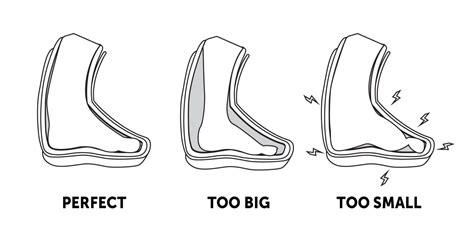
How to Fit Your Boot
Sit down, completely loosen the boot, and then slide your foot into it. Kick your heel back into the boot a few times, and then tighten the liner and then the outside of the boot. When you stand up, your toes should be touching the end of the liner. You should be able to feel that it’s there but your toes shouldn’t be curled, they should just be touching it. When you stand in a bent stance your toes should come slightly off the end of the boot.Snowboard Boot Fit & Size Guiding | Choosing the Right Snowboard Boots | SkatePro
Lacing Systems
Everyone is familiar with the traditional lace-up style of boots. Just like a shoe, you simply pull up to tighten the laces, tie them in a bow and you’re good to go. If you’ve seen the boots with a cable and a dial at the top of the outer tongue then you know exactly what we’re talking about. If not, boots with a boa lacing system have a cable or rope instead of laces, and a dial that when turned tightens the cable or rope. This makes it even easier to tighten your boots, and the cable stays tightened until you pop the dial back open at the end of the day.Found on various levels of men's, women's, and kids' boots, this system is especially nice for those who never feel they can get their boots as tight as they want them. Or, after riding for a while, when the boot and the liner generally loosen up a little, riders can simply reach down and turn the dial a few times without having to sit down and completely re-lace their boot on the hill! The BOA Focus system also gives riders zonal tightening options, so you can keep certain sections tighter or looser than others for ultimate customization.Some models also use one dial for the outside of the boot and one to tighten the liner. And to answer the big questions “Will it break?”. BOA is actually its own company, and its system is used on everything from shoes and hockey skates to horse boots. Therefore, it’s a proven system, made to outlast various levels of performance.While most brands are utilizing BOA in some fashion, some still have their own form of a quick lacing system. Most systems involve some sort of draw string, sometimes fixed to the tongue or the side of the boot. After the user pulls up on the system to tighten the boot, the system usually locks into place so the lace cannot become loose while riding. These systems allow the user to get much more leverage that with a traditional lace, which is nice for women and kids who may not be able to tighten their boots as tight as they like.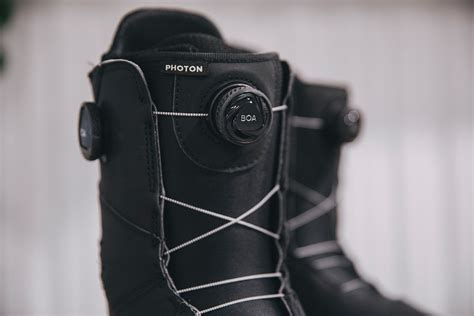
Price and Performance
This generally represents entry-level boots perfect for the beginner to learn on. This includes boots both ideal for the beginner looking to progress as well as the park rider looking for something to learn tricks such as small jumps and boxes on. Riders looking for a little more performance without something too demanding will find a medium flexing boot ideal. Most aggressive riders will find a boot in this category fits their needs. A stiff flex means better edgehold, and effortless energy transfer. Boots in this category are ideal for the hard charger. This is the rider looking to carve hard turns at high speed and wants the ultimate performance out of their boot. Boots with original retail in this range usually represent a mid-level boot with a mid-level flex. While the boot isn’t too stiff or demanding, it offers a little more response and performance for the intermediate rider. Generally, the liners in these boots are made with materials that wick away sweat and keep the rider warm. The fit of the boot is also a little more exact, and they are usually less bulky, which lowers weight and maximizes energy transfer. Usually higher performance boots, these have all the bells and whistles. Often stiffer and more responsive, boots in this range give riders the ultimate in customization, while keeping boots low in weight and as comfortable as possible.| Price Range | Skill Level | Flex | Features |
|---|---|---|---|
| Entry-Level | Beginner | Soft | Ideal for learning |
| Mid-Level | Intermediate | Medium | More responsive, better fit |
| High-End | Advanced/Expert | Stiff | Ultimate customization, low weight |
Read also: Is the Gnu Antigravity Snowboard Worth It?
Read also: Battle Bindings: Performance and Value
Read also: Renting Snowboards in Whistler Blackcomb: What You Need to Know