So, you’re into snowboarding and you want to take the next evolutionary step into the backcountry: splitboarding. It’s not that I don’t like soft-boots and bindings, in fact I love them. The surfy feel, the comfortable boots, the cranking up of ratchets when on the steep, and the ease of walking to the bar to get another beer, are all things I might miss. But the time has come to slip my ever-so-soft feet into a pair of hard-boots and bindings to give me more confidence holding an edge in no-fall zones in walk mode. But where to start?
Fortunately, there are more and more options these days in both boots and bindings, so we thought it’d be useful to compile most of your options in one place. This isn’t an authoritative review of hard-boot kit but more of a where-to-start and what’s-on-the-market, given that we’ve just researched it for our own purposes anyway! So, if you, like me, are sick of losing a downhill ski while side-hilling on a crust, or worse being left behind by your ski-touring buddies who don’t seem to notice that the skin-trail snow’s gone to shit, read on.
At least with boots it used to be relatively simple, well that’s if you don’t want to do any modifications yourself, as there are currently only three splitboard-specific hard-boot manufacturers : Phantom’s Slipper/Slipper HD - but as of Oct 2024 Phantom no longer make the Slipper, they do have some limited stock left and will continue to sell spare parts - the Key Equipment’s Disruptive and the Splitpin. There is actually one more but it’s super expensive, more on that below.
Hardboot Splitboarding - the pros and cons
Phantom have made some significant functional tweaks to the Backlands boot but it’s still, fundamentally a Backlands boot - and having tried one on in a shop recently I was wowed at the comfort level - as good, if not better than my current soft boots (standing in the shop, anyway!). And when in walk mode there is so much less resistance to movement, it’s incredible. And the liners are great too. As one of our mates says, “These are race touring boots - they are even built to run in!”. Indeed, John from Phantom wears his Slippers all day, skiing or not.
If you live in the US you’ll probably go for the Slipper and if you live in Europe the Disruptive is possibly the way to go, because of import taxes.
Read also: Types of Ski Boots Explained
In dedicated split-boarding boots, you have:
The Phantom Slipper which has been around a couple of years, and has had great reviews, you can find out more about its development in our podcast with John Keffler here. New in the 21/22 season and reviewed by is is the Phantom Slipper HD (Heavy Duty) with an additional plastic tongue to protect the soft gaitor material, a lot more stiffness, and a higher internal gaiter for more protection from the elements. Phantom assure us that the original Slipper is still a stonkingly-good boot, and has a tiny weight advantage.
All Slippers are based around the Atomic Backlands ski touring boot, modified to give a soft boot feel, with the lower buckle moved to the ankle pivots to alleviate heel lift and the addition of Phantoms Link Lever, a sprung version of the Atomic lever, which flips up in tour/walk mode and clicks back into place for riding. The link Lever is available in various strengths of spring, enabling a tailored ride depending on your weight.
See our review here - for narrow feet up to 295mm, this is a hugely comfortable boot, giving excellent surfy feel and precise adjustments, though is expensive and showed some interesting wear and tear quite quickly (all fixable).
Interested in the backcountry? Well look no further, be it splitboarding or skiing, than our workshop in association with Altitude Guides, which is designed as an on-snow week to help you to take your first backcountry strides, or build on your existing backcountry knowledge with the view to start planning your own tours.
Read also: Guide to Snowboard Boot Inserts
Hard Boot Options
Here's a breakdown of available hard boot options:
- Phantom Slipper/Slipper HD: Modified Atomic Backlands ski touring boot, focuses on a soft boot feel, Link Lever for tour/walk mode.
- Key Equipment Disruptive: New in 21/22, now in its 5th season and has had a few tweeks on the original design. They’ve moved from a soft tongue to a firmer plastic one, which still allows a good flex while riding. The Disruptive is sold with or without a liner, which is a nice touch especially if you live somewhere really cold and want a high volume liner.
- Splitpin: New to market, fabricated in Chur Switzerland, modified Dalbello Quantum ski touring boot with a changed up spring loaded heel lock and a dynamic shaft manipulation cord.
- Pierre Gignoux Black Snowboard: An uber-light carbon hard boot that's comes in at a whopping €1700-odd, derived from a more cross-country skiing direction.
They also have a new lighter plastic bottom half in a limited edition (yellow boot above), these are being worn and branded by Krister Kopala who is riding some very big lines. The new 100g/foot lighter boots will also have a Vibram sole and is now widely available in all sizes, from 23.5 to 31 EU sizing, sold with or without a liner. Check out our pod with Key Equipment co-founder, Hampus Cederholm.
See our review here - Catering for wider feet but not running to quite as large sizes , it is also highly comfortable and surfy, and keeps the cost down by using less lower-tech adjustments and buckles than the Slipper - but still works well.
If you can afford it… the uber-light Pierre Gignoux Black Snowboard, a carbon hard boot that’s comes in at a whopping €1700-odd, and seems derived from a more cross-country skiing direction, somehow... If anyone out there has tried it, let us know!
And lastly The Splitpin, above, not tried by us yet, is a new to market boot, fabricated in Chur Switzerland. It’s a modified Dalbello Quantum ski touring boot with a changed up spring loaded heel lock and a dynamic shaft manipulation cord. The Splitpin comes with a Thermoflex heat moulded inner, and it’s actually possible to test the boot, if you visit them in Chur. They also offer a fitting service, which is unique, but for this you again must visit them in Chur, but it does cut out all the problems of not being sure what size boot to buy.
Read also: Acceptable Boot Overhang Explained
The Atomic Backlands range is also an option here - the Phantom Slippers are based on one of these models after all. And for these, you could consider buying Phantom’s “Link Lever”, made specifically for Atomic Backlands, to replace their default rigid ski/walk mode lever arm and give you a more surfy feel - just unscrew the old one, screw in the Link Lever, and bob’s your uncle.
We’ve noted that with some of the Atomic Backlands, some youtubers and internetters have reported cracks appearing in the fronts of the shells - mainly, it appears, those models where there is a 90-degree corner on the top/front of the shell where the very front of the softer upper tongue starts from - probably due to unusual torsions that the designers didn’t take into account that come from splitboarding!
But having said that, the base model Phantom Slipper (not the HD, shares that feature and we’ve not heard about that issue in them. The Slipper HD anyway has more re-incforcement around that area, and after several seasons on them we’ve seen no cracking of their shell. Many riders use Dynafit Speedfits or TLTs, some straight out of the box, or modded, and you could consider their Speed Boot also. Dedicated ski-touring boots like the Scarpa Alien or Dalbello Quantum can work pretty-much straight out of the box.
You’ll benefit from the full walk-mode flex range, which gets restricted on the Disruptive and the Slipper by the placement of the ankle strap. On the flip-side, you’ll need to check if you can get sufficient heel hold from ski-touring boots, and of course, the flex and stiffness you need.
Hard snowboard boots are generally sized using the Mondo system. Your Mondo size is the overall length in centimetres of your longer foot. This distance will guide your boot shell size choice, and the final fit will be made using the appropriately sized, and often heat moulded, boot liner (Intuition, ZipFit etc.). Buying the “correct” size for you can be difficult given how few places you can go to try these boots on.
Deeluxe shells are known for having a slightly wider heel fit for any given foot length compared to UPZ. UPZ and Mountain Slope come equipped with spring flex control systems. Many more experienced riders swear by finding a shell size where with their bare foot in the shell without a liner, and their toes at the boot end, more than 1 but less than 2 fingers can be inserted behind their heel. They then use a low volume moldable liner to get a snug fit between foot and boot shell.
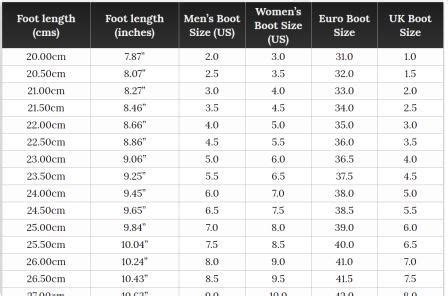
Obviously, this can only be done if you can try boots before buying. None of the brands of boots are cheap, but you may be able to find second hand boots being sold by someone struggling to find their right size. Boots more than 10 years old are probably best avoided, or else bought knowing that their usable life may be very short.
I personally ride UPZ RC10 boots I bought new in 2016. I have relatively slim heels and I had tried Deeluxe shells in the past and they had poor heel hold for me. I use a shell which will fit a liner the same mondo size as my feet. The boots have been stretched to accommodate my big toes which need a bit more room to the side. I use Intuition Pro Wrap heat moldable liners after the UPZ originals caused skin abrasion blisters on my shins after 2-3 days riding.
Bindings
With bindings it becomes a little more complicated, with at least four main options. One big difference between them - three of them go into your backpack when touring, thus saving you “swing weight” on your feet, while the Plum SOK can be used to tour in as well (possible advantage here in transition speed?). All are also much lighter than soft bindings (although this is somewhat offset by the “Toe Tech” you’ll need - more on that later) and also with a much lower profile.
- Spark R&D Dyno DH: Seem like a ringside seat to the next heavyweight bout - bloody hard to come by. High demand might be because, if like me, you use the Spark soft-boot system then you’ll already have pucks on your existing board that these bad boys will slide straight onto. Spark do advise though using canted pucks to make it easy on your knees, but you could keep using the regular ones.
- Phantom M6 Bindings: Are things of beauty. A super low profile, very few moving parts, and strong as nails. The actual metal of the binding flexes when ridden, making it a comfortable ride, while still dialling in a secure hold on your boot and sitting flat on the board to give a more solid-board feel. The M6 comes with 3 different types of puck - each set costs an additional $199: A super light and simplistic fixed angle set; an adjustable-angle set; and a “3-in-1” set which are adjustable and will also fit onto a solid board so you can ride your hard-boots on that too. Read our review of the M6 system here.
- Plum SOK: Uses the same side-lever system to lock onto the Plum-designed interface as their soft bindings. If you don’t already have those it’ll add another €229 to the price but includes the simple touring bar bracket too. Plum, unlike the others here, also sell ski bindings as well as skis and snowboards.
- Karakorum Guide HB: Are simple, solid and cantered. There’s no weight info on their site but they can’t weigh much as there’s not a lot to them - they claim they’re the lightest hard-boot binding on the market. They work with the Karakorum Prime System interface, which is sold separately. The sides of these bad boys are different colours, so you won’t get them round the wrong way when in the middle of a dicey transition. Review coming soon!
- Voile Mtn Plate ADS/DS: Voile also make a couple of hard-boot bindings, the Mtn Plate ADS (ascent/descent) $265, and the Voile Mtn Plate DS (descent only) $200. They’re new ish and look no-fuss and adjustable, though perhaps have a higher stack-height than some of the above. They attach with a pin system, and are easy to adjust to the size of your boot with the sliding toe and heel plates, although these plates look like they put quite a bit of height between you and your board.
- Phenix: Known for 4 part custom made splits and swallow tails solids, Phenix have some hybrid soft boot style straps mounted on a flat hardboot plate, but these are just prototypes that we’ve seen on Instagram and not for sale right now.
Touring Mode
The one really big reason for switching to a hard-boot system is to improve the uphill experience - lets face it, you’re probably not swapping primarily for the down, so the way you connect your foot to the board in touring-mode is possibly the most important aspect.
You can keep the Plum SOK on the board for walking (using their simple ‘Uphill bracket’ in place of a tech toe) but the best edge-hold while touring would be to run with the more direct two-pin “toe tech”: its what skiers use after all. In fact, you might be able to just use ski kit here - that is, a Dynafit TLT Speed toe, but with an adapter plate from Spark R&D - though it’s not clear if Spark still offer this.
For split-specific options, Plum sell the rather suave looking PEKYE; Spark have their Toe Tech; Phantom have their GT Tech Toes. Karakorum though, don’t seem to offer their own.
For something different, Voile offer the STS Tour Binding, which is a simpler affair and for use with their DS Binding plate. Think the Plum or Spark Toe Tech minus the springs, so it’s lighter but is manually closed. If you are counting grams, this could be the one you need, though you’ll need Voile’s own ski crampons to go with it.
Risers
Risers for hard boots need to be a little higher than with soft bindings, as they go directly onto the sole of the boot and not the bottom of the binding plate.
- Spark R&D Hard-boot Dual Height Wires are set at 55mm (12°) and 75mm (18°) and the plastic screw bracket is fully adjustable so as to hit the sweet spot of whichever boots you choose.
- Phantom Rocket Risers, dual height as well, stand out as being fully metal and have additional slots in the body of it to allow you to thread a ski-strap though and buckle over your boot, to lock your heel down when down-skiing.
- Voile’s Splitboard Dual Height Climbing Heels are not specific for hard-boots but will work, with the back climbing wire height at 55mm and the front wire is 75mm. The down side is their position is fixed on the board.
- Voile’s STS Tour Binding - Heels are their splitboard-specific risers, super cheap and a similar design to the Phantoms but made with a plastic base (and no slots for ski strap heel-lockdown).
Snowboard Bindings by Riding Style and Flex Level
The flex of your snowboard bindings should be appropriate to your ability level and the terrain you ride. It should also match the flex in your boots.
- Beginners and freestylers tend to choose bindings with short, flexible highbacks (the vertical plate that rests against your Achilles tendon) for a softer, forgiving ride and easy recovery when landing jumps and tricks.
- Advanced riders and freeriders typically prefer bindings with tall, stiff highbacks for precise control at high speeds, in deep powder and on steep terrain.
Your choice of snowboard bindings can be narrowed based on the following riding styles:
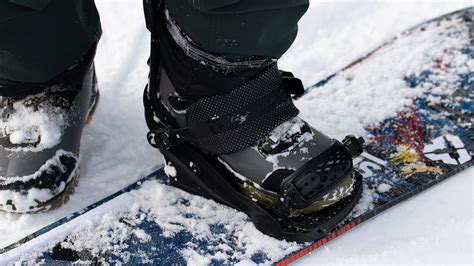
- All-mountain: Best for any terrain, including groomed runs, powder, park and pipe. Flex levels of bindings vary based on your skill level and preferred terrain. Most riders choose soft to medium flex, while racers choose stiff flex.
- Freestyle: Best for jumps, spins, tricks and park features such as half-pipe, rails and boxes. Freestyle bindings typically offer soft flex for greater turning ease and maneuverability.
- Freeride and Splitboard: Best for unmarked backcountry and sidecountry terrain. Bindings are stiffer for greater control.
- Powder: Bindings are typically stiffer for greater control on wider, longer boards that float in deep powder.
Types of Snowboard Bindings
Strap Bindings
The most common kind of snowboard bindings, strap bindings feature straps that ratchet down to secure your boots in place; the highbacks do not move. Strap bindings feature multiple adjustment options, excellent support and cushioning.
On the downside, manually buckling and unbuckling the straps can be cumbersome and time-consuming when wearing gloves or in very cold conditions. Strap bindings are generally suitable for both soft and firm-flexing boots.
Step-in Bindings
Unlike traditional snowboard bindings, step-in bindings (pictured above) don't rely on toe and ankle straps to keep your boots attached to the snowboard. Instead, step-in bindings use a locking mechanism (like toe and heel cleats) to connect your boots to the board so you can click in and ride. These bindings are designed to save time, energy and strap-induced frustration on the slopes.
Splitboard Bindings
While it is possible to make your conventional snowboard bindings work on a splitboard with adapters, splitboard-specific bindings make the experience of backcountry riding that much more enjoyable. There are two main types of splitboard bindings to consider: soft-boot bindings and hard-boot bindings. Soft-boot bindings are what most splitboarders use; they look and perform a lot like regular snowboard bindings. Hard-boot bindings are much more of a niche setup; they do away with highbacks and straps in favor of a design that works with plastic alpine touring ski boots rather than snowboard boots.
Rear-entry Bindings
These bindings look similar to strap bindings, but have reclining highbacks that allow quick and easy in-and-out boot access, which is preferred by many casual riders. These bindings stabilize your feet with a yoke system that applies uniform pressure across the forefoot. They are often heavier than strap bindings, and performance-focused riders feel they reduce board control. Rear-entry bindings are generally suitable for both soft and firm-flexing boots.
Snowboard Binding / Board Compatibility
Binding baseplates feature bolts or discs that attach to a snowboard's binding interface and adjust to attain your preferred stance on the board. Make sure the baseplates are compatible with the interface on your chosen snowboard.
Most bolt patterns are 2x4 or 4x4. Some Burton boards have a diamond-shaped, "3D" bolt pattern found only on its boards. Burton also has a line of boards featuring The Channel system which works with any Burton binding and some bindings from other major brands.
Snowboard Binding Fit Tips
Snowboard bindings must accommodate your boot size. A compatible binding will grip a boot snugly and securely, but without forcing the boot into position or pinching it into place. Bindings should allow your boots to flex, without letting them wobble or shift.
Binding straps should not dangle excessively when tightened.