For automotive enthusiasts seeking performance upgrades without breaking the bank, DIY hockey puck motor mounts offer a compelling solution. This method, popular among builders, provides a cost-effective alternative to expensive aftermarket options.
One of the main reasons people swapping in the CA18DET have a hard time locating a front strut tower bar that clears the intake manifold is due to the fact that the Nismo mounts raise the height of the motor. In my case, this problem was compounded when I switched to a top mounted T3 turbo and the exhaust housing of the turbo was now in a position to play tag with the brake master cylinder. Herein lies my dilemma.
Unlike the Nismo mounts that cost anywhere from $200 to $300 the hockey puck mounts cost about $20 to make. First, go to the local sports shop and buy 4 regulation hockey pucks. They cost about .99c each. Next, go to the auto parts or home store and buy 2 - 5/16 x 3″ bolts.
This image shows a rough assembly of the hockey puck mount outside of the engine bay. First remove the top and bottom nuts from one motor mount. Next place a padded jack under the oil pan.* Slowly jack the motor up until the disconnected motor mount slides out.** Once out, slide a washer on the 5/16 X 3″ bolt and thread it up through the mounting hole in the front crossmember. Now slide 2 of the large washers on the bolt, followed by the 2 hockey pucks and 2 more washers. Slide the upper portion through the motor mount bracket and place a standard washer, lock washer and then the nut on the bolt. Lower the motor back down. The hockey pucks should now make contact with the motor bracket and the crossmember.
* Note: Do not use a narrow headed jack under the oil pan. Use a wide jack with a padded head, otherwise you will dent the pan. ** Note: If you have trouble removing the mounts, you can disconnect both mounts at the same time. Just realize that the motor will move a lot more in the engine bay so the reinstall will require a little more finesse. *** Note: This is where your extra washers come into play. The bolts I got where not threaded all the way so once I tightened them down all of the way I checked under the car and noticed the bolt had slack on the bottom and did not sit flush against the crossmember. This will result in play in the mounts which should be avoided.
Read also: Features of Custom Hockey Gloves
The ‘ghettocet’ Miata affords plenty of opportunity to take things back to ‘old school.’ With that in mind, let’s explore hockey puck motor mounts on this project. It’s something I built years ago for the CA18DET swapped 240sx. Hockey puck motor mounts are simple, cost-effective, and work on many front engine/RWD drivetrains (or inline drivetrains). Factory replacement mounts average $99 per side. High durometer (hardness) aftermarket units start at $225 per side.
On the durometer, the average hockey puck is around 90. This is the hardness of an aftermarket race mount, and it perfectly suits my purposes. I find that the engine and diff mounts are always too soft on any inline engine. This is a compromise to reduce NVH (Noise, Vibration, and Harshness) for street-driven vehicles. The soft factory mounts at the racetrack allow the engine, transmission, and differential to move under heavy loading, making missed shifts more likely and reducing driver feel and feedback. Hence, the need for harder-than-stock mounts. Although the motor mounts perform as race mounts at a fraction of the cost, they may not be pretty or cool and take some work to get right. This means, from my perspective, there are no cons. The performance per dollar can’t be beaten. Even if you must get your hands dirty to build these.
I built the mounts during the engine rebuild for the NA Miata ‘ghettocet.‘ As such, the engine was already removed from the car. If you are doing this with the engine in the car, choose a method to raise the engine. I like using an engine hoist. Alternatively, you can use a hydraulic jack under the front of the oil pan with appropriate padding. Regardless of the method, you will remove the two nuts that hold the bottom of the factory mounts to the subframe before lifting. Once lifted, the brackets that attach the mounts to the block must also be removed.
Only a few parts are required to build the hockey puck motor mounts. The pucks, two bolts, a few washers, and lock nuts. 4 x standard hockey pucks. I ordered these from Amazon. 2 x (3/8″ x 2-1/2″ fine thread grade 8 or above bolts). The parts we will work with are the engine bracket, bolt, nut, washers, and two hockey pucks. The lock washer is redundant.
I gathered base measurements to compare the factory mount height to the hockey puck height. As you can see from the pictures below, there is a 1/8″ difference in height between the mounts, Which is fine for my purpose. The hockey pucks will raise the engine by 1/8″. Alternatively, you could shave one of the pucks 1/8″ to achieve the same height. (Note 1: There is room to lower the engine by 1/4″ or more and improve the center of gravity with a variation on these mounts.
Read also: The story of Craig Needham
Building the mounts is very easy. However, I use a welder during this process and will recommend an alternative build for those who don’t have access. First, drill the hockey pucks through the center. Second, after cleaning the inside of the engine mount bracket, insert the 3/8″ bolt with a washer through the bracket. Tack weld the bolt and washer on the back side of the bracket. Next, place and tighten the hockey pucks, washer, and lower nut on the bolt to secure the bolt head before welding. (Note 2: The bolt and washer are welded to the bracket so that it is easy/possible to tighten the lock nut through the subframe in the last step. If you cannot access a welder, you can substitute two fully threaded bolts for the partially threaded ones I am using. Then, using an extra nut, lock the bolt to the bracket by threading the extra nut onto the bolt and tightening it. Refer to the previous note above: The height with two pucks will increase by the height of the additional nut.
The motor mount is assembled and tightened to ensure proper bolt alignment while welding. Three tack welds secure the bolt to the backside of the engine bracket. This prevents the bolt from spinning when tightening the lower nut to the subframe. Third, remove the bolt, washer, and hockey pucks and allow the bolt to cool. Once cooled, add the pucks back and loosely attach the engine brackets to the block. (3 x 14mm bolts) Then, slowly lower the engine into place. I find guiding the driver-side bolt into the subframe (center hole) easier. Then, let the passenger-side bolt slide into place. Once the bolts are aligned, and before taking all the weight off the lift or jack, tighten the engine brackets to the block completely. Now, set the entire weight of the engine down. Finally, tighten the nylon lock nut and washer to the bottom of the engine mount through the subframe.
The new mounts are in place. I previously explored hockey puck motor mounts while building Nissan 240sx’s for drift competitions years ago. Some of these ‘old school’ methods are relevant today. This exo car built on the NA Miata chassis is one such example. It is a way to build high-performing garage parts at a fraction of the cost of store-bought. And as the project nears completion, expect to see more offerings of this ‘old school’ methodology.
Assembly. Insert the hockey pucks on either side of the bracket. You can glue the pucks together if you would like however the factory engine mount bracket will prevent them from coming apart. I appreciate feedback and apologize for the lack of photos. I made this bracket long before I had joined the forum and did not take as many pictures as I should have.
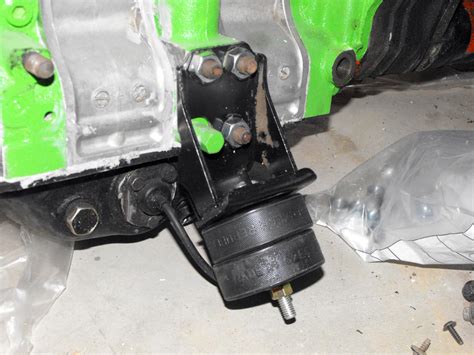
Parts needed for hockey puck motor mounts.
Read also: Inside Aaron Ness's Career
Step-by-Step Guide to Creating Hockey Puck Motor Mounts:
- Go ahead now and cut out that bushing in the middle. A wire bench wheel will make the next part easier, you have to remove ALL the old rubber from around the bushing.
- For the bracket you'll have to do the same thing. Using a knife, remove all the old rubber from inside the bracket.
- Now you have remove enough material from the outside edges of the puck to insert them into the original bracket. There are different ways to do this i.e. a knife but i used a table mounted router. (P.s.
Additional Considerations:
I would for sure use the bottom cup and on top, a washer as big in diameter as the motor mount. Anything less will kill the rubber biscuit. That makes a lot of sense to use washers on top, I didn't think it would have to be the same diameter but that is why I asked. Why the lower cup? Is it to locate the mount so it doesn't move? What would you do below?
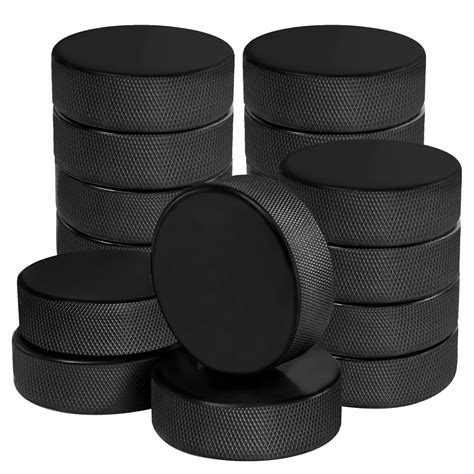
Regulation hockey pucks.
Alternative Materials
I use two part portable sealer used in pitch pockets in EPDM roofs. I prefer the Firestone Stuff but Carlisle also makes a good one. What ever you do don’t use the one part stuff. Just tape off one side of a mount and fill the voids with it. You could do many many of them with a gallon so plan accordingly. Also make sure it is completely mixed before using. I find 3m WindowWeld to be the best one-part for mounts of oem-ish hardness, otherwise call up a plastics shop and have them spec you some 2 part polyurethane in your choice of color and hardness. Window weld is great for filling oem mounts for extra stiffness too.
Important Notes
- Hockey pucks are vulcanized rubber and may break apart under extreme stress.
- Ensure all components are properly secured to avoid play in the mounts.
Conclusion
DIY hockey puck motor mounts offer an affordable and effective solution for enthusiasts looking to enhance their vehicle's performance. While they may require some fabrication skills, the cost savings and performance gains make them a worthwhile project for the budget-conscious builder.